Phonological and Phonemic Awareness
Not sure you’re ready?
Take the ~3-minute readiness diagnostic and see where you stand.
Language begins in the dark. Long before a child ever looks at a printed page to decode a letter, they are swimming in a complex, invisible sea of acoustic frequencies and rhythmic pulses. To master reading, a child must first realize that the continuous stream of speech they hear is not a single, unbroken block of sound, but rather a highly structured assembly of interchangeable acoustic parts. This cognitive awakening—the ability to perceive, break apart, and manipulate the sound structures of spoken language—forms the bedrock of human literacy. Without mastering the invisible architecture of sound, the visual symbols on a page remain entirely meaningless to a young mind.
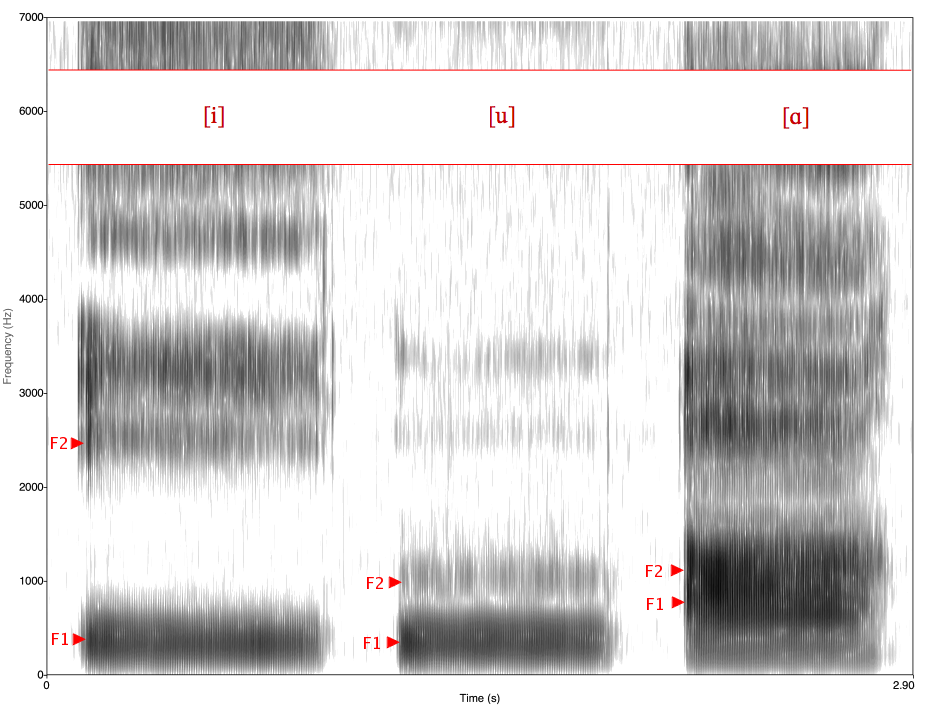
Our brains evolved to process speech naturally and unconsciously. When we listen to someone speak, we hear meaning, not individual sounds. But the invention of the alphabet forced a profound cognitive shift: it required us to map visual symbols onto distinct oral noises. Before a student can decode the written word, they must realize the oral word can be broken down.

This realization is phonological awareness.
Phonological awareness is a broad auditory skill that involves identifying and manipulating parts of spoken language.
Because reading is essentially cracking a sound-symbol code, possessing this auditory skill is a highly accurate predictor of early reading success. If a student cannot hear that "bat" and "ball" start with the same sound, showing them the letter 'B' will not bridge the gap.
It is absolutely crucial to understand the environment in which this learning occurs. Phonological awareness instruction is primarily an auditory process. You could teach it in pitch-black darkness. This is the great dividing line in early literacy: phonics instruction differs from phonological awareness by explicitly connecting spoken sounds to written letters. Phonics requires the eyes; phonological awareness requires only the ears.
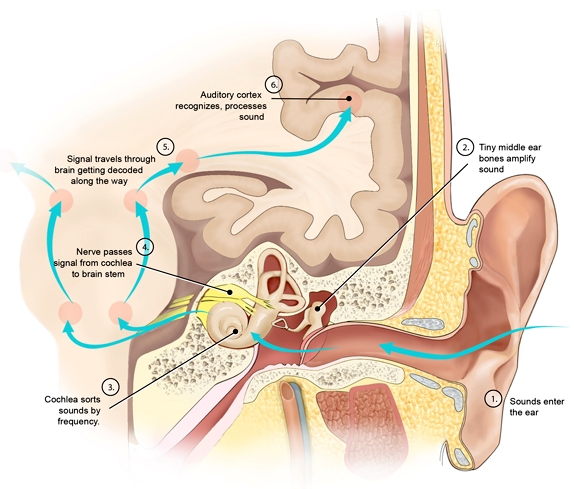
Within this broad auditory umbrella, we zoom in to the most microscopic level of sound. Phonemic awareness is a specific subset of phonological awareness. While phonological awareness might deal with large chunks of sound like whole words or syllables, phonemic awareness focuses exclusively on identifying and manipulating individual sounds in spoken words. Because it is entirely auditory, phonemic awareness tasks do not inherently require the use of written letters.
When children first begin to manipulate language, they operate on a macro-level. They grab language in large, manageable chunks before they learn to isolate the tiny atoms of sound.
The largest macro-level skill is sentence segmentation. When we speak, our words bleed together into a continuous acoustic stream. Sentence segmentation involves identifying and isolating individual words within a continuously spoken sentence. A child clapping once for every word in the sentence "The cat ran away" is demonstrating this skill.
As we move closer to the sounds inside the words, children begin to recognize acoustic patterns.
- Rhyming: Recognizing rhyming words is an early-developing phonological awareness skill. It requires the child to notice that the tail ends of two different words ("bear" and "chair") match perfectly in sound.
- Alliteration: The flip side of the coin. Alliteration awareness involves identifying multiple words that begin with the exact same initial sound. When a child delights in a phrase like "Peter Piper picked," they are isolating that explosive burst of the /p/ sound at the front of the words.
If words are the building blocks of sentences, syllables are the rhythmic beats of words.
A syllable is a unit of pronunciation containing a single vowel sound.
Every time your jaw drops to vocalize a vowel, you are producing a syllable. Just as we can manipulate sentences and words, we can manipulate syllables.
- Syllable blending involves combining individual spoken syllables into a complete word. For example, blending the spoken syllables 'pum' and 'kin' creates the whole word 'pumpkin'.
- Syllable deletion involves removing an entire spoken syllable from a multisyllabic word. If you instruct a student to say "sunflower," and then tell them to say it again but leave out "sun," deleting the syllable 'sun' from the spoken word 'sunflower' leaves the spoken word 'flower'.
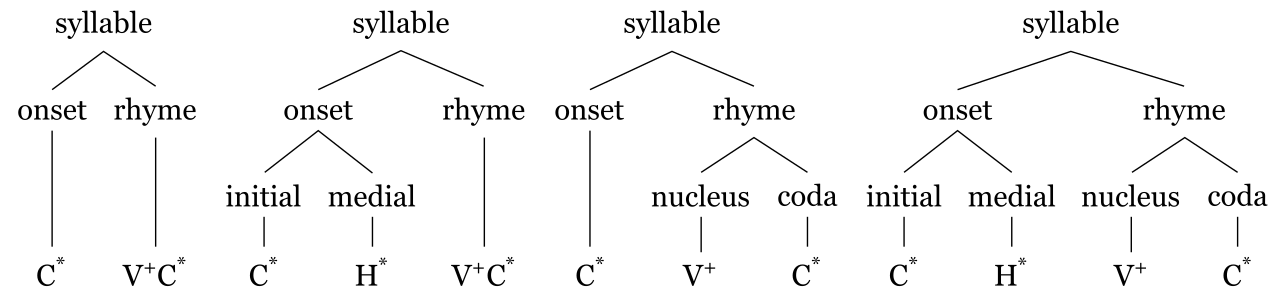
But we can slice the syllable itself into two distinct acoustic components: the onset and the rime.
- The onset of a syllable consists of the initial consonant or consonant cluster before the vowel.
- The rime of a syllable consists of the vowel and any trailing consonants.
Let us look at a simple, single-syllable word. The onset of the spoken word 'cat' is the /k/ sound, while the rime of the spoken word 'cat' is the /at/ sound. Separating onsets and rimes acts as a critical bridge between broad syllable awareness and the microscopic world of phonemes.
Now we reach the fundamental particles of spoken language.
A phoneme is the smallest individual unit of sound in a spoken language.
Though the English alphabet has only 26 letters, the English language contains approximately 44 distinct phonemes. Some phonemes are represented by single letters (like the /m/ in "map"), while others are represented by combinations of letters (like the /sh/ in "ship" or the /ch/ in "chat").
To see this in action, let us return to our feline example. The spoken word 'cat' contains three distinct phonemes: /k/, /a/, and /t/. Identifying these distinct units is the pinnacle of reading readiness.
Once a student can recognize phonemes, they must learn to play with them. Phonemic awareness requires a mental laboratory where sounds are isolated, blended, broken apart, and swapped.
1. Isolation
Before you can move a sound, you must be able to point to it. Phoneme isolation involves identifying the specific sound occurring at the beginning, middle, or end of a spoken word. If an educator asks, "What is the last sound you hear in 'dog'?", the student isolating the final phoneme in the spoken word 'dog' yields the /g/ sound.
2. Blending and Segmenting
These are the two most critical inverse operations in reading and spelling.
- Blending involves combining smaller oral language units into a single larger oral unit. This is the auditory equivalent of reading. Blending the individual phonemes /d/, /o/, and /g/ produces the spoken word 'dog'.
- Segmenting involves breaking a larger oral language unit into smaller spoken parts. This is the auditory equivalent of spelling. Segmenting the spoken word 'stop' yields the individual phonemes /s/, /t/, /o/, and /p/.
3. Advanced Manipulation: Substitution, Deletion, and Addition
The highest tier of phonemic awareness is the ability to actively edit the sound structure of a word on the fly. This mental gymnastics proves a student has total mastery over the acoustic code.
| Manipulation | Definition | Real-World Example |
|---|---|---|
| Substitution | Phoneme substitution involves replacing one phoneme in a word with another phoneme to create a new word. | Substituting the initial /k/ sound in 'cat' with a /b/ sound creates the spoken word 'bat'. |
| Deletion | Phoneme deletion involves removing a phoneme from a spoken word to create a new word. | Deleting the initial /k/ sound from the spoken word 'cat' results in the spoken word 'at'. |
| Addition | Phoneme addition involves adding a new sound to an existing word to create a new word. | Adding the /s/ sound to the beginning of the spoken word 'top' creates the word 'stop'. |
When we teach phonological and phonemic awareness, we are not merely teaching vocabulary or alphabet memorization. We are teaching acoustic logic. We are taking the seamless, biological instinct of speech and slowing it down, forcing the brain to recognize the mechanical gears turning beneath the surface of conversation.
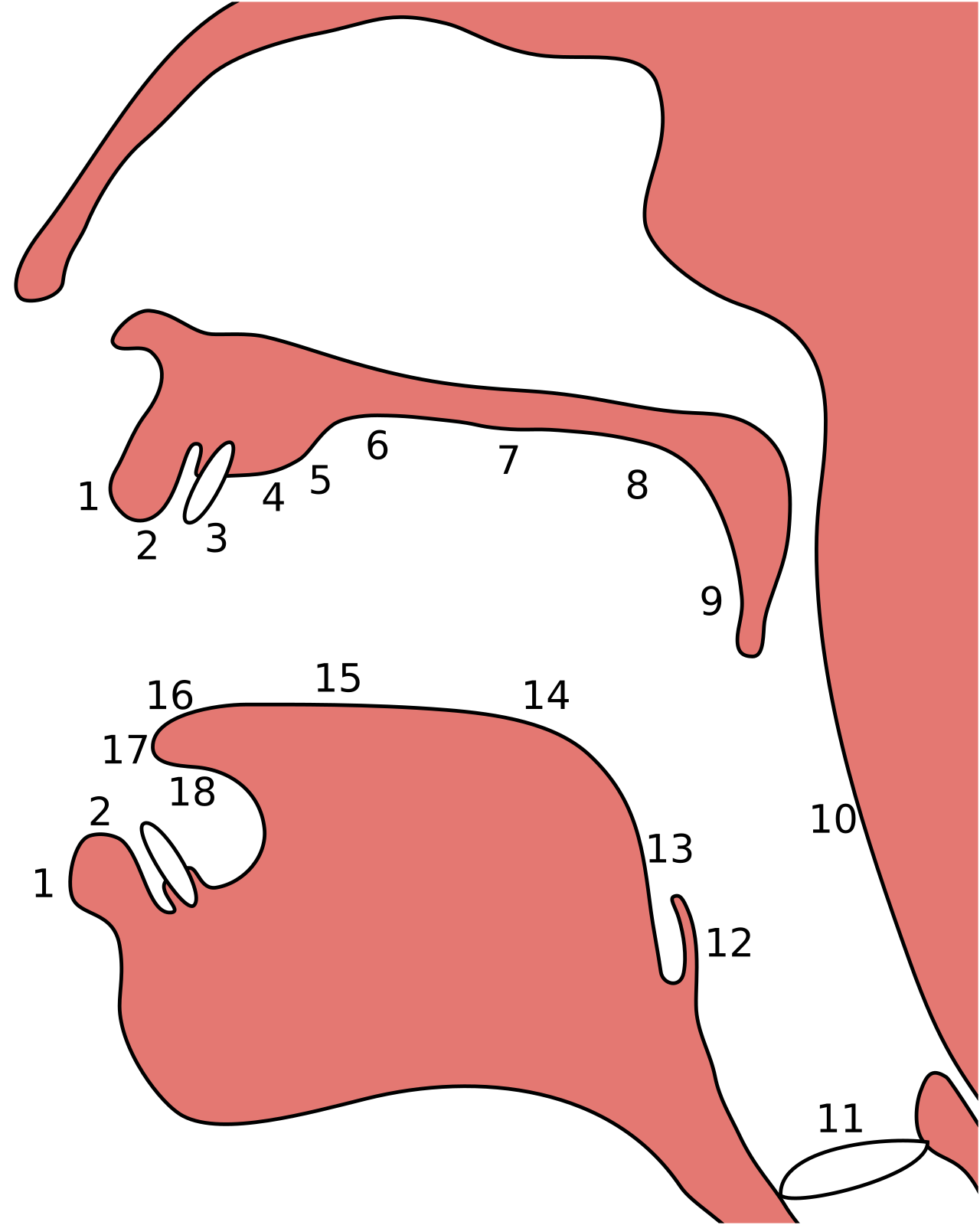
Once a child can confidently hear a word, isolate its phonemes, substitute its consonants, and blend its syllables back together entirely in the dark—only then are they truly ready to turn on the lights, look at a written page, and read.