Phonics and Word Analysis
Not sure you’re ready?
Take the ~3-minute readiness diagnostic and see where you stand.
Human speech is a biological given, but written language is a magnificent, artificial code. When a child looks at a printed page, they are staring at an elaborate cryptographic cipher that maps the continuous, invisible sound waves of human speech onto a series of abstract visual symbols. Teaching a child to read is the act of giving them the key to this cipher. We are not merely teaching them to memorize arbitrary shapes; we are training their brains to wire visual recognition to auditory processing. To achieve this, an educator must understand the exact mechanics of how English maps its sounds to its spelling patterns, how syllables are constructed, and how words are built from smaller units of meaning.
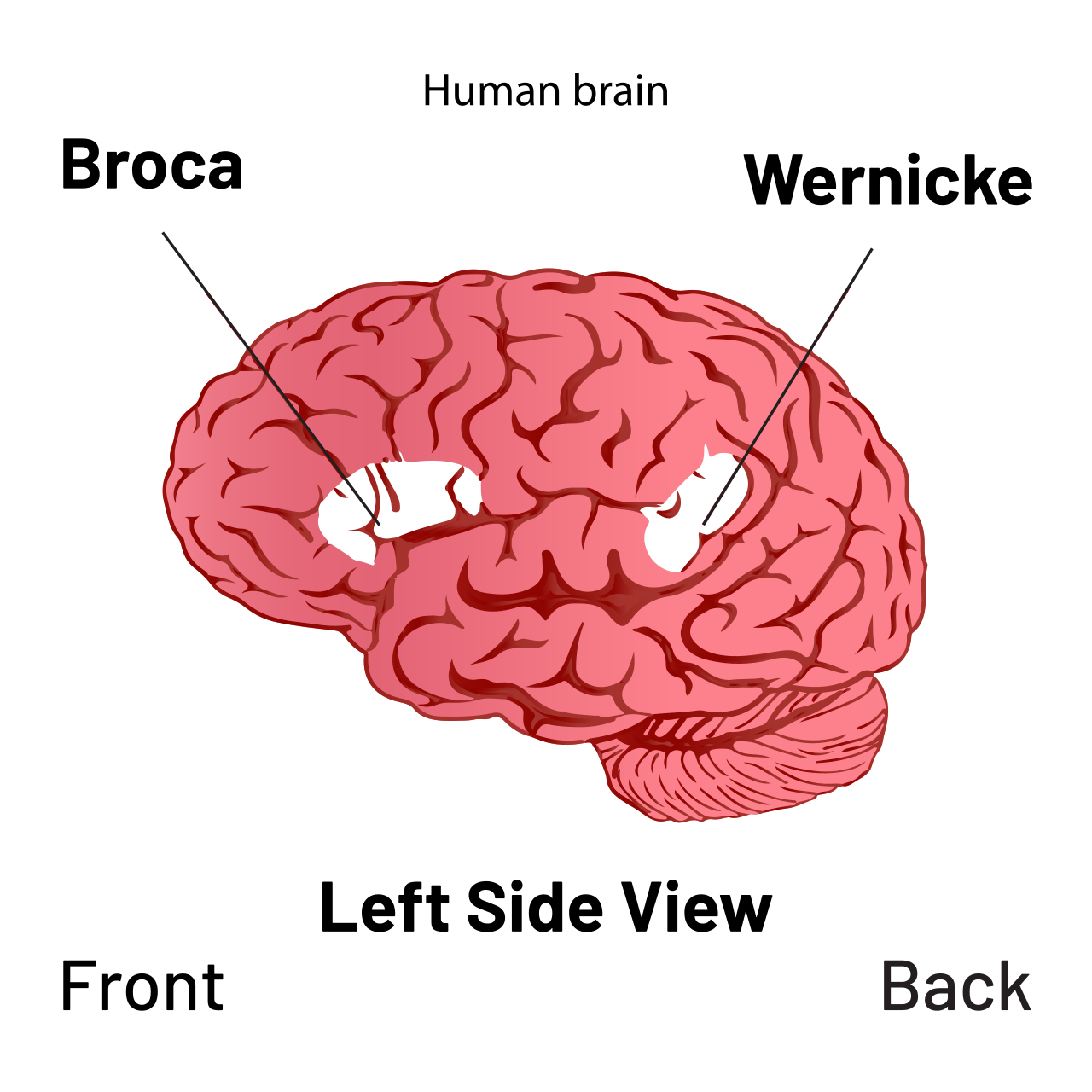
At the foundation of literacy is phonics, an instructional method that teaches the precise relationship between printed letters and spoken sounds. Phonics operates on a fundamental theorem: spoken language can be broken down into discrete acoustic parts, and those parts correspond to specific visual marks.
To understand this system, we must clearly define the raw materials of language:
A phoneme is the smallest unit of spoken language that makes a difference in a word's meaning. Changing just one phoneme changes the word entirely (e.g., swapping the /b/ in bat for a /c/ to make cat).
Graphemes are the written letters—or groups of letters—that represent a single phoneme on the page. While a phoneme is the sound you hear, the grapheme is the symbol you see.
Consonant Behaviors: Blends vs. Digraphs
When consonants cluster together, they behave in one of two distinct ways. Recognizing the difference is vital for teaching children how to decode words.
Consonant Blends Think of a consonant blend like playing a chord on a piano. You press multiple keys simultaneously, but if you listen closely, you can still hear the distinct note of each individual key. Consonant blends are groups of two or three consonants where each individual consonant sound can still be heard as they slide together.
- Common examples include the letter pairs bl (as in black), str (as in string), and cr (as in crab).
Consonant Digraphs If a blend is a musical chord, a digraph is a chemical reaction. When sodium mixes with chlorine, it completely transforms into something new: table salt. Consonant digraphs are two consecutive consonant letters that represent one entirely distinct speech sound. The letters surrender their individual identities to create a single phoneme.
- Common examples include the letter pairs sh (ship), ch (chat), th (thin), and wh (whip).
Vowel Behaviors: Teams and Diphthongs
Vowels are the resonant, open sounds of the English language, but their spelling can be notoriously complex because English has far more vowel sounds (around 20) than vowel letters (5 or 6). To accommodate this, vowels frequently team up.
Vowel Teams Vowel teams are combinations of two to four letters that represent a single vowel sound. The combination produces a stable, unified phoneme (e.g., the ee in feet or the eigh in weigh).
Diphthongs A specialized type of vowel team is the diphthong. Diphthongs are gliding vowel sounds formed by a combination of two adjacent vowels in a single syllable. When pronouncing a diphthong, the mouth physically changes position, gliding from the first vowel sound into the second within one seamless breath impulse.
- Common examples include the letter pairs oi (boil), oy (boy), ou (out), and ow (cow).
The Chameleon Consonants: Hard and Soft 'C' and 'G'
The letters 'c' and 'g' are chameleons; their pronunciation shifts entirely based on the immediate environment of the letter that follows them. The rule governing this is remarkably consistent:
- The Hard 'C' and 'G': The hard 'c' sound (as in cat) occurs when the letter 'c' is immediately followed by the letters 'a', 'o', or 'u'. Similarly, the hard 'g' sound (as in goat) occurs when the letter 'g' is immediately followed by 'a', 'o', or 'u'.
- The Soft 'C' and 'G': The soft 'c' sound (the /s/ sound, as in cent) occurs when the letter 'c' is immediately followed by the letters 'e', 'i', or 'y'. The soft 'g' sound (the /j/ sound, as in gem) occurs when the letter 'g' is immediately followed by 'e', 'i', or 'y'.
As a reader's brain encounters text, it must process words using different strategies depending on the word's structure and the reader's experience.
Decodable words follow regular, predictable letter-sound correspondence rules. These words can be read by a student using basic phonics skills—sounding out and blending the individual letter sounds together sequentially (e.g., s-t-o-p → stop).
However, not all words play by the rules. English is a magnificent, messy amalgamation of Anglo-Saxon, Latin, Greek, and French. Because of this, many high-frequency words—words that appear most often in printed texts—contain irregular spelling patterns that cannot be sounded out using basic phonics rules (e.g., said, was, the, of).
The ultimate goal of reading instruction is to move words into a state of automaticity. This brings us to sight words. While the term is often confused with high-frequency words, a true sight word is any word that a reader instantly recognizes from memory without needing to decode it. A highly proficient reader has turned almost every word they encounter—both regular and irregular—into a sight word.
Every word is built out of rhythmic beats, and the nucleus of every beat is a vowel. By definition, a syllable is a unit of pronunciation containing exactly one vowel sound. Notice the emphasis on sound, not letter. The word straight has four vowel letters (a, i, g, h acting together), but it produces only one vowel sound, making it a single syllable.
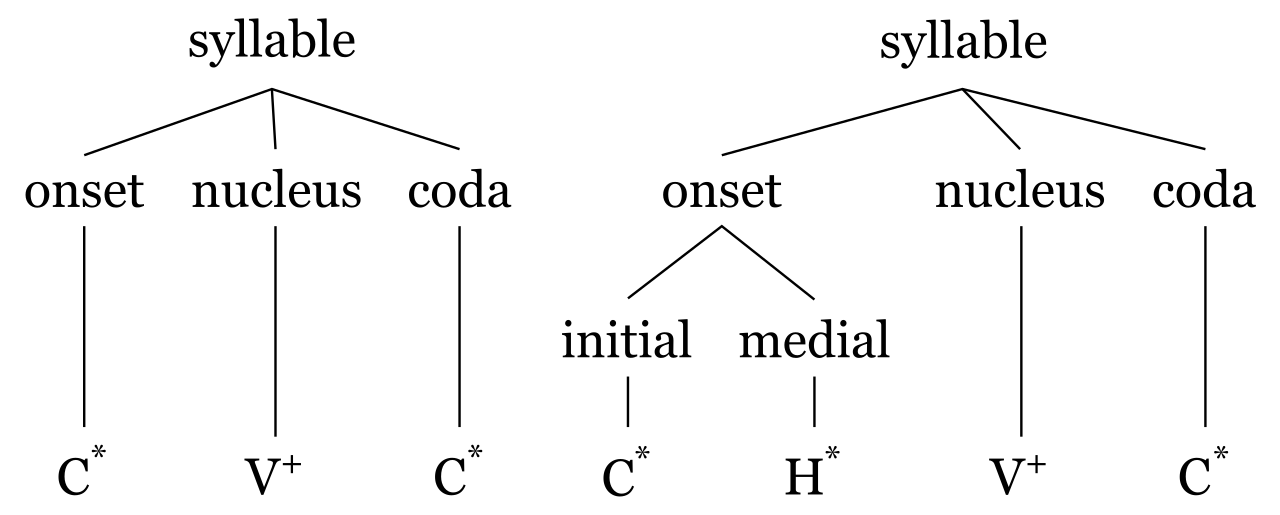
Understanding syllable types allows a reader to predict how a vowel will behave. English has six primary syllable types:
| Syllable Type | Structural Definition | Vowel Behavior | Examples |
|---|---|---|---|
| Closed | A syllable that ends with a consonant. The consonant "closes in" the vowel. | Typically contains a short vowel sound. | cat, pen, mad |
| Open | A syllable that ends with a single vowel letter, leaving the vowel unconstrained. | Typically contains a long vowel sound (it "says its name"). | me, go, hi |
| Vowel-Consonant-e (CVe) | Ends with one vowel, followed by one consonant, followed by a silent letter 'e'. | The silent 'e' usually makes the preceding vowel represent a long vowel sound. | bake, time, mule |
| Vowel Team | Contains two or more adjacent vowels that produce a single vowel sound. | Varies by team, but often represents a long vowel sound or a diphthong. | boat, seed, play |
| R-Controlled | Contains a vowel followed directly by the letter 'r' (the "bossy r"). | The letter 'r' completely changes the pronunciation of the preceding vowel (neither strictly short nor long). | car, bird, fork |
| Consonant-le | An unaccented final syllable containing a single consonant followed by the letters 'le'. | The 'e' is silent; the consonant and 'l' create the final sound. | ap-ple, tur-tle |
Syllabication Patterns: Dividing the Word
When a reader encounters a multi-syllabic unfamiliar word, how do they know where to chop it into manageable pieces? They look for the structural bridges between the vowels.
The VCCV Pattern (Vowel-Consonant-Consonant-Vowel) When two consonants stand between two vowels, words are usually divided into syllables between the two consonants (VC / CV).
- Example: In the word rabbit (rabbit), the division happens right between the twin consonants: rab / bit. Both resulting syllables are closed, meaning both vowels will be short.
The VCV Pattern (Vowel-Consonant-Vowel) When a single consonant stands between two vowels, words are usually divided into syllables before the consonant (V / CV). This division deliberately creates an open first syllable, which signals a long vowel sound.
- Example: In the word tiger (tiger), we split before the 'g': ti / ger. The first syllable is open (long 'i'), and the second is r-controlled.
- Note: If splitting before the consonant yields a word that doesn't make sense (like splitting cabin into ca / bin), the reader tries splitting after the consonant to create a closed syllable (cab / in).
As a student encounters longer, more complex vocabulary, phonics alone is no longer an efficient tool. The reader must shift from decoding sounds to decoding meaning. Structural word analysis involves breaking words down into their smallest units of meaning to decode unfamiliar words.
At the core of this analysis is the morpheme: the smallest meaningful unit in a language. While a phoneme is about sound, a morpheme is about significance. The word unbreakable has three morphemes: un- (not), -break- (to shatter), and -able (capable of).
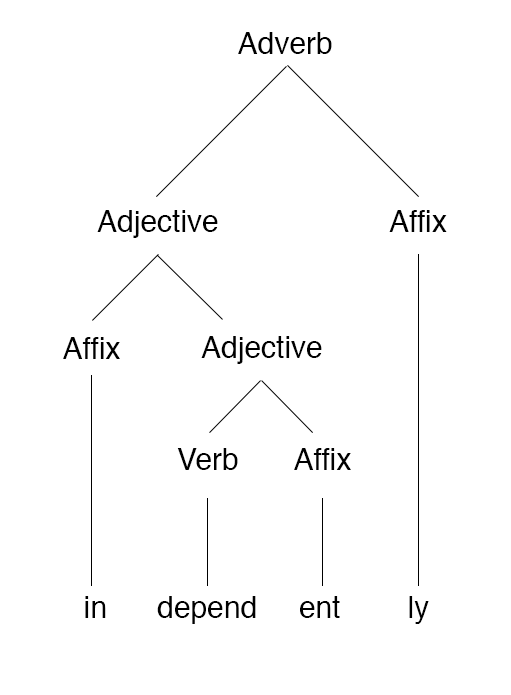
Roots and Affixes
To perform structural analysis, we categorize morphemes into two main groups: roots and affixes.
1. Root Words A root word is the base portion of a word that contains its core meaning. It is the anchor. In the word unbreakable, the root is break.
2. Affixes Affixes are bound morphemes attached to a root word to modify the word's meaning or its part of speech. They are "bound" because they cannot stand alone as independent words. Affixes are directional:
- Prefixes are affixes added to the beginning of a root word (e.g., pre-, re-, un-).
- Suffixes are affixes added to the end of a root word (e.g., -ing, -ly, -tion).
The Two Domains of Suffixes
Suffixes carry out two very different types of grammatical heavy lifting, and it is crucial to distinguish between them:
Derivational suffixes fundamentally alter the word. They change the part of speech or the fundamental meaning of the root word.
Inflectional suffixes, on the other hand, are strictly functional. They indicate grammatical features such as tense, number, or possession. Crucially, inflectional suffixes do not change the basic meaning or the part of speech of the root word.
- Example: Adding -s to dog creates dogs. It is still a noun, and it still means the same animal; it just indicates plurality. Adding -ed to jump creates jumped. It remains a verb; the suffix merely indicates that the action happened in the past. English has very few inflectional suffixes (mostly -s, -es, -ed, -ing, -er [comparative], -est).
By understanding phonemes and graphemes, mastering syllable architecture, and analyzing morphological roots and affixes, an educator provides a student with a comprehensive toolkit. You are not just teaching them to vocalize ink on a page; you are equipping them to decipher the intricate, beautiful code of written language with fluency and comprehension.