Literary Theories for ELA Educators
Not sure you’re ready?
Take the ~3-minute readiness diagnostic and see where you stand.
An English classroom is an optics lab, and a literary text is a beam of white light. Without a prism, the light looks like a single, unified narrative. But insert a prism—a specific conceptual lens—and the light scatters into distinct, measurable wavelengths: power dynamics, psychological depths, structural scaffolding, or the emotional echoes of the reader. In this context, literary theory provides a systematic framework for analyzing literature, acting as the overarching scientific model for how to interrogate a text. By contrast, literary criticism is the practical application of literary theory to specific texts—the act of putting the prism on the desk, aiming it at The Great Gatsby or Beloved, and recording what you see.

For an aspiring secondary English teacher, mastering these theories is not a mere academic exercise. They are the exact tools you will use to design passage-based reasoning questions, teach students how to unpack implicit biases in informational texts, and guide them in writing sophisticated literary arguments. To teach literature effectively, you must understand the lenses through which it is read.
Before the 20th century, literature was often taught as a historical artifact or a moral sermon. Then came a radical shift toward examining the words themselves. Formalism focuses entirely on the structural purposes of a text—its rhyme, meter, syntax, and imagery. To maintain this strict focus, formalist critics ignore the author's biography during literary analysis and strictly ignore the historical context of a text during literary analysis. The text is an island.
New Criticism is a specific type of Formalism popular in the mid-twentieth century that became the absolute bedrock of how we teach English today. Whenever you hand a student a "cold read" on a standardized test, you are utilizing a New Critical approach. New Criticism treats a literary work as a self-contained aesthetic object. If a poem is a machine, the New Critic wants to know how the gears turn, not who built it or what year the factory opened. Naturally, close reading is the primary analytical method used in New Criticism.
To protect the purity of the close reading, New Critics coined the term intentional fallacy, which is the mistaken belief that an author's intention defines the primary meaning of a text. (Think of the student who asks, "But what did Shakespeare actually mean?" The New Critic replies, "It doesn't matter what he meant; it matters what the text does.") Conversely, New Critics coined the term affective fallacy, which is the mistaken belief that a text's meaning is derived from the reader's emotional response. If a poem makes a student sad, that sadness is an emotional byproduct, not the objective meaning of the poem.
Imagine a tree falling in a forest with no one around. Does it make a sound? A New Critic says yes; the sound waves exist objectively. A Reader-Response critic says no; sound requires an ear.
Reader-response theory argues that a text has no inherent meaning outside of the reader's interpretation. The words on the page are just ink; the "literature" happens in the mind. Consequently, reader-response criticism analyzes how a reader's background influences their understanding of a text.
The Transactional Nature of Reading The scholar Louise Rosenblatt developed the transactional theory of reading. Rather than viewing reading as a passive reception of data, the transactional theory of reading posits that meaning is created through a dynamic interaction between the reader and the text. It is an event in time.
However, this doesn't mean every interpretation is equally valid or entirely chaotic. Stanley Fish introduced the concept of interpretive communities to reader-response theory. He observed that interpretive communities are groups of readers sharing similar reading strategies and cultural expectations. When your 9th graders all predictably misinterpret a satirical essay as a literal truth, they are operating as an interpretive community governed by their shared, developing adolescent worldview.
Contrasting the Foundational Lenses
| Feature | New Criticism | Reader-Response Theory |
|---|---|---|
| Locus of Meaning | The text itself (objective). | The interaction between reader and text. |
| Role of the Reader | Discover the objective mechanisms of the text. | Actively construct meaning based on background. |
| Fallacies to Avoid | Intentional Fallacy, Affective Fallacy. | Believing the text has one fixed, universal meaning. |
If Formalism isolates the text and Reader-Response isolates the mind, sociological theories look outward. They ask: Who holds power? Who is marginalized? How does language enforce or dismantle social hierarchies? When you teach students to evaluate rhetoric and bias in informational texts, you are drawing on these traditions.
Marxism and Economic Determinism
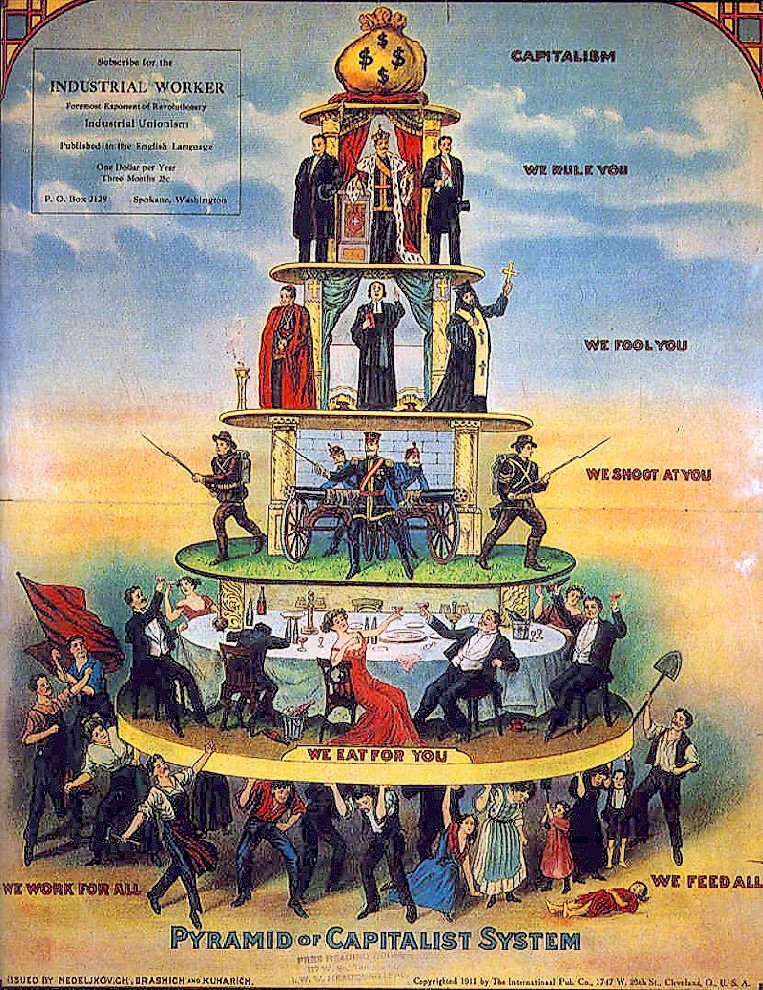
Marxist literary criticism analyzes literature through the lens of class conflict. It does not simply look for poor characters and rich characters; instead, Marxist criticism examines how texts reflect the ideological control of the dominant social class. When analyzing a novel, Marxist critics evaluate the economic conditions portrayed within a literary work, asking how capitalism, labor, and systemic poverty drive the narrative tension.
Feminist and Queer Theory
Feminist criticism analyzes how literature reinforces the oppression of women (such as reducing female characters to one-dimensional tropes) and simultaneously examines how literature subverts patriarchal structures. By applying this lens, feminist literary critics examine the representation of gender roles in texts.
Pushing beyond the binary of gender roles, Queer theory challenges heteronormative assumptions present in literary texts. It goes further than representation, as Queer theory examines the socially constructed nature of sexual identity in literature, asking how society draws the boundaries of "normalcy" and how texts either police or dismantle those boundaries.
Critical Race Theory and Postcolonialism
When analyzing race and imperial expansion, ELA educators use theories that interrogate historic injustices. Critical Race Theory examines how literature reflects systemic racism in society, moving beyond individual prejudice to see how institutions operate. In practice, Critical Race Theory analyzes the representation of racial power dynamics in texts.
On a global scale, Postcolonial criticism analyzes literature produced by cultures subjected to imperial rule. When teaching Chinua Achebe's Things Fall Apart, postcolonial critics examine the power dynamics between colonizers and colonized peoples in literature. A towering pillar of this field is scholar Edward Said. Edward Said's concept of Orientalism is a foundational text in postcolonial literary criticism. Through exhaustive historical analysis, Edward Said's Orientalism describes how Western literature historically stereotyped Eastern cultures as exotic, backward, or irrational to justify imperial conquest.

Traditional history viewed literature as a mere reflection of its time. However, Stephen Greenblatt is widely considered the founder of New Historicism, a theory that treats literature as an active participant in history.
New Historicism assumes that a literary text is shaped by its historical context, but crucially, it also assumes that a literary text actively shapes its historical context. Harriet Beecher Stowe’s Uncle Tom’s Cabin was born of the 1850s, but it also fundamentally altered the political reality of the 1850s. Because of this two-way street, New Historicism analyzes texts alongside other cultural documents from the same time period—reading a Shakespearean play side-by-side with Renaissance medical tracts or legal statutes regarding witchcraft.
How do humans make sense of stories? Linguistics and philosophy offer a mechanical approach to narrative.
Structuralism
Structuralism analyzes literature by examining underlying systems of signs. Think of structuralism like studying the grammar of a sentence, but applying it to entire plots. Structuralist literary critics seek to identify universal narrative structures common to all stories (like the "Hero's Journey").
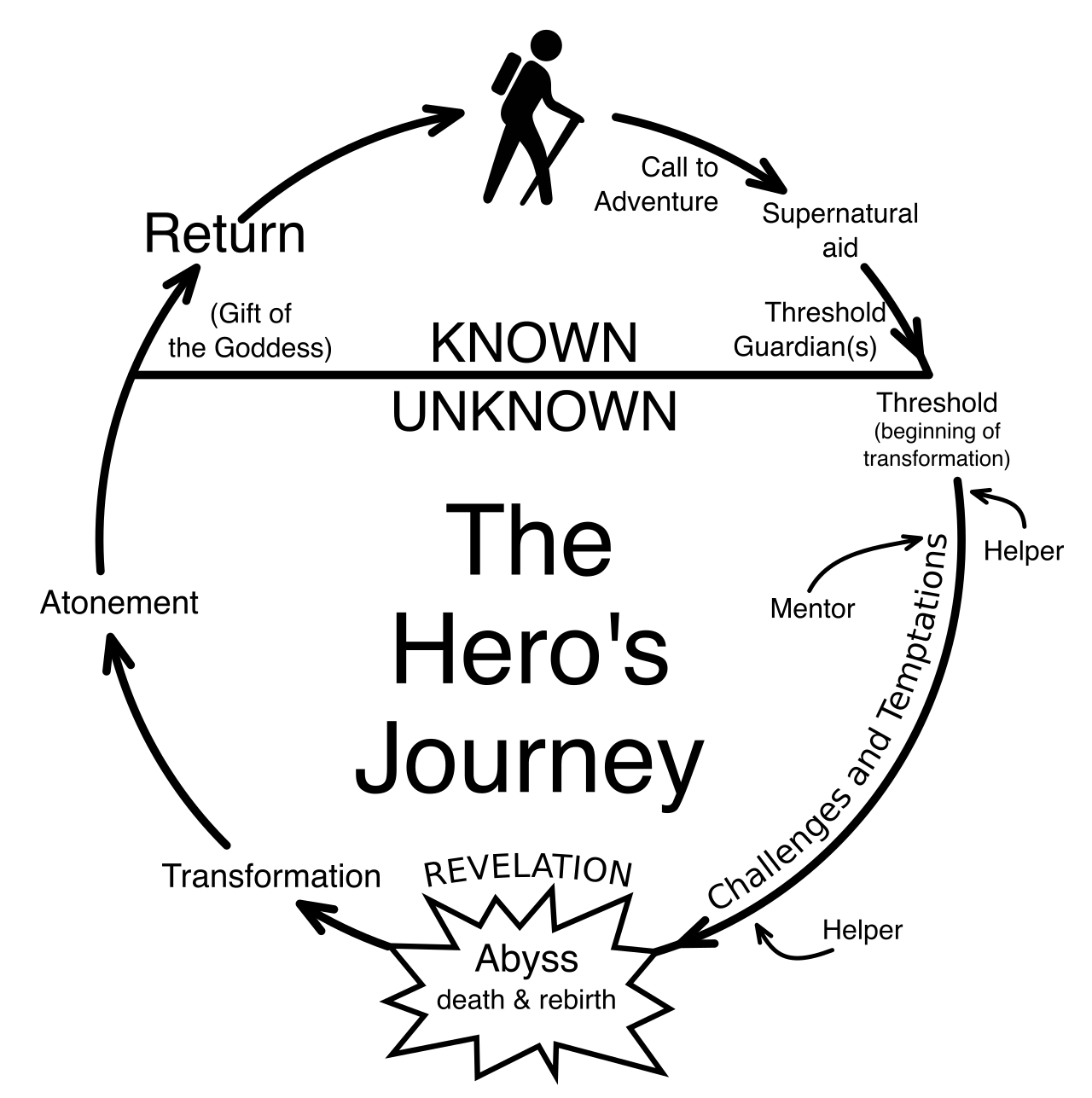
To do this, Structuralist critics frequently analyze texts by identifying binary oppositions. Binary oppositions are pairs of related terms that are opposite in meaning (e.g., light/dark, civilized/savage, male/female). Structuralists argue that human thought, and therefore literature, is organized around these binaries.
Deconstruction and Post-Structuralism
If Structuralism builds a sturdy bridge out of binary oppositions, Deconstruction points out that the steel has microscopic fractures. Post-structuralism asserts that fixed underlying structures of meaning do not exist. The world is too messy to fit into neat, universal grids.
Born from this movement, Deconstruction is a literary theory associated with the philosopher Jacques Derrida. Derrida observed that a binary opposition is never equal; one side is always culturally privileged (e.g., "civilized" over "savage"). Because language relies on arbitrary signs, Deconstruction argues that language is inherently unstable. Therefore, Deconstructionists seek to expose inherent contradictions within a literary text. Ultimately, Deconstructionist critics analyze how a text subverts its own apparent meaning, proving that the text accidentally argues against itself.
Finally, we have theories that connect literature to the deepest layers of human psychology and the physical planet we inhabit.
Psychoanalytic Criticism
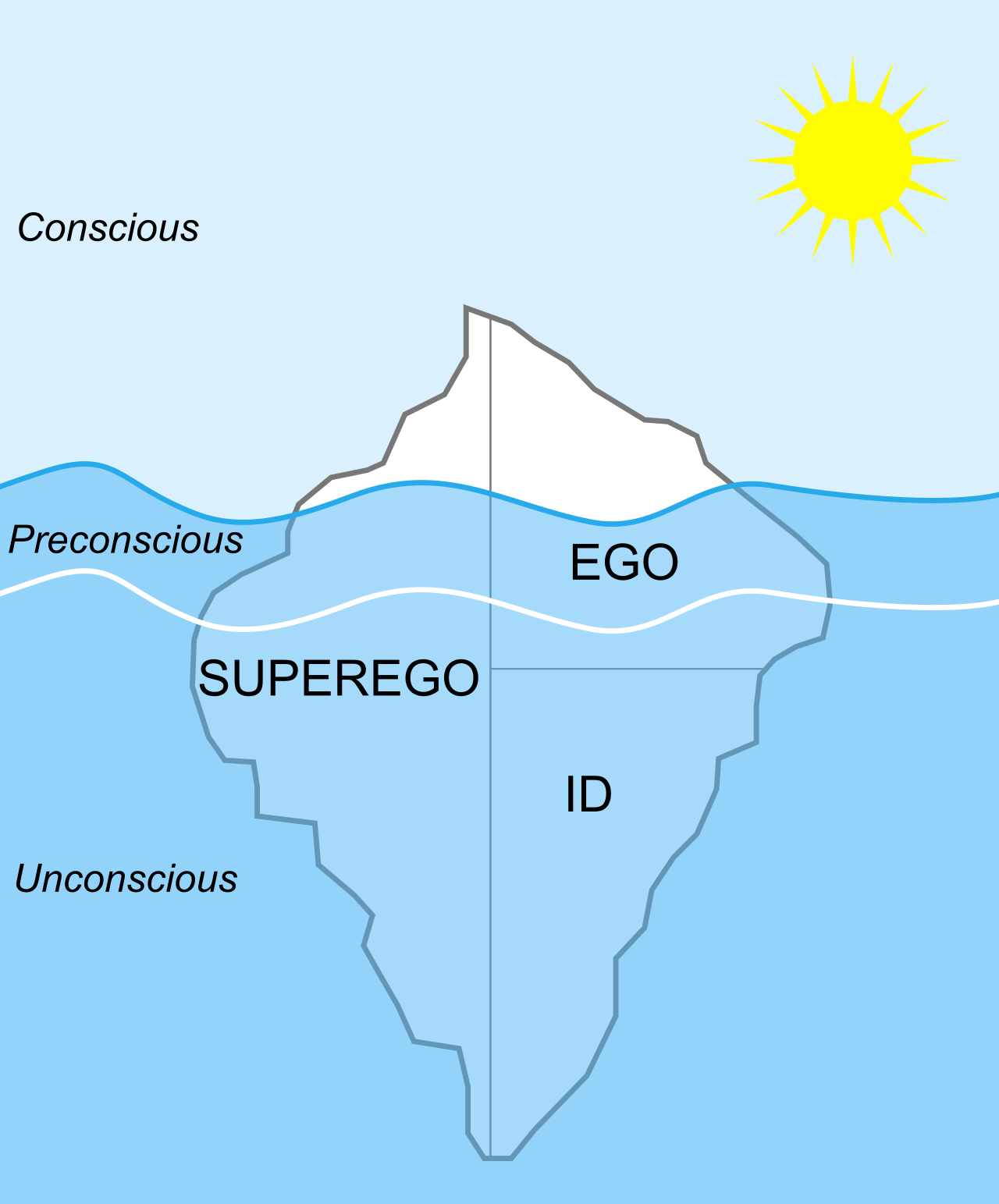
Drawing on clinical psychiatry, psychoanalytic criticism applies the psychological theories of Sigmund Freud to literature. Instead of looking at sociological power, psychoanalytic critics analyze the unconscious desires of literary characters. They look for repressed trauma, Oedipal complexes, and explore the presence of the id, ego, and superego in literary characters. (For instance, viewing Dr. Jekyll and Mr. Hyde as an allegory for the ego struggling to repress the id).
Archetypal Criticism
While Freud focused on the individual unconscious mind, the psychologist Carl Jung looked at the collective. Carl Jung's concept of the collective unconscious heavily influenced archetypal literary criticism. According to Jung, all human beings inherit a shared reservoir of latent memories and symbols.
Drawing on this, Archetypal criticism identifies recurring myths across different cultures in literature (like the great flood or the dying god) and identifies recurring character types across different cultures in literature (the trickster, the wise old man, the earth mother). Northrop Frye was a prominent theorist in the field of archetypal criticism, arguing that these universal patterns form the true grammar of human imagination.
Ecocriticism
As modern environmental concerns grew, literary theory adapted. Ecocriticism examines the relationship between literature and the physical environment. Moving beyond humans talking to other humans, ecocritical analysis focuses on representations of nature within literary texts, investigating whether a text treats the earth as a resource to be conquered or a web of life to which humanity belongs.
When you step into the ELA classroom, you are teaching students how to think critically about the information they consume. By understanding New Criticism, you teach them to spot evidence. Through Reader-Response, you validate their lived experiences. Through Marxist, Feminist, and Critical Race theories, you teach them to recognize implicit bias and power dynamics. Literary theory is not just for university seminars; it is the blueprint for creating critical, engaged citizens.