Research-Based Strategies for Reading Instruction
Not sure you’re ready?
Take the ~3-minute readiness diagnostic and see where you stand.
Handing a high school student a complex, centuries-old text and expecting immediate comprehension is like handing a novice a pile of bricks and expecting them to build a cathedral. The materials are there, but the architectural framework is missing. When a student stares blankly at a page of literature or a dense scientific article, it is rarely a failure of intelligence. It is a failure of cognitive mechanics. Reading is not the passive reception of ideas; it is a highly active, constructive process where symbols on a page are decoded, translated into language, and systematically integrated into the mind’s existing architecture. To teach reading effectively, we must first understand the invisible machinery of the mind, explicitly modeling how expert readers navigate difficulty, resolve confusion, and construct meaning from raw text.

The human brain does not store information in isolated silos. It organizes knowledge into vast, interconnected webs. This is the foundation of schema theory, which suggests that reading comprehension depends on integrating new text information with existing knowledge structures.
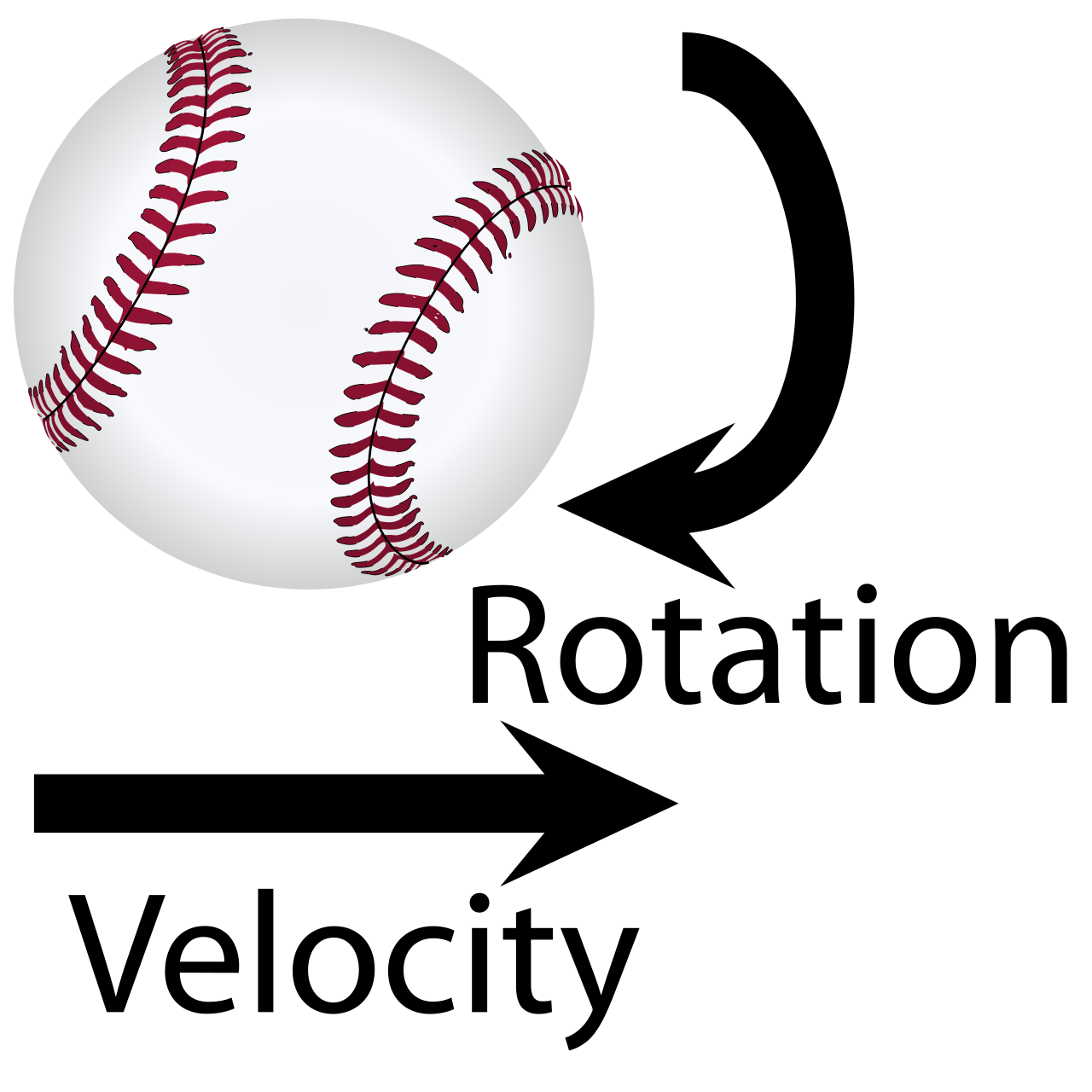
Imagine asking a student to read a dense informational article about the physics of a curveball. A student who has played baseball will effortlessly grasp the text, not necessarily because they are a superior reader, but because they have a robust schema to attach the new information to. Therefore, activating prior knowledge is a non-negotiable first step in instruction. It helps students connect unfamiliar text information to their existing cognitive schemas. If the schema does not exist, the teacher must build it before the reading begins.
We achieve this through specific, highly effective pre-reading strategies:
- The Anticipation Guide: An anticipation guide is a pre-reading strategy containing statements about the upcoming text's central themes. Before opening a novel like Fahrenheit 451, you might provide statements like, "Technology isolates people rather than connecting them," and ask students to agree or disagree. Anticipation guides stimulate student interest and activate background knowledge before reading begins, priming the cognitive engine.
- The K-W-L Chart: A K-W-L chart is a graphic organizer used to activate prior knowledge before reading. It provides a highly visible map of the learning process.
- The K section of a K-W-L chart records what students already know about a specific topic.
- The W section of a K-W-L chart records what students want to learn about a specific topic.
- Finally, returned to at the end of the lesson, the L section of a K-W-L chart records what students have learned after reading about a specific topic.
Expert readers constantly talk to themselves while reading. They pause, question, visualize, and re-evaluate. This is metacognition—which in reading involves a student actively monitoring their own thinking processes. Novice readers, however, often plow through text blindly, unaware that their comprehension broke down three pages ago.
The National Reading Panel identified explicit comprehension strategy instruction as essential for achieving reading proficiency. To teach these mental habits, reading comprehension strategies must be explicitly modeled by the instructor before students can successfully apply them independently.
This requires explicit strategy instruction, which demands a gradual release of responsibility from the teacher to the student. The gradual release of responsibility model follows a strict, highly effective sequence: teacher modeling, guided practice, and independent practice. ("I do, we do, you do.")
Think-Alouds and Self-Monitoring
During the "teacher modeling" phase, the most powerful tool is the think-aloud. A think-aloud is an instructional strategy where a teacher verbalizes their internal thought processes while reading a text. By reading a passage aloud and interrupting yourself to say, "Wait, I thought the narrator was reliable, but this sentence makes me question his motives...", think-alouds provide students with an explicit model of metacognitive monitoring.
Once students see the internal mechanics of expert reading, they can begin self-monitoring, which requires readers to constantly evaluate their own comprehension during the reading process.
Fix-Up Strategies
When self-monitoring reveals a breakdown in understanding, the reader must deploy fix-up strategies. These are specific techniques readers use upon realizing their reading comprehension has failed. Explicitly teaching these prevents the fatalist "I just don't get it" response.
Two critical fix-up strategies include:
- Rereading a confusing sentence: This is a fundamental fix-up strategy. Often, the brain just needs a second pass to parse complex syntax.
- Adjusting reading speed based on text difficulty: This is a recognized fix-up strategy where readers learn to slow down for dense philosophical paragraphs and speed up through straightforward narrative exposition.
Words are the raw material of thought. The National Reading Panel identified vocabulary instruction as an essential, foundational component of reading comprehension. We cannot rely on students absorbing vocabulary purely by osmosis; explicit vocabulary instruction involves directly teaching specific word meanings to students.
How do we unlock meaning for complex terms?
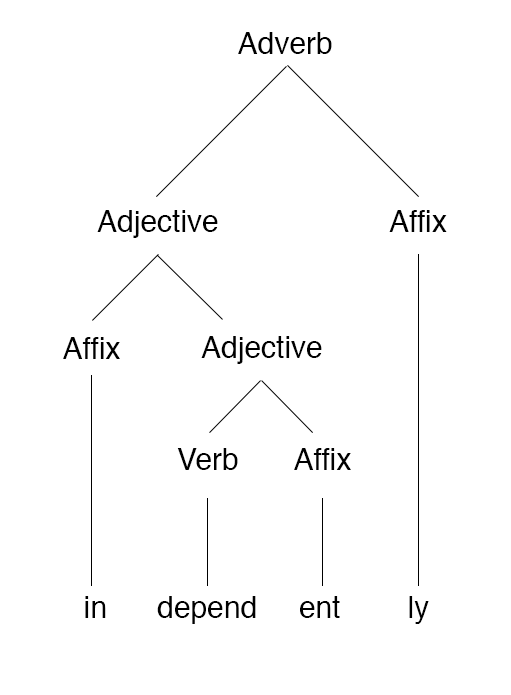
Morphological Analysis: This involves breaking down words into prefixes, roots, and suffixes to determine their meaning. For example, recognizing the root dict (to say) in contradict, dictate, and predict. Because scientific and academic terminologies are heavily derived from Greek and Latin roots, morphological analysis is a highly effective strategy for deciphering domain-specific vocabulary in scientific texts.
Context Clues: Often, authors leave breadcrumbs. Context clues are the surrounding words or phrases that provide hints about an unfamiliar word's meaning.
To cement newly acquired vocabulary, we rely on spatial and relational organization:
- The Frayer Model: This is a four-square graphic organizer specifically used for vocabulary building. The Frayer Model requires students to provide a definition, characteristics, examples, and non-examples of a target word. It forces deep, multi-faceted conceptual understanding rather than rote memorization.
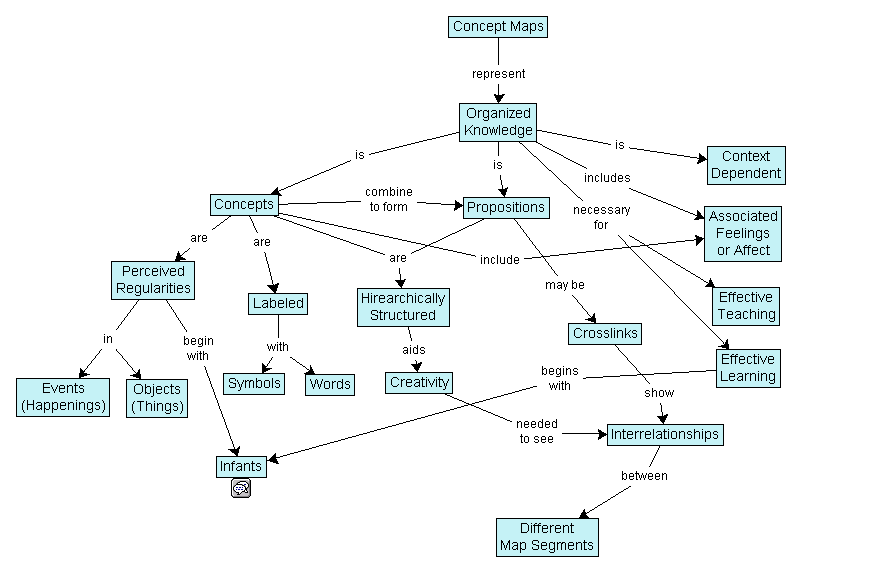
- Semantic Mapping: This visually displays the categorical relationships among different words, helping students see how a word like "democracy" connects to "voting," "representation," and "citizenship."
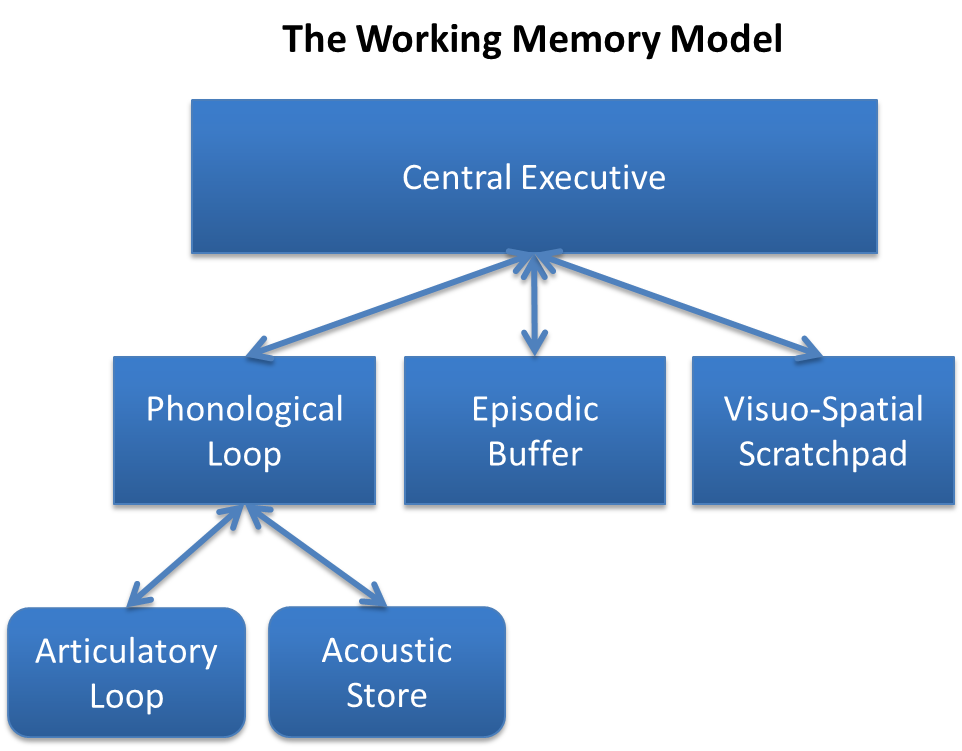
Consider the student's working memory as a small, brightly lit desk. If the student spends all their mental energy just trying to pronounce the words, the desk is completely covered. There is absolutely no room left to understand what the words mean.
This is why poor reading fluency significantly impairs reading comprehension by overwhelming a student's working memory.
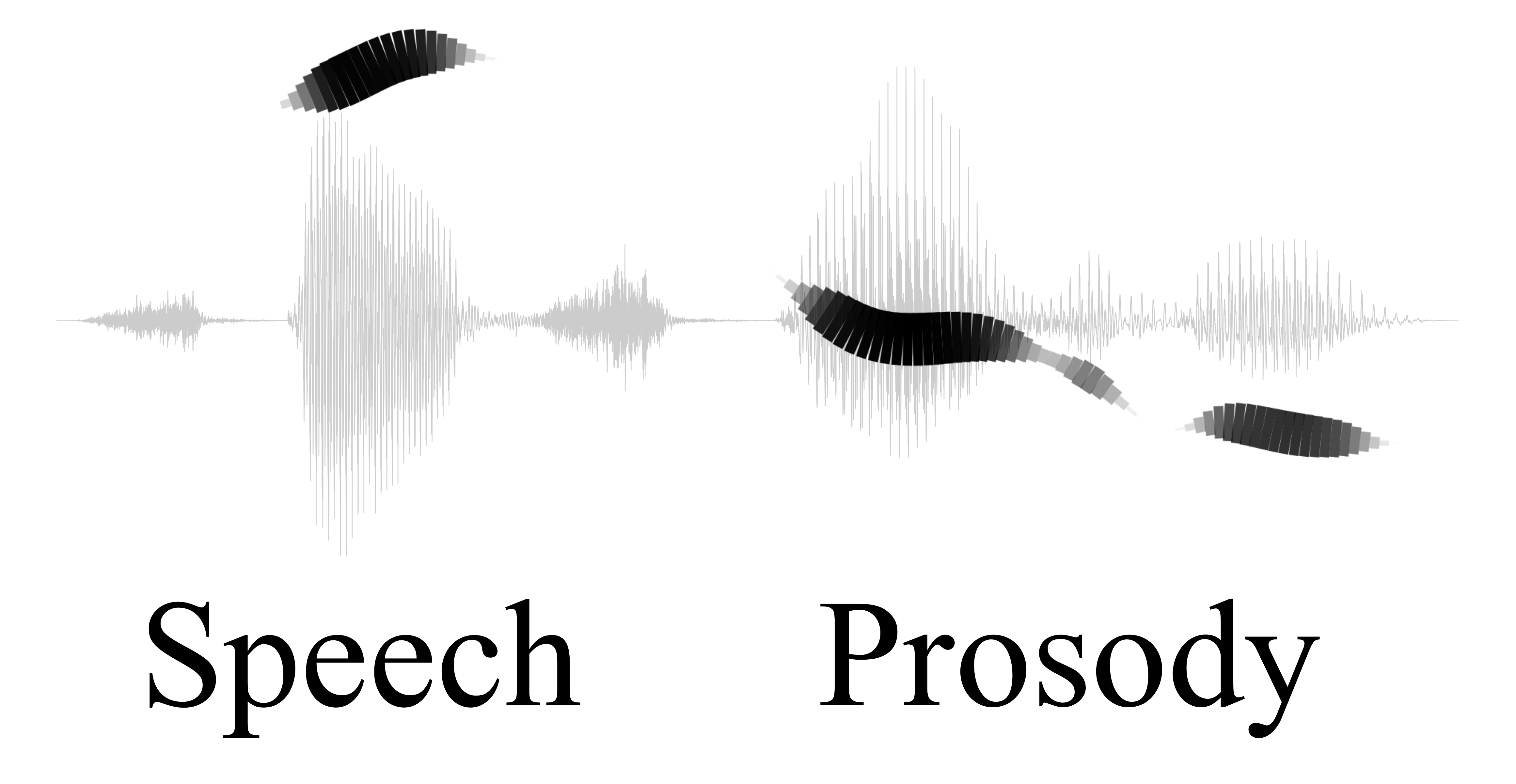
Reading fluency consists of the three distinct components of accuracy, rate, and prosody:
- Accuracy: Decoding words correctly.
- Rate: Reading at a conversational, efficient speed.
- Prosody: This refers to reading aloud with appropriate expression, intonation, and phrasing. (A robot can read fast and accurately, but only a comprehending reader uses prosody).
To build fluency, we use targeted auditory and repetitive strategies:
- Choral Reading: This involves students reading a passage aloud in unison with the classroom teacher. Choral reading provides struggling readers with an immediate auditory model of fluent reading, allowing them to participate safely while mimicking the teacher's prosody.
- Repeated Reading: This is an instructional strategy requiring a student to read the same text multiple times. Repeated reading builds reading rate and increases word recognition automaticity, gradually clearing space on that "working memory desk" for actual comprehension.
Once the schema is built and the vocabulary is primed, students must interact with the text. We structure this interaction through precise frameworks.
Reciprocal Teaching
Reciprocal teaching is an instructional activity involving a structured dialogue between teachers and students. It transforms passive reading into a dynamic, collaborative investigation. Reciprocal teaching relies on the four specific strategies of summarizing, questioning, clarifying, and predicting:
| Strategy | Cognitive Function |
|---|---|
| Predicting | Requires students to use textual clues to hypothesize about upcoming events or information in the reading. |
| Clarifying | Involves identifying confusing words or concepts and finding ways to understand them. |
| Questioning | Generating questions during reading helps students focus on main ideas and verify their own understanding. |
| Summarizing | Requires students to identify the most important information in a text, filtering out the noise. |
The Question-Answer Relationship (QAR)
When students struggle to answer comprehension questions, it is often because they do not understand where the answer comes from. The Question-Answer Relationship is a strategy designed to help students understand different types of reading comprehension questions.
The Question-Answer Relationship framework categorizes questions into Right There, Think and Search, Author and You, and On My Own:
- Right There questions require students to find literal answers explicitly stated in a single sentence of the text.
- Think and Search questions require students to synthesize information from multiple different parts of the text.
- Author and You questions require students to combine their personal prior knowledge with information provided by the author to infer an answer.
- On My Own questions rely entirely on the student's prior knowledge, using the text merely as a conceptual springboard.
Frameworks for Complex Texts
When facing rigorous literature or dense nonfiction, students need structural lifelines. Graphic organizers provide a visual framework to help students comprehend complex organizational structures in texts (such as cause/effect or compare/contrast). Furthermore, dual coding theory posits that readers understand text better when exposed to both verbal and visual representations of the information.
For highly dense informational texts, the SQ3R reading method stands for Survey, Question, Read, Recite, and Review. The SQ3R method provides a highly structured approach to comprehending dense informational texts, forcing the reader to constantly interact with the material rather than passively scanning it.
For literature, close reading involves multiple focused encounters with a complex text. Instead of reading for mere plot, close reading focuses heavily on analyzing text structure, word choice, and the author's underlying purpose. To facilitate this, we teach text annotation, which requires readers to actively engage with the text by writing analytical notes directly in the margins. This marginalia helps students track character development and trace thematic elements during the reading of a novel, creating a permanent record of their thinking.
If an assignment is incredibly lengthy, teachers can utilize the jigsaw method. The jigsaw method is a cooperative learning strategy used for managing lengthy reading assignments. In the jigsaw method, individual students master one specific segment of a text and then teach that segment to their peers, enforcing accountability and deeper comprehension through the act of teaching.
Finally, all these strategies hinge on putting the right text in the hands of the right student. If the text is vastly too difficult, no amount of strategy will save the lesson. If it is too easy, cognitive growth stagnates.
Matching readers to appropriate texts requires balancing quantitative measures, qualitative measures, and reader-task considerations.
- Quantitative Measures: These mathematically analyze sentence length and word frequency. The Lexile framework is a quantitative measure used to determine the objective complexity of a text. A high Lexile score usually means long sentences and rare, multisyllabic words.
- Qualitative Measures: A computer cannot understand irony, non-linear timelines, or mature themes. Qualitative measures of text complexity analyze levels of meaning, text structure, and language conventionality. (For example, Hemingway's The Old Man and the Sea has a very low quantitative Lexile score due to short sentences, but a high qualitative complexity due to deep thematic resonance).
In a diverse ELA classroom, you will have students with vastly different reading levels. To maintain a unified intellectual community, teachers use tiered texts. Tiered texts involve assigning readings of varying difficulty levels focused on the exact same core topic. By providing different entry points to the same concepts, tiered texts allow students at vastly different reading levels to participate equitably in the same thematic classroom discussion.
Teaching reading is not simply assigning chapters and asking questions. It is the deliberate, rigorous engineering of the human mind, bridging the gap between symbols on a page and profound understanding.