Rhetorical Strategies, Purpose, and Perspective
Not sure you’re ready?
Take the ~3-minute readiness diagnostic and see where you stand.
Language is not a transparent window into reality; it is a meticulously crafted lens. When a student reads a historical primary source, an editorial, or a classic novel, they are not merely absorbing a sequence of facts. They are being guided, maneuvered, and sometimes subtly manipulated by a writer wielding an arsenal of structural and linguistic tools. To master and teach English Language Arts is to train students to dismantle this machinery—to recognize not just what is being said, but precisely how the text was engineered to make the audience feel, think, or act.
As an educator analyzing literature and informational texts, your task is to reverse-engineer the text. You must look at a paragraph and see the load-bearing walls. We do this by mastering rhetoric, universally defined as the art of effective or persuasive speaking or writing.
This guide strips down the mechanics of rhetorical strategies, purpose, and perspective. We will examine how writers assemble these components, why they work on the human brain, and how you will be expected to evaluate them on your content knowledge exam.
Before we analyze the specific bolts and gears of a text, we must understand the engine driving it. Every piece of writing exists to perform a job.
An author's purpose is the primary reason the author creates a text.
Common authorial purposes include persuading, informing, entertaining, and explaining. If you cannot identify the purpose, you cannot evaluate the text's efficacy.
Simultaneously, the text is filtered through a specific lens. An author's point of view represents the author's personal attitude or perspective on a subject. An author reveals their point of view not just through overt declarations, but through the granular choices they make on the page: diction, tone, and the selection of details. When you ask a student to determine point of view, you are asking them to weigh the adjectives, to gauge the warmth or hostility of the tone, and to notice which facts the author included—and critically, which facts they chose to omit.
When this selection of details becomes entirely lopsided, we enter the territory of bias. Bias occurs when an author's point of view heavily favors one side of an argument over another, often at the expense of objectivity.
When an author’s purpose is to persuade, they rely on three foundational pillars. On your exam, you will frequently be asked to identify which appeal is operating in a specific excerpt and why the author chose to use it.
- Ethos is a rhetorical appeal based on the author's credibility, character, or ethical standing. In practice, ethos establishes the author as a trustworthy source on the subject being discussed. When an environmental scientist begins an essay by mentioning their decades of fieldwork, they are front-loading their ethos so the reader accepts the subsequent data.
- Logos is a rhetorical appeal relying on logic, reasoning, and evidence to persuade an audience. Functionally, logos builds a foundational argument that makes the author's perspective appear as an objective truth. It is the deployment of statistics, historical parallels, and if-then rationalities.
- Pathos is a rhetorical appeal designed to evoke an emotional response from the audience. Fear, patriotism, pity, and anger are potent motivators. Pathos supports an author's purpose by aligning the audience's emotions with the author's viewpoint, ensuring that the reader is not just intellectually convinced, but emotionally invested.

Sometimes, the most effective way to convey a point of view is to say the exact opposite of what you mean, or to construct a narrative reality that collapses in on itself.
Satire is a literary genre that uses humor, irony, exaggeration, or ridicule to expose societal flaws. Satire is never merely for laughs; it is a weaponized form of critique. The primary purpose of satire is to provoke change or reform by criticizing human foolishness or vices. Authors use satirical exaggeration to emphasize the absurdity of an opposing viewpoint, inflating a flawed argument until its structural weaknesses are visible to everyone.
Irony is the engine that drives most satire, and it manifests in three primary forms:
| Type of Irony | Mechanism | Application in Text |
|---|---|---|
| Verbal Irony | Occurs when a speaker says the opposite of what they actually mean. | Authors employ verbal irony to subtly mock an opposing argument without direct confrontation. |
| Situational Irony | Occurs when the actual outcome of an event drastically differs from the expected outcome. | Exposes the unpredictability of life or the folly of human planning. |
| Dramatic Irony | Occurs when the audience possesses knowledge that the characters in a narrative lack. | Builds tension or tragedy (e.g., we know Juliet is sleeping, but Romeo believes she is dead). |

It is crucial to distinguish verbal irony from its most aggressive cousin. Sarcasm is a harsh, biting form of verbal irony intended to mock or convey contempt. While verbal irony can be gentle or purely observational, sarcasm is inherently critical.
Writers manipulate the scale of their subjects to force the reader to see them differently.
Hyperbole is a figure of speech utilizing extreme exaggeration to make a point or create emphasis. Naturally, hyperbolic statements are not meant to be interpreted literally by the reader. If a student says their backpack weighs a ton, correcting their understanding of imperial measurements misses the point. The rhetorical function is paramount: the intentional use of hyperbole signals strong emotional involvement by the author in the subject matter. It is a flashing light indicating where the author's passions lie.
Conversely, we have the power of shrinking a concept down. Understatement is a rhetorical device that intentionally minimizes the significance or severity of a situation. Why would an author do this? Often, understatement can create an ironic effect by drawing attention to the magnitude of a completely ignored issue. By discussing a catastrophe as if it were a minor inconvenience, the author forces the reader to supply the missing outrage.
A highly specific, highly testable form of understatement is litotes. Litotes is a specific form of understatement that expresses a positive statement by negating its opposite. For example, an example of litotes is using the phrase "not bad" to mean "good," or saying someone is "not unfamiliar" with a topic to imply they are an expert. It forces the brain to process a double negative, creating a distinct, restrained rhetorical tone.
The human brain is wired to notice contrast. Authors exploit this by placing incompatible ideas next to each other to clarify their perspective.
- Juxtaposition is the placement of two contrasting elements close together to highlight their differences. In persuasive texts, juxtaposition supports an author's purpose by forcing the reader to compare a preferred concept against an undesirable one. Think of a politician describing a decaying, abandoned factory right before describing a bustling, newly funded tech hub.
- Antithesis is a refined, highly structured form of juxtaposition. Antithesis involves the juxtaposition of contrasting ideas in balanced or parallel words, phrases, or grammatical structures. ("It was the best of times, it was the worst of times.")
- Paradox is a seemingly self-contradictory statement that reveals a latent truth upon closer examination. (e.g., "I must be cruel to be kind.") It forces the reader to pause and decode the underlying logic.
- An oxymoron is a microscopic paradox. It is a figure of speech pairing two contradictory terms side-by-side for rhetorical effect, such as "deafening silence" or "jumbo shrimp."

An author's point of view is also communicated through the pacing and rhythm of their sentences. Repetition and questioning are not just stylistic flourishes; they are structural commands given to the reader.
A rhetorical question is a question asked solely to produce an effect or make an assertion. Crucially, a rhetorical question does not expect or require a reply from the audience. Its function is navigational: rhetorical questions guide the reader toward the author's perspective by implying an obvious answer. When Patrick Henry asks, "Is life so dear, or peace so sweet, as to be purchased at the price of chains and slavery?", he is not polling the room. He is fencing the audience into his point of view.
When an author wants to hammer a concept into the audience's memory, they turn to structured repetition:
- Anaphora is the deliberate repetition of the first part of the sentence in order to achieve an artistic effect. (e.g., We shall fight on the beaches, we shall fight on the landing grounds...)
- Epistrophe is the inverse: it is the repetition of the same word or phrase at the end of successive clauses or sentences. (e.g., "...government of the people, by the people, for the people.")
- Chiasmus is a rhetorical device in which two or more clauses are balanced against each other by the reversal of their structures. (e.g., "Ask not what your country can do for you; ask what you can do for your country.")
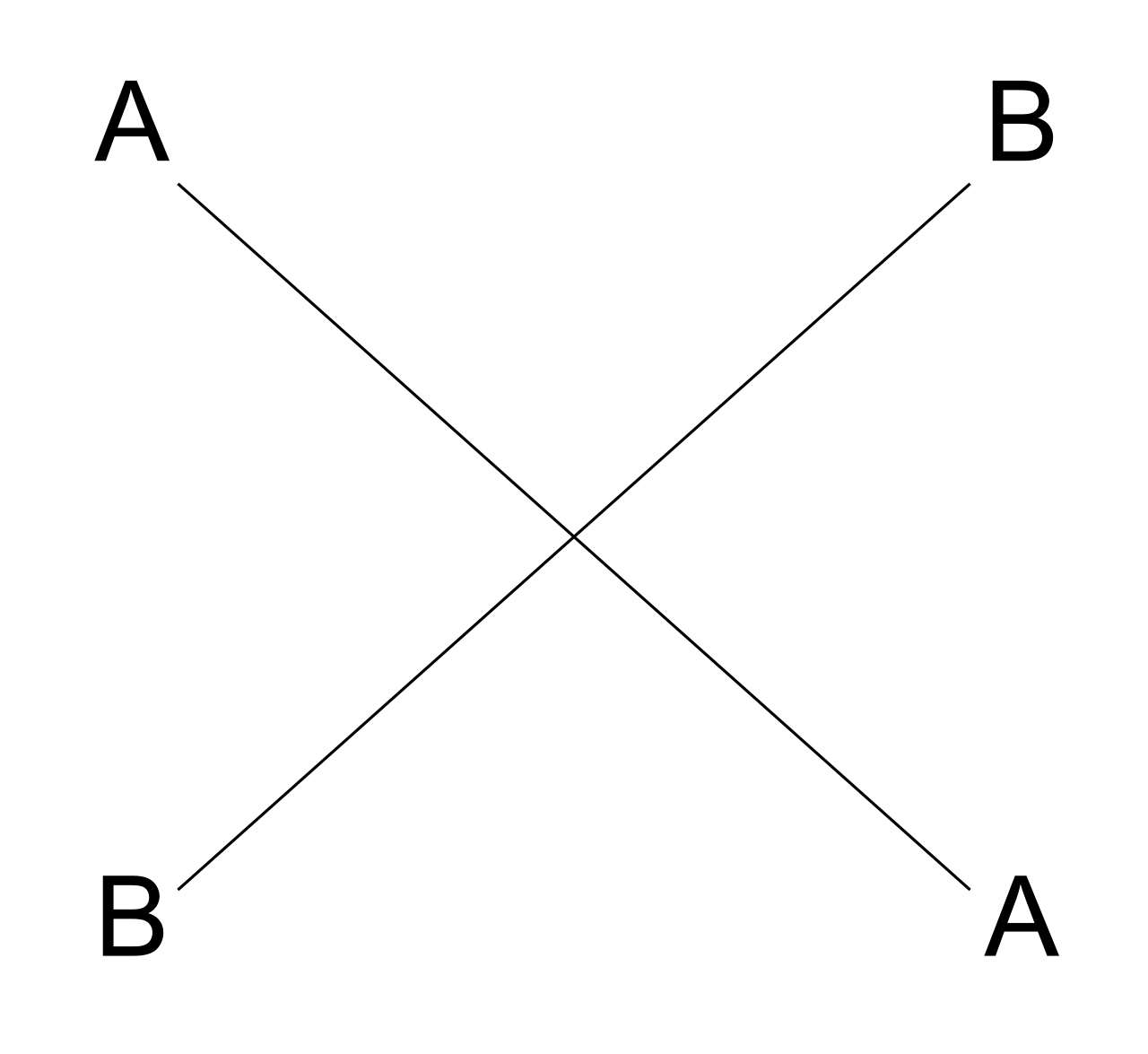
Language often operates by proxy. Authors swap words and references to reframe how a reader perceives an idea.
Euphemism is the substitution of an agreeable or inoffensive expression for one that may offend or suggest something unpleasant (e.g., "passed away" instead of "died"). In persuasive contexts, authors utilize euphemisms to soften the impact of controversial topics within a persuasive argument, removing the emotional friction that might cause an audience to reject their premise.
Similarly, we have devices that substitute parts and associations for the whole:
- Metonymy is a figure of speech that replaces the name of a thing with the name of something else with which it is closely associated. (e.g., "The White House issued a statement," where the building is substituted for the administration).
- Synecdoche is a rhetorical device in which a part of something represents the whole. (e.g., "All hands on deck," where the hands represent the sailors).

Finally, authors connect their texts to the broader universe of human knowledge to enhance their point of view.
- An allusion is a brief and indirect reference to a person, place, thing, or idea of historical, cultural, literary, or political significance. By alluding to the Garden of Eden or the Titanic, an author imports the entire emotional and historical weight of those subjects into their own text instantly.
- Apostrophe is a rhetorical figure in which the speaker addresses an absent person, an abstract idea, or an inanimate object. When a poet cries out, "O Death, where is thy sting?", they are using apostrophe to personify and confront an abstraction, elevating the emotional intensity (pathos) of the passage.
When you sit for your Content Knowledge exam—and more importantly, when you stand in front of a classroom of secondary students—you must remember that text is an engineered product. Every instance of hyperbole, every rhetorical question, and every subtle anaphora was chosen to execute a specific function. By mastering these definitions and understanding the underlying psychology of why authors use them, you gain the ability to dismantle any text, revealing the raw mechanics of human persuasion underneath.