Methods of Appeal and Persuasion
Not sure you’re ready?
Take the ~3-minute readiness diagnostic and see where you stand.
Persuasion is the mechanics of moving a human mind from one coordinate of belief to another. Long before modern psychology or neurobiology, the ancient Greek philosopher Aristotle codified the three primary modes of persuasion known as ethos, pathos, and logos. He understood that human beings are not strictly rational calculating machines; rather, we filter arguments through the credibility of the speaker, the emotional resonance of the message, and the structural integrity of the logic. For a scholar and educator of the English language, analyzing methods of appeal is not merely an exercise in vocabulary. It is the practice of decoding the invisible architecture of influence that governs historical rhetoric, contemporary media, and the written arguments students construct daily.

To evaluate how a text attempts to persuade, we must first isolate its foundational pillars. Aristotle’s triad forms the baseline of all rhetorical analysis.
- Ethos is a rhetorical appeal that relies on establishing the speaker's credibility, authority, or moral character. When Martin Luther King Jr. references his role as a clergyman or cites constitutional architects, he is building ethos. He is answering the audience's implicit question: Why should I listen to you?
- Pathos is a rhetorical appeal designed to evoke a specific emotional response from the audience to influence decision-making. Whether it is a charity advertisement invoking pity or a political speech inciting outrage, pathos bypasses the analytical mind to strike at human vulnerability and empathy.
- Logos is a rhetorical appeal that utilizes reason, structured arguments, and factual evidence to persuade an audience. It is the domain of statistics, historical precedents, and logical syllogisms.

However, possessing the right appeal is insufficient without the correct environment. Kairos is a rhetorical concept referring to the timeliness or opportune moment for delivering a persuasive message. A brilliant argument against censorship carries infinitely more weight immediately following a controversial book ban than it does in a vacuum. Kairos is the "where and when" that amplifies the "what."

Evaluating the Effectiveness of an Appeal
Identifying an appeal is merely observation; evaluating its effectiveness requires critical judgment.
The Metric of Effectiveness The effectiveness of a persuasive text is evaluated by analyzing the author's ability to align rhetorical appeals with the target audience's core values.
An argument built on the value of rugged individualism will fail spectacularly before an audience that prizes collectivism, no matter how logically sound it is.
When analyzing logos, we must stress-test the evidence. An effective logical appeal requires evidence that is directly relevant to the core claim, meaning the data actually addresses the specific variable being debated. Furthermore, an effective logical appeal requires evidence that is sufficient in quantity to support the core claim. A single localized statistic cannot bear the weight of a national policy proposal.
The precise vocabulary an author chooses acts as a dial, tuning the message to the frequency of a highly specific demographic.
The Dial of Complexity: Technical vs. Non-Technical Language
The complexity of an author's lexicon is a deliberate strategic choice based on audience proximity to the topic.
- Technical language consists of specialized vocabulary or jargon specific to a particular profession or field of study.
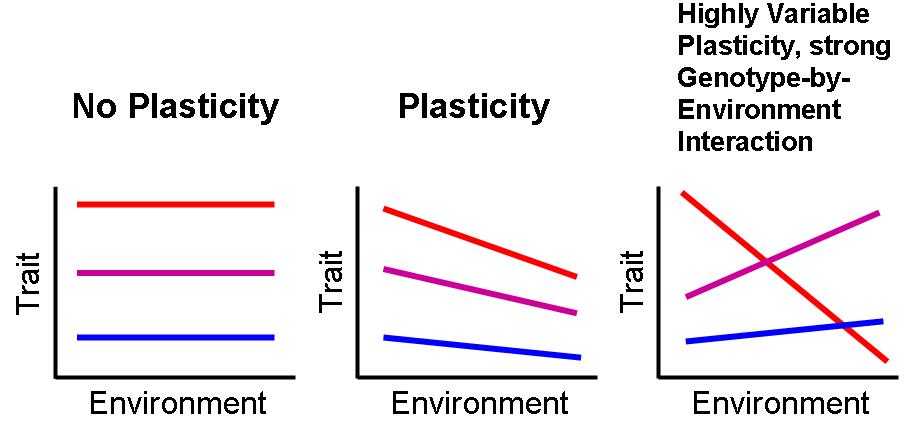
- Using technical language helps establish a speaker's expertise when addressing an audience composed of industry peers. When a scientist uses terms like "phenotypic plasticity" at a conference, they are signaling in-group competence.
- However, this dial can be turned too far. Excessive technical language can alienate a non-expert audience by making an argument overly complex or inaccessible.
- Conversely, non-technical language utilizes common vocabulary to ensure a persuasive message is easily understood by a general audience. When an astrophysicist explains planetary orbits using the analogy of a spinning ice skater, they are translating technical mechanics into non-technical language to maintain audience engagement.
Emotional Framing and Reflection
Authors routinely manipulate semantics and syntax to bypass logical defenses.
- Loaded language involves using words with strongly positive or strongly negative connotations to manipulate an audience's emotional response. Calling a proposed tax a "bureaucratic shackle" rather than a "revenue measure" colors the audience's perception before the actual argument even begins.
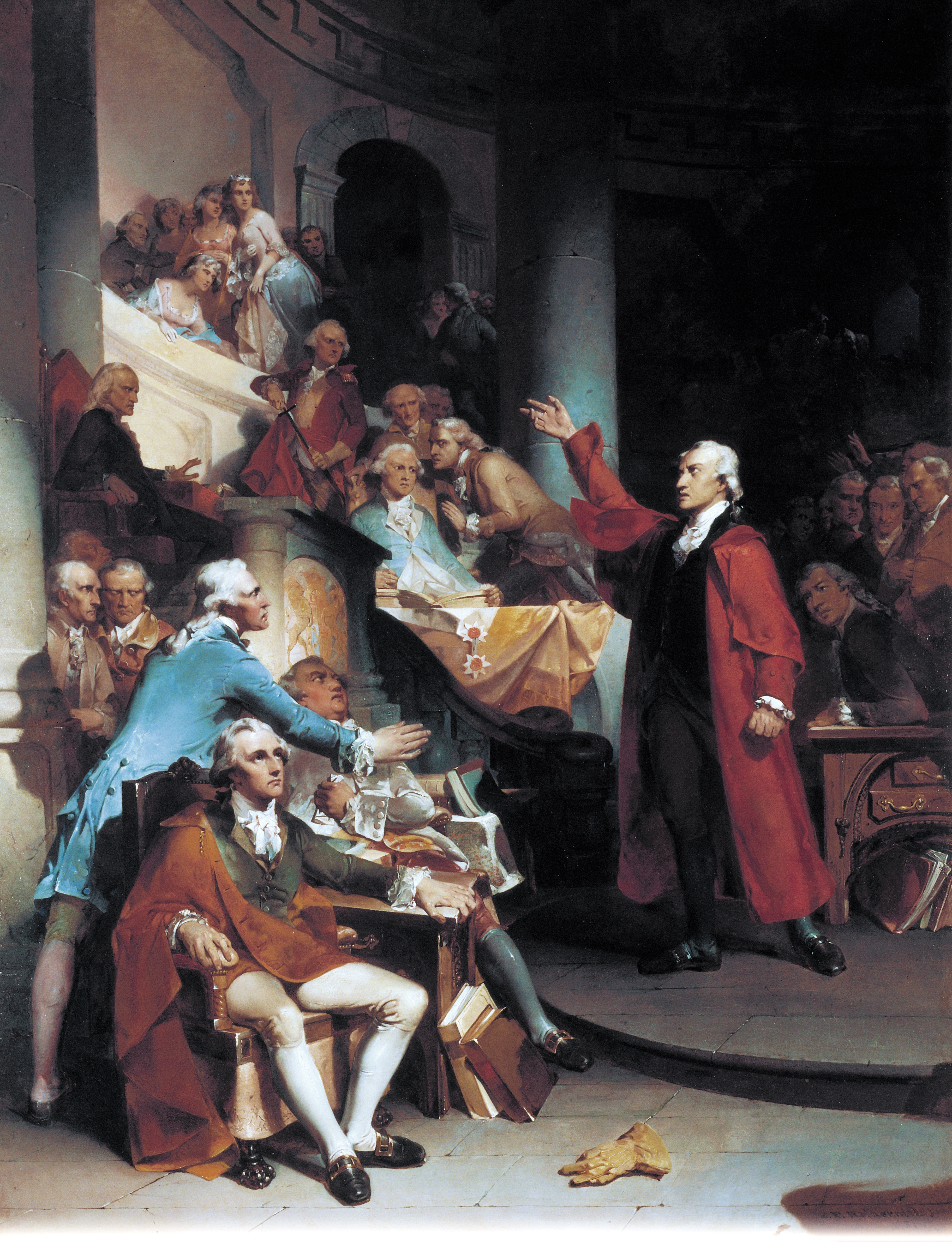
- Similarly, authors use rhetorical questions to prompt audience reflection on a specific point rather than to elicit a literal spoken answer. When Patrick Henry asked, "Is life so dear, or peace so sweet, as to be purchased at the price of chains and slavery?" he was not taking a poll; he was cornering his audience into an inescapable psychological conclusion.
Authors frequently deploy specific rhetorical heuristics—mental shortcuts designed to bypass rigorous logical processing by appealing to societal instincts.
| Technique | Mechanism | Example in Practice |
|---|---|---|
| Expert Opinion | A persuasive technique where an author cites a recognized authority to strengthen an argument's credibility. | A journalist citing a Nobel-laureate climatologist to support an argument about sea-level rise. |
| Testimonial | A persuasive technique in which a person endorses a product, idea, or candidate based on personal experience. | A local citizen speaking at a town hall about how a new zoning law personally improved their neighborhood. |
| Plain Folks | Attempts to persuade an audience by presenting the speaker as an ordinary, highly relatable person. | A billionaire politician wearing a flannel shirt and eating at a local diner to signal, "I understand your everyday struggles." |
| Snob Appeal | Aims to persuade an audience by suggesting that accepting an idea will elevate the audience's social status. | An advertisement implying that only individuals of refined intellect and high culture read a specific literary magazine. |
| Bandwagon | Attempts to persuade an audience by suggesting that a belief or action is highly popular. | "Over two million teachers have already switched to this curriculum—don't be left behind!" |

A logical fallacy is an illusion of reason. It is a flaw in the structural integrity of an argument that makes a claim appear sound when, upon closer inspection, the wiring is entirely faulty. Recognizing these fallacies is crucial for passage-based reasoning tasks.
The Fallacies of Generalization
Human beings naturally recognize patterns; we look at a few instances and attempt to create a rule. A generalization is a broad statement applied to an entire group based on specific examples or limited data points. Generalizations are necessary for basic reasoning, but they become fallacious when they lack rigor. A hasty generalization is a logical fallacy occurring when a conclusion is drawn from insufficient or unrepresentative evidence. If a student reads two difficult poems by Emily Dickinson and concludes, "All 19th-century poetry is impossibly cryptic," they have committed a hasty generalization.
The Fallacies of Diversion and Attack
When an arguer lacks sufficient evidence (logos), they frequently resort to attacking the opponent or changing the subject.
- An ad hominem fallacy occurs when an arguer attacks an opponent's personal character instead of addressing the opponent's actual argument. (e.g., "We cannot trust the senator's education plan because he is a known hypocrite.")
- A straw man fallacy involves deliberately misrepresenting an opponent's argument to make that argument easier to attack. If a school board member proposes delaying start times for sleep health, and an opponent counters with, "My colleague wants to coddle teenagers and eliminate all discipline in our schools," they have built a fragile "straw man" rather than engaging the actual proposal.
- A red herring is a logical fallacy used as a diversionary tactic to distract an audience from the original topic of discussion. If asked about a failing curriculum, an administrator might launch into a passionate speech about the importance of upgrading the football stadium—a complete change of subject masked as an answer.

The Fallacies of False Structure
Some fallacies manipulate the framework of reality to force an audience into a predetermined conclusion.
- The slippery slope fallacy asserts that a relatively small first step will inevitably trigger a chain of negative events. "If we allow students to use phones in the hallway, they will use them in class, cheating will skyrocket, and graduation rates will plummet."
- A false dilemma is a persuasive fallacy that incorrectly presents only two mutually exclusive options in a complex situation. "Either we cut funding to the arts, or the district goes bankrupt." This deliberately ignores a vast spectrum of alternative budget solutions.
- Appeal to tradition is a logical fallacy arguing that a practice is correct or superior simply because the practice has been done for a long time. "We have taught this specific novel to high school freshmen since 1975; therefore, it must remain in the curriculum." The duration of a practice does not inherently prove its ongoing validity.
Finally, evaluating the effectiveness of a text requires an understanding of the psychological environment in which the text operates. Persuasion does not occur in a sterile vacuum; it interacts directly with human bias.
The most potent of these is confirmation bias, which is the psychological tendency of an audience to favor information that aligns with preexisting beliefs. If a reader already holds a deep skepticism of standardized testing, they will readily accept a poorly sourced article criticizing the exams, while hyper-scrutinizing a peer-reviewed study defending them.

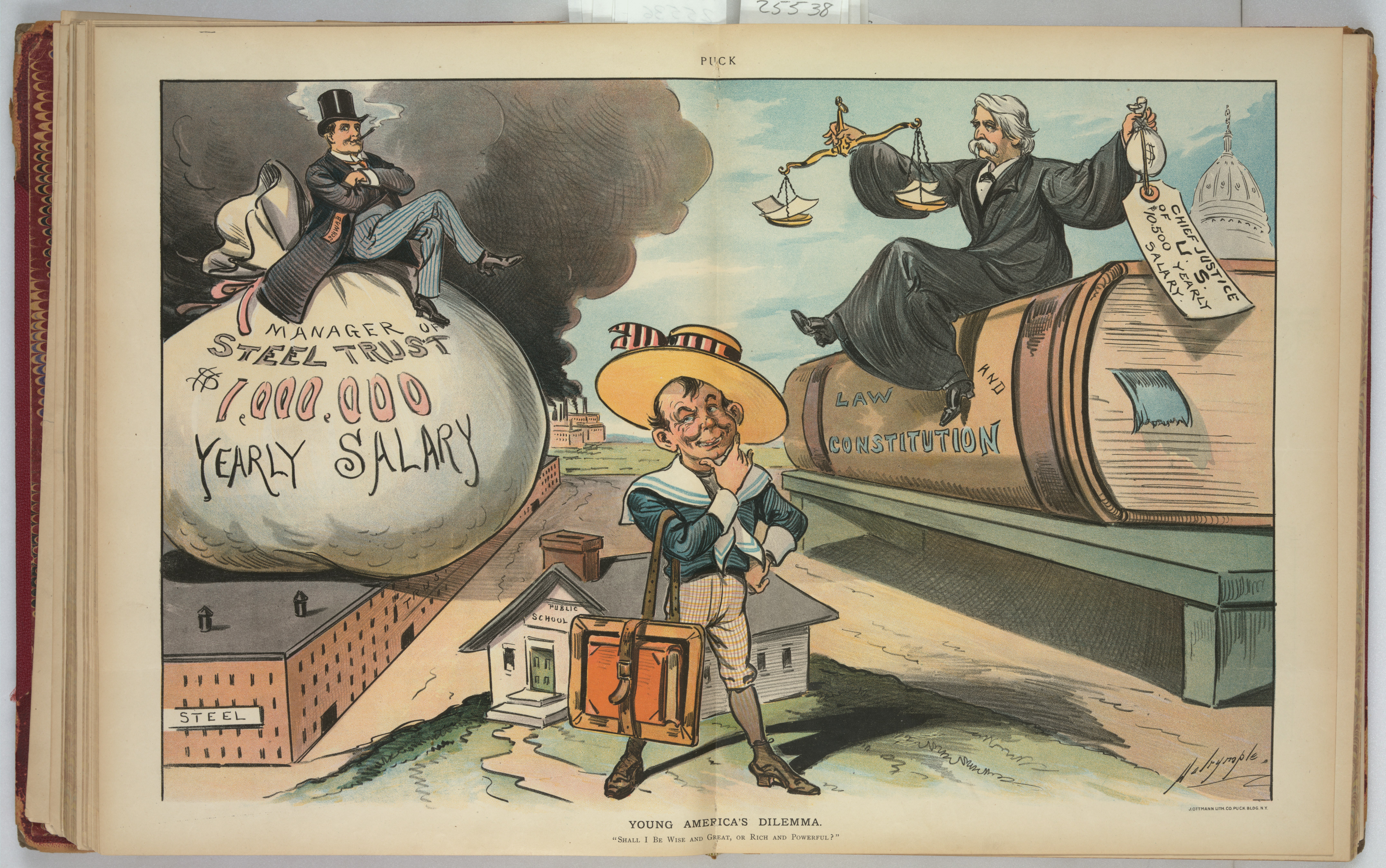
Because of this, evaluating an author's methods requires identifying any inherent biases that might compromise the objectivity of the presented evidence. An author is never entirely neutral. When evaluating an informational text, one must ask: Does the author have a financial, political, or deeply personal stake in this outcome? If so, the presence of inherent bias does not automatically invalidate their argument, but it drastically raises the burden of proof required for their logos to be deemed sufficient.
By mastering this taxonomy of appeals, vocabulary shifts, heuristic techniques, and fallacies, you possess the theoretical toolkit necessary to dissect any piece of persuasive rhetoric with clinical precision.