Effective Written Arguments
Not sure you’re ready?
Take the ~3-minute readiness diagnostic and see where you stand.
Imagine a seventh-grader marching into the principal’s office to demand a longer lunch period. They do not merely ask; they present a flurry of grievances, dramatic predictions about their midday stamina, and anecdotal tales of friends who simply cannot finish a sandwich in twenty minutes. Our job as English Language Arts educators is to take that raw, instinctual drive to persuade and formalize it. We teach students how to deconstruct and assemble an argument—a structured set of reasons provided to support a specific conclusion. To achieve this, we must examine the mechanics of logic, evidence, and rhetoric so precisely that we can evaluate exactly where a text stands strong, and where it collapses under its own weight.
For the Praxis 5047 exam, you are not just reading to comprehend; you are reading like an architect inspecting a foundation. You must assess how authors construct their arguments, whether their evidence can bear the load, and whether their reasoning is structurally sound.
Every piece of nonfiction text has a distinct mechanical purpose. Expository texts primarily seek to explain or inform readers about a specific topic. You can think of them as manuals or encyclopedias. Persuasive texts, however, operate with an agenda: they primarily seek to convince readers to adopt a specific viewpoint. In many cases, persuasive texts often urge readers to take a specific action, moving the audience from mere agreement to tangible behavioral change.
At the heart of any effective written argument lies the claim, which is an arguable statement presented as a fact. It is the engine that drives the essay. An effective written argument requires a clear and debatable central claim; if the premise is universally accepted (e.g., "Water is wet"), there is no argument to be made.
This central claim is established by the thesis statement, the anchor of the text. When analyzing middle school reading passages, you will find that thesis statements generally categorize into three specific variations:
- A claim of fact asserts that something is demonstrably true or false. (Example: "Extended screen time alters adolescent sleep patterns.")
- A claim of value asserts that something is fundamentally good or bad. (Example: "Standardized testing is a detrimental measure of student intelligence.")
- A claim of policy asserts that a specific course of action should be taken. (Example: "The school district must mandate physical education for all grades.")
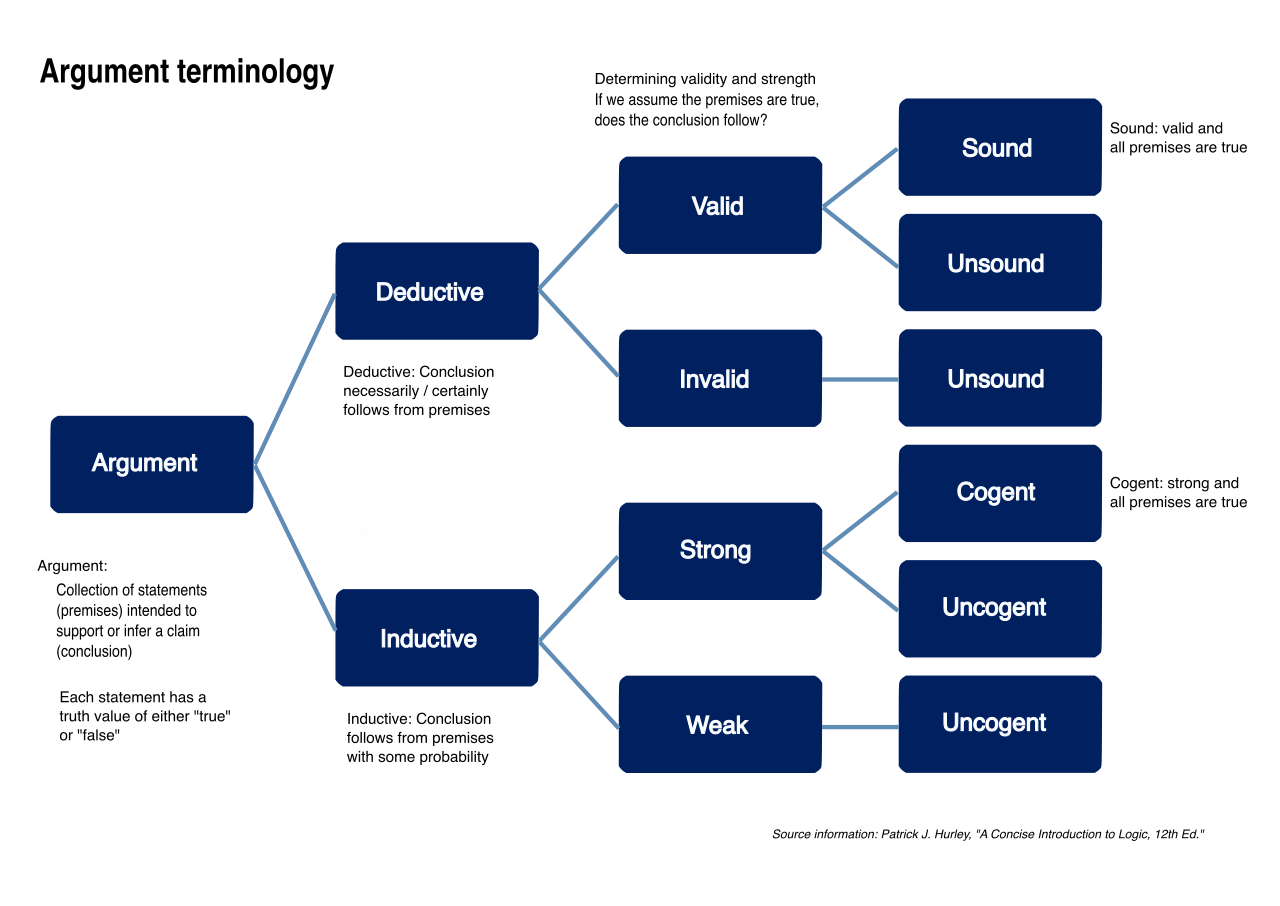
Once a claim is established, it must be defended. The transition from claim to conclusion relies on reasoning. In academia, we do not merely ask if an argument "makes sense." We measure it against the rigid criteria of validity and soundness.
Valid reasoning dictates that a conclusion must logically follow from the provided premises. Sound reasoning is a higher threshold: it requires both logically valid structures and demonstrably true premises.
An argument can be logically valid but entirely unsound if its starting premise is false. (For example: All middle schoolers are aliens. Timothy is a middle schooler. Therefore, Timothy is an alien. This is valid structure, but wholly unsound because the first premise is false.)
Human beings construct logical pathways using two primary modes of reasoning:
- Deductive reasoning moves from general rules to a specific conclusion. If the general rules are true, the specific conclusion is guaranteed to be true. It is a top-down approach.
- Inductive reasoning moves from specific observations to a broader generalization. It is a bottom-up approach. Because it relies on observing a limited sample to make a universal claim, inductive reasoning yields probabilistic conclusions and inherently does not guarantee absolute certainty.

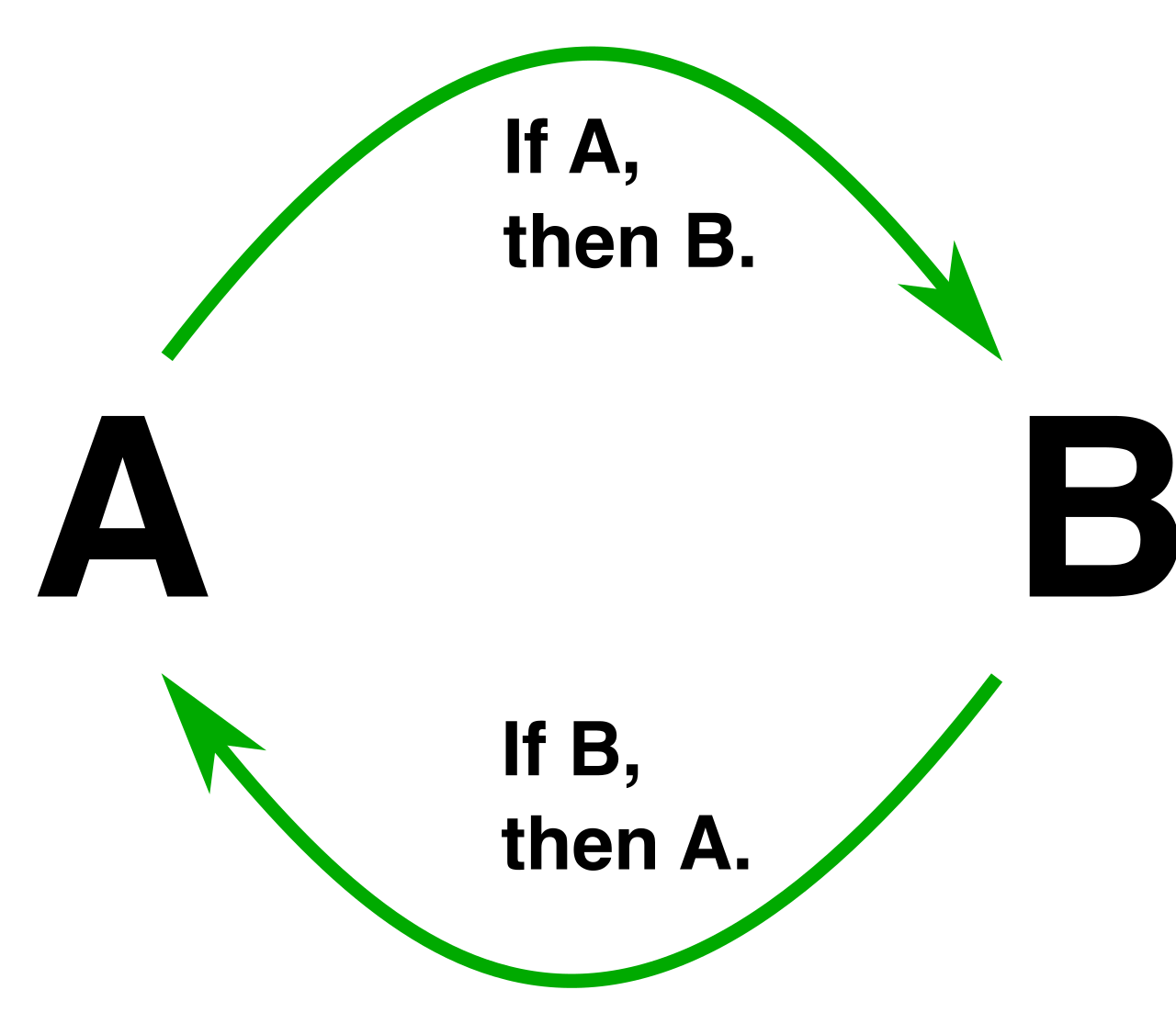
When the structural integrity of an argument fails, we encounter a logical fallacy. Logical fallacies are structural flaws in reasoning. Because they represent a breakdown in the logical chain, logical fallacies undermine the validity of a written argument.
In your classroom, and on your exam, you must be able to spot these structural failures immediately.
| Fallacy | Definition & Mechanism | Classroom Example |
|---|---|---|
| Ad Hominem | An ad hominem fallacy attacks the character of an opponent and deliberately ignores the substance of an opponent's actual argument. | "We shouldn't listen to Sarah's proposal for a recycling program because she is always late to class." |
| Straw Man | A straw man fallacy intentionally misrepresents an opponent's argument. It aims to make an opponent's argument easier to attack. | Principal: "We need to reduce hallway noise." <br>Student: "The principal wants us to march in dead silence like robots!" |
| Slippery Slope | A slippery slope fallacy asserts that one minor event will inevitably trigger a chain of extreme consequences. | "If we let students chew gum, next they'll be bringing full-course meals to class, and soon the school will be overrun by rats." |
| Red Herring | A red herring fallacy introduces irrelevant information into a debate. It aims to distract an audience from the primary argument. | "You bring up a good point about my missing homework, but isn't the real issue the outdated textbooks we're forced to use?" |
| Hasty Generalization | A hasty generalization fallacy draws a broad conclusion from a very small sample size. This almost always stems from an unrepresentative data sample. | "I asked two students in the front row, and they loved the novel. The whole 8th grade thinks it's a masterpiece." |
| Circular Reasoning | Circular reasoning occurs when an argument's conclusion is used as one of the argument's supporting premises. | "This policy is the best rule for the school because it is the finest regulation we have." |
| False Dilemma | A false dilemma fallacy presents exactly two competing options and deliberately ignores other viable possibilities. | "Either we ban all smartphones, or no one will ever learn anything in class." |
| Post Hoc Ergo Propter Hoc | The post hoc ergo propter hoc fallacy assumes that a preceding event directly caused a subsequent event. | "The fire alarm went off right after I opened my locker, so my locker must have triggered the alarm." |

An argument is only as strong as the materials used to construct it. Evidence consists of verifiable data or information utilized to support a claim.
When evaluating an author's evidence, we must ask two structural questions. First, is it relevant? Relevant evidence directly connects to the specific claim being made, and it actively supports the specific claim being made. Second, is it sufficient? Sufficient evidence means a writer has provided enough distinct data points to fully justify a claim. A single statistic cannot support a massive societal generalization.
Authors utilize various materials to build their case:
- Factual evidence is based on objective realities. Crucially, factual evidence can be independently proven true or false.
- Opinion evidence relies entirely on personal judgments or beliefs. While sometimes useful for illustrating perspective, it is weak structural support.
- Statistical evidence employs numerical data to validate a claim.
- Empirical evidence is gathered through direct scientific observation or is gathered through controlled scientific experimentation. This is the gold standard for claims regarding science or human behavior.
- Expert testimony consists of formal statements made by recognized authorities in a specific field.
- Anecdotal evidence relies on isolated personal stories. While highly engaging for a reader, anecdotal evidence is objectively insufficient to prove a broad, generalized claim.
A skilled reader not only looks at the bricks but also studies the bricklayer. How is the author choosing to present this information?
The tone of a text reveals much about its intent. An objective tone avoids personal pronouns to present information neutrally, and it avoids emotional language to present information neutrally. Conversely, a subjective tone deliberately includes personal feelings and opinions.
We must also be vigilant for distortions. Authorial bias occurs when personal prejudices improperly influence a writer's argument. As readers, we must also police our own minds for confirmation bias, which is the human tendency to favor information confirming preexisting beliefs. If a student is reading an essay about why homework should be abolished, they are highly susceptible to confirmation bias.
The Aristotelian Appeals
Thousands of years ago, Aristotle codified how writers persuade audiences. An effective argument balances these three rhetorical appeals:
- Logos is a rhetorical appeal based entirely on logic and objective evidence.
- Ethos is a rhetorical appeal based on the credibility of the author and is a rhetorical appeal based on the ethical character of the author.
- Pathos is a rhetorical appeal designed to evoke a strong emotional response from the audience.
Source Evaluation
When testing an argument's validity, we must interrogate its origins.
- Primary sources provide firsthand evidence concerning a specific historical event or scientific topic (e.g., a diary entry, original lab data, a photograph).
- Secondary sources offer analysis or interpretation of primary sources (e.g., a textbook, a critical essay).
Evaluating source credibility requires examining the author's professional credentials. Who are they, and what qualifies them to speak on this issue? Furthermore, evaluating source credibility requires examining the reputation of the publishing organization. An article published by a peer-reviewed university press inherently holds more weight than a self-published blog post.
Finally, a sophisticated argument does not hide from its opposition; it invites it into the room. A counterclaim is an opposing perspective to the writer's central claim.
Why would an author introduce the very idea trying to dismantle their thesis? Because acknowledging counterclaims demonstrates a writer's comprehensive understanding of a topic. It bolsters their ethos. It signals to the reader: I have looked at the opposing side, I understand it, and I am still right.
Following the counterclaim, the author delivers the rebuttal, which is a direct response intended to disprove a counterclaim. This creates a highly resilient argumentative structure, anticipating the reader's doubts and neutralizing them before they can take root.
As you prepare to teach and assess middle school readers, internalize these concepts. You are not just teaching them to read text; you are handing them a toolkit to dissect the rhetoric of the world around them, ensuring they demand sound logic, sufficient evidence, and undeniable truth.