Instructing Language Acquisition and Vocabulary
Not sure you’re ready?
Take the ~3-minute readiness diagnostic and see where you stand.
Language acquisition in the middle school classroom is fundamentally a problem of cognitive friction and velocity. The human brain is a meaning-making machine, but acquiring the nuanced, sophisticated vocabulary of middle grades English Language Arts requires deliberate architectural planning. You cannot simply hand a twelve-year-old a dictionary and expect them to build a robust mental lexicon. Instead, educators must cultivate a linguistic ecosystem where new terms are not merely memorized, but encountered, mapped, and wielded as tools for thinking.
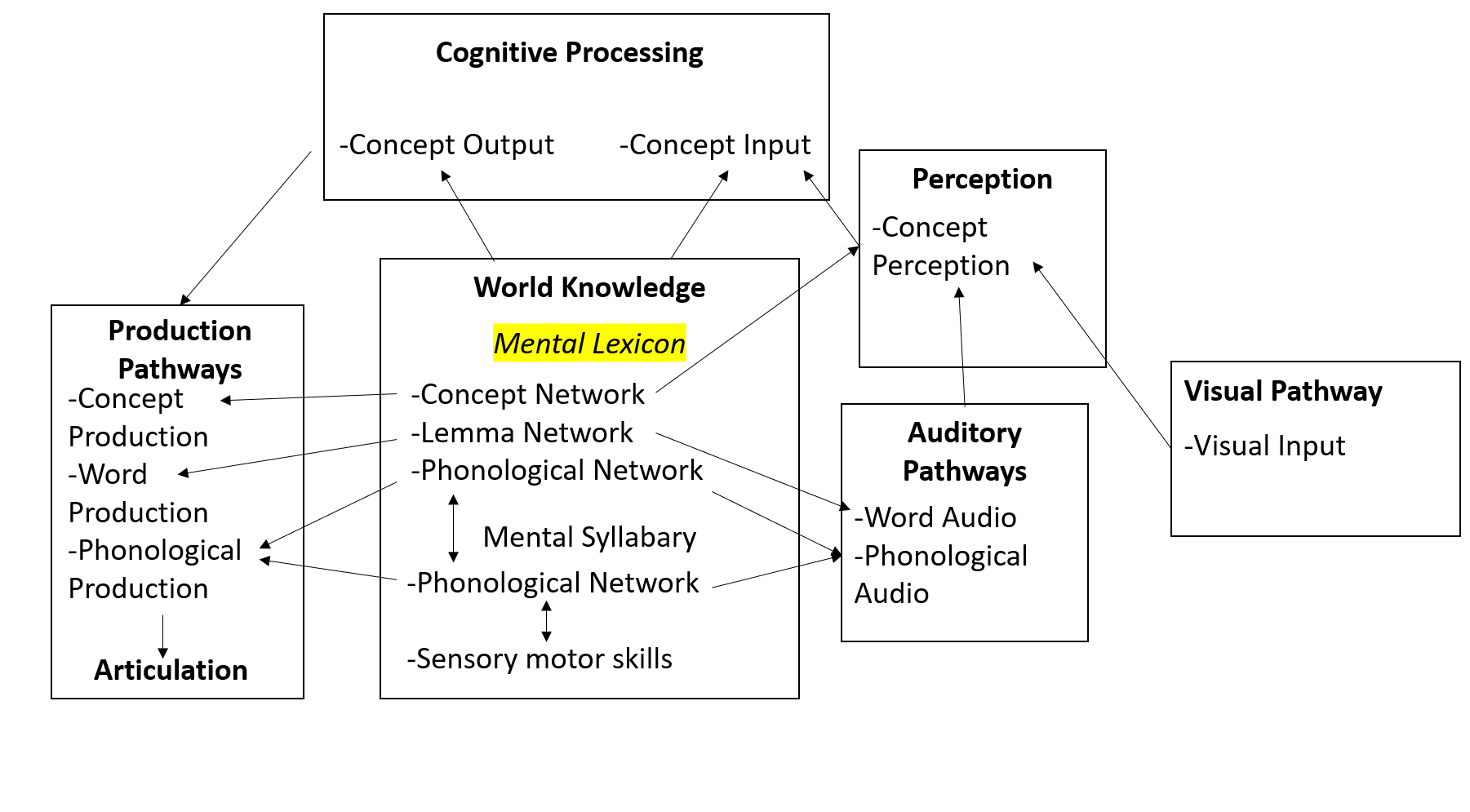
To master the principles of instructing language acquisition and vocabulary for the Praxis 5047 exam, we must look at how words operate as networks of meaning, how diverse learners cross the threshold into academic fluency, and which specific instructional levers actually change the architecture of a student’s brain.
Not all words are created equal. If you treat the word "clock" with the same instructional weight as the word "analyze," you waste valuable cognitive resources. Researchers Isabel Beck, Margaret McKeown, and Linda Kucan developed the three-tier framework for vocabulary development to help teachers efficiently categorize and prioritize which words require direct intervention.
| Vocabulary Tier | Definition & Characteristics | Instructional Approach | Middle School Examples |
|---|---|---|---|
| Tier 1 | Tier 1 vocabulary words are basic, everyday words that rarely require direct instruction in the classroom. | Learned implicitly through daily life and basic conversation. | Dog, run, happy, clock, book. |
| Tier 2 | Tier 2 vocabulary words are high-frequency, cross-curricular academic words that require explicit instruction. | The primary focus of ELA vocabulary instruction. They unlock complex texts across all subjects. | Analyze, synthesize, benevolent, crucial, evaluate. |
| Tier 3 | Tier 3 vocabulary words are low-frequency, domain-specific terms best taught within the context of specific subject matter. | Taught on a "need-to-know" basis when encountering specific content. | Isotope, peninsula, iambic pentameter, hypotenuse. |
In a middle school text, your instructional target is almost always Tier 2. These words are the workhorses of academic text.
To teach English Language Learners (ELLs) effectively, we must first dispel the illusion that "speaking English" is a single, unified skill.
Cummins' Dual-Iceberg: BICS vs. CALP
Jim Cummins introduced the distinction between Basic Interpersonal Communication Skills (BICS) and Cognitive Academic Language Proficiency (CALP). This distinction explains why a multilingual student might converse fluently with friends in the cafeteria but struggle to write an analytical essay on The Giver.
- Basic Interpersonal Communication Skills (BICS) encompass the conversational language skills needed for everyday social interactions. These are context-heavy and cognitively undemanding. It typically takes English language learners six months to two years to acquire Basic Interpersonal Communication Skills.
- Cognitive Academic Language Proficiency (CALP) refers to the formal academic language required for success in the classroom. This language is context-reduced and cognitively demanding. Because of its complexity, it typically takes English language learners five to seven years to develop Cognitive Academic Language Proficiency.
Krashen's Input and Filters
Linguist Stephen Krashen modeled how language actually enters the mind. His theories dictate how we set up the classroom environment:
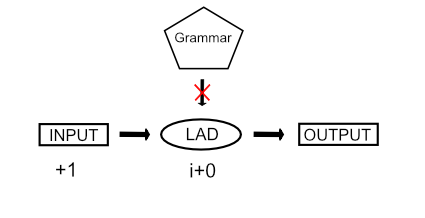
- Stephen Krashen's comprehensible input hypothesis posits that learners acquire language when they understand messages that are slightly above their current language level. Think of this as i+1 (input plus one level of difficulty). If a text is too easy, no growth occurs. If it is entirely incomprehensible, it is mere noise.
- The affective filter hypothesis states that emotional variables like anxiety and low self-esteem can block language acquisition. If a middle schooler is terrified of being mocked for their accent, their "filter" goes up, and comprehensible input bounces right off. A safe, low-stakes classroom environment is a neurological prerequisite for language learning.
Instructor's Note: Notice how these theories intersect. A student in the pre-production stage of language acquisition typically undergoes a "silent period" where they absorb the new language without speaking. During this stage, forcing them to read aloud raises the affective filter. Instead, flood them with comprehensible input and allow them to listen.
Vygotsky's Zone of Proximal Development
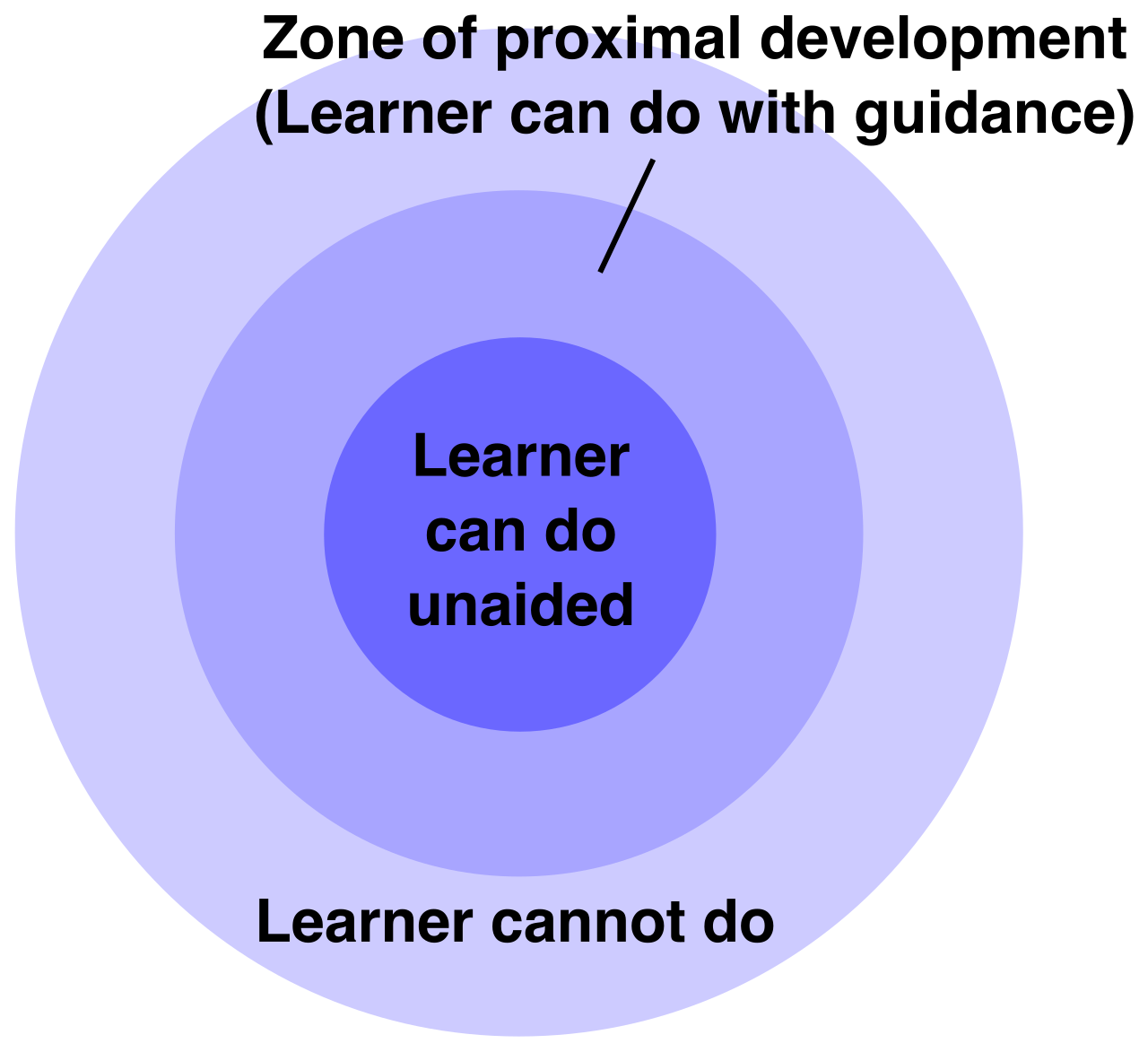
Vygotsky's Zone of Proximal Development (ZPD) states that learners acquire language best when engaged in tasks they can complete with guidance from a more knowledgeable peer. Language is fundamentally social. Grouping a newcomer ELL with a bilingual peer to analyze a poem allows the student to operate at a higher cognitive level than they could alone.
How do words actually get into a student's brain permanently?
Implicit vocabulary instruction occurs when students learn new words naturally through wide reading and exposure to language-rich environments. In fact, wide independent reading is cited by researchers as the primary mechanism for long-term, large-scale vocabulary growth in students. If a student reads 20 minutes a day, they will encounter millions of words a year, naturally deducing meaning through context clues—hints found within a sentence or paragraph that help a reader deduce the meaning of an unfamiliar word.
However, implicit learning is not enough for complex Tier 2 words. Explicit vocabulary instruction involves providing students with clear, direct definitions and specific activities to practice new words.
The Law of Multiple Exposures
You cannot teach a word on Monday, quiz it on Friday, and expect a student to own it. Research indicates that students need multiple exposures to a new word in varied contexts to fully internalize its meaning. A student must hear the word, read it in a novel, use it in a sentence, and play with its meaning before it becomes a permanent tool in their cognitive toolkit.
To fuel this, ELA teachers must foster word consciousness, which refers to an awareness of and interest in words and their meanings. When teachers celebrate interesting words, play with puns, or point out powerful verbs, they are fostering word consciousness in the classroom, which increases student motivation to learn and use new vocabulary.
When we move to explicit instruction, we must use strategies that force the brain to categorize and connect.
-
Morphology instruction teaches students to derive word meanings by analyzing prefixes, suffixes, and root words. Teaching the Greek root chron (time) gives a student the key to unlock chronological, chronic, chronicle, and synchronize.
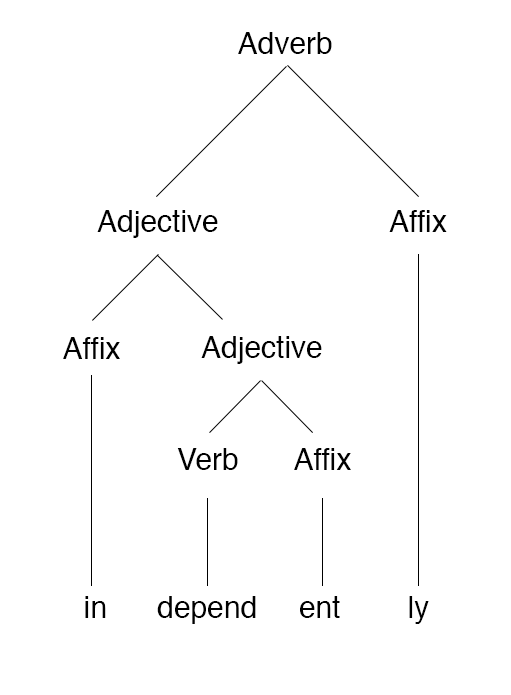
A morphological tree diagram demonstrating how complex academic words can be systematically broken down into prefixes, root words, and suffixes to explicitly derive meaning. Source: Independently morphology tree by Annie yang, CC BY-SA 4.0. -
The Frayer Model is a graphic organizer that requires students to define a word, describe its characteristics, provide examples, and provide non-examples. It forces deep cognitive processing, rather than shallow memorization.
-
Semantic mapping is a visual strategy that helps students connect a new vocabulary word to related words and concepts. It builds a "web" of meaning.
-
Semantic feature analysis uses a grid to help students explore how a set of related words or concepts are similar to and different from one another. (e.g., Comparing hut, house, mansion, and palace across features like "size," "permanence," and "luxury").
-
Interactive word walls are not just wallpaper. An interactive word wall is a classroom display that organizes vocabulary words visually and requires active student engagement to update and reference. Students should be taking words off the wall to use in their writing or grouping them by themes.
-
Reciprocal teaching is an instructional activity that uses predicting, clarifying, questioning, and summarizing to improve reading comprehension and vocabulary. It operationalizes Vygotsky’s ZPD by having students guide each other through a text.
Teaching complex texts to ELLs requires precise architectural supports.
Sheltered instruction integrates language and content instruction to make academic concepts accessible to English language learners. You do not water down the middle school ELA curriculum; you change the delivery mechanism.
Concrete Hooks and Early Acquisition
When students are in the early stages of language learning, abstractions fail.
- Total Physical Response (TPR) is a language teaching method that coordinates language with physical movement. (e.g., Having students physically "shrug" when learning the word "ambivalent"). Total Physical Response is highly effective for vocabulary acquisition in the early stages of second language learning.
- Providing realia involves using real-life objects in the classroom to build background knowledge and vocabulary for language learners. If you are reading about a nautical voyage, bring in a physical compass or a piece of heavy canvas sail for them to touch.

Bridging the Language Gap
- Cognates are words in two different languages that share a similar spelling, pronunciation, and meaning. (e.g., English family and Spanish familia). Leveraging native language cognates is a research-based strategy to accelerate English vocabulary acquisition for multilingual learners.
- Scaffolding language instruction involves providing temporary supports like sentence frames or word banks to help students achieve independence. Over time, these supports are removed.
- A prime example of scaffolding is the sentence frame, which is a fill-in-the-blank structure that helps students formulate grammatically correct sentences using academic vocabulary. (e.g., "Although the protagonist initially felt _____, she eventually realized that _____.")
- Pre-teaching vocabulary involves introducing key terms before reading a text to reduce cognitive load and improve comprehension. If students are wrestling with both plot comprehension and decoding 15 new words simultaneously, their working memory overflows. Pre-teaching removes the vocabulary barrier.
The Trap of Figurative Language
Idioms are figurative expressions that present significant comprehension challenges for English language learners because their meanings cannot be deduced literally. A phrase like "spilled the beans" or "caught red-handed" makes zero logical sense to a non-native speaker. Therefore, explicit instruction of idioms and figurative language is necessary for English language learners to fully access complex literary texts.
An elite middle school ELA classroom is a room of varying velocities. While your ELLs are acquiring foundational academic language, your advanced students need distinct challenges. Differentiated vocabulary instruction for gifted learners often involves exploring word etymologies (the history of words) and studying complex morphological structures, rather than simply giving them "more words" or moving them to the next grade level's list.
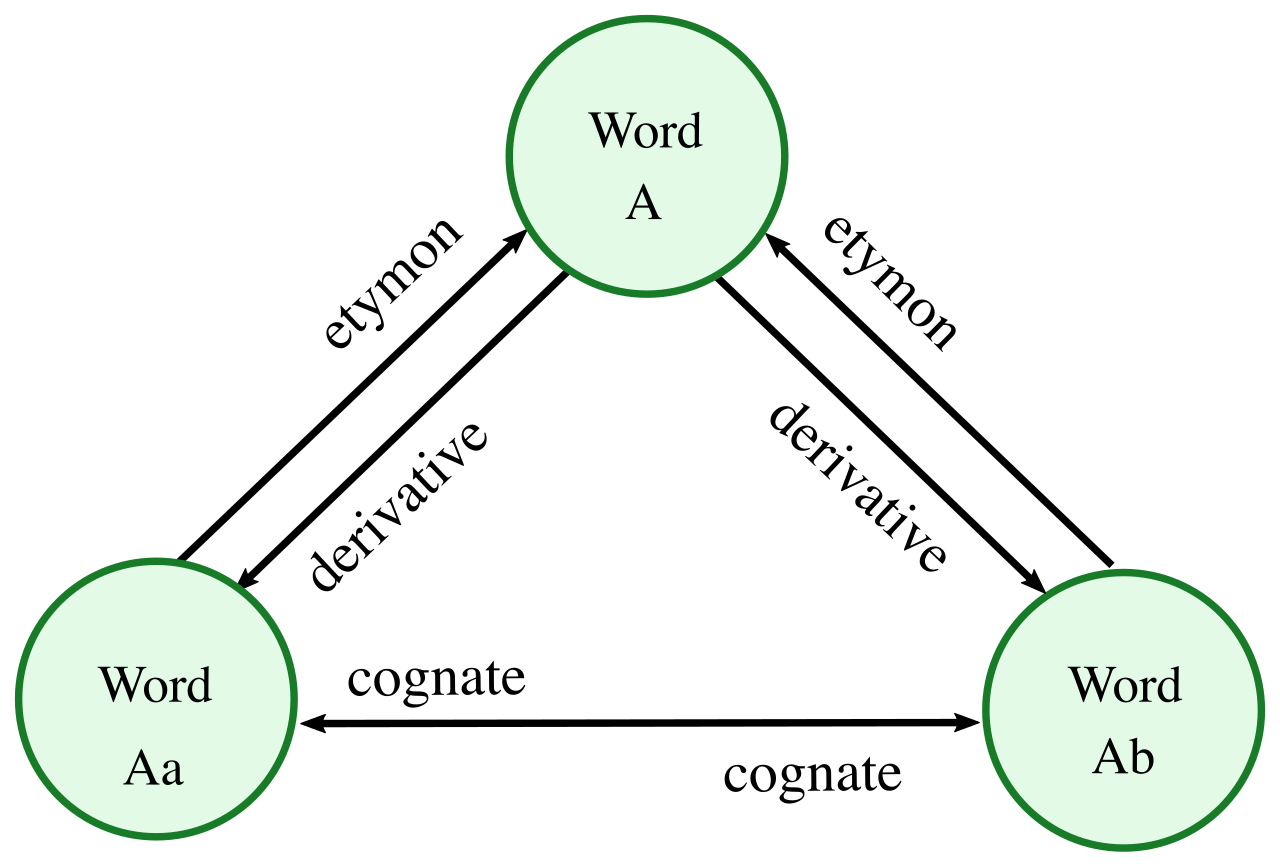
Assessing True Vocabulary Mastery
How do you know if a student actually knows a word?
If you give them a matching quiz on Friday, you are only assessing short-term working memory. Because deep understanding requires seeing a word's nuances, multiple-choice definition matching is considered an ineffective assessment of deep vocabulary knowledge.
Instead, assessing deep vocabulary knowledge requires evaluating a student's ability to use the word correctly in a novel context. If a student can write an original sentence applying the word "benevolent" to a situation in their own life, or argue why a character in a new story is acting "benevolently," they have achieved true semantic ownership. They have moved the word from an external artifact into their internal engine of thought.