Literal and Inferential Interpretations of Informational Texts
Not sure you’re ready?
Take the ~3-minute readiness diagnostic and see where you stand.
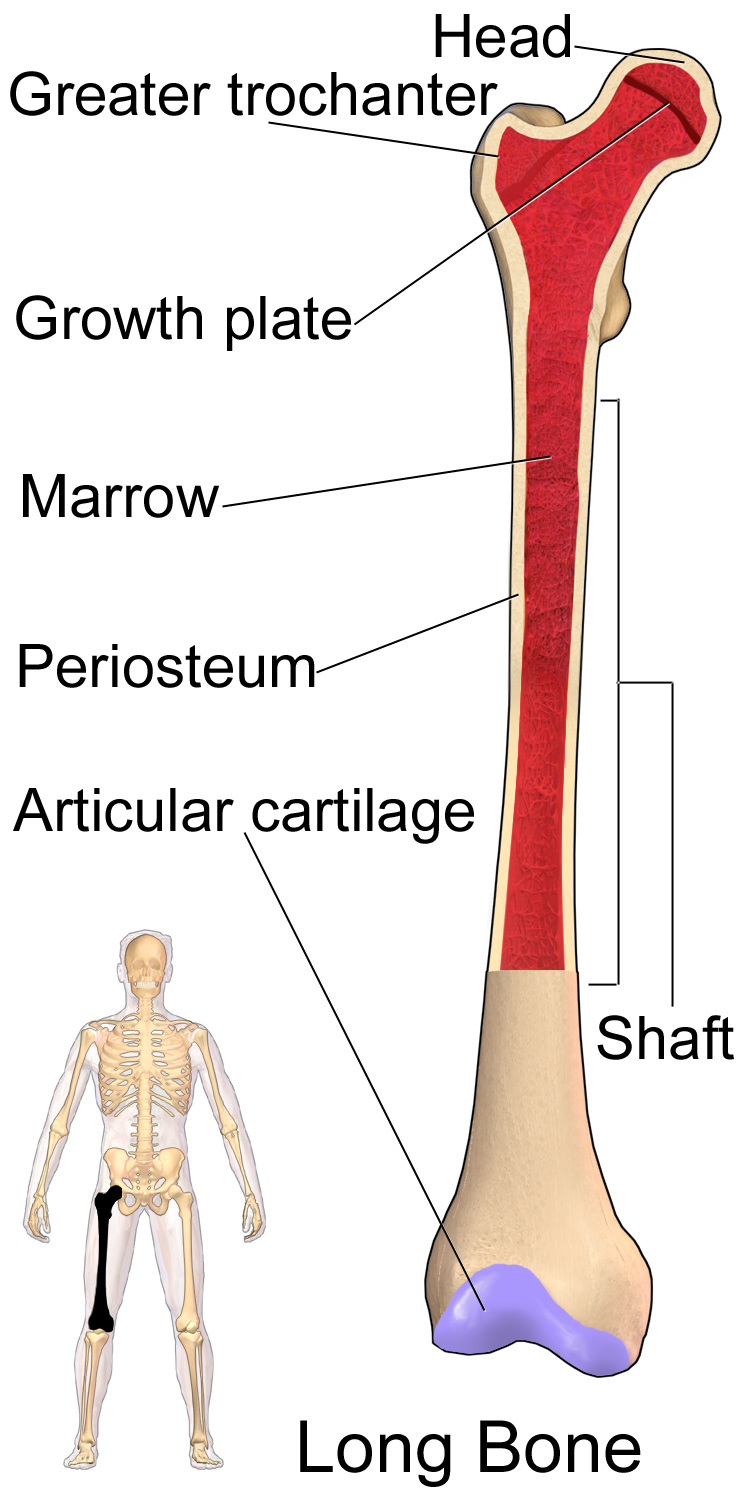
Reading a complex informational text is akin to examining a fossil record. A paleontologist first observes the literal indentations in the rock—the undeniable shape of a femur or the precise length of a tooth. However, the true scientific work begins when they synthesize those explicit shapes with their own understanding of biology to deduce how the creature moved, hunted, and survived. Teaching middle school students to read informational texts demands this exact same dual vision. Students must learn to extract the precise, explicit data anchored to the page, and then use those anchor points to navigate the unwritten, implied spaces of the author’s argument. The mastery of both literal comprehension and inferential interpretation forms the absolute foundation of critical literacy.
Informational texts are categorized as a nonfiction genre. Rather than relying on narrative arcs or character development, this genre relies on the transmission of ideas, arguments, and data. You will find informational texts everywhere in your classroom, as they include formats such as essays, speeches, biographies, and news articles. To teach students how to navigate these texts, we must first clearly separate what is on the page from what is between the lines.
Literal Comprehension: The Anchor to the Page
Before a student can analyze an argument, they must master literal comprehension. Literal comprehension requires identifying explicitly stated facts in an informational text. This is not about interpretation; this is about observation.
Literal meaning refers to the direct and exact definition of words within a text. When an author makes an explicit statement, they are building the undeniable physical foundation of their text. An explicit statement leaves no room for confusion or doubt about the author's meaning. If an article states, "The city council voted 5-2 to allocate $100,000 to the new library," the literal meaning is mathematically exact. There is no guesswork involved.
Inferential Interpretation: Seeing the Invisible
If literal comprehension is observing the bricks of a building, inferential interpretation is understanding the architect's blueprint. Often, authors use an implicit statement, which suggests a meaning without directly stating that meaning.

To bridge this gap, readers must rely on inference. An inference is a logical conclusion drawn from textual evidence and a reader's prior knowledge. Inferential interpretation requires readers to synthesize clues hidden within an informational text.
The Golden Rule of Inference: A valid inference cannot contradict explicitly stated information within the same text. If a text explicitly states that a newly discovered planet is entirely composed of freezing gas, an inference that "humans could build colonies there tomorrow" is invalid because it violates the text's established physics.
As a teacher, your goal is to pull students away from wild guessing and ground them in text-based logic. The Praxis 5047 exam assesses a candidate's ability to identify textual evidence supporting a specific inference, meaning you must be highly skilled at spotting the exact sentence that justifies a logical leap.
Once students can read both the explicit lines and the implicit spaces between them, they must learn to dismantle the text. Text analysis involves breaking down an informational text into its component parts. Through this process, text analysis evaluates the manner in which an author constructs a logical argument.
Identifying Claims and Details
At the center of every informational text is a beating heart: the claim. A claim is the main argument or assertion an author makes in an informational text. It is the destination the author wants to reach. To get the reader there, the author builds a pathway of supporting details, which provide specific information to clarify an author's claim.
The Currency of Analysis: Textual Evidence
In a middle school classroom, the most common instructional hurdle is getting students to prove their thoughts. The Common Core State Standards for English Language Arts require middle school students to cite specific textual evidence to support analysis.
What exactly counts as this evidence?
- Textual evidence consists of direct quotes from an informational text. (e.g., The author states, "The river's pollution levels rose 40%").
- Textual evidence consists of paraphrased details from an informational text. (e.g., The author illustrates that water toxicity drastically increased over the last decade).
Ultimately, textual evidence is used to substantiate an analysis of an informational text. But not all evidence is created equal. When teaching students to build arguments—or when evaluating answer choices on the Praxis—you must distinguish between the quality of evidence:
| Evidence Type | Definition | Classroom Example |
|---|---|---|
| Strong Textual Evidence | Directly relates to the claim being made about a text. | Claim: The town desperately needs a new bridge. <br>Strong Evidence: "Engineers declared the current structure unsafe for vehicles over two tons." |
| Weak Textual Evidence | Is loosely related to the claim being made about a text. | Claim: The town desperately needs a new bridge. <br>Weak Evidence: "Many citizens enjoy driving by the river." |
Furthermore, evaluating an author's claim requires checking the factual accuracy of the supporting evidence. If an author claims that electric cars are a poor investment, the text analysis must test whether the numbers they cite regarding battery life hold up against verifiable reality.
No informational text is written in a vacuum. Every word is chosen by a human being looking through a specific lens. To truly understand a text, a reader must look at the author behind it.
Purpose and Perspective
An author's perspective is shaped by the author's individual background and personal experiences. A marine biologist and a corporate oil executive will write vastly different articles about offshore drilling.

To map this out, look at intent. Identifying the author's purpose helps a reader understand the overall perspective of an informational text.
- Sometimes, an author operates as a neutral camera. An author's purpose in an informational text may be to objectively inform the reader about a topic.
- Other times, the author is an attorney in a courtroom. An author's purpose in an informational text may be to persuade the reader to adopt a specific viewpoint.
Objectivity vs. Subjectivity
When an author's personal experiences overshadow objective reality, we encounter bias. Bias occurs when an author presents a one-sided perspective on a topic. We teach students to detect bias by identifying the text's position on the spectrum of objectivity:
- Objective informational texts present verifiable facts without the author's personal opinions. Think of a standard encyclopedia entry.
- Subjective informational texts heavily feature the author's personal opinions or feelings. Think of an impassioned editorial or a political speech.

To navigate this, readers must constantly sort the author's sentences into two categories:
Factual Claim: A factual claim can be definitively proven true or false through objective evidence. (e.g., "Water boils at 212 degrees Fahrenheit at sea level.")
Opinion: An opinion represents a belief or judgment. Crucially, an opinion cannot be objectively proven true or false. (e.g., "Summer is undeniably the best season for productivity.")
One of the most complex, yet vital, skills you will teach is how to synthesize multiple voices. Frequently, readers will encounter multiple texts discussing the exact same event, policy, or historical figure.
The Nature of Conflict
When placing two texts side by side, conflicts usually manifest in two distinct ways:
- Two informational texts on the same topic may present conflicting facts. Text A says the protest had 1,000 attendees; Text B says there were only 200.
- Two informational texts on the same topic may present conflicting perspectives based on the exact same facts. Both texts agree the city spent $1 million on a park. Text A uses this fact to argue the city is investing in community health; Text B uses the exact same fact to argue the city is recklessly ignoring pothole repairs.
The Toolkit for Synthesis
How do we untangle this? First, a reader compares conflicting texts by identifying the differing main ideas of each text. Once the macro-level arguments are isolated, you move to the micro-level. Comparing texts involves analyzing the different types of evidence each author uses to support a claim. Does one author rely on scientific data while the other relies on emotional anecdotes?
Next, you must evaluate the messengers. Evaluating conflicting texts requires assessing the credibility of each author. Is the author an expert in the field? Do they have a financial stake in the argument? Similarly, evaluating conflicting texts requires assessing the reliability of the evidence presented in each text.
When checking reliability, we look at the origin and volume of the information:
- Primary source: A primary source is an original document created at the time under study. (e.g., A diary entry from a Civil War soldier, or raw data from a laboratory experiment).
- Secondary source: A secondary source analyzes or synthesizes information from primary sources. (e.g., A modern textbook chapter about the Civil War).
- Corroborating evidence: Corroborating evidence is information from multiple independent sources that supports a single claim. If three separate primary sources from different locations all describe the same earthquake, the claim is corroborated and highly reliable.
Classroom Application: Making It Visual
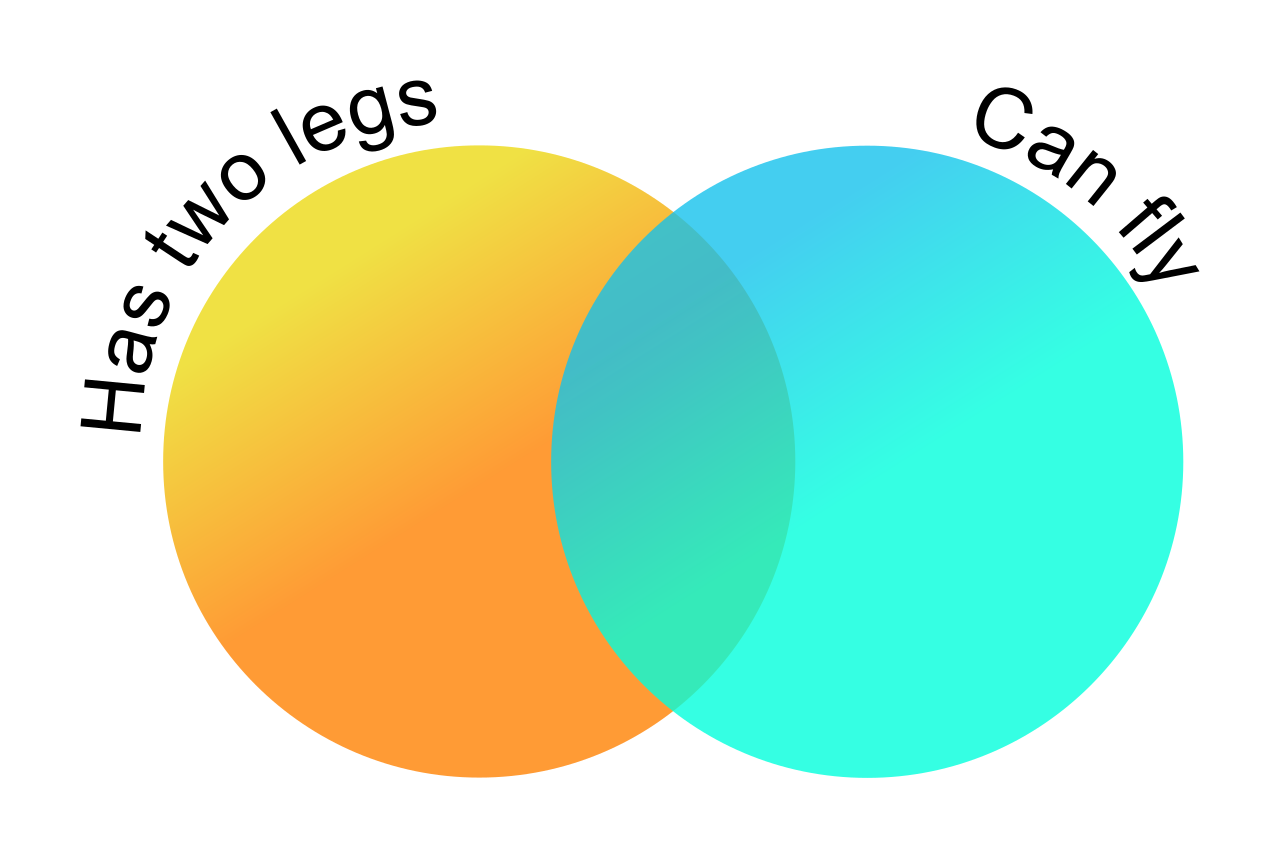
To make these abstract comparisons tangible for middle schoolers, visual scaffolding is essential. Graphic organizers like Venn diagrams are standard pedagogical tools used to compare conflicting texts. By placing Text A on the left, Text B on the right, and their shared facts in the overlapping center, you transform abstract rhetorical analysis into a concrete, visual map.
As a future educator, mastering these concepts allows you to do more than pass the Praxis 5047. It equips you to walk into a classroom and teach young minds how to dissect the overwhelming stream of information they face daily—empowering them to distinguish fact from feeling, and truth from persuasion.