Active Reading Literacy Skills
Not sure you’re ready?
Take the ~3-minute readiness diagnostic and see where you stand.
Reading is not a process of passive absorption; it is an active construction site. When a student's eyes track across a page of literature, they are not merely recording symbols like a scanner. They are engaged in active reading, a dynamic process where the reader consciously interacts with a text to construct meaning. For middle school students, the transition from "learning to read" to "reading to analyze" depends entirely on the deliberate deployment of cognitive strategies. Without these tools, a complex novel is just a sequence of words. With them, it becomes a multidimensional landscape that the student navigates, questions, and masters.
As an English language arts teacher, your goal is to make the invisible mental habits of expert readers visible to your students.
Think of a new text as an isolated electrical circuit. On its own, it holds potential, but it only generates power when connected to an external energy source. The reader is that source. We bridge the gap between the author's words and our own understanding by making three specific types of linkages.
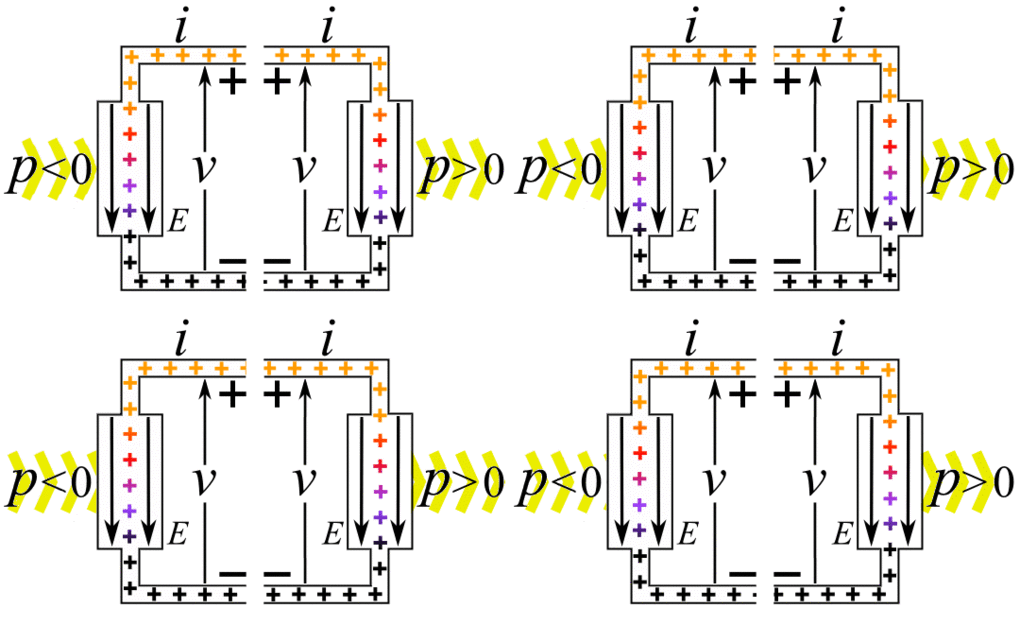
- Text-to-self connections occur when a reader relates the events of a text to the reader's own personal experiences. When a seventh grader reads about a protagonist's anxiety before a spelling bee and remembers their own terror before a piano recital, they have anchored the text to their own emotional reality.
- Text-to-text connections involve finding similarities between the current reading and previously read materials. Recognizing that the dystopian government in The Giver functions similarly to the one in The Hunger Games allows the student to transfer analytical frameworks from one book to another.
- Text-to-world connections expand the scope entirely. These connections link the themes of a text to historical events in the real world (such as comparing a fictional tale of prejudice to the Civil Rights Movement) or link the themes of a text to current events in the real world (such as connecting a sci-fi story about environmental collapse to modern climate change headlines).
The Professor's Note: Why do connections matter? Because memory is associative. The more hooks a student can attach to a new piece of information, the more securely that information is retained and understood.
Active readers do not wait for the teacher to hand them a worksheet; they generate their own momentum.
Questioning is an active reading skill where readers generate inquiries about the text across the entire timeline of their reading experience:
- Before reading: They interrogate the title, the cover, and the author's background to set a purpose.
- During reading: They pause to ask, "Why did the character make that decision?" or "What does this symbol mean?"
- After reading: They reflect and ask, "Did the resolution satisfy the central conflict?"
As they question, they are also building a mental theater. Visualizing is an active reading strategy where readers construct mental images of the characters described in the text, as well as constructing mental images of the settings described in the text. This isn't daydreaming; it is a vital cognitive rendering process that makes abstract language concrete.
To externalize these internal processes, teach students the art of annotating. Annotating is an active reading skill involving highlighting text to isolate critical evidence, but it doesn't stop at neat yellow lines. Crucially, it involves writing marginal notes directly on a text to capture the reader's ongoing dialogue with the author.
Authors rarely spell out every detail. They leave breadcrumbs, requiring the reader to perform intellectual leaps. We generally categorize these leaps into two distinct operations: inferencing and predicting.
Inferencing requires the reader to synthesize textual evidence with the reader's background knowledge. An inference is an unstated conclusion drawn directly from details provided within the text. If an author writes, "The boy marched in the door, slammed his backpack on the floor, and stared at the ceiling with a red face," the author never states the boy is angry. The reader infers it by synthesizing the textual clues (slamming, red face) with their background knowledge of human behavior.
Making a prediction, on the other hand, involves anticipating future events in a narrative based on available clues.
The Middle School English Language Arts 5047 exam tests a candidate's ability to evaluate the strength of a prediction based on textual evidence. It is vital to understand that a prediction in literature is not a wild guess. It is a calculated probability.
A valid reading prediction must meet three strict criteria:
- It must be supported by specific textual evidence.
- It must align with established character traits within the narrative. (If a character is famously cowardly, predicting they will charge headfirst into a dragon's lair without a very compelling, evidence-backed reason is invalid).
- It must align with the established plot trajectory within the narrative.
Because narratives are dynamic, active readers constantly evaluate initial predictions as new textual evidence emerges. When the plot twists, they do not cling stubbornly to their first guess; rather, active readers revise initial predictions as new textual evidence emerges.
If making connections and predictions is about expanding upon the text, summarizing is about compression.
Summarizing requires condensing a passage down to the passage's essential main ideas. Think of it like boiling down gallons of maple sap to yield a single jar of syrup. You are removing the water to leave only the absolute essence.
The Middle School English Language Arts 5047 exam tests a candidate's ability to evaluate a summary of a reading passage. You will be asked to distinguish between high-quality summaries and flawed ones. How do you evaluate them?
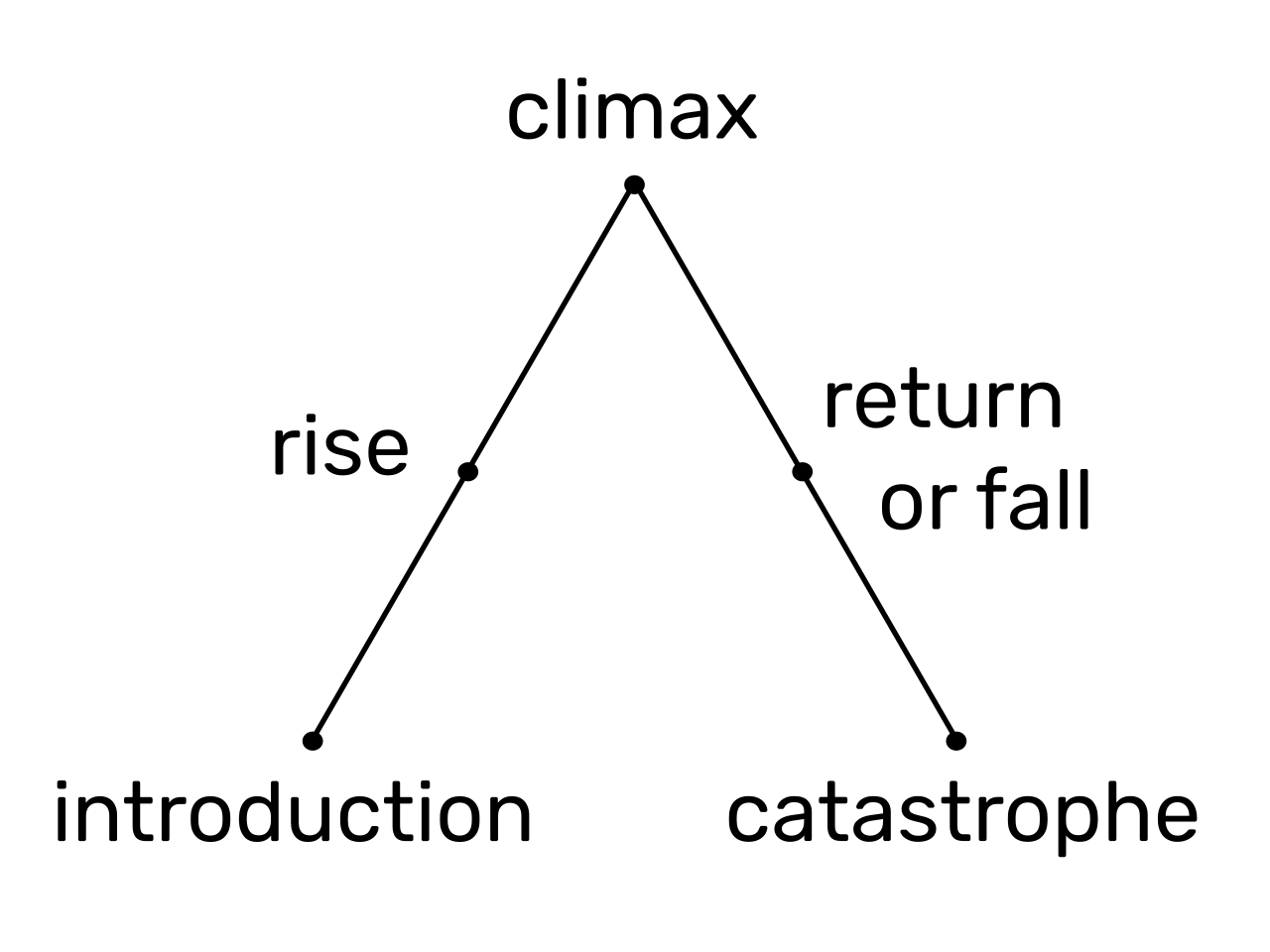
Evaluating a summary requires determining if the summary includes all major plot points. If it skips the story's climax, it has failed. Conversely, an effective summary completely omits minor details from the source text. It does not name every side character or list the items in the protagonist's lunchbox.
Furthermore, evaluating a summary requires determining if the summary misrepresents the original text. An effective summary accurately reflects the author's original intended meaning. To achieve this, it must remain entirely neutral.
| Feature of an Effective Summary | Why it Fails if Missing |
|---|---|
| Omits personal opinions | An effective summary completely omits the reader's personal opinions. Adding "I thought the ending was boring" turns a summary into a critique. |
| Omits personal biases | An effective summary completely omits the reader's personal biases, ensuring the text is judged on its own terms, not the reader's worldview. |
| Maintains neutral tone | An objective summary maintains a neutral tone. Emotive language skews the distillation of the author's intent. |
Even the most adept readers occasionally crash into a wall of confusion—a convoluted sentence, an archaic vocabulary word, or a sudden perspective shift. The difference between a struggling reader and a proficient one is how they handle the crash.
Proficient readers use clarifying, which is a monitoring strategy used by readers to resolve comprehension breakdowns. When the mental movie stops making sense, the active reader pauses. They might reread the previous paragraph, look up a word, or adjust their reading speed. They do not just blindly plow forward hoping the confusion clears itself up.
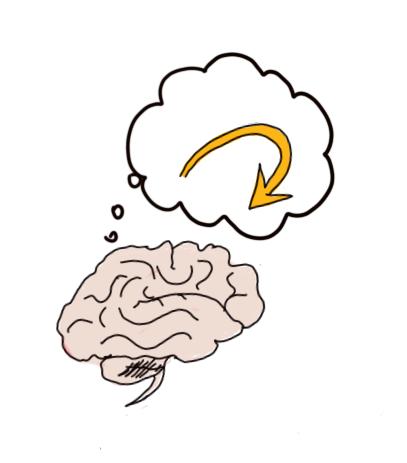
Ultimately, all of these tools—connecting, visualizing, annotating, questioning, inferencing, predicting, summarizing, and clarifying—serve one massive overarching goal. Active reading strategies improve a student's metacognition during the reading process. Metacognition is "thinking about your own thinking."
By equipping your middle schoolers with these literacy skills, you are doing far more than helping them pass an ELA exam. You are handing them the control panel to their own minds, allowing them to transform the heavy, opaque block of a challenging text into a clear, navigable window into the world.