Word Choice and Rhetoric in Informational Texts
Not sure you’re ready?
Take the ~3-minute readiness diagnostic and see where you stand.
Consider the difference between reading a meticulously peer-reviewed botanical report on deforestation and a fiery political op-ed on the exact same subject. Both texts rely on the English language, but their mechanisms of operation are vastly different. When we examine informational texts, we are not merely decoding words on a page; we are reverse-engineering the cognitive machinery an author has built to direct a reader’s mind. For the aspiring middle school English language arts teacher preparing for the Praxis 5047, this is the ultimate pedagogical challenge: taking adolescents who have predominantly read for plot and training them to read for craft. This guide deconstructs the architecture of word choice and rhetoric in informational texts, equipping you to master your certification exam and to teach your future students how to see the invisible structures of persuasion, precision, and bias that shape the information they consume every day.

Before we can analyze how an author builds a text, we must understand why they built it. Every informational text is an artifact of human intent.
An author's purpose is the primary reason the author wrote the text. While human motivations are wonderfully complex, the three primary authorial purposes are to persuade, to inform, and to entertain.
When your seventh graders read a NASA article about the Mars Rover, the purpose is to inform. When they read a persuasive essay arguing for the abolition of plastic straws, the purpose is to persuade. But purpose is only the engine; the steering wheel is the author's perspective.

An author's point of view is the author's personal perspective or opinion on the topic. In fiction, "point of view" refers to first-person or third-person narration. In informational texts, it refers to the author's stance. This stance generally falls onto a spectrum between two poles:
- A subjective point of view includes the author's feelings and opinions.
- An objective point of view presents information without the author's personal opinions.
Middle schoolers often assume that if a text contains facts, it must be completely objective. Your job is to show them the sleight of hand. An author's point of view in informational texts is revealed through the author's word choice. But it goes deeper than just the words used. An author's point of view in informational texts is revealed through the selection of specific facts, highlighting data that supports their worldview. Conversely, and perhaps most dangerously, an author's point of view in informational texts is revealed through the omission of specific facts. An article praising a new factory for creating two thousand jobs (selection) while entirely ignoring the resulting river pollution (omission) is highly subjective, even if every printed word is factually true.
Finally, we have the emotional resonance of the piece. Tone is the author's attitude toward the subject matter. If the point of view is what the author thinks, the tone is how they sound when they say it—whether urgent, dismissive, reverent, or cynical.
To analyze tone and intent, readers must distinguish between what is on the page and what is hidden between the lines.
Explicit information is stated directly and clearly within the text. If a biography states, "Abraham Lincoln was born in 1809," that is explicit. However, writers rarely spell everything out, especially when dealing with complex or controversial ideas. Implicit information is not directly stated within the text.
Because the author leaves gaps, readers must use context clues to infer implicit information. This is heavily tested on the Praxis 5047. You will be asked to read a passage and identify the underlying assumption the author is making.
The Dual Nature of Words: Denotation and Connotation
The most precise tool an author has for implying meaning is vocabulary. Every word possesses a dual identity:
- Denotation refers to the literal, dictionary definition of a word.
- Connotation refers to the emotional or cultural associations connected to a word.
Consider the words frugal and stingy. Their denotation is nearly identical: both mean "careful with money." But their connotations are worlds apart. Frugal implies wisdom and responsibility; stingy implies selfishness.
When an author intentionally stacks the deck with highly connotative vocabulary, they are using loaded language. Loaded language consists of words with strongly positive or negative connotations. Instead of calling a policy "a change in the tax code" (neutral), an author might call it "a devastating financial scheme" (negative). Authors use loaded language to elicit a strong emotional response from the reader, bypassing critical thought by triggering immediate outrage, fear, or pride.
Not all specialized vocabulary is designed to manipulate emotion. Sometimes, an author needs absolute, clinical precision.
Technical language consists of specialized vocabulary used within a specific field or profession. When a botanist writes about photosynthesis, or a lawyer writes about habeas corpus, they are utilizing this specialized lexicon. Technical language is also known as jargon.
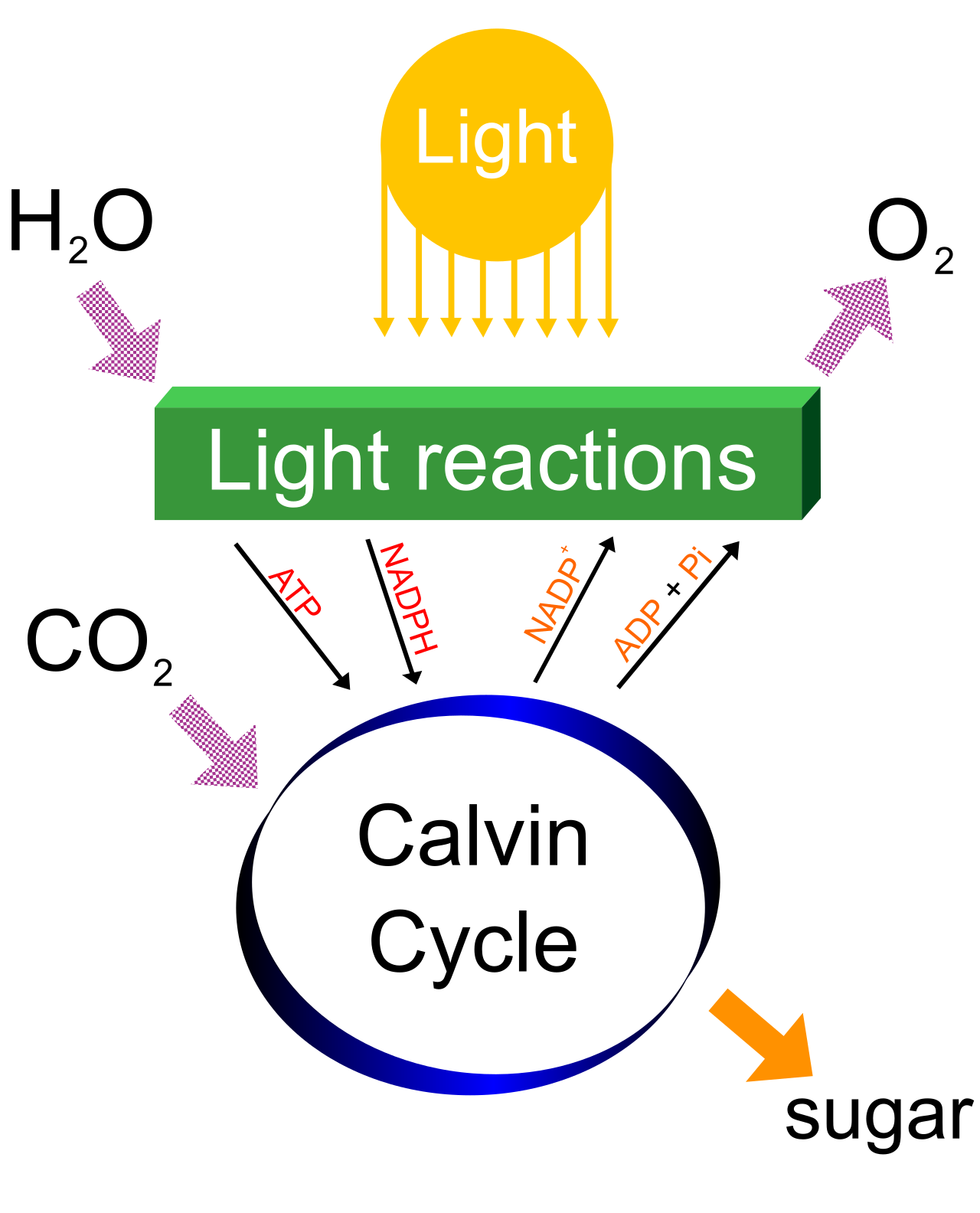
Why do authors use jargon instead of plain English? There are two primary, strategic reasons:
- Authors use technical language to provide precise descriptions of complex processes. You cannot accurately explain quantum mechanics or appellate court procedures using only everyday vocabulary; the standard words lack the necessary specificity.
- Authors use technical language to establish credibility with the audience. By using the precise terminology of a field, the author signals to the reader, "I am an insider. I know what I am talking about. You can trust me."
However, jargon comes with a critical risk. Technical language assumes a baseline level of prior knowledge from the target audience. If an author misjudges their audience—for instance, a textbook writer using advanced biochemical jargon in a text meant for sixth graders—the communication breaks down entirely.
When an author wants to move an audience to action, they turn to ancient, mathematically precise tools of persuasion. Rhetoric is the art of effective or persuasive speaking and writing.
The Greek philosopher Aristotle gave us the foundational triad of rhetorical appeals, which serve as the bedrock for evaluating any persuasive informational text:
| Rhetorical Appeal | Definition | Example in Practice |
|---|---|---|
| Ethos | Ethos is a rhetorical appeal to the credibility or ethical character of the speaker. | "As a pediatrician with twenty years of experience, I can assure you this vaccine is safe." |
| Pathos | Pathos is a rhetorical appeal to the audience's emotions. | "If we do not fund this animal shelter, innocent puppies will be left to freeze in the winter snow." |
| Logos | Logos is a rhetorical appeal to logic and reason. | "Installing solar panels will reduce the school's energy expenditures by 15%, paying for itself in four years." |
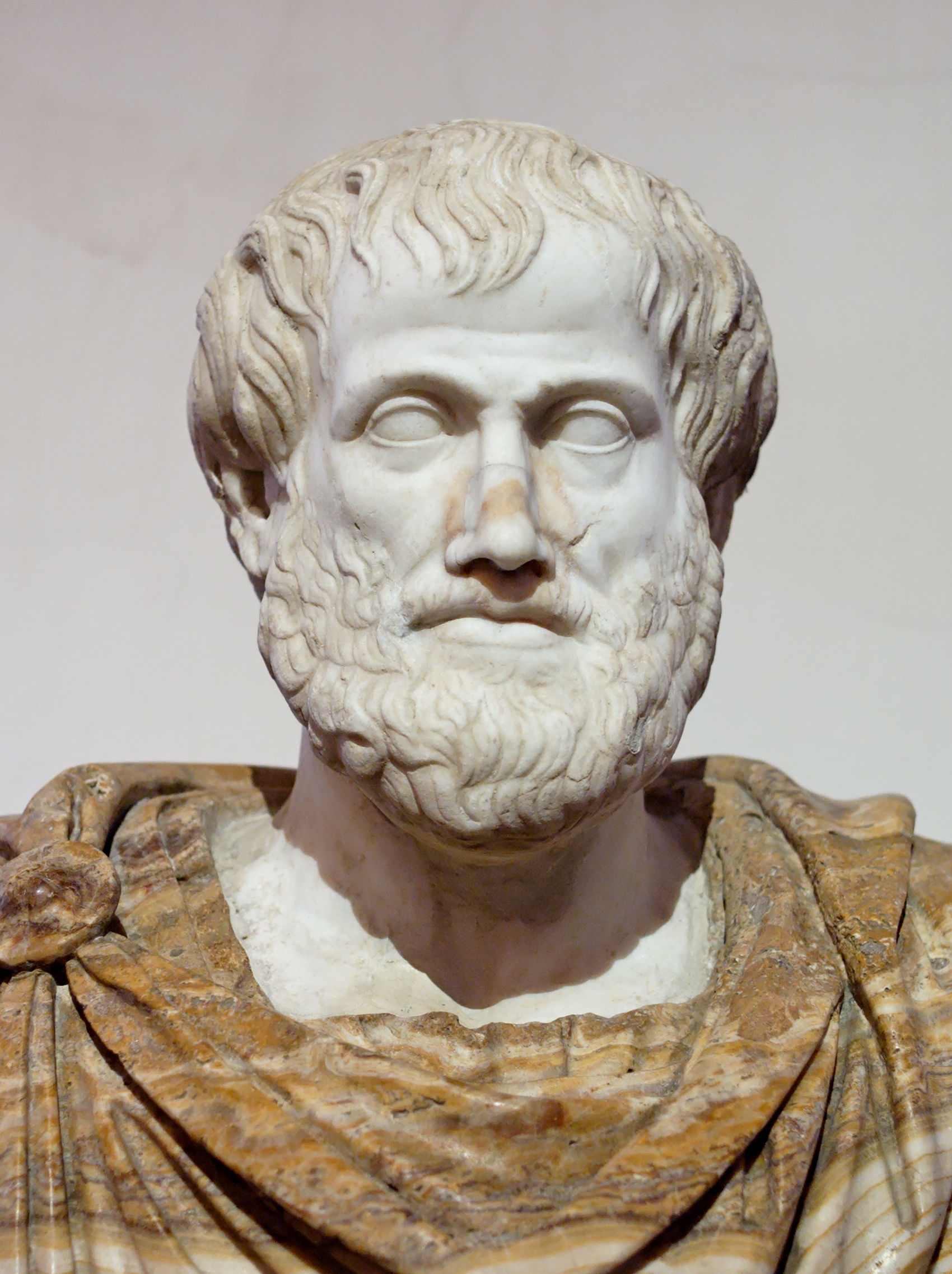
The best informational and persuasive texts weave all three together. They use ethos to make you listen, logos to make you agree, and pathos to make you act.
To actualize these appeals, authors use specific stylistic tools. Figurative language uses words in ways that deviate from literal meanings to create a specific effect.
1. Structural Devices
How a sentence is built affects how it is received by the brain.
- Authors use parallelism to create rhythm within a text and Authors use parallelism to emphasize equal importance among multiple ideas. (e.g., "We shall fight on the beaches, we shall fight on the landing grounds, we shall fight in the fields...")
- Authors use repetition to reinforce a key concept or argument. If an author repeats a phrase, it serves as an anchor for the reader's memory.
- Authors use rhetorical questions to prompt the audience to think about a point rather than to elicit an actual answer. When an author asks, "Can we really afford to ignore climate change?", they don't want you to say "Yes" or "No"—they want you to internalize the urgency of the premise.
2. Devices of Comparison and Association
To explain the unknown, authors anchor it to the known.
- Authors use metaphors in informational texts to draw comparisons between unrelated things without using the words like or as. Calling the human brain "a supercomputer" immediately transfers the properties of processing power and complexity to the reader's understanding of biology.
- An analogy compares two different things to explain a complex concept in simpler terms. If an author explains economic inflation by comparing it to a balloon expanding until it pops, that is an analogy.
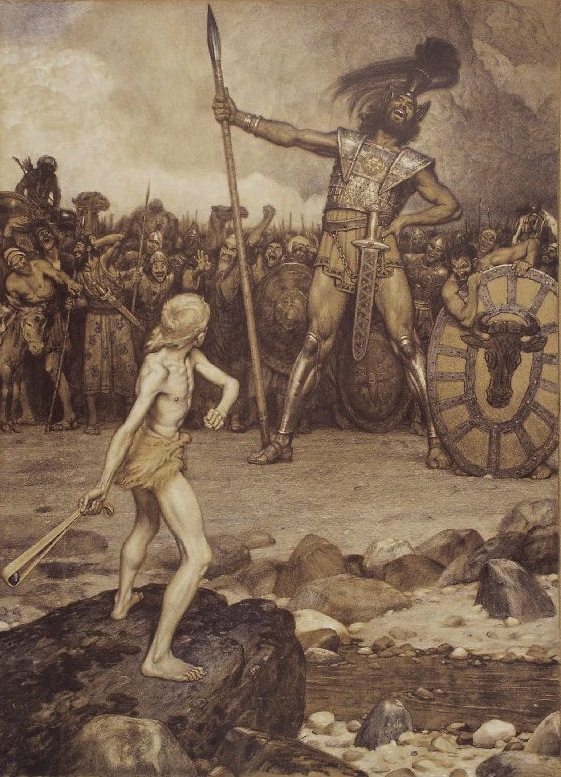
- Allusion is a brief reference to a historical, cultural, or literary person, place, or event. Authors use allusions to connect a new concept to a reader's existing knowledge. Describing a whistleblower's task as a "David and Goliath battle" instantly conveys the power disparity without needing a paragraph of explanation.
3. Devices of Scale and Contradiction
Sometimes, truth is best revealed by distorting reality.
- Hyperbole is a rhetorical device that uses extreme exaggeration to make a point. ("This new zoning law will destroy our town forever.")
- Understatement is a rhetorical device used to intentionally make a situation seem less important than the situation actually is. ("The hurricane caused a bit of a breeze.")
- Juxtaposition is the placement of two contrasting elements close together to highlight differences. Placing a paragraph about immense corporate wealth immediately next to a paragraph about local childhood poverty forces the reader to confront the disparity.
- An oxymoron is a figure of speech that combines two contradictory terms (e.g., "deafening silence" or "controlled chaos").
- A paradox is a statement that appears self-contradictory. However, a paradox can reveal an underlying truth upon closer inspection. Take the famous architectural maxim: "Less is more." It makes no logical sense on its face, but upon reflection, it reveals the profound aesthetic value of minimalism.
4. Devices of Irony and Substitution
Sometimes, what is not said, or what is said backwards, is the most powerful choice of all.
- Verbal irony occurs when a speaker's intended meaning contrasts with the literal meaning of the words spoken. Stepping out into a torrential downpour and saying, "What beautiful weather," is verbal irony.
- Sarcasm is a form of verbal irony used to mock or convey contempt. If a politician says, "Oh, brilliant strategy," in response to a rival's failure, the irony isweaponized to demean.
- Euphemisms are mild or indirect words substituted for words considered too harsh or blunt. In informational texts, euphemisms can be a polite necessity ("passed away" instead of "died"), but they can also be used deceptively by authors to hide uncomfortable truths (calling civilian casualties "collateral damage").
A robust argument is a marvel of logical engineering. But occasionally, the engine stalls. When analyzing rhetoric, you and your students must learn to spot the cracks in the foundation.
A logical fallacy is a flaw in reasoning that weakens a rhetorical argument. While there are dozens of fallacies, the Praxis 5047 expects you to be highly familiar with how authors attempt to manipulate readers when their actual logos (logic) is weak. Two of the most common are:
- An ad hominem fallacy attacks the person making the argument rather than the argument itself. If a scientist presents a paper on renewable energy, and a critic responds by saying, "We shouldn't listen to him because he's an arrogant jerk who dresses poorly," the critic has committed an ad hominem fallacy. They have ignored the data entirely to attack the human.
- A straw man fallacy misrepresents an opponent's argument to make the opponent's argument easier to attack. Imagine a school board member argues, "We should redirect some funding from the football program to the debate team." If an opponent responds, "My colleague wants to destroy all school sports and hates our student-athletes!", they have built a "straw man." They created a fake, extreme version of the argument because it is much easier to defeat than the actual, nuanced proposal.
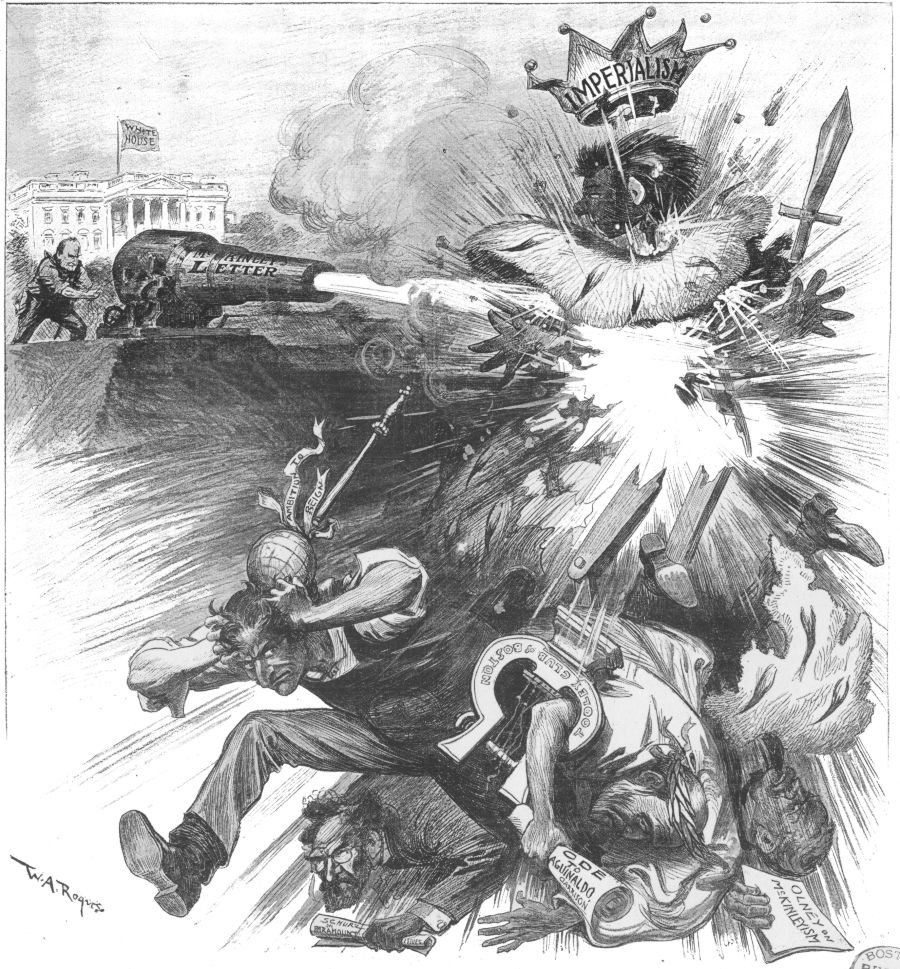
As you prepare for your Praxis exam, keep these principles grounded in the reality of the middle school classroom. When a student reads a historical speech and circles the repeated phrases, they aren't just doing a worksheet; they are mapping parallelism and repetition. When they argue with you that their curfew is a "prison sentence," they are instinctively using hyperbole.
Your goal on the exam is to correctly identify and analyze these elements in complex passages. Your ultimate professional goal is to pull back the curtain on these techniques, showing your students that language is not just a vehicle for sharing facts—it is a toolkit for shaping reality. Mastery of these concepts ensures you are ready to pass the test and ready to teach the next generation how to read the world.