Conventions of Standard English Grammar and Usage
Not sure you’re ready?
Take the ~3-minute readiness diagnostic and see where you stand.
Language is a physical structure, governed by laws as precise as the physics supporting a suspension bridge. When a middle school student writes a sentence that collapses under its own weight, they have not merely "sounded awkward"—they have violated a fundamental principle of structural load. As an English language arts teacher, your role is not to be a pedantic editor wielding a red pen, but an engineer. You must diagnose where the syntax buckled, explain the invisible forces holding the words together, and give the student the tools to rebuild. Understanding the conventions of standard English grammar is about mastering the blueprints of human communication.
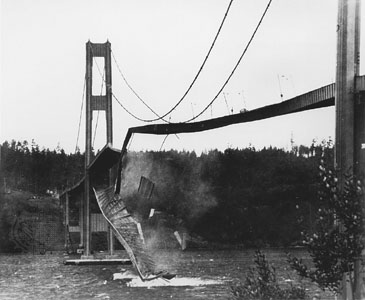
To prepare for the Praxis 5047 exam and the reality of the middle school classroom, we must examine these blueprints. We will break language down into its raw materials, observe how those materials alter their shapes to perform different functions, and study the structural laws that allow clauses to combine into complex, load-bearing ideas.
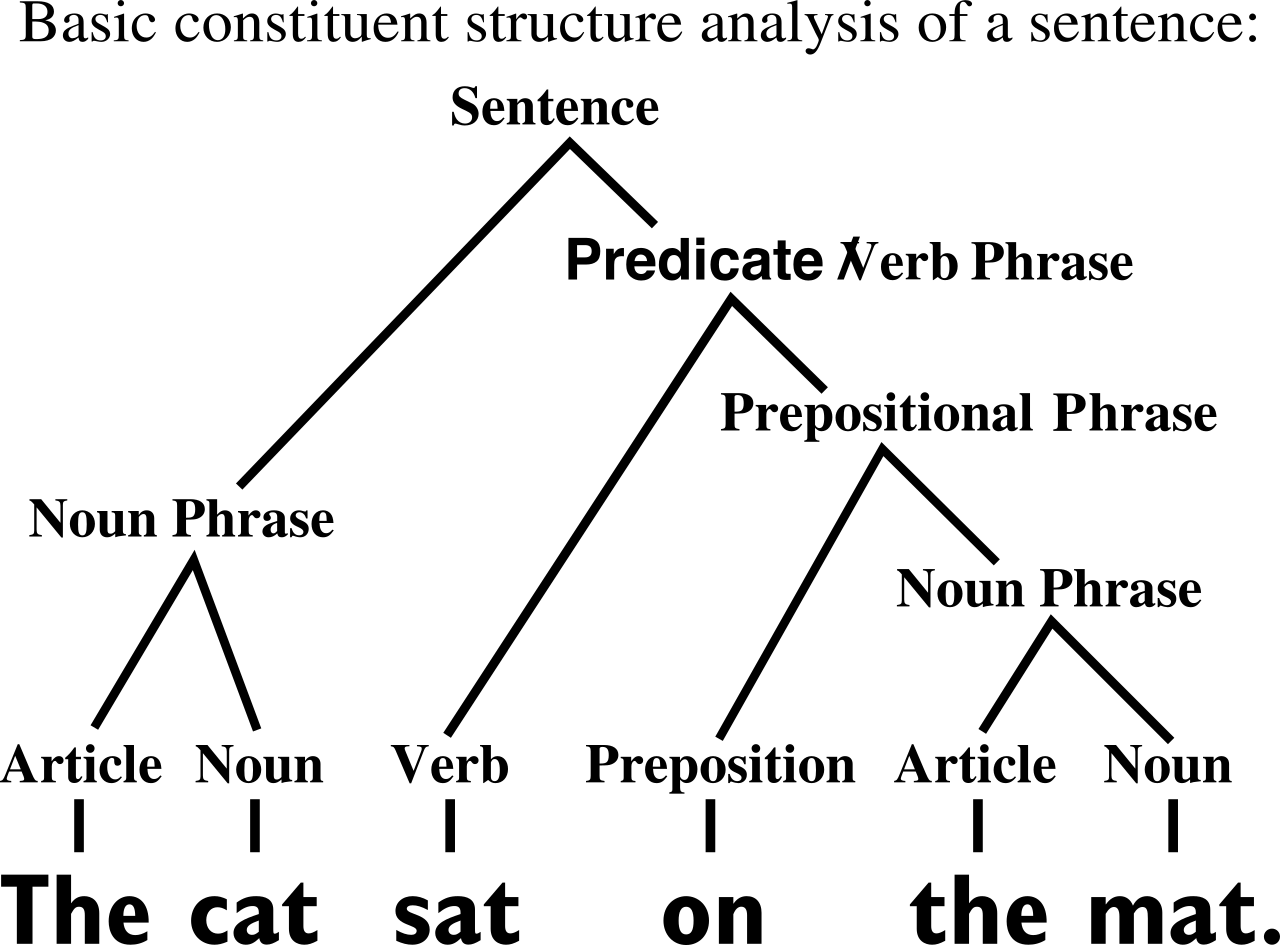
Before we can build, we must understand the fundamental properties of our materials. Every word in a sentence serves a specific, mechanical function.
Nouns: The Anchors
A noun is a word that names a person, place, thing, or idea.
Nouns are the physical and conceptual anchors of our sentences. We categorize them by their specificity and their nature:
- A common noun names a general person, place, thing, or idea (e.g., teacher, school, freedom).
- A proper noun names a specific person, place, thing, or idea (e.g., Mr. Feynman, Elm Street, the Renaissance). Because it designates a singular identity, a proper noun must be capitalized in standard English.
- An abstract noun refers to an idea, quality, or state rather than a concrete object you can touch (e.g., courage, democracy, exhaustion). Middle schoolers often struggle to recognize these as nouns because they lack physical form.
- A collective noun represents a group of individuals acting as a single unit (e.g., choir, team, flock).
Pronouns: The Proxies
To prevent sentences from becoming relentlessly repetitive, we use proxies.
A pronoun is a word used in place of one or more nouns. The specific noun that a pronoun replaces or refers to is called the antecedent.
Pronouns are highly specialized:
- Relative pronouns (who, whom, whose, which, that) do the heavy lifting of subordination. A relative pronoun relates a dependent clause to a word in the main clause, effectively bolting extra information onto a noun.
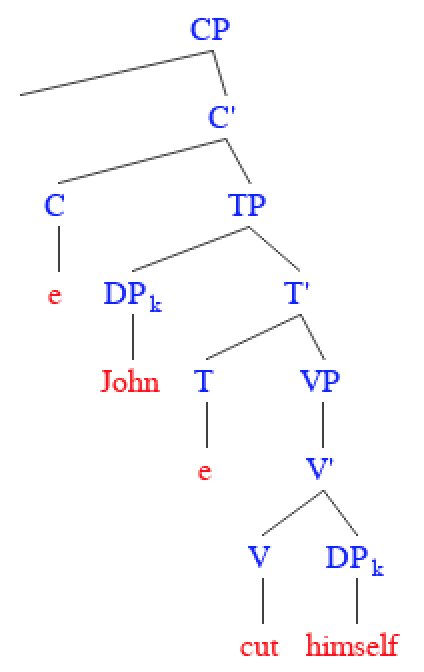
- Reflexive pronouns (myself, themselves) act like mirrors. A reflexive pronoun refers back to the subject of the clause (e.g., The student taught herself to code).
- Intensive pronouns look exactly like reflexive pronouns—an intensive pronoun always ends in the suffix -self or -selves—but they serve a different function. An intensive pronoun emphasizes its antecedent and can be removed without breaking the sentence (e.g., The principal himself approved the field trip).
Verbs: The Engines
If nouns are the anchors, verbs are the engines.
A verb expresses an action, an occurrence, or a state of being.
Verbs dictate how energy flows through a sentence.
- An action verb expresses a physical or mental activity (run, synthesize, ponder).
- A transitive verb requires a direct object to receive the action of the verb. Think of it as throwing a baseball; someone must catch it. (The student finished the essay.)
- An intransitive verb does not take a direct object. The action completes itself. (The student sneezed.)
- A linking verb (is, seems, becomes) does not express action at all. Instead, it acts as an equal sign. A linking verb connects the grammatical subject of a sentence to a subject complement, and a subject complement renames or describes the subject of the sentence (The theory is fascinating).
- An auxiliary verb (or helping verb) accompanies a main verb to express tense, mood, or voice (She has been studying).
Modifiers and Connectors: The Joints and Polish
The remaining parts of speech adjust our meaning and connect our ideas.
- Adjectives: An adjective modifies a noun or pronoun. Its job is precise: an adjective describes, identifies, or quantifies a noun or pronoun (the three heavy books).
- Adverbs: An adverb modifies a verb, an adjective, or another adverb. It often tells us how, when, where, or to what extent (He ran quickly; She is very smart).
- Prepositions: A preposition shows the relationship of a noun or pronoun to another word in the sentence, usually indicating time, space, or logic (The book is under the desk).
- Conjunctions: These are the structural joints of syntax.
- A coordinating conjunction (FANBOYS: for, and, nor, but, or, yet, so) connects words, phrases, or clauses of equal grammatical rank.
- A subordinating conjunction (although, because, if) introduces a dependent clause. By doing so, a subordinating conjunction establishes a relationship between a dependent clause and an independent clause, turning one idea into a condition or cause of the other.
- Correlative conjunctions are pairs of conjunctions (either/or, neither/nor, not only/but also) that work together to coordinate two grammatical elements.
- Interjections: An interjection is a word or phrase that expresses strong emotion (Wow! Ouch!). Because it exists purely for emotional punctuation, an interjection is grammatically independent from the rest of the sentence.
One of the most complex leaps for a middle school writer is realizing that a word's form does not always restrict its function. Verbs can put on disguises and act like other parts of speech.
A verbal is a verb form that functions as a noun, an adjective, or an adverb.
There are three types of verbals you must master for the Praxis:
- The Gerund: A gerund is a verbal ending in the suffix -ing that functions exclusively as a noun. (Reading improves vocabulary. Here, reading is the subject of the sentence).
- The Participle: A participle is a verbal that functions exclusively as an adjective. (The exhausted teacher graded the running student's paper.)
- The Infinitive: An infinitive is a verbal consisting of the word to plus the base form of a verb (e.g., to read, to write). The infinitive is the ultimate multi-tool:
- An infinitive can function grammatically as a noun (To teach is a privilege).
- An infinitive can function grammatically as an adjective (I have an essay to grade).
- An infinitive can function grammatically as an adverb (She studied to pass).
To build a sentence, we assemble our raw materials into clauses. The Praxis frequently tests your ability to identify clause boundaries, as this is the key to both reading comprehension and diagnosing punctuation errors.
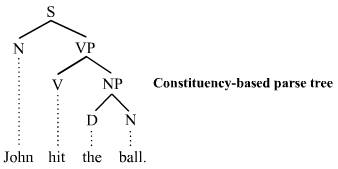
- An independent clause contains a subject and a predicate, and crucially, an independent clause can stand alone as a complete sentence.
- A dependent clause also contains a subject and a predicate, but because it is introduced by a subordinating conjunction or relative pronoun, a dependent clause cannot stand alone as a complete grammatical sentence.
By combining these clauses, we generate the four fundamental sentence architectures:
- A simple sentence contains exactly one independent clause. It contains zero dependent clauses. (Note: It may have compound subjects or verbs, but only one independent clause framework).
- A compound sentence contains two or more independent clauses. It contains zero dependent clauses. We typically bridge these clauses in two ways: A compound sentence can join independent clauses using a coordinating conjunction (often preceded by a comma), or a compound sentence can join independent clauses using a semicolon.
- A complex sentence contains exactly one independent clause. Furthermore, a complex sentence contains at least one dependent clause. This structure is vital for analytical writing because it naturally establishes cause-and-effect or conditional logic.
- A compound-complex sentence contains two or more independent clauses and a compound-complex sentence contains at least one dependent clause.
A bridge will collapse if the load isn't balanced. In grammar, we call this balance agreement and consistency.
Subject-Verb Agreement
The most basic rule of syntax is that the engine must match the anchor.
- Subject-verb agreement requires a singular subject to take a singular verb.
- Subject-verb agreement requires a plural subject to take a plural verb.
This sounds elementary until the sentence gets crowded. The Praxis will attempt to trick you by placing distractors between the subject and the verb. You must remember a vital law of linguistic physics: intervening prepositional phrases between a subject and a verb do not change the grammatical number of the subject.
- Error: The box of chocolates are on the table.
- Correction: The box [of chocolates] is on the table.
Indefinite pronouns also cause friction. Words like everyone, each, nobody refer to non-specific entities. You must memorize that singular indefinite pronouns require singular verbs (Everyone is here), whereas plural indefinite pronouns require plural verbs (Both are here).
Pronoun-Antecedent Agreement
Just as subjects and verbs must match, proxies must match the nouns they replace.
- A pronoun must match its antecedent in grammatical number (singular or plural).
- A pronoun must match its antecedent in grammatical person (first, second, or third person).
- A pronoun must match its antecedent in gender.
A massive pitfall in student writing—and a common Praxis test item—is the vague pronoun reference. The proxy fails if the reader doesn't know who or what it represents.
- A vague pronoun reference occurs when a pronoun has two or more possible antecedents (When Arthur drove the car into the wall, he severely damaged it. Did he damage the car or the wall?).
- A vague pronoun reference occurs when a pronoun has no clear antecedent in the text (On the news, they said it would rain. Who is "they"?).
Timeline and Balance
When narrating an event, standard English requires maintaining a consistent verb tense throughout a sentence. You cannot begin in the past and casually slide into the present. A writer should only shift verb tenses to indicate a deliberate change in the timeline of events (I am grading the essay that he wrote yesterday).
Furthermore, when listing items, we must maintain parallel structure.
- Parallel structure requires using the same grammatical form for words in a series.
- Parallel structure requires using the same grammatical form for phrases in a series.
- Parallel structure requires using the same grammatical form for clauses in a series.
Nonparallel structure occurs when elements in a list do not share the same grammatical form. If you ask a student what they like to do, and they write, "I like hiking, to swim, and bicycling," they have mixed gerunds and infinitives. To restore the structural integrity, align the forms: "I like hiking, swimming, and bicycling."
When the blueprints are ignored, sentences break. As a teacher, you will encounter these specific failure modes daily.
Modifier Mishaps
Modifiers are like spotlights; they illuminate specific parts of a sentence. If the spotlight is aimed wrong, chaos ensues.
- A misplaced modifier is a phrase or clause positioned too far from the target word. Because of its physical distance in the sentence, a misplaced modifier inadvertently modifies the wrong word.
- Example: She served sandwiches to the children on paper plates. (Are the children sitting on paper plates?)
- A dangling modifier is a phrase or clause that lacks a logical target word to modify in the sentence. This happens almost exclusively at the beginning of sentences. A dangling modifier often occurs when the implied subject of an introductory phrase is not the grammatical subject of the sentence.
- Example: Walking through the park, the trees looked beautiful. (The trees were not walking through the park; the sentence lacks the logical subject "I" or "we.")
Boundary Failures: Fragments and Run-ons
Punctuation marks are the borders between ideas. When a student misunderstands clauses, they misplace the borders.
A sentence fragment is a group of words punctuated as a complete sentence that fails to express a complete thought. Fragments manifest in three distinct ways:
- A phrase punctuated as a sentence without a main subject forms a sentence fragment. (Running through the rain.)
- A phrase punctuated as a sentence without a finite verb forms a sentence fragment. (The dog in the yard.)
- A dependent clause punctuated alone forms a sentence fragment. (Because she forgot her homework.)
On the opposite end of the spectrum is the overstuffed sentence.
- A run-on sentence occurs when two independent clauses are joined without appropriate punctuation.
- A run-on sentence occurs when two independent clauses are joined without an appropriate conjunction.
- A comma splice is a type of run-on sentence where two independent clauses are joined by only a comma. A comma is not strong enough to bear the weight of two independent clauses without the help of a coordinating conjunction (The bell rang, the students left -> The bell rang, and the students left).
The Logic Trap: Double Negatives
Finally, we must respect the mathematical logic of language. A double negative occurs when two negative words are used in the same clause to express a single negative idea (I don't have no homework). Because two negatives mathematically cancel each other out to create a positive, standard English conventions dictate avoiding double negatives to express a single negative concept.

By internalizing these architectural laws—the functions of the parts of speech, the transformation of verbals, the structure of clauses, and the rules of grammatical physics—you will do more than pass the Praxis 5047. You will look at a struggling student's paper not as a mess of errors to be marked in red, but as a blueprint waiting to be realigned.