Colonial Interactions
Not sure you’re ready?
Take the ~3-minute readiness diagnostic and see where you stand.
When the global hemispheres finally collided in the late fifteenth and early sixteenth centuries, it was not merely a geographic encounter; it was a violent, biological, and economic tectonic collision. Three disparate worlds—the Americas, Europe, and Africa—were irrevocably bound together through a complex web of trade, conquest, exploitation, and cultural synthesis. As future social studies educators, you must prepare your students to see the colonial period not as a static timeline of settlements, but as a dynamic laboratory of human interaction. The systems of law, race, and economics forged during this era built the foundational scaffolding of the modern world.
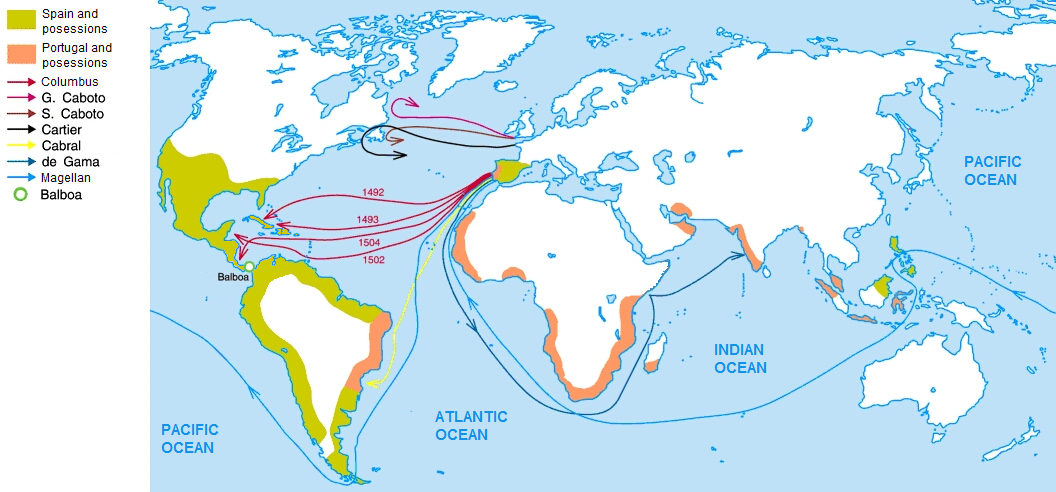
To understand colonial conflict, you have to understand the fundamental, irreconcilable differences in how these societies viewed the physical world. Consider how you might manage a shared teacher’s lounge versus your own personal desk.
Native American societies historically viewed land as a communal resource meant for collective use rather than individual possession. Conversely, European settlers fundamentally viewed land as a commodity subject to individual private ownership. This was not merely a philosophical disagreement; these conflicting paradigms regarding land ownership between European colonizers and Native Americans served as a primary catalyst for territorial warfare.
The Columbian Exchange
Before the colonizers could even build their fences, biology did the heavy lifting of conquest.
The Columbian Exchange: The unprecedented transfer of plants, animals, culture, human populations, technology, and ideas between the Americas, West Africa, and the Old World in the 15th and 16th centuries.
-
Pathogens: The Columbian Exchange introduced deadly Eurasian pathogens such as smallpox and measles to immunologically vulnerable Native American populations. The demographic collapse was apocalyptic; Eurasian diseases introduced during the Columbian Exchange eradicated up to ninety percent of the Native American population following European contact.
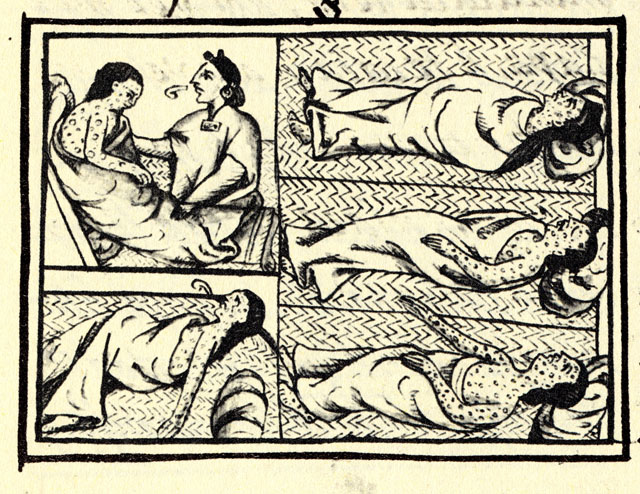
A 16th-century illustration from the Florentine Codex depicting Nahua people suffering from smallpox, representing the devastating biological impact of European contact. -
Flora and Fauna: It was a two-way street that changed the globe. The Columbian Exchange introduced major American staple crops such as maize and potatoes to European diets, sparking a population boom in Europe. In the Americas, the introduction of European horses profoundly transformed the culture of Great Plains Native American tribes by dramatically increasing hunting efficiency.
-
Technology: The introduction of European firearms intensified the lethality of existing conflicts between rival Native American tribes.
A common stumbling block on the Praxis 5081 exam is conflating the behaviors of the different European empires. Each empire brought a distinct economic model that dictated how they interacted with indigenous populations.
The Spanish: Conquest, Labor, and Syncretism
Spain prioritized immense territorial control and wealth extraction. To achieve this, the Spanish Crown implemented the encomienda system to reward conquistadors with the forced labor of Native Americans.
This brutal exploitation did not go unnoticed. Bartolomé de las Casas was a Spanish Dominican friar who fiercely condemned the brutal exploitation of Native Americans by Spanish colonists. In response to such pressure, the Spanish Crown officially replaced the encomienda system with the repartimiento system in 1542.
The Repartimiento System: A legal framework that mandated that Native American communities supply a temporary quota of laborers for Spanish colonial enterprises, rather than being bound to an individual conquistador.
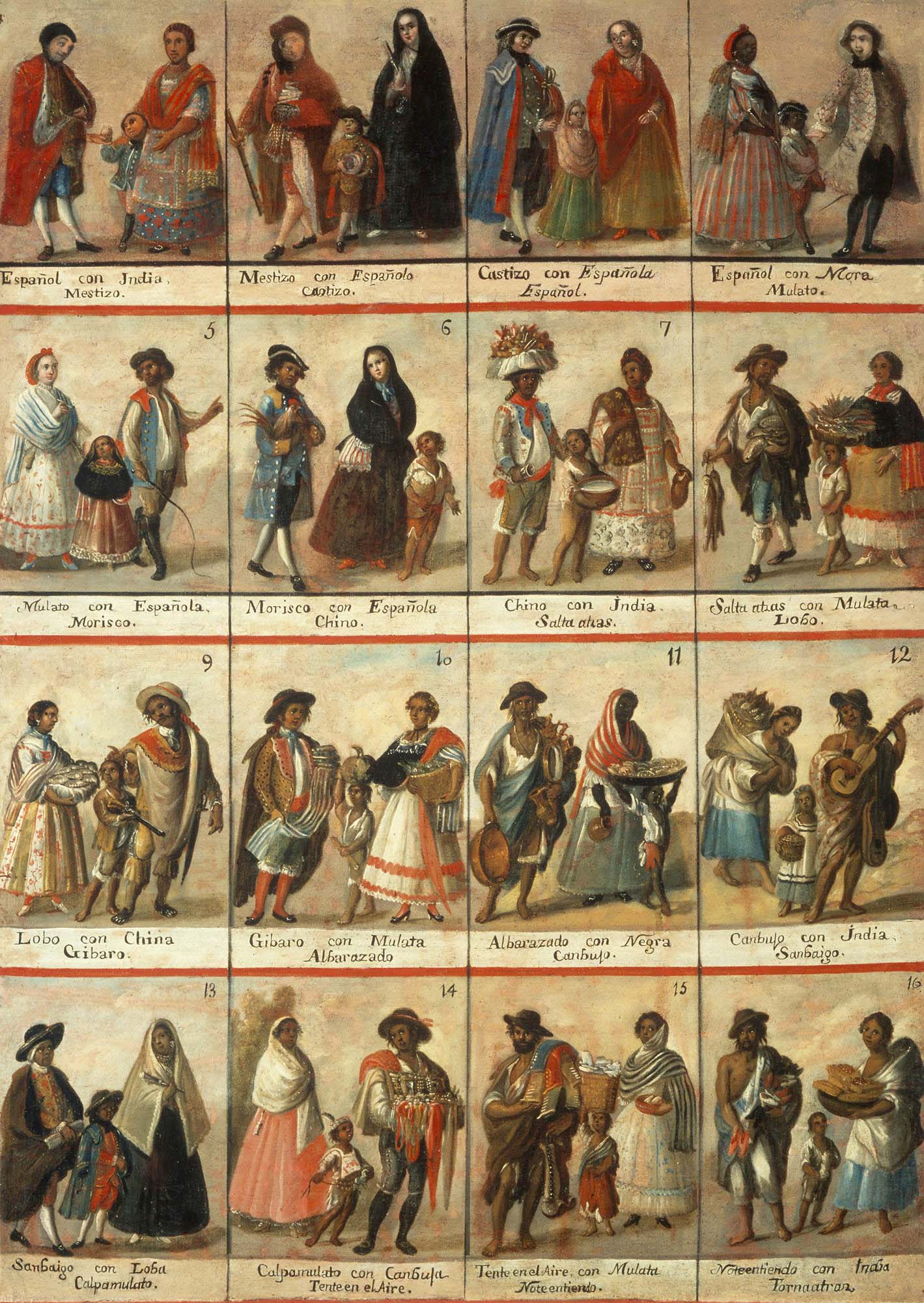
To manage this complex, multi-ethnic society, Spanish colonial authorities established the casta system to organize society into a strict racial hierarchy based on varying degrees of Spanish, Native American, and African ancestry. Culturally, Spanish colonial missions in places like California and Florida actively sought to forcibly assimilate Native Americans into Spanish culture. However, human culture is remarkably resilient. Native Americans frequently practiced religious syncretism by subtly blending traditional indigenous spiritual beliefs with Catholic teachings introduced by Spanish missionaries.
When oppression became unbearable, indigenous peoples struck back. Popé was a Tewa religious leader who successfully orchestrated the Pueblo Revolt of 1680. This was a massive indigenous victory; the Pueblo Revolt of 1680 successfully expelled Spanish colonizers from the province of New Mexico for twelve years.
The French and Dutch: Fur and Alliances
If Spain was a mining corporation, France and the Netherlands were international trading firms.
-
The French: French colonial survival in North America depended heavily on maintaining strong diplomatic and economic alliances with indigenous Native American tribes. French colonists primarily engaged in the lucrative fur trade with Native American partners rather than establishing massive agricultural settlements. Because they needed partners, French fur traders frequently integrated into Native American kinship networks by marrying Native American women. The descendants of French colonial fur traders and Native American women became a distinct cultural group known as the Métis. Even French religion was more adaptive; French Jesuit missionaries attempted to convert Native Americans to Catholicism without forcing the Native Americans to completely abandon their traditional cultures.
-
The Dutch: Dutch colonizers formed a formidable economic and military alliance with the Iroquois Confederacy to dominate the regional North American fur trade. Armed with new technology, the Iroquois Confederacy utilized European firearms acquired from Dutch traders to aggressively expand their territory during the Beaver Wars.
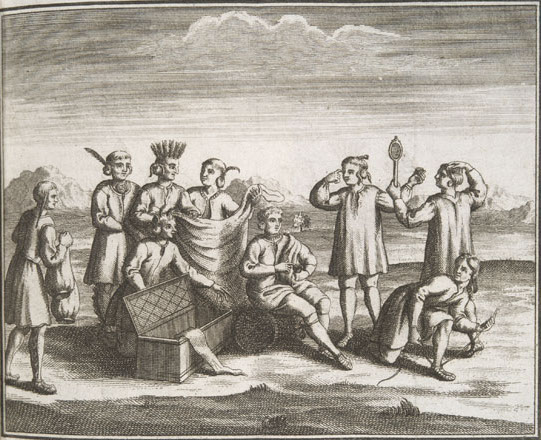
An engraving showing Indigenous peoples engaging in the fur trade with European merchants, exchanging pelts for manufactured goods and firearms.
Teaching note: Use the Beaver Wars to teach your students about ecological economics! The insatiable European market demand for beaver pelts caused a severe ecological depletion of beaver populations throughout the northeastern woodlands of North America.
The English: Land, Agriculture, and Displacement
Unlike the French, English colonizers prioritized massive agricultural expansion over establishing mutually beneficial trade networks with Native Americans. They wanted to build permanent, exclusive English towns.
This relentless English focus on agricultural expansion inevitably led to the permanent geographic displacement of Native American communities from their ancestral homelands. Furthermore, English colonists strictly avoided intermarriage with Native Americans to maintain rigid cultural and racial boundaries.
The timeline of English-Native relations is a steady drumbeat of escalating warfare over land:
-
First Anglo-Powhatan War: Concluded in 1614 with a diplomatic peace sealed by the marriage of English colonist John Rolfe and the Powhatan woman Pocahontas.
-
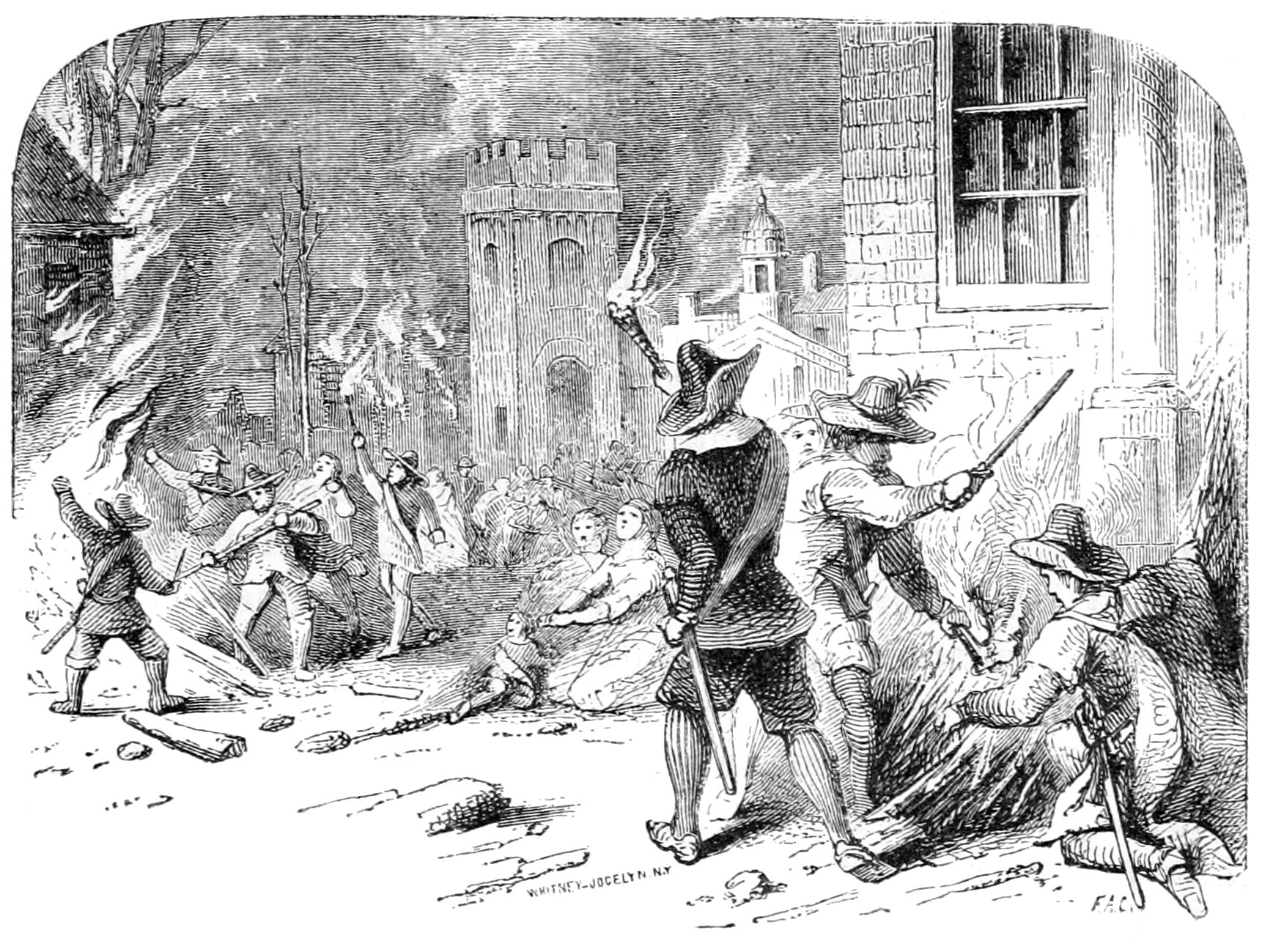
Pequot War (1637): English Puritan colonists engaged in a brutal conflict against the Pequot tribe. English colonial forces allied with the Mohegan and Narragansett tribes to militarily decimate the Pequot tribe. This war culminated in the Mystic massacre of hundreds of Pequot noncombatants by English forces.
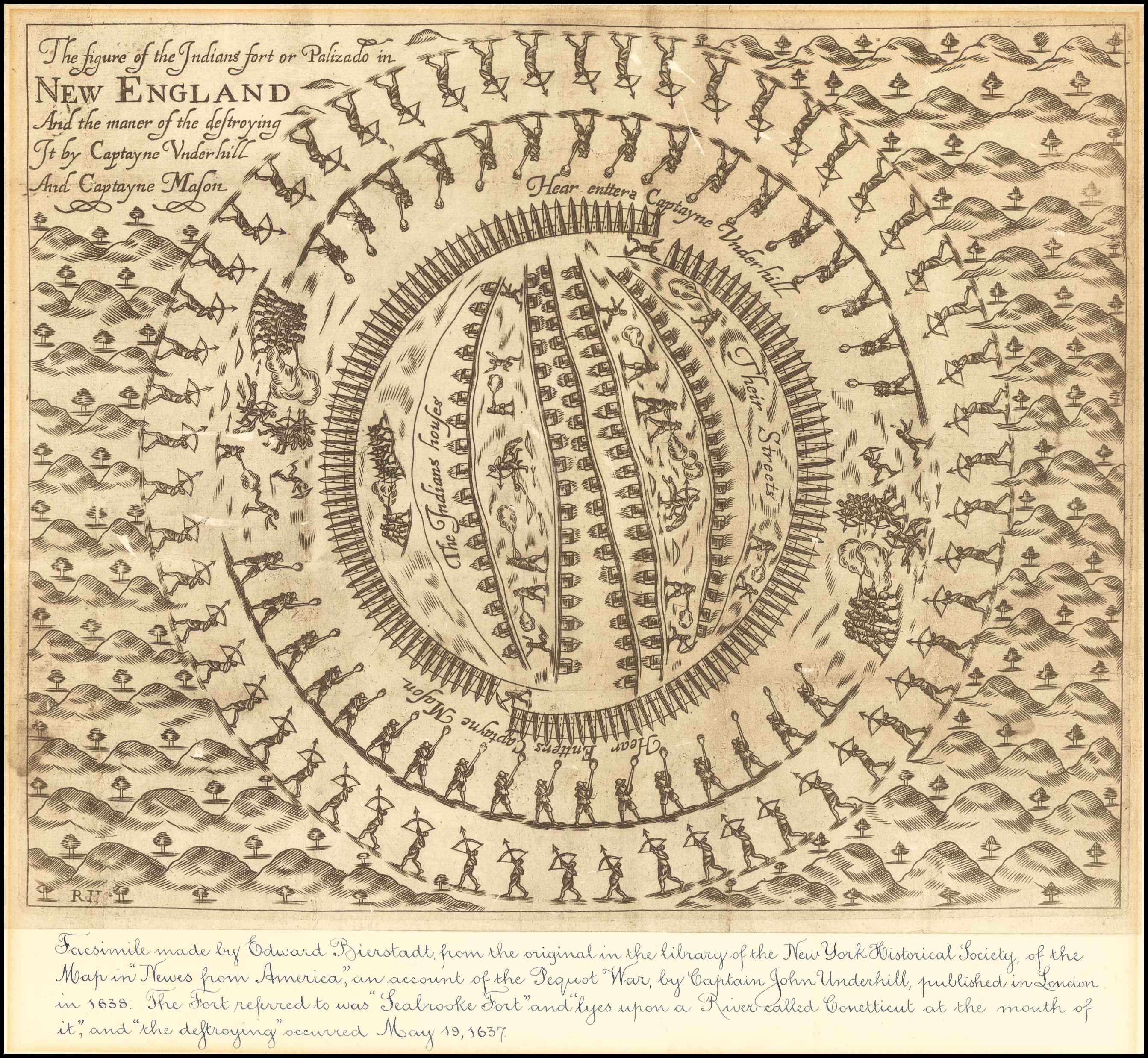
A 1638 engraving depicting the Mystic Massacre, in which English colonists and their Native allies surrounded and burned a Pequot village. -
King Philip's War (1675): This erupted as a direct result of ongoing English encroachment onto Wampanoag lands in New England. Metacom was the prominent Wampanoag leader who organized a broad Native American military coalition during this war. King Philip's War resulted in the deaths of thousands of Native Americans and effectively ended organized indigenous military resistance in southern New England.
Quick Reference: Colonial Models
| Empire | Primary Economic Focus | Relationship with Natives | Key Demographics / Social System |
|---|---|---|---|
| Spain | Silver, Gold, Agriculture | Conquest, Forced Labor, Missions | Casta system, widespread intermixing |
| France | Fur Trade | Diplomatic Alliances, Kinship | Métis, small male-dominated outposts |
| England | Cash Crops, Settler Agriculture | Exclusion, Displacement | Family-unit settlements, rigid racial lines |
To fuel the massive agricultural engines of the Americas, Europe turned to the systematic exploitation of African bodies. Portuguese explorers were the initial Europeans to systematically initiate the transatlantic trade of enslaved Africans during the fifteenth century.
Why did this happen? Follow the money. European imperial demand for labor-intensive cash crops was the primary economic engine driving the massive expansion of the transatlantic slave trade.
The African Dynamics
A common misconception among high schoolers is that Europeans marched into the African interior to capture people. In reality, European slave traders predominantly purchased enslaved Africans directly from West African kingdoms rather than personally capturing enslaved individuals. West African political leaders frequently traded enslaved war captives to European coastal merchants in direct exchange for European firearms.
This horrific economic feedback loop destroyed the stability of the continent. The transatlantic slave trade fundamentally destabilized West African societies by heavily draining male populations and escalating inter-regional warfare.
The Triangular Trade and Middle Passage
The transatlantic slave trade operated within a broader interconnected maritime commercial system known as the Triangular Trade (goods to Africa, slaves to the Americas, raw materials to Europe).
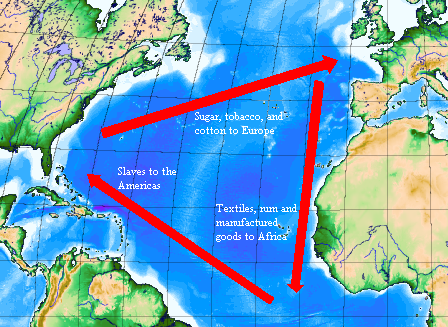
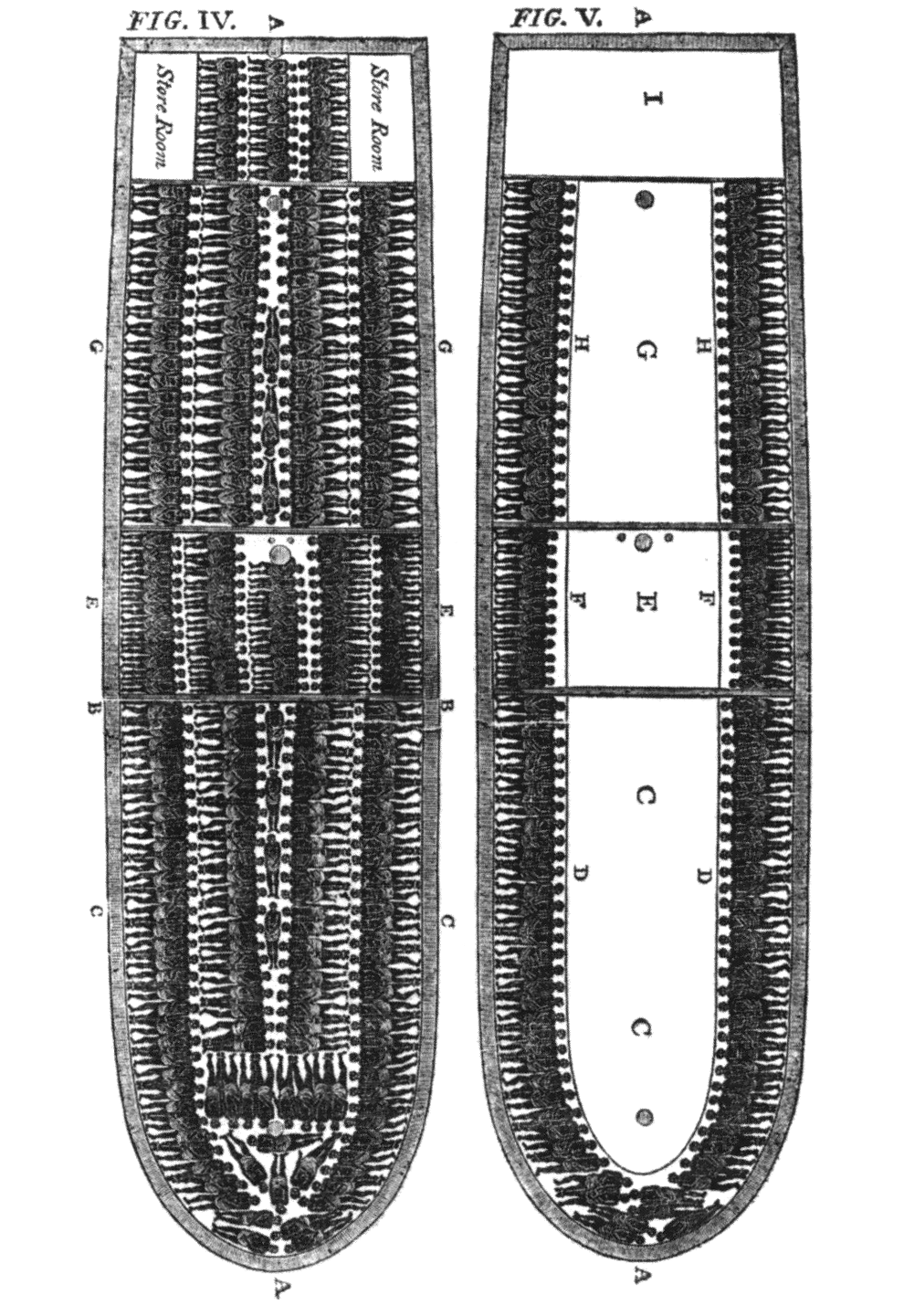
The horrifying core of this triangle was the Middle Passage—the profoundly brutal oceanic crossing that transported millions of enslaved Africans across the Atlantic Ocean to the Americas. Mortality rates for enslaved Africans during the Middle Passage frequently exceeded fifteen percent due to rampant infectious disease and horrific physical conditions.
How did the English colonies transition to a society legally defined by racial slavery? It was a calculated, economic and political pivot, best observed in Virginia.
Initially, seventeenth-century Virginia tobacco planters relied heavily on indentured servants imported from England for arduous agricultural labor.
Indentured Servants: Individuals legally bound by contract to perform unpaid labor for a specific number of years in exchange for transatlantic passage.
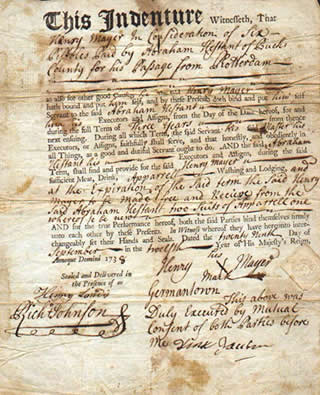
However, these servants eventually finished their contracts, wanted land, and found none available. In 1676, Nathaniel Bacon led a violent armed rebellion composed largely of angry landless former indentured servants against the Virginia colonial government.
Following Bacon's Rebellion, Virginia elites perceived the rapidly growing population of disgruntled landless white freedmen as a severe internal threat to colonial social stability. Their solution was chillingly pragmatic: Virginia planters deliberately shifted from utilizing indentured servants to aggressively purchasing enslaved Africans to create a permanently manageable labor force.
To lock this system in place, the Virginia colonial legislature enacted a foundational 1662 law declaring that the enslavement status of a child was exclusively determined by the enslavement status of the child's mother. This 1662 Virginia law regarding matrilineal inheritance of slave status formally institutionalized a permanent system of lifelong hereditary enslavement. Through colonial slave codes, enslaved Africans were legally classified strictly as chattel property rather than as human beings possessing inherent rights.
Despite being legally classified as property, enslaved Africans actively shaped colonial economies and fiercely resisted their subjugation.
Economic Contributions: Africans forcibly brought to the Americas successfully introduced the cultivation of resilient staple crops such as yams, okra, and black-eyed peas. Furthermore, enslaved Africans imported into the Carolina colony possessed specialized agricultural knowledge of rice cultivation that massively enriched European plantation owners.
Violent Resistance and Oppressive Backlash: In 1739, the Stono Rebellion erupted as a major violent uprising orchestrated by enslaved Africans in the colony of South Carolina. In direct response to the Stono Rebellion, the South Carolina colonial legislature immediately passed the oppressive Negro Act of 1740.
- The Negro Act explicitly prohibited enslaved people in South Carolina from legally assembling in independent groups.
- It legally stripped enslaved people in South Carolina of the right to learn to read or write.
Covert and Cultural Resistance: Stripped of the ability to openly revolt, resistance became embedded in daily life. Enslaved Africans engaged in continuous covert economic resistance by purposely slowing down their mandated pace of physical work, and by intentionally breaking essential agricultural tools.
Culturally, enslaved Africans engaged in subtle resistance by covertly maintaining indigenous West African spiritual practices. In the isolated coastal regions of South Carolina and Georgia, enslaved Africans organically developed the Gullah language. The Gullah language represents a dynamic cultural linguistic synthesis combining English vocabulary with complex grammar from various West African languages.
Finally, as a social studies educator, it is your duty to correct the geographical myth that slavery was purely a "Southern" sin. The northern economy was entirely intertwined with the slave trade.
Northern English colonies economically benefited immensely from the transatlantic slave trade through the profitable construction of slave ships. Furthermore, New England merchants acquired immense wealth by distilling rum to export directly to Africa in exchange for enslaved human beings. The economic foundations of the entire colonial project were built upon this devastating, interconnected system.