Modern Political Realignment
Not sure you’re ready?
Take the ~3-minute readiness diagnostic and see where you stand.
Imagine an electoral map of the United States as a tectonic plate. For decades, the political geography was locked into a supercontinent known as the New Deal coalition, a massive alliance that kept the Democratic Party in steady power. But beneath the surface, intense heat and pressure from civil rights legislation, cultural upheavals, and economic shocks were building. When the crust finally snapped in the late twentieth century, the American South sheared away, massive populations drifted toward the Sunbelt, and the fundamental role of the federal government was entirely redefined. For a social studies teacher, explaining modern American history requires moving beyond a simple timeline of presidents. It demands showing students how and why the ground shifted beneath our feet—how the massive expansion of the federal safety net in the 1960s triggered a conservative backlash that fundamentally realigned the nation’s political DNA, and how the United States simultaneously navigated its rapidly evolving role on the global stage.
To understand the modern conservative realignment, you must first understand what it was reacting against. In 1964, President Lyndon B. Johnson launched The Great Society, a sweeping set of domestic programs. The primary goal of the Great Society was the elimination of poverty and racial injustice in the United States.
If Franklin D. Roosevelt’s New Deal was about saving the American economic system from collapse, Johnson’s Great Society was about perfecting it. It relied on the assumption that a wealthy nation possessed both the moral obligation and the financial capacity to cure societal ills.
Legislative Cornerstones
The sheer volume of legislation passed during this era fundamentally rewired American society. As a teacher, when you map this era, categorize the legislation into three pillars: Civil Rights, the Safety Net, and Immigration.
- Civil Rights:
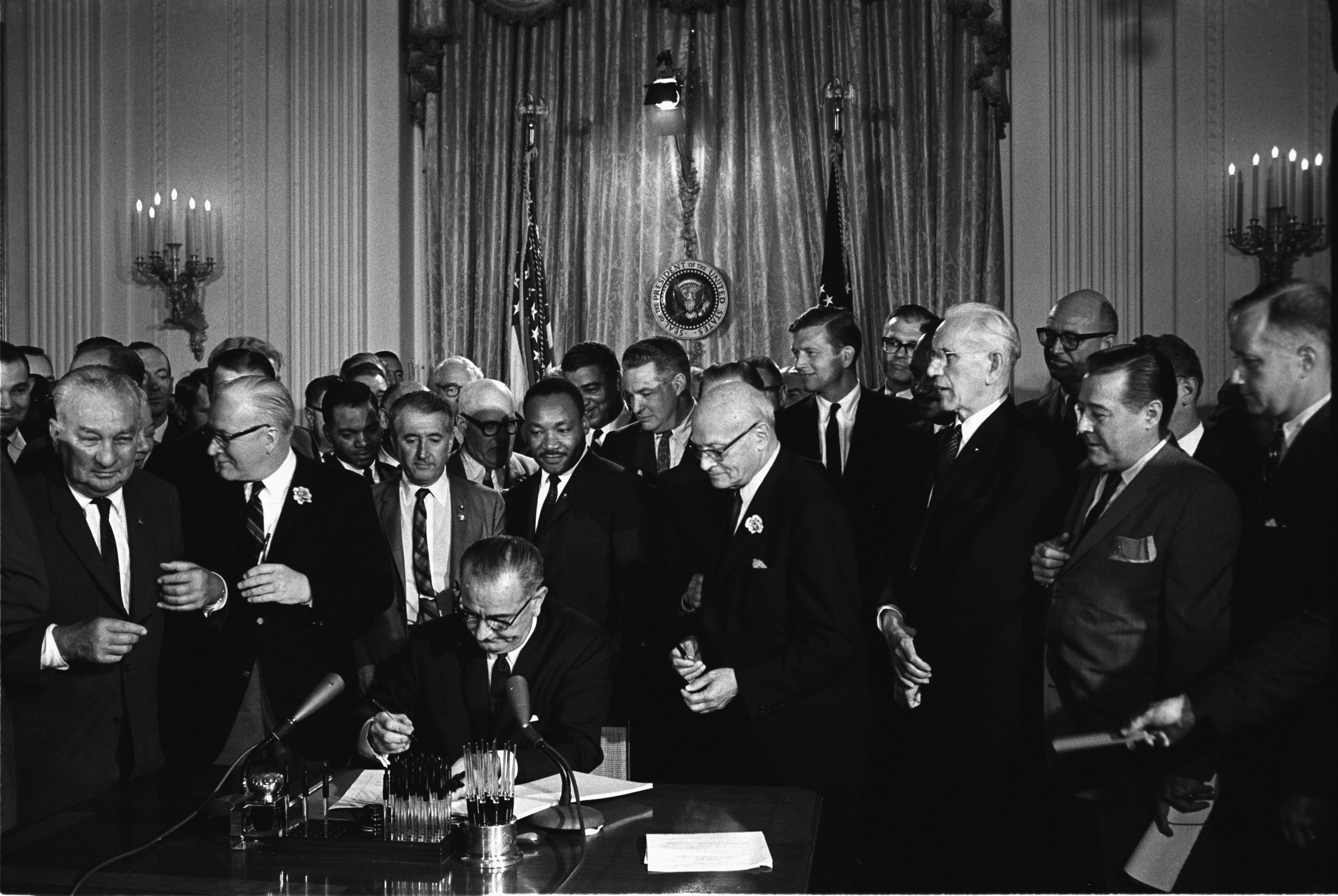
- The Civil Rights Act of 1964 outlawed discrimination based on race, color, religion, sex, or national origin. It dismantled the legal framework of Jim Crow.
- The Voting Rights Act of 1965 prohibited racial discrimination in voting practices, allowing millions of African Americans in the South to access the ballot box for the first time.
-
The Safety Net (The War on Poverty):
- President Johnson's War on Poverty created the Office of Economic Opportunity to administer federal anti-poverty programs, launching initiatives like Head Start and Job Corps.
- The Medicare program was established in 1965 to provide federal health insurance for Americans aged 65 and older.
- The Medicaid program was established in 1965 to provide health insurance coverage for low-income individuals.
-
Immigration:
- The Immigration and Nationality Act of 1965 abolished the national origins quota system that had heavily favored Western European immigrants since the 1920s.
- Crucially, the Immigration and Nationality Act of 1965 prioritized family reunification and the admission of skilled immigrants, a shift that profoundly altered the demographic makeup of the United States over the next half-century.
The Conceptual Shift: Taken together, Great Society programs significantly expanded the size and scope of the United States federal government. It shifted the government from an economic referee into a proactive social engineer.
The Backlash
Every action in physics has an equal and opposite reaction; politics is no different. Conservatives criticized Great Society programs for creating government dependency and increasing federal spending. They argued that well-intentioned anti-poverty programs were actually trapping citizens in cycles of reliance and that the federal bureaucracy was becoming an unmanageable, expensive leviathan. This critique became the intellectual bedrock of the looming conservative revolution.
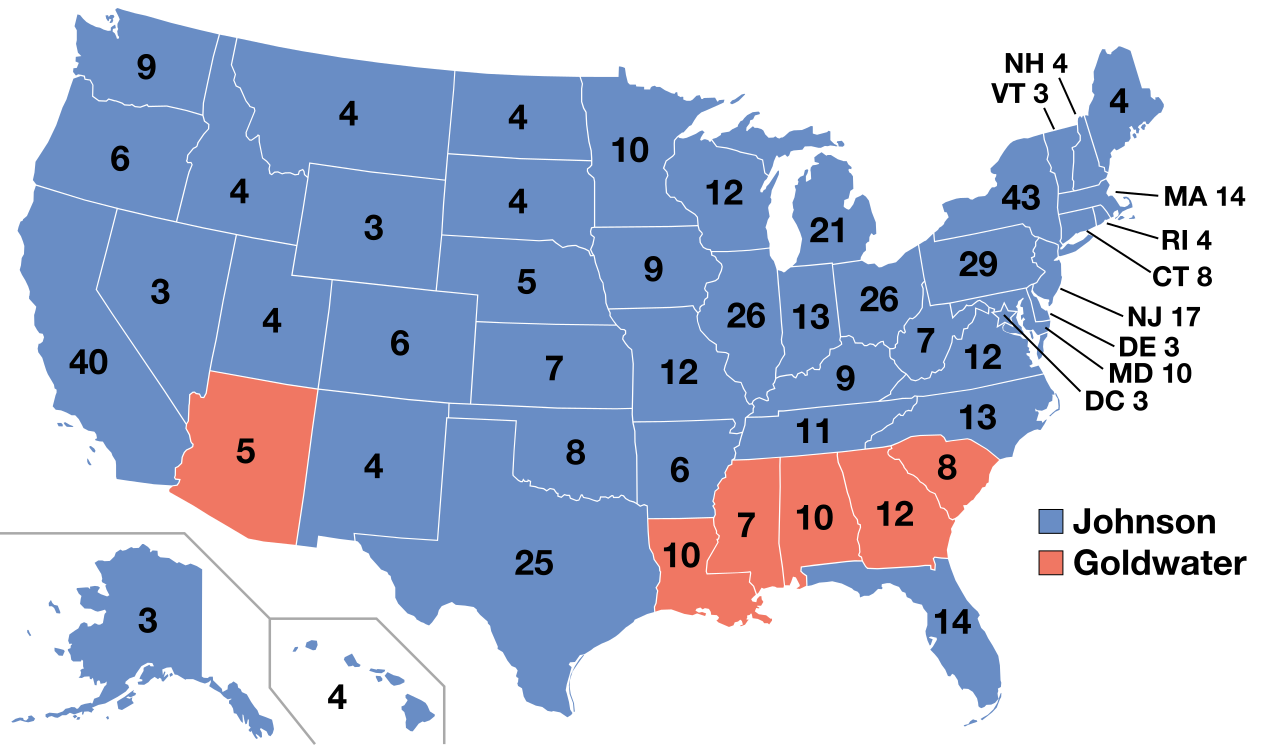
For your students, electoral realignment is best visualized through a map of the American South. From the end of Reconstruction until the 1960s, the South was a solid block of Democratic blue.
The New Deal Coalition consisted of labor unions, minority groups, and Southern white Democrats. It was a historically bizarre alliance—urban northern liberals and minority voters allied with segregationist Southern whites—held together solely by shared economic interests forged during the Great Depression.
But an alliance built on economics cannot survive fundamental disagreements on human rights and culture. The New Deal Coalition began to fracture in the 1960s over civil rights legislation and cultural issues. When the national Democratic Party championed the Civil Rights Act and the Voting Rights Act, Southern white Democrats felt betrayed by their own party.
The Southern Strategy and the Silent Majority
Sensing this fracture, the Republican Party executed a geographic pivot. The Southern Strategy was a Republican electoral tactic designed to gain political support among white voters in the South.
How did they do it? The Southern Strategy capitalized on white resentment toward federal civil rights legislation and desegregation. Instead of overtly racist rhetoric, politicians used "dog whistles"—language focusing on "states' rights," "law and order," and pushback against forced busing. The result was a political earthquake: The American South transitioned from a predominantly Democratic stronghold to a Republican stronghold during the late twentieth century.
At the same time, President Richard Nixon appealed to the Silent Majority of Americans who opposed the counterculture and anti-war protests. Nixon successfully painted the Democratic Party as the party of radical youth, urban riots, and coastal elites, bringing working-class whites into the Republican fold.
Ideas only gain traction when the environment is right. In the 1970s, two structural changes—one economic, one demographic—accelerated the conservative realignment.
The Economic Engine Overheats: Stagflation
For decades, economists believed in the Keynesian model: governments could manage the economy by spending during busts and taxing during booms. It assumed inflation and unemployment lived on a seesaw—if one went up, the other went down.
Then came the 1970s. Stagflation is defined by the simultaneous occurrence of high inflation, high unemployment, and slow economic growth. It was an economic paradox that broke the seesaw. Driven in part by massive federal spending (on the Vietnam War and Great Society) and external oil shocks, prices skyrocketed while people lost their jobs.
Economic stagflation in the 1970s undermined public confidence in liberal Keynesian economic policies. If the government couldn't manage the economy, voters were ready to hear the conservative argument that government itself was the problem.

The Power Shift: The Sunbelt Migration
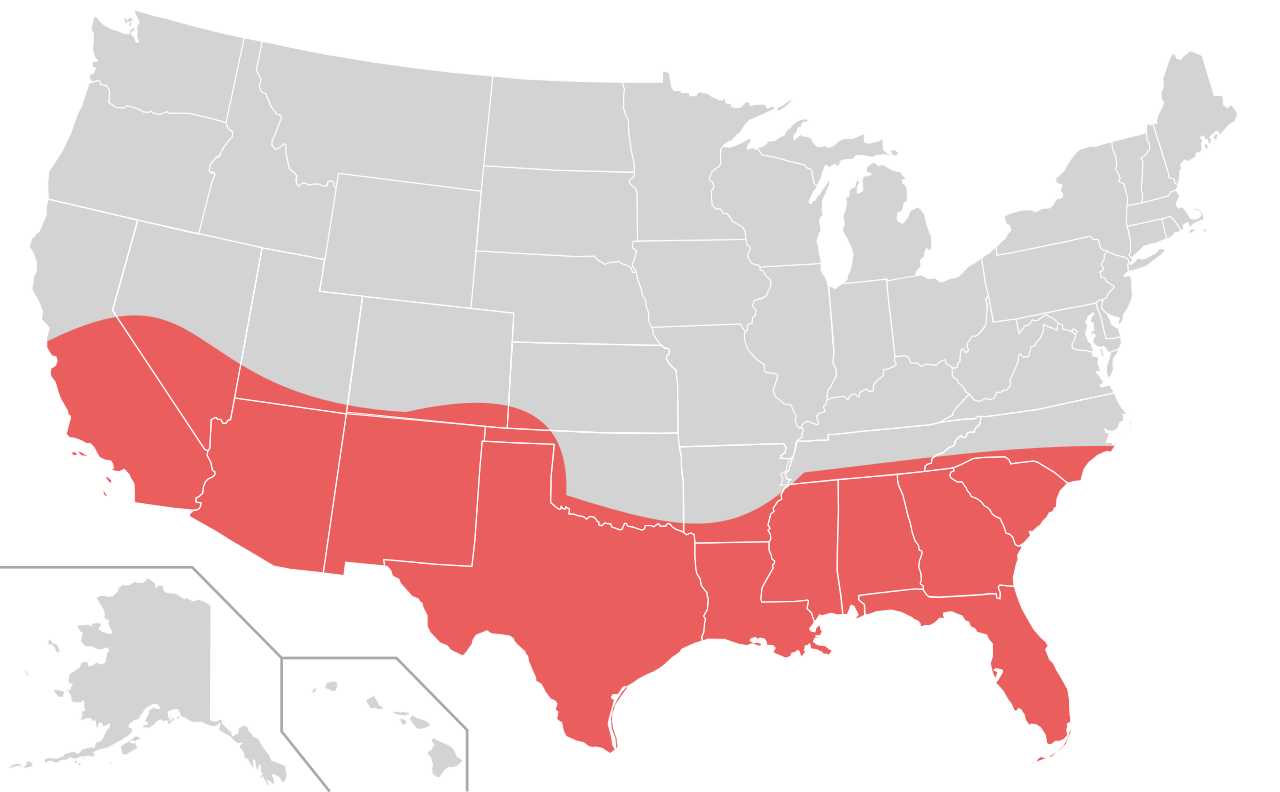
Geography is destiny in American politics. The Sunbelt refers to the southern and southwestern states that experienced significant population growth in the late twentieth century. Thanks to the proliferation of air conditioning, cheaper non-union labor, and booming aerospace and defense industries, millions of Americans packed moving vans and left the rustbelt North for states like Florida, Texas, and Arizona.
Because the US Census reapportions Congressional seats every ten years, the migration of populations to the Sunbelt increased the Electoral College power of conservative-leaning states. The mathematical center of American political power drifted decisively South and West.
By 1980, the stage was set for a complete paradigm shift. The final piece of the coalition was the activation of religious voters.
The Moral Majority
The Moral Majority was a prominent American political organization associated with the Christian right and the Republican Party. Reverend Jerry Falwell founded the Moral Majority organization in 1979.
Prior to this, many evangelical Christians viewed politics as a dirty, worldly affair to be avoided. But perceived threats from secularism, the sexual revolution, and Supreme Court rulings on school prayer and abortion triggered a massive mobilization. The Christian right mobilized evangelical voters around social issues like opposition to abortion and support for school prayer. They became the highly motivated grassroots infantry of the Republican Party.
The Reagan Revolution
All of these threads—Southern whites, the Silent Majority, Sunbelt power, and the Christian Right—woven together, formed the new Republican coalition. The election of Ronald Reagan to the presidency in 1980 marked a definitive conservative realignment in American politics.
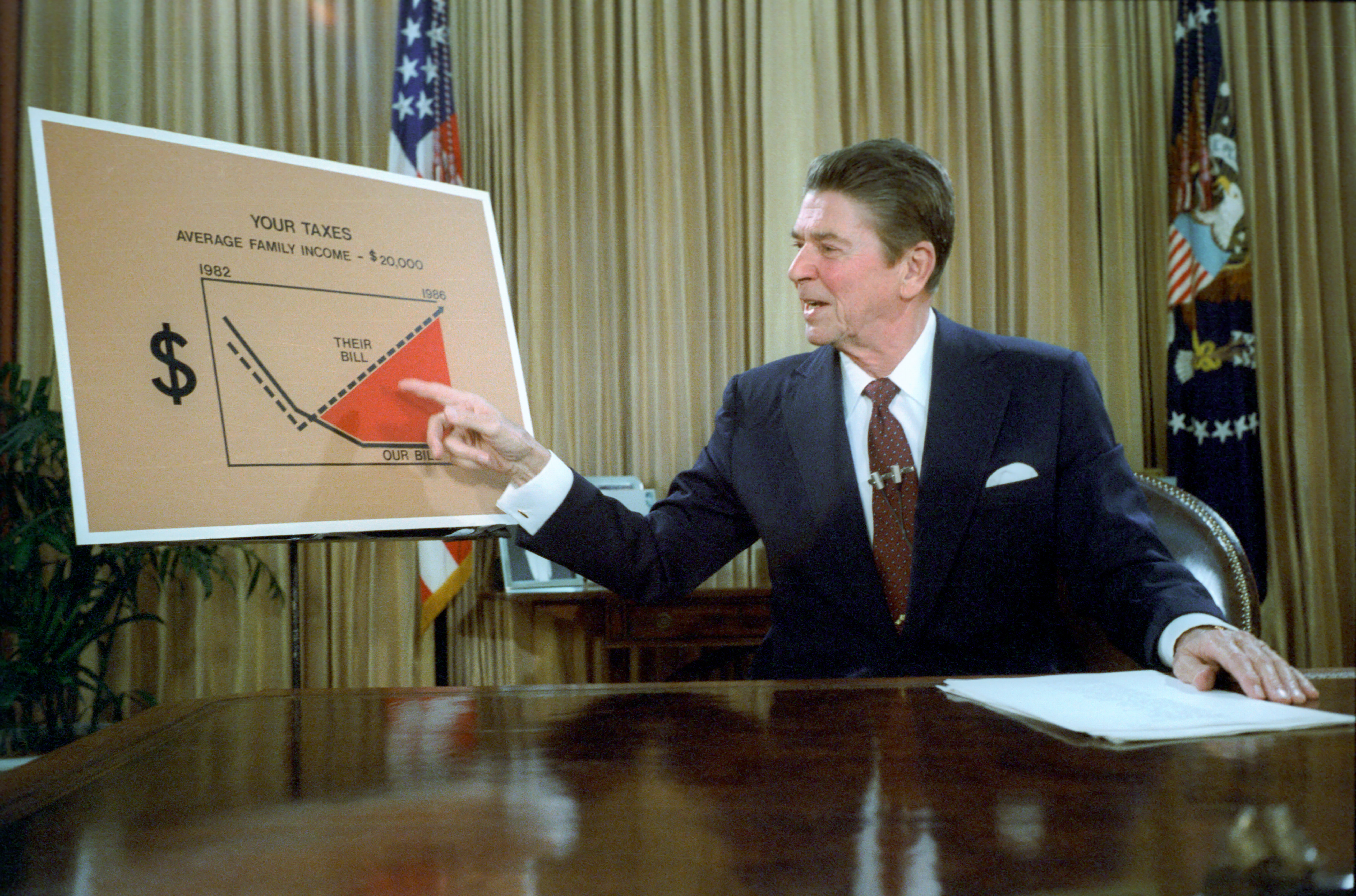
Reagan offered a sunny, optimistic vision heavily rooted in conservative economic theory. Reaganomics refers to the economic policies promoted by President Ronald Reagan during the 1980s.
To teach this, contrast Keynesianism (which stimulates demand by giving consumers money) with Reagan's approach: Reaganomics relied on supply-side economics to stimulate economic growth.
Supply-Side Economics: The theory postulates that lowering taxes and decreasing business regulations increases production and economic growth. The idea is that if you remove barriers for producers (the "supply" side), they will invest, build factories, and hire workers, ultimately expanding the tax base.
The 1994 Culmination
The momentum of the Reagan era crested a decade later. Reacting to the early years of the Clinton administration, Republicans introduced a sweeping manifesto. The Contract with America was a 1994 Republican legislative agenda promising to reduce the size of the federal government. It nationalized the midterm elections—turning local races into a referendum on federal power.
The strategy was devastatingly effective: The 1994 midterm elections resulted in Republicans gaining control of both the House and the Senate for the first time in forty years. The conservative realignment of the domestic political apparatus was complete.
| Era | Dominant Philosophy | View of Federal Government | Key Coalitions |
|---|---|---|---|
| New Deal/Great Society (1930s-1960s) | Liberalism / Keynesianism | Primary engine of social equity and economic management. | Labor unions, minorities, Southern Democrats. |
| Conservative Ascendancy (1980s-1990s) | Conservatism / Supply-Side | An obstacle to economic growth; a threat to traditional values. | Sunbelt suburbanites, the Christian Right, Southern whites. |
While the United States was experiencing domestic turbulence and realignment, its role in the world was undergoing an equally dramatic transformation.
The Brief Unipolar Moment
The dissolution of the Soviet Union in 1991 left the United States as the sole global superpower. The half-century ideological cage match of the Cold War ended in an undeniable American victory.
The post-Cold War era of the 1990s is often described as a unipolar international system dominated by the United States. Unipolarity is like a solar system with only one massive sun; the gravitational pull of the US dictated global economics, culture, and security.
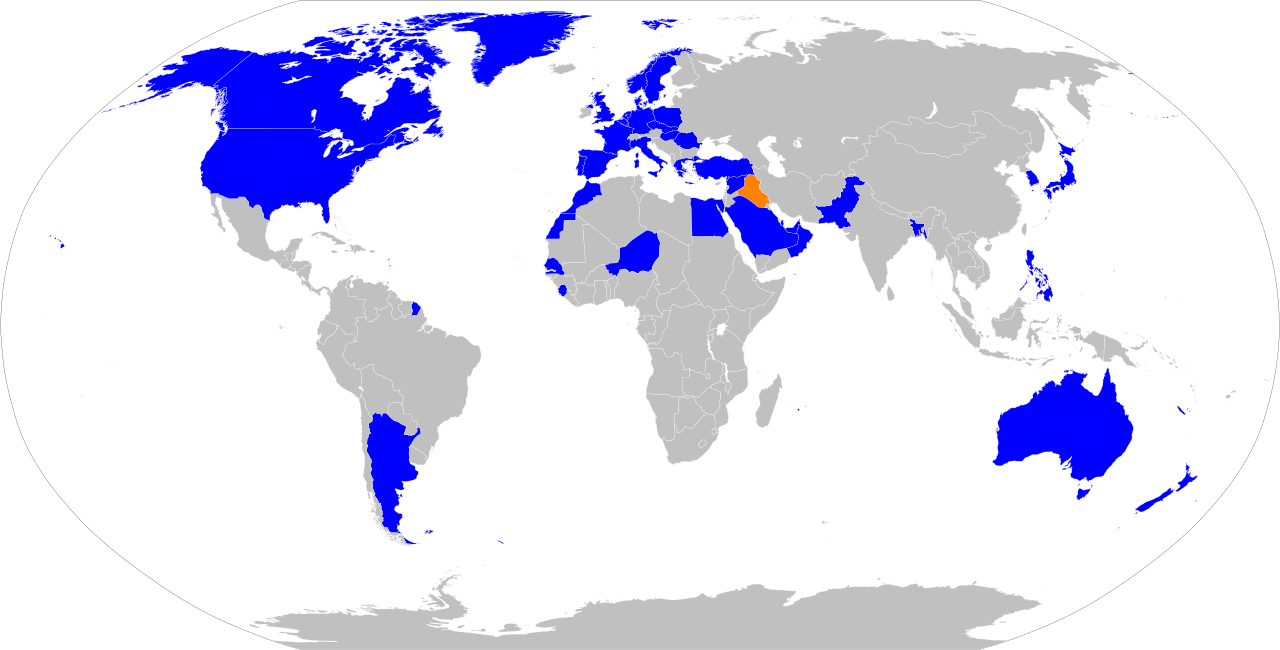
This dominance was put on display immediately in the Middle East. The 1991 Gulf War demonstrated overwhelming American military superiority following the end of the Cold War. When Saddam Hussein invaded Kuwait, a US-led coalition expelled Iraqi forces with astonishing speed and precision, validating America's status as the uncontested global hegemon.
The Post-9/11 Paradigm
This unipolar confidence was shattered on a Tuesday morning in 2001. The terrorist attacks of September 11, 2001, fundamentally shifted American foreign policy toward global counterterrorism.
_-_B6019~11.jpg)
The response was swift and ideological. The administration of George W. Bush abandoned the Cold War doctrines of containment and deterrence (which do not work against non-state actors like Al-Qaeda). Instead, they introduced a highly aggressive new framework. The Bush Doctrine asserted the right of the United States to launch preemptive military strikes against perceived foreign threats. America would hit its enemies before they had the chance to strike again.
This doctrine manifested in two massive conflicts:
- The United States invaded Afghanistan in 2001 to dismantle Al-Qaeda and remove the Taliban from power.
- The United States invaded Iraq in 2003 based on intelligence claiming the presence of weapons of mass destruction.
The Return of Multipolarity
The wars in the Middle East did not go as swiftly as the 1991 Gulf War. Insurgencies and nation-building efforts dragged on for decades. Prolonged military engagements in Iraq and Afghanistan led to domestic war weariness in the United States. The American public grew increasingly skeptical of foreign intervention, demanding a focus on domestic infrastructure and the economy.
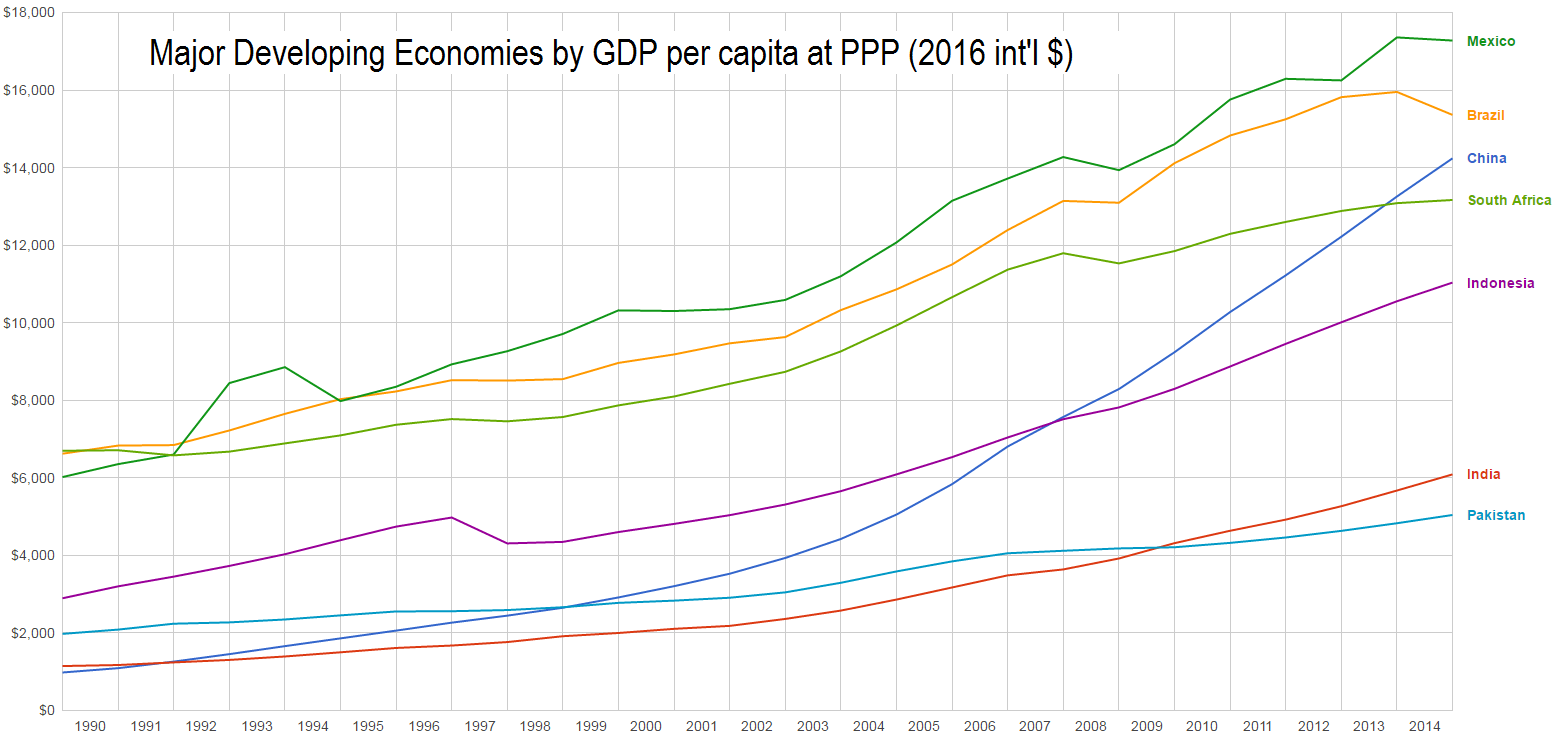
Simultaneously, the geopolitical tectonic plates were shifting once more. While the US spent trillions fighting counter-insurgencies, competitors were rapidly modernizing. In the twenty-first century, the global power structure shifted toward multipolarity due to the economic and military rise of China.
The era of uncontested American unipolarity was over. Today, the world operates as a complex web of competing power centers. Understanding this trajectory—from the domestic heights of the Great Society to the complexities of a multipolar global stage—is essential for grasping the forces that animate modern American political behavior.