Psychology and Individual Behavior
Not sure you’re ready?
Take the ~3-minute readiness diagnostic and see where you stand.
Every time you step to the front of a classroom, you are not merely a purveyor of historical facts or economic theories; you are an applied behavioral scientist. The fifty minds sitting before you are complex engines of perception, memory, and social conditioning. To teach effectively—to ensure that a lesson on the Constitution is actually encoded into memory, or to understand why a frustrated student is acting out during a geography exam—you must understand the underlying mechanics of human behavior. Psychology provides the blueprint of the learning machine. By mapping out how the mind develops, how it processes information, and how it is shaped by unseen forces, you equip yourself to bridge the gap between your curriculum and the subjective reality of your students.
To understand modern psychology, we must first look at its architectural foundations. Psychology emerged as an independent discipline by severing its purely philosophical roots and anchoring itself in empirical observation.
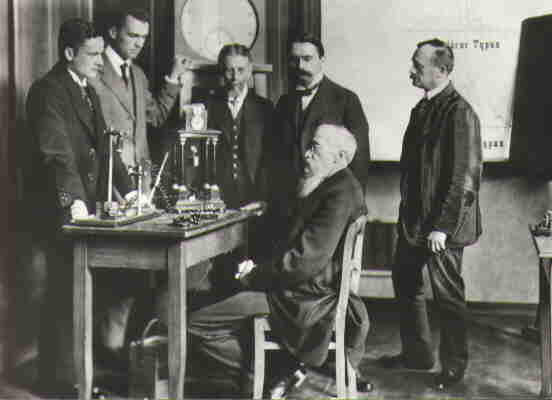
Wilhelm Wundt opened the first experimental psychology laboratory in 1879, effectively launching the science of psychology in Leipzig, Germany, by attempting to measure the speed of mental processes. Shortly after, the discipline crossed the Atlantic when William James wrote the first major psychology textbook in the United States, defining the functionalist perspective that asked why our minds operate the way they do.
As the field matured, it splintered into several distinct "lenses" or approaches, each prioritizing a different mechanism to explain human behavior. As a teacher, you will intuitively switch between these lenses daily.
The Seven Major Approaches
| Approach | Core Philosophy | Classroom Application |
|---|---|---|
| Behavioral | The behavioral approach in psychology focuses strictly on observable actions. It emphasizes the role of the environment in shaping human actions. John B. Watson established the psychological school of behaviorism, arguing that internal thoughts were irrelevant compared to external stimuli. | Implementing a token economy or a strict reward/punishment system to manage classroom behavior. |
| Cognitive | The cognitive approach in psychology studies internal mental processes. It examines processes like thinking, memory, and problem-solving. | Structuring a lesson plan to avoid cognitive overload and maximize memory retention. |
| Biological | The biological approach in psychology examines how genetics influence behavior and examines how brain chemistry influences behavior. | Recognizing that a student's inability to focus may be rooted in neurochemistry, such as ADHD. |
| Psychodynamic | The psychodynamic approach in psychology emphasizes the influence of unconscious drives on behavior. Sigmund Freud founded the psychodynamic approach to psychology. | Understanding that a student's sudden outburst might stem from repressed, unacknowledged anxieties. |
| Humanistic | The humanistic approach in psychology emphasizes human free will and emphasizes an individual's inherent drive toward self-actualization. | Creating a supportive, empowering classroom culture where students feel they have agency over their learning. |
| Sociocultural | The sociocultural approach in psychology analyzes how cultural context shapes human behavior and analyzes how social interactions shape human behavior. | Recognizing that a student's reluctance to speak out in class may stem from cultural norms regarding authority. |
| Evolutionary | The evolutionary approach in psychology explains behavior through the principles of natural selection. | Understanding why humans possess an innate, instinctual fear of certain stimuli (like snakes or strangers) as survival mechanisms. |
How do humans acquire new behaviors? In psychology, learning is a relatively permanent change in behavior resulting from experience. You must master the fundamental principles of how associations and consequences wire the human brain.
Classical Conditioning: Learning by Association
Classical conditioning is a learning process that pairs a biologically potent stimulus with a previously neutral stimulus. The pioneer of this field was a physiologist: Ivan Pavlov first described classical conditioning through experiments with dogs.
Imagine the school bell ringing. By itself, a bell means nothing. But in a school, it triggers a physiological rush of energy in students because it signals lunch or the end of the day.
- An unconditioned stimulus naturally and automatically triggers a physiological response without prior learning. (In Pavlov's lab, this was the food).
- An unconditioned response is an unlearned reaction to an unconditioned stimulus. (The dogs salivating at the food).
- Through repeated pairing, we introduce a neutral stimulus. Eventually, this becomes a conditioned stimulus: a previously neutral stimulus that triggers a response after being paired with an unconditioned stimulus. (The bell).
- The resulting reaction is the conditioned response: a learned reaction to a previously neutral stimulus. (Salivating at the sound of the bell).
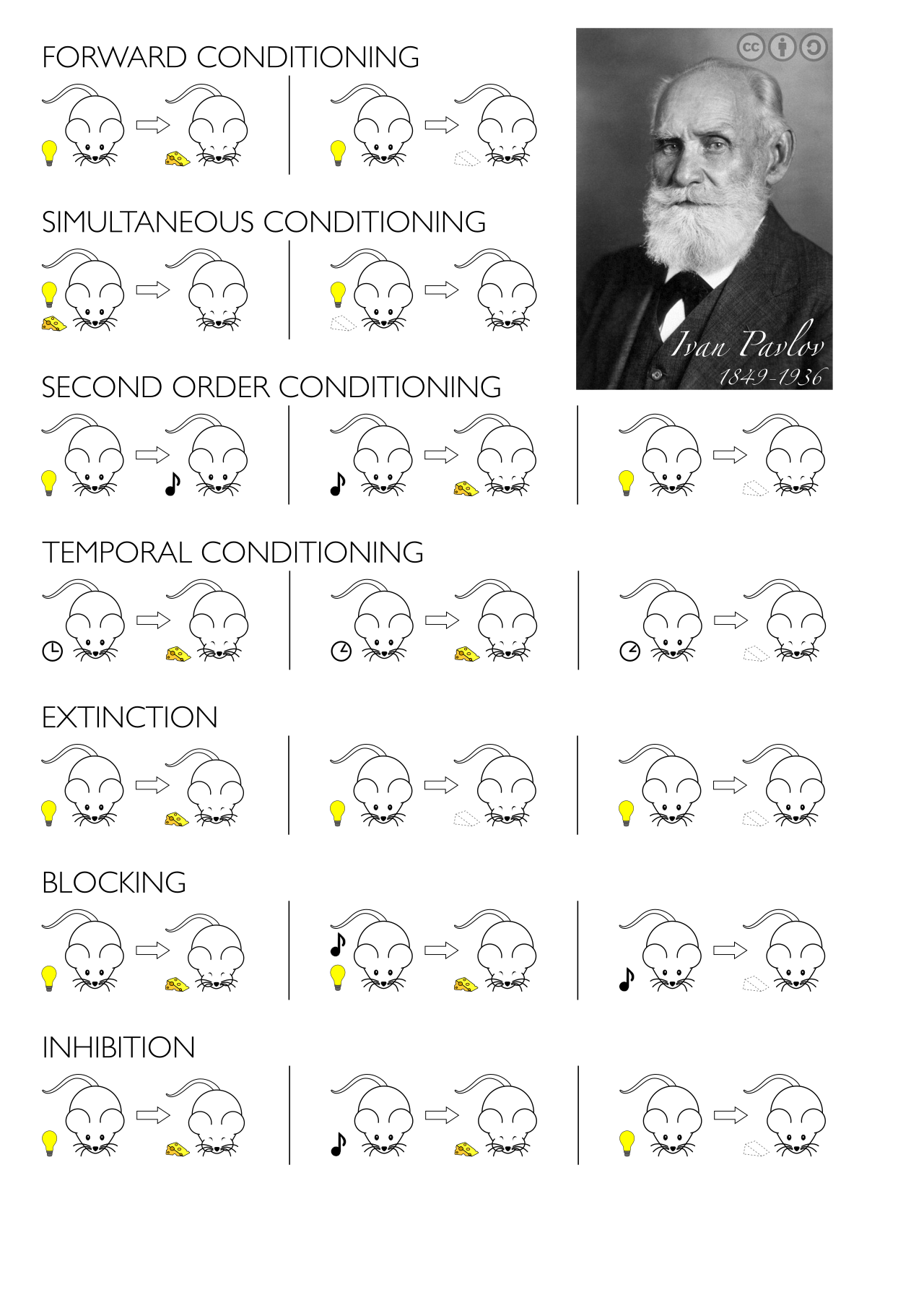
The Boundaries of Conditioning What happens if the bell rings every hour, but school never lets out? Eventually, the association breaks. Extinction in classical conditioning occurs when a conditioned stimulus is repeatedly presented without the unconditioned stimulus. Furthermore, students exhibit stimulus generalization, which occurs when a response conditioned to one stimulus is elicited by similar stimuli. (A student conditioned to fear a strict male math teacher might generalize that fear to all male teachers). Conversely, stimulus discrimination is the learned ability to distinguish between a conditioned stimulus and other irrelevant stimuli. (The student learns to fear only the math teacher, not the history teacher).
Operant Conditioning: Learning by Consequence
While classical conditioning involves passive, involuntary associations, operant conditioning involves active, voluntary behavior. Operant conditioning is a learning process where behavior is controlled by consequences. Building on the foundations of behaviorism, B.F. Skinner developed the fundamental principles of operant conditioning.
In Skinner's paradigm, there are two axes: Reinforcement (increasing a behavior) vs. Punishment (decreasing a behavior), and Positive (adding a stimulus) vs. Negative (removing a stimulus).
- Positive reinforcement involves adding a desirable stimulus to increase the frequency of a behavior. (Giving a student a gold star for a well-written essay).
- Negative reinforcement involves removing an undesirable stimulus to increase the frequency of a behavior. (Canceling a dreaded pop quiz because the class participated wonderfully in discussion—you are removing something bad to encourage future participation).
- Positive punishment involves presenting an unfavorable outcome to decrease the frequency of a behavior. (Assigning detention to a student who disrupts the class).
- Negative punishment involves removing a favorable stimulus to decrease the frequency of a behavior. (Taking away a student's smartphone after they text during a lecture).
Complex behaviors aren't learned overnight. You cannot expect a student to instantly write a flawless DBQ (Document-Based Question) essay. Instead, you use shaping, which is an operant conditioning procedure that reinforces successive approximations toward a target behavior. You reward them first for a good thesis, then for a good paragraph, slowly raising the bar.
Observational Learning: The Power of Modeling
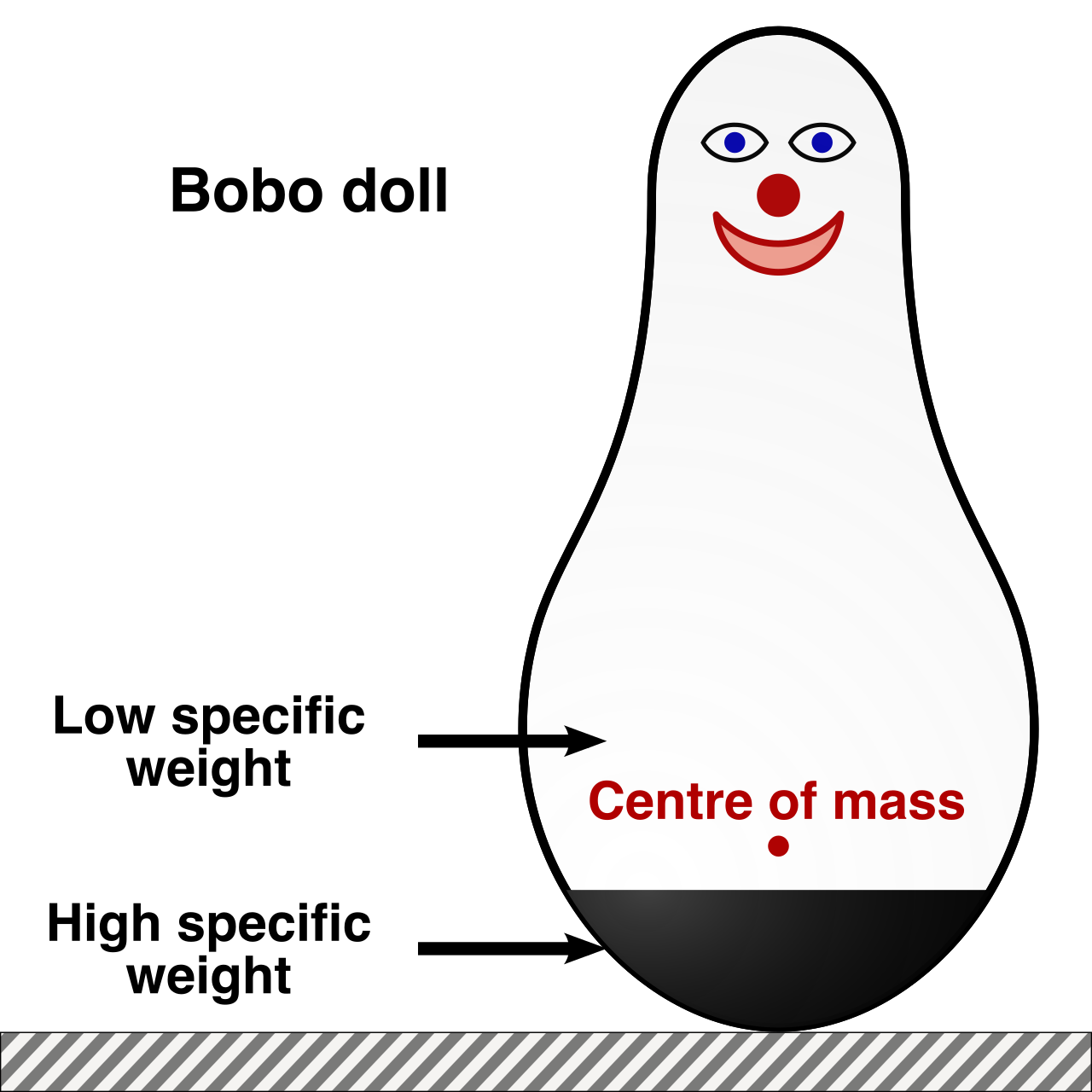
Students do not only learn through direct reinforcement; they learn by watching you and their peers. Observational learning occurs by watching the behaviors of others and the consequences of those behaviors. Albert Bandura demonstrated observational learning through the Bobo doll experiment, showing that children who watched adults act aggressively toward a doll later modeled that exact aggressive behavior. In the classroom, the culture you model is the culture your students will absorb.
Teaching is an exercise in futility if nothing is remembered. To understand memory, we look through the cognitive lens, which treats the brain somewhat like an organic computer.
There are three essential, sequential processes:
- Encoding is the process of converting information into a form usable in memory. (Translating the sound of your lecture into a neural code).
- Storage is the process of retaining encoded information over time. (Filing that code away).
- Retrieval is the process of bringing stored information out of memory and into conscious awareness. (Pulling the file back up during an exam).
The Architecture of Memory
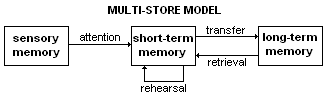
Richard Atkinson and Richard Shiffrin proposed the multi-store memory model in 1968. This definitive framework maps how data travels through the mind: The multi-store memory model divides memory into sensory, short-term, and long-term storage systems.
- Sensory memory holds briefly presented information for a fraction of a second. It is the raw data of your immediate environment. If you don't pay attention to it instantly, it vanishes.
- If attention is applied, data moves to the next phase: Short-term memory holds a small amount of information in an active state for a brief period. Cognitive load theory tells us that short-term memory has a typical capacity of about seven items (often summarized as 7±2). If you give students a 12-step instruction list verbally, their short-term memory will overflow and data will be lost.
- Through rehearsal and deep processing, data finally enters the vault: Long-term memory is the relatively permanent storage system with a practically limitless capacity.
Types of Long-Term Memory
Long-term memory is not a single filing cabinet; it is divided into two distinct biological systems.
Explicit memory involves conscious recollection of factual information or past experiences. You can declare this knowledge.
- Episodic memory is a type of explicit memory containing personal experiences and specific events. (A student remembering their 10th birthday party).
- Semantic memory is a type of explicit memory containing general knowledge and facts. (A student knowing that George Washington was the first US President). This is the primary domain of social studies education.
Implicit memory involves unconscious retention of learned skills or conditioned associations. You perform it without thinking.
- Procedural memory is a type of implicit memory responsible for knowing how to perform motor skills. (Riding a bicycle or typing on a keyboard).
Why We Forget
Why do students forget a lesson they learned perfectly a month ago? Hermann Ebbinghaus discovered the forgetting curve, demonstrating that without active rehearsal, the vast majority of newly acquired information is lost exponentially within the first few days.
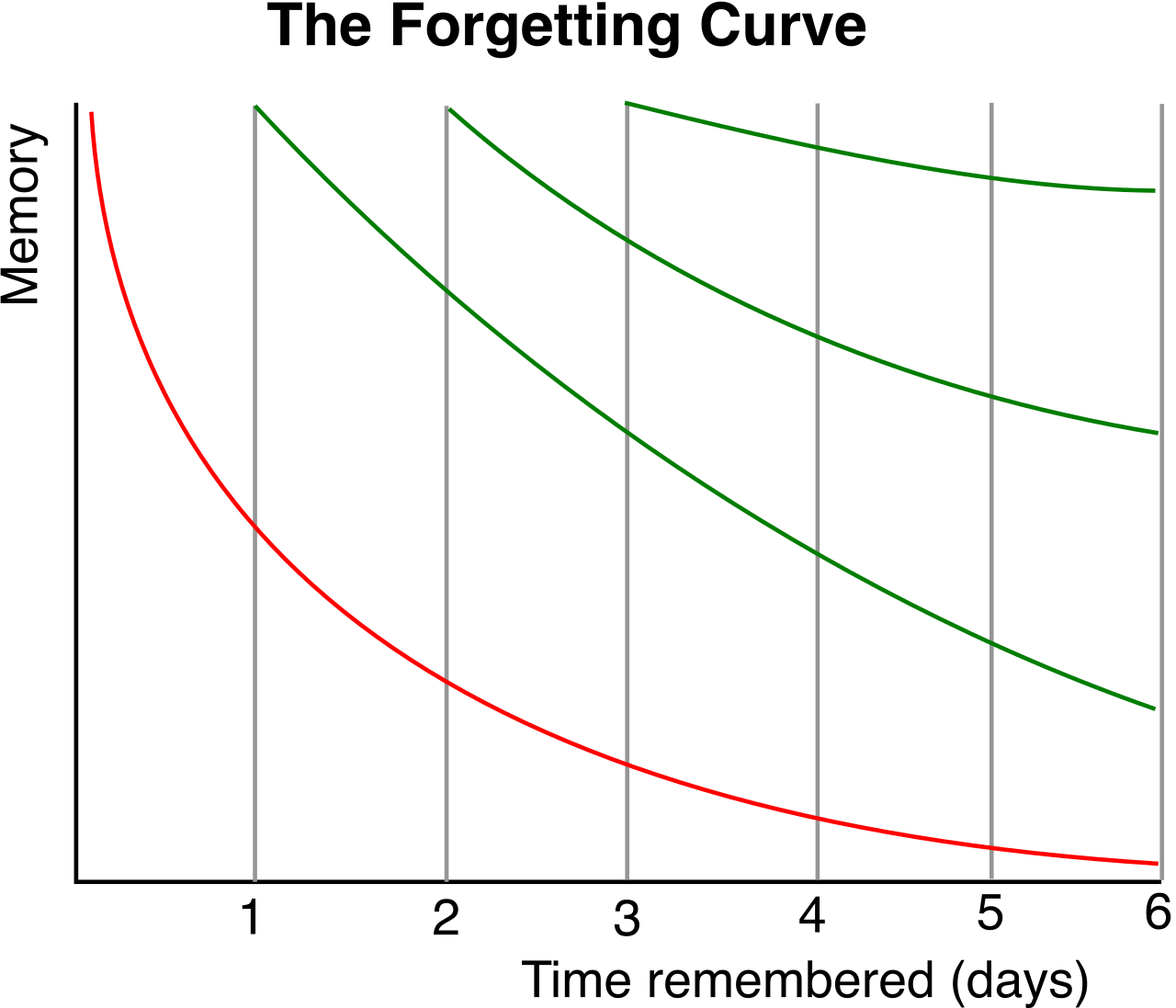
Furthermore, memories aggressively crowd each other out:
- Proactive interference occurs when older memories disrupt the recall of newer information. (A student learns Spanish in middle school, and now in high school, their old Spanish vocabulary keeps popping up when they try to speak French).
- Retroactive interference occurs when new learning disrupts the recall of older information. (A student learns about the Cold War, and suddenly they can no longer remember the specific alliances of World War I they studied last month).
No two students react to the same lesson in the exact same way. Personality psychology studies the enduring patterns of thoughts, feelings, and behaviors that distinguish individuals.
Psychodynamic Perspectives
The foundational, albeit controversial, framework for personality comes from the psychodynamic approach. Sigmund Freud divided the human personality into the id, ego, and superego.
- The id operates on the pleasure principle. It is primitive and entirely unconscious. The id seeks to satisfy basic survival and aggressive desires—it demands immediate gratification.
- The superego represents internalized moral standards and societal ideals. It is the rigid, perfectionist conscience developed from parents and society.
- Caught in the middle is the executive branch: The ego operates on the reality principle to mediate between the id and external reality.
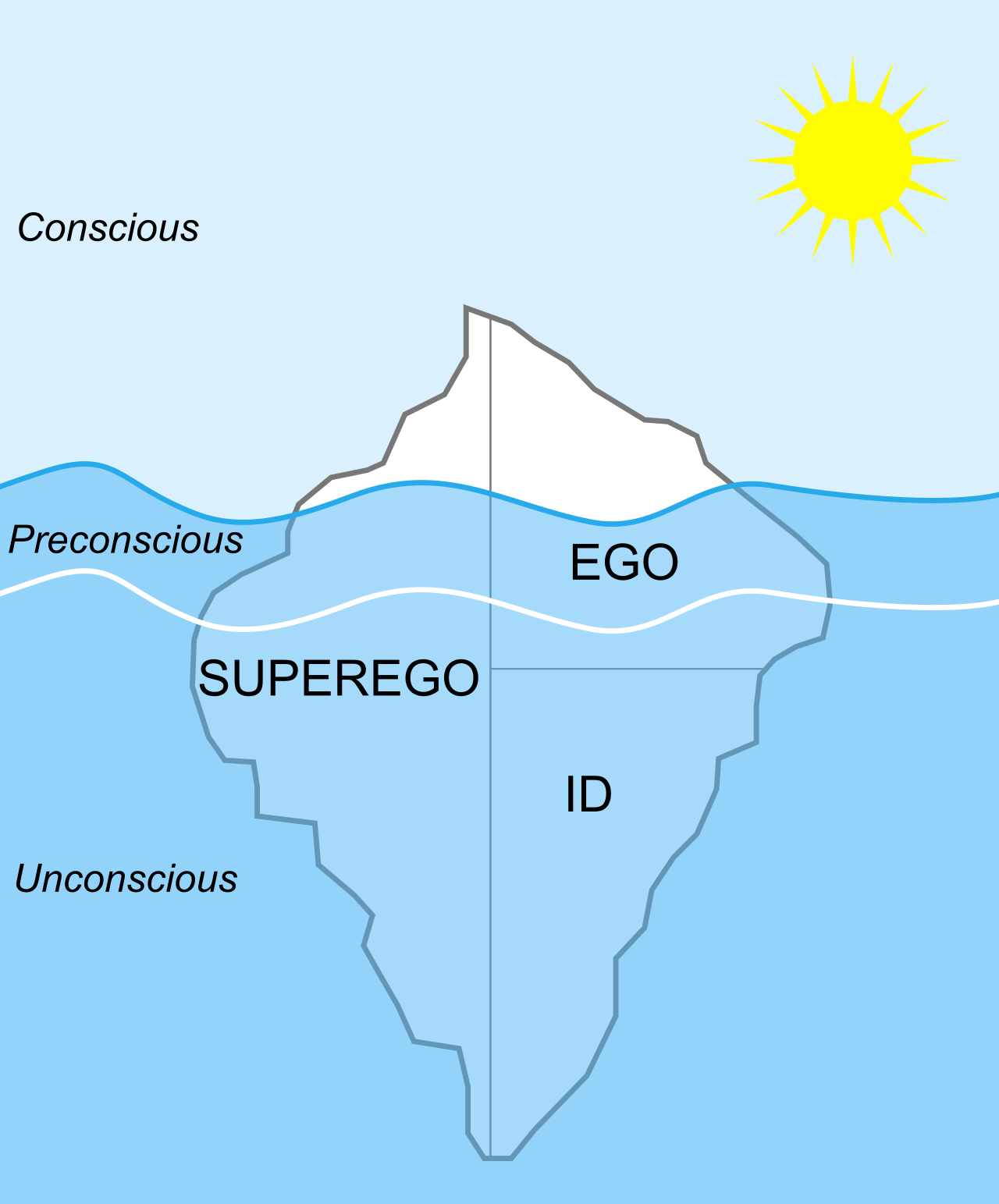
When the conflict between the id's demands and the superego's restrictions becomes too intense, the ego deploys defenses. Defense mechanisms are unconscious psychological strategies used by the ego to cope with anxiety. The most foundational of these is repression: Repression is a defense mechanism that banishes anxiety-arousing thoughts from consciousness.
Trait Theory
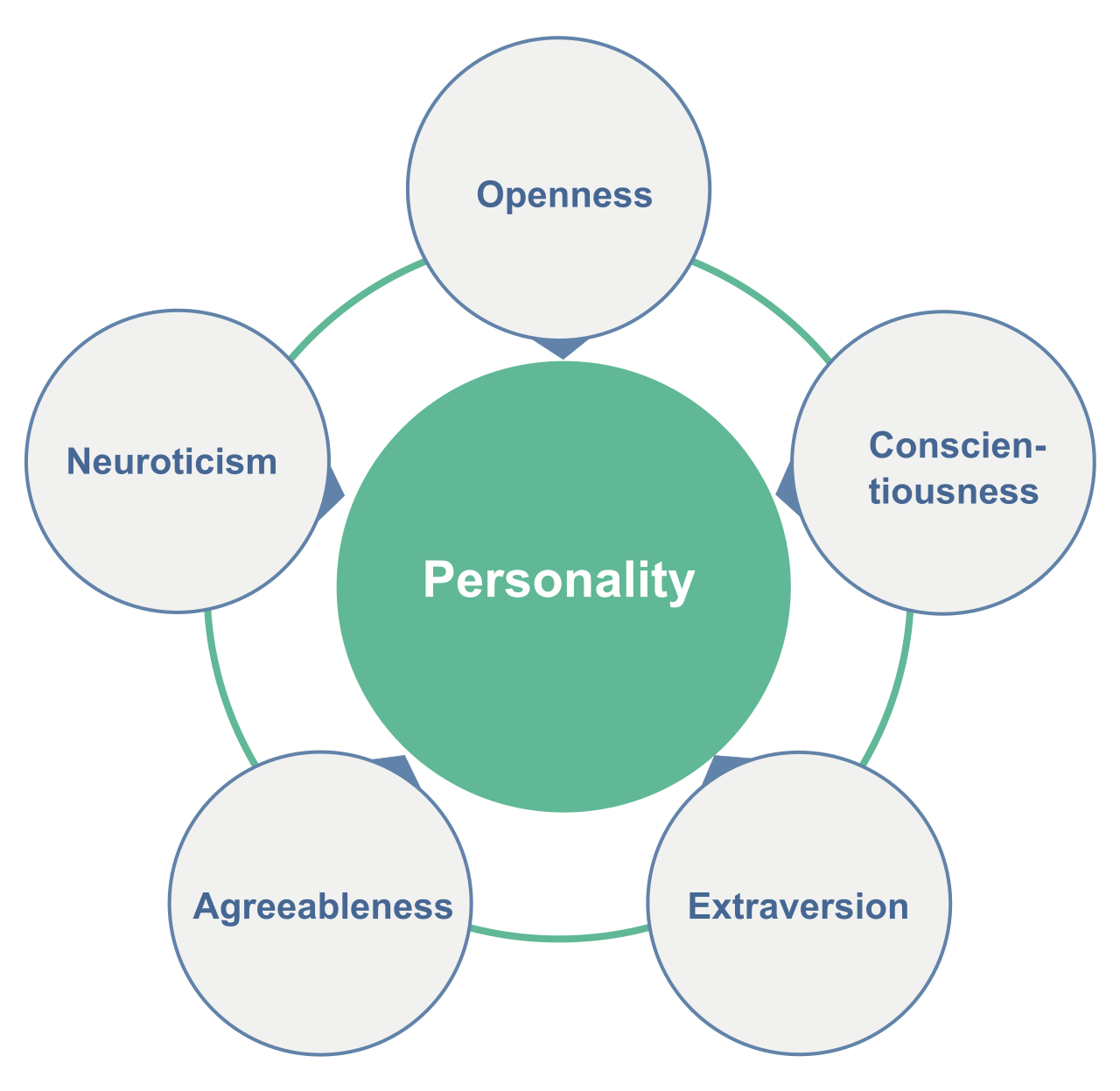
Modern psychologists largely prefer an empirical approach over Freud's unconscious structures. Trait theory focuses on identifying and measuring persistent characteristics that determine behavior.
The current gold standard in this field is the "Big Five" (often remembered by the acronym OCEAN). The Big Five personality model identifies openness, conscientiousness, extraversion, agreeableness, and neuroticism as core traits. A student high in conscientiousness will rigorously organize their study materials, while a student high in extraversion draws energy from group work and debates.
Humanistic Perspectives
Humanistic psychology rebelled against the dark, deterministic views of Freud and the robotic views of behaviorism, focusing instead on human potential.
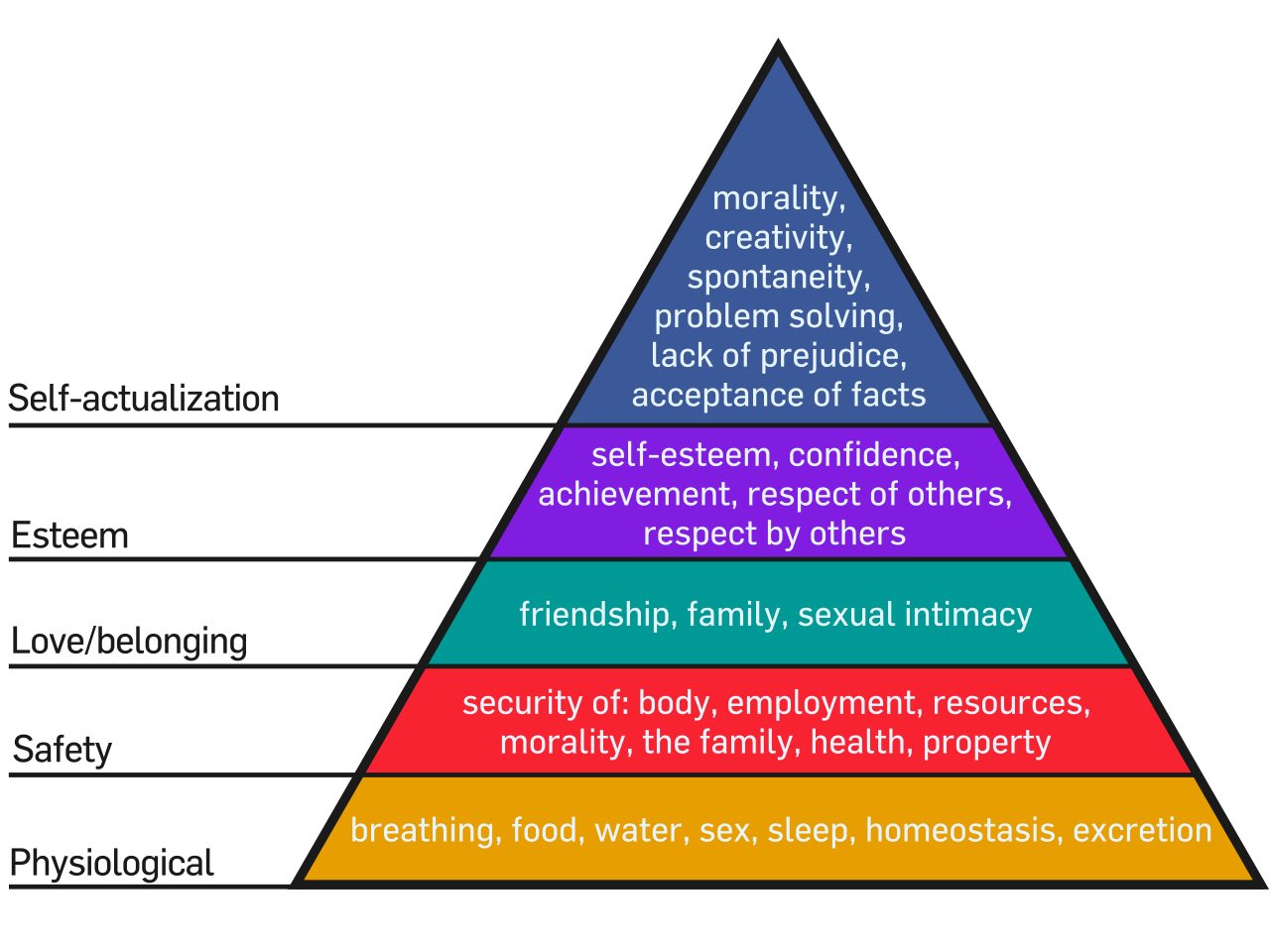
- Abraham Maslow proposed a hierarchy of human needs culminating in self-actualization. He argued that a student cannot possibly reach their full academic potential (self-actualization) if their foundational physiological and safety needs (food, shelter, security) are not met.
- Similarly, Carl Rogers proposed that individuals require unconditional positive regard from others to develop a healthy self-concept. As a teacher, offering a baseline of warmth and uncritical acceptance provides the environment students need to thrive.
Finally, to teach effectively, you must understand the developmental stage of the human beings sitting in your classroom. Developmental psychology studies physical, cognitive, and social change throughout the human life span.
Cognitive Development (Jean Piaget)
The Swiss psychologist Jean Piaget formulated a four-stage theory of cognitive development in children. Piaget showed that children are not just "miniature adults" with less information; their brains literally process reality in a fundamentally different way at different ages.
- The sensorimotor stage is the first phase of Jean Piaget's theory of cognitive development (Birth to ~2 years). Infants learn strictly through physical interaction with the world. Crucially, infants develop object permanence during Jean Piaget's sensorimotor stage. Object permanence is the understanding that objects continue to exist even when out of sight.
- The Preoperational stage (~2 to 7 years). Here, children use language but lack complex logical thought during Jean Piaget's preoperational stage. They are highly egocentric and struggle to see the world from another's perspective.
- The Concrete operational stage (~7 to 11 years). During this period, children gain the mental operations to think logically about physical events during Jean Piaget's concrete operational stage. They can do math and understand cause and effect, but they require tangible, concrete examples.
- The Formal operational stage (~12+ years). At this point, adolescents develop the capacity for abstract and hypothetical reasoning during Jean Piaget's formal operational stage. This is why you cannot effectively teach advanced, abstract political philosophy (like the nuances of Locke's social contract) until middle or high school.
Sociocultural Cognitive Development (Lev Vygotsky)
While Piaget viewed children as solitary scientists exploring the world, Lev Vygotsky's sociocultural theory emphasizes the role of social interaction in cognitive development. Vygotsky argued that learning is fundamentally a social act.
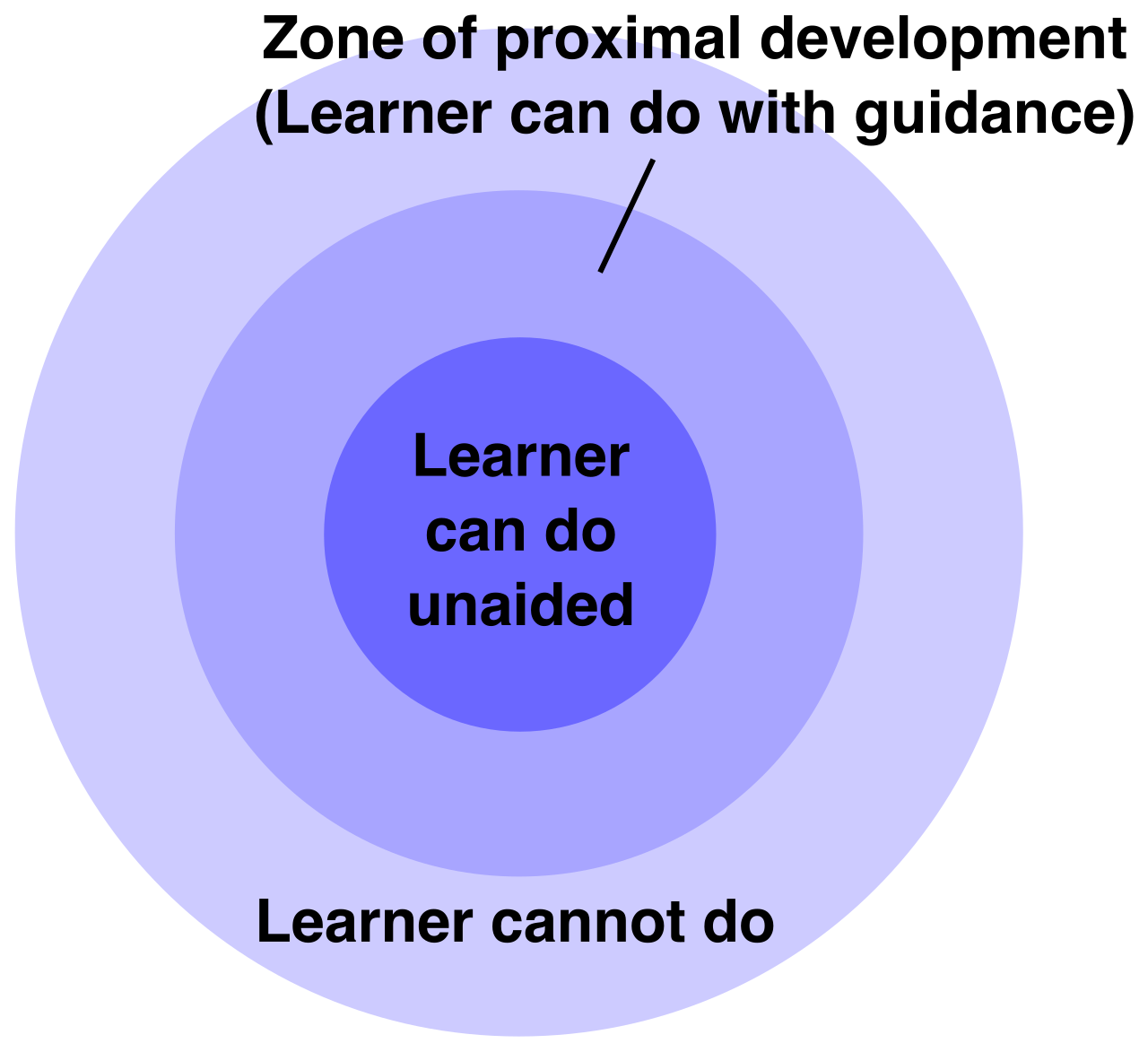
His most vital contribution to education is the concept of scaffolding within a student's optimal learning range. The zone of proximal development describes the difference between what a learner can do independently and what a learner can do with guidance. Your job as a teacher is to keep your instruction firmly within this zone—not so easy that they are bored, and not so hard that they cannot succeed even with your help.
Psychosocial Development (Erik Erikson)
While Piaget and Vygotsky tracked the intellect, Erik Erikson developed a theory of psychosocial development containing eight stages across the lifespan. He argued that each stage in Erik Erikson's psychosocial theory centers on resolving a specific social crisis.
- The foundation of the entire structure happens in infancy: The trust versus mistrust stage is the first crisis in Erik Erikson's psychosocial theory. If caretakers are reliable, the child learns the world is safe.
- By the time students reach you in secondary education, they are navigating the Identity versus Role Confusion stage, desperately trying to figure out who they are and where they fit into society. Their social interactions in your classroom are deeply tied to this psychosocial crisis.
Moral Development (Lawrence Kohlberg)
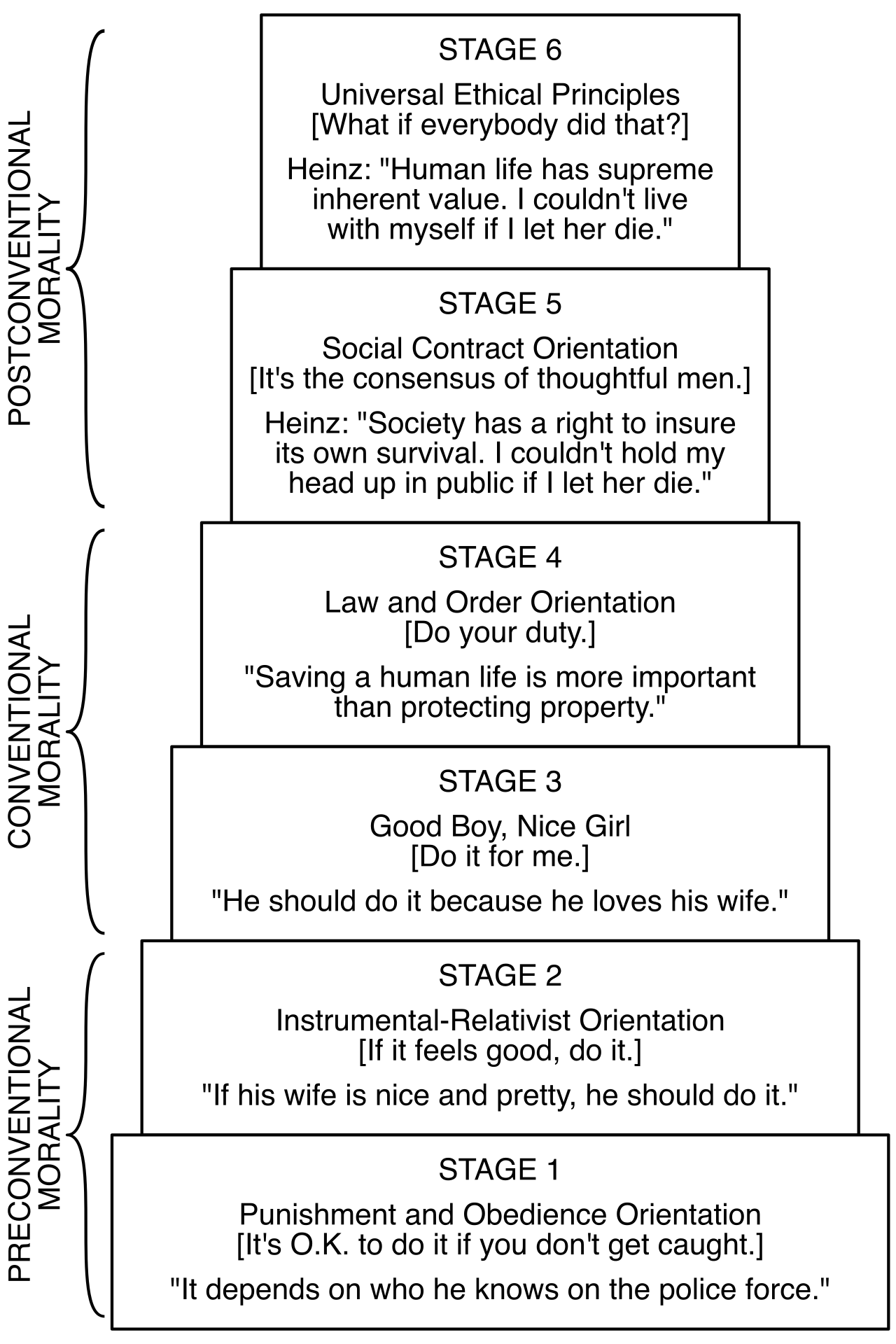
How do humans decide what is right and wrong? Lawrence Kohlberg developed a three-level stage theory of moral reasoning. Understanding this explains a great deal about why students obey (or break) classroom rules.
- Preconventional Level: Morality is entirely externally controlled.
- Individuals in the preconventional stage of moral development obey rules primarily to avoid punishment. (A student doesn't cheat only because they fear a failing grade).
- Individuals in the preconventional stage of moral development obey rules primarily to gain concrete rewards. (A student participates only for extra credit).
- Conventional Level: Morality is defined by societal norms.
- Conventional morality upholds laws and rules to gain social approval. (A student behaves to be seen as a "good kid" by peers and teachers).
- Conventional morality upholds laws and rules to maintain social order. (A student recognizes that rules are necessary for the school to function).
- Postconventional Level: Morality transcends strict laws.
- Postconventional morality involves actions judged by self-defined ethical principles. (A student might protest an unjust school policy, accepting the punishment because they are driven by a higher ethical imperative of justice and equality).
By synthesizing these principles—understanding how your students process memories, how their environment reinforces their actions, what internal traits drive their personalities, and where they stand on the developmental ladder—you cease to be a mere lecturer. You become an architect of the intellect.