Reconstruction
Not sure you’re ready?
Take the ~3-minute readiness diagnostic and see where you stand.
The Civil War settled the question of national survival, but it left a profound constitutional and physical vacuum in its wake. Imagine building a house from the ashes of another, but the architects fundamentally disagree on the blueprint, the materials, and who even has the right to live inside. This was the United States during the Reconstruction era, a period that lasted from 1865 to 1877. The federal government faced an unprecedented civic engineering problem: how to reintegrate eleven treasonous Southern states into the Union while fundamentally redefining the legal and social status of four million newly freed African Americans.
For the aspiring social studies educator, this era is the fulcrum of American history. It is the bridge between the original Constitution and the civil rights struggles of the 20th century. To teach Reconstruction is to teach the mechanics of power, the limits of the law, and the tragic consequences of abandoned political will.
When you outline the origins of Reconstruction for your students, you must frame it as an intense struggle over executive versus legislative power. There was no instruction manual in the Constitution for how to handle a defeated domestic rebellion.
In the midst of the war, Abraham Lincoln proposed the Ten Percent Plan in 1863. His goal was pragmatic: end the war quickly by making it incredibly easy for the South to surrender. The Ten Percent Plan required ten percent of a state's 1860 voters to take an oath of allegiance to the United States. Furthermore, it required Southern states to formally abolish slavery to be readmitted to the Union.
Congress balked. To lawmakers, Lincoln’s threshold was far too low. They viewed the Southern states as conquered territory that needed fundamental restructuring, not just a quick slap on the wrist. In response, Congress passed the Wade-Davis Bill in 1864 to counter Abraham Lincoln's Ten Percent Plan. This much stricter legislation required a majority of a state's white male citizens to take an Ironclad Oath of absolute loyalty to the Union, swearing they had never willingly supported the Confederacy. Recognizing that this would paralyze readmission, President Abraham Lincoln pocket-vetoed the Wade-Davis Bill, setting the stage for a massive postwar clash.
That clash accelerated when Andrew Johnson assumed the presidency after the assassination of Abraham Lincoln in 1865. Johnson, a staunchly states-rights Southerner who had remained loyal to the Union, implemented a phase known as Presidential Reconstruction. His strategy aimed for the rapid readmission of Southern states to the Union with lenient terms. Bypassing Congress, President Andrew Johnson freely issued pardons to most former Confederates, effectively handing political control of the South right back to the very planter elite who had started the war.
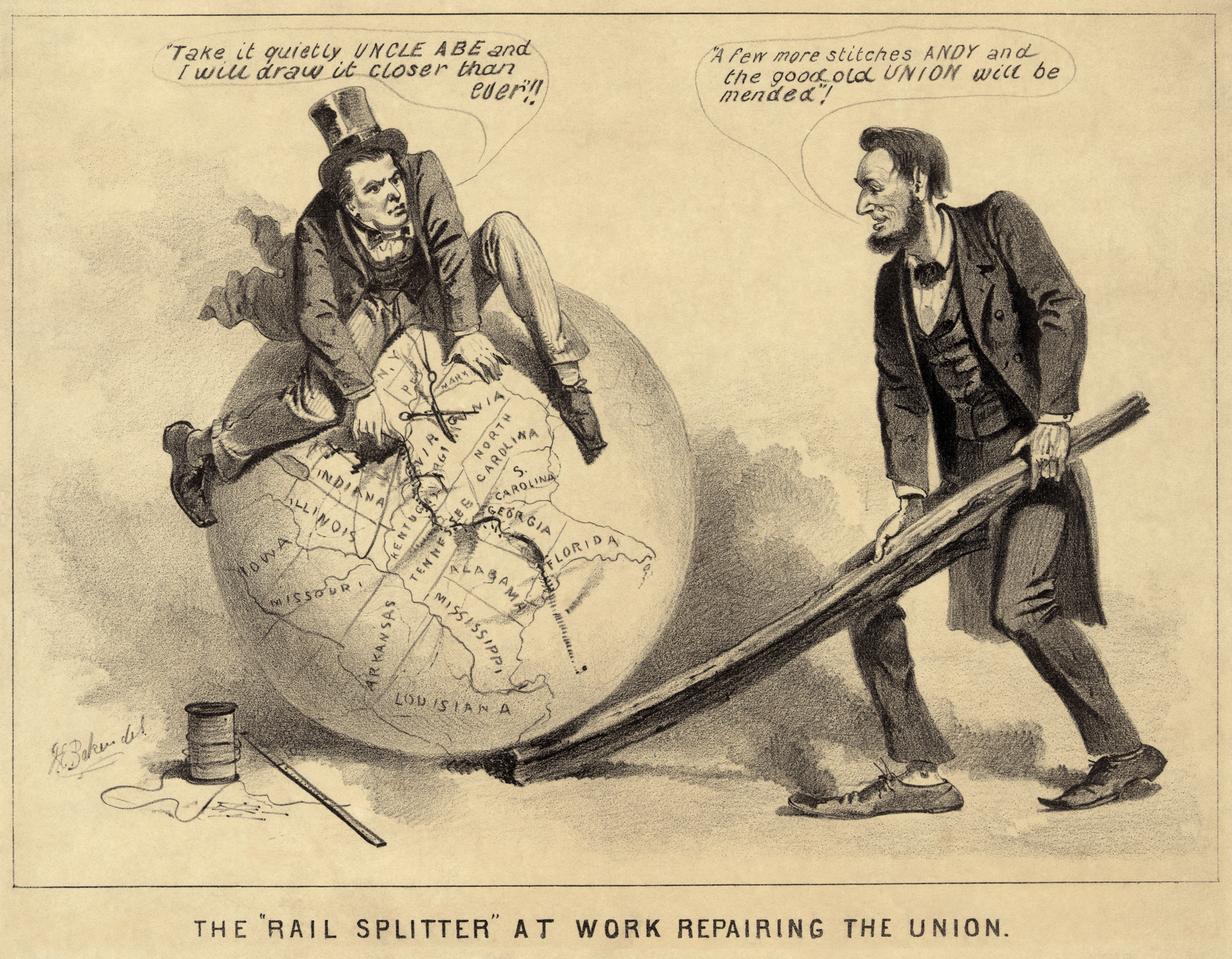
To understand the civic physics of this era, watch how Southern actions triggered Congressional reactions. Empowered by Johnson’s leniency, Southern state legislatures passed Black Codes immediately following the Civil War.
Black Codes Laws that legally restricted the freedom of African Americans and forced them into low-wage labor contracts, closely mirroring the mechanisms of slavery without using the word itself.
Northern lawmakers were outraged. Their hard-won victory was being dismantled. This fueled the rise of the Radical Republicans, a powerful faction in Congress who sought to aggressively punish former Confederate leaders and, crucially, sought to use federal power to actively enforce civil rights for formerly enslaved individuals.
Congress began building a federal safety net. Congress established the Freedmen's Bureau in 1865, an extraordinary expansion of federal responsibility. The Freedmen's Bureau provided food, housing, medical aid, and schooling to newly freed African Americans, acting as an essential lifeline in the devastated South.
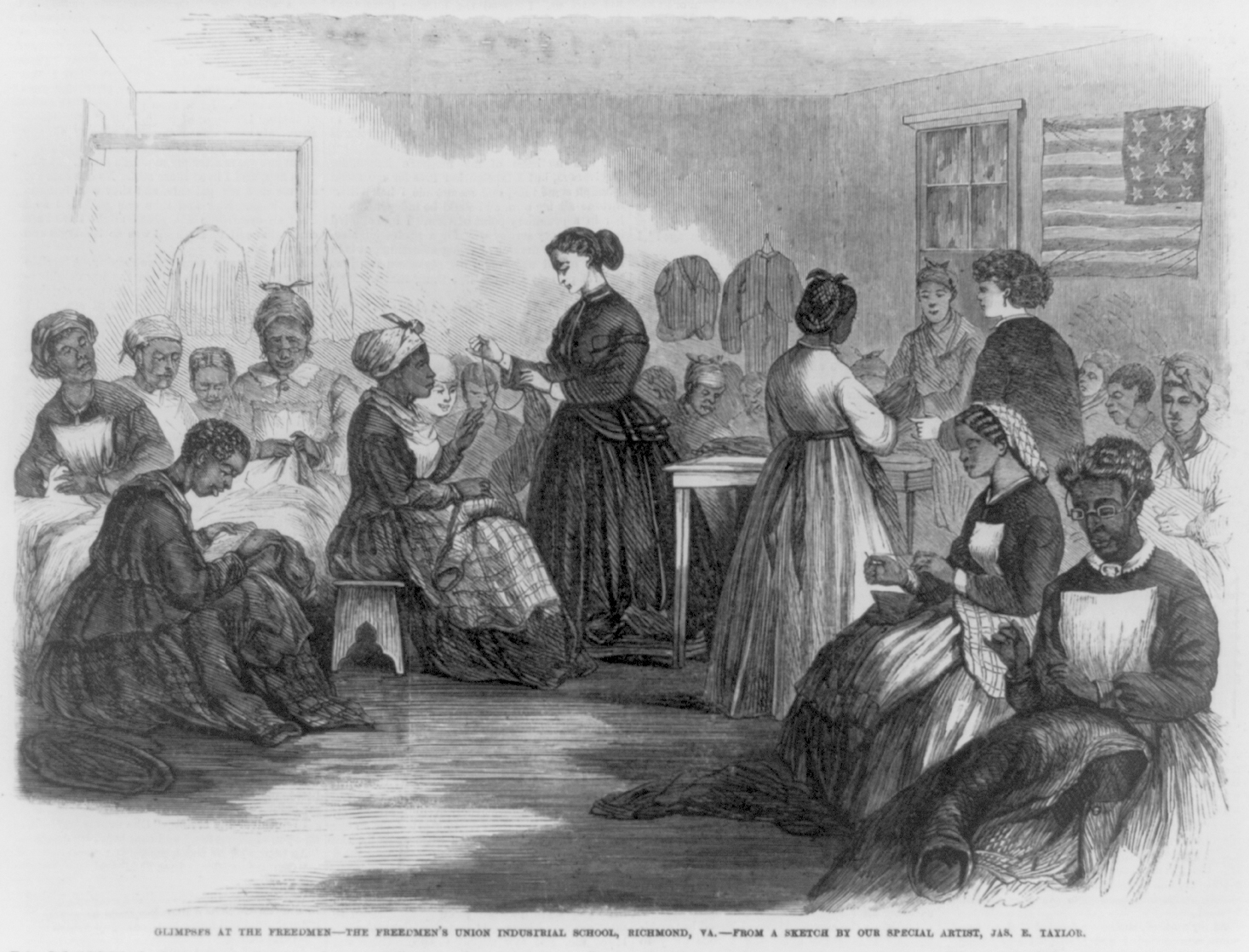
When Congress tried to protect civil liberties directly, they passed the Civil Rights Act of 1866 over a veto from President Andrew Johnson. This landmark legislation declared that all people born in the United States were citizens regardless of race.
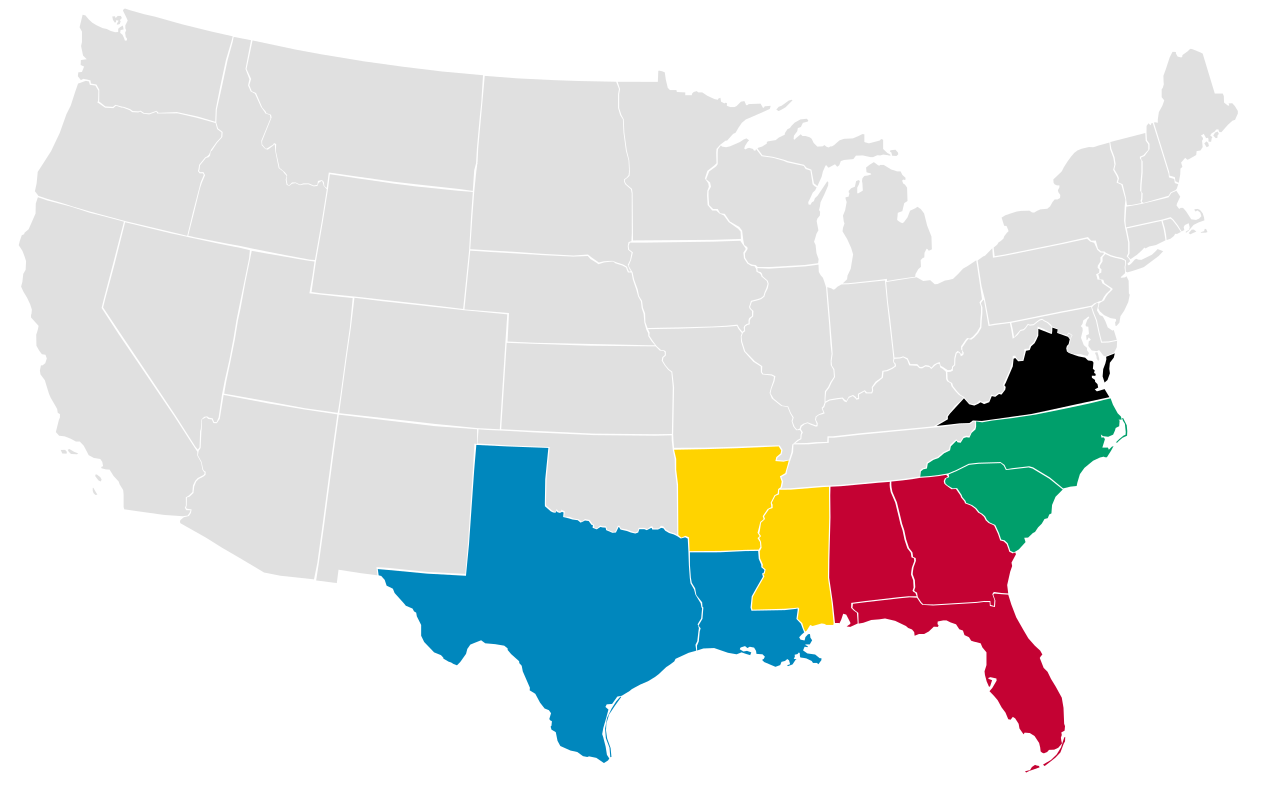
The battle between the President and Congress reached its breaking point. To take control of the Southern states out of Johnson's hands, Congress passed the Military Reconstruction Act of 1867. This sweeping law divided the former Confederacy into five military districts governed by Union generals, ensuring that federal troops, not unrepentant local elites, oversaw the drafting of new state constitutions.
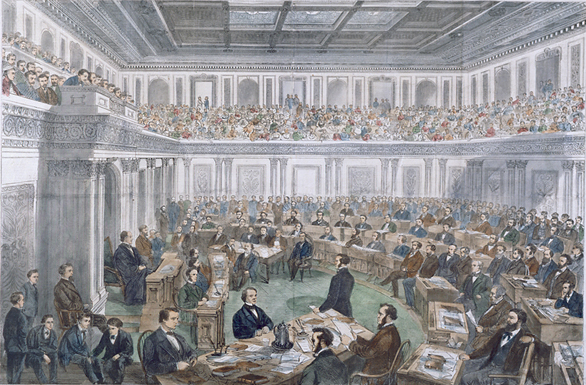
The animosity culminated in an unprecedented constitutional crisis: The House of Representatives voted to impeach President Andrew Johnson in 1868. Officially, President Andrew Johnson was impeached by the House of Representatives for violating the Tenure of Office Act, a controversial law designed to prevent him from firing sympathetic cabinet members. However, the trial was truly about his obstruction of Reconstruction. Ultimately, the United States Senate failed to convict President Andrew Johnson by a margin of a single vote, keeping him in office but politically castrating his administration.
For your Praxis exam, you must master the Reconstruction Amendments. They fundamentally altered the relationship between the federal government, state governments, and the individual.
| Amendment | Year Ratified | Core Function and Nuance |
|---|---|---|
| Thirteenth | 1865 | Completely outlawed the institution of slavery in the United States. Crucially, however, the Thirteenth Amendment permitted involuntary servitude exclusively as a punishment for a legally convicted crime—a loophole that Southern states would later exploit through convict-lease systems. |
| Fourteenth | 1868 | The bedrock of modern civil rights. The Fourteenth Amendment guaranteed birthright citizenship to all persons born or naturalized in the United States, overriding the Dred Scott decision. Furthermore, it guaranteed equal protection under the law for all American citizens, forcing states to respect federal civil liberties. |
| Fifteenth | 1870 | The Fifteenth Amendment prohibited the denial of voting rights based on race, color, or previous condition of servitude. |
These amendments temporarily revolutionized Southern politics. Under the protection of federal troops, Black political participation surged. In a powerful symbolic milestone, Hiram Revels became the first African American to serve in the United States Senate in 1870, occupying the very seat from Mississippi previously held by Jefferson Davis.
Teaching history requires bridging the gap between laws written in Washington and life lived in the mud and fields of the South. The social fabric of the Reconstruction South was defined by distinct factions and brutal economic realities.
New social dynamics emerged. Northerners who migrated to the South during Reconstruction to profit or promote social changes were known as carpetbaggers—a derogatory term implying they carried all their worldly possessions in cheap luggage. Meanwhile, White Southerners who openly supported Reconstruction policies and the Republican Party were derisively called scalawags by their Confederate neighbors, who viewed them as traitors to their race and region.
Economically, the South was utterly devastated, with virtually no currency circulating. This vacuum gave rise to a new labor system. Sharecropping emerged as the dominant agricultural labor system in the South during the Reconstruction era. Under this system, landowners provided land and seed in exchange for a massive "share" of the crop. Because workers had to buy supplies on credit at exorbitant interest rates, the sharecropping system systematically trapped many African Americans and poor white farmers in inescapable cycles of debt, tethering them to the land almost as securely as slavery had.
Newton’s third law—every action has an equal and opposite reaction—applies fiercely to social history. As Black political power grew, an organized, violent backlash formed.
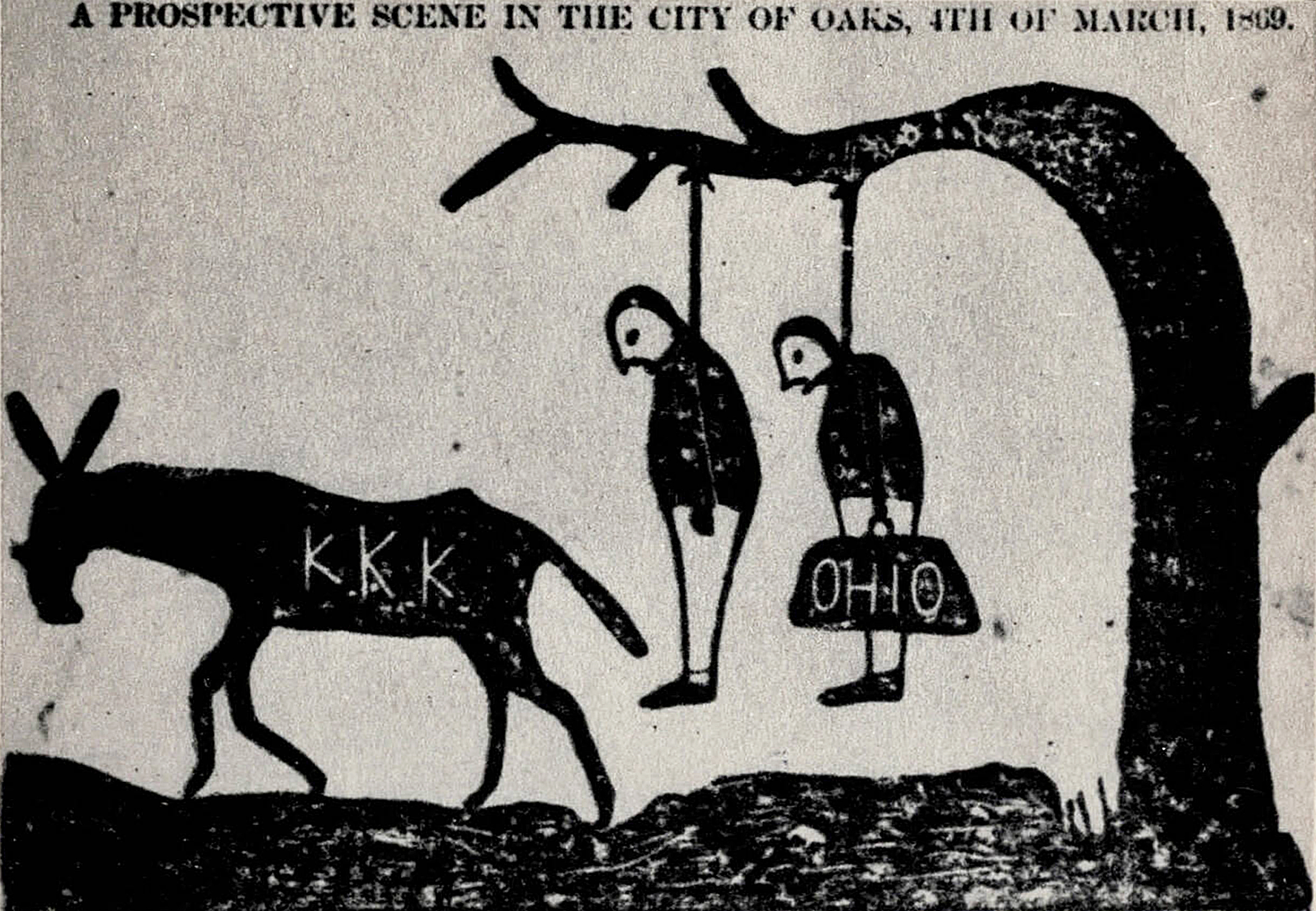
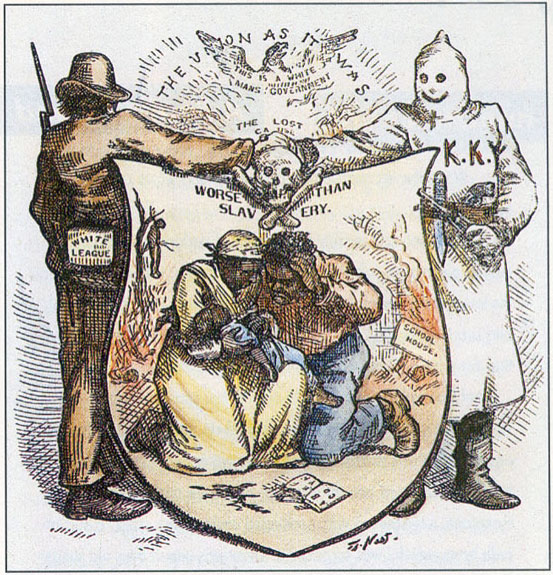
The Ku Klux Klan was founded by Confederate veterans in Pulaski, Tennessee, in 1865. Operating as the paramilitary wing of the Democratic Party, the Ku Klux Klan utilized systematic violence and intimidation to suppress African American voting and Republican political power. To fight back, Congress passed the Enforcement Acts between 1870 and 1871 to combat white supremacist violence in the South, temporarily breaking the power of the KKK by authorizing military intervention and federal prosecution of Klan crimes.
But political fatigue was setting in. By 1872, the appetite for punishing the South was waning in the North, leading to the Amnesty Act of 1872, which restored voting and office-holding rights to the vast majority of former Confederates.
Simultaneously, the Supreme Court began actively dismantling the legal architecture of Reconstruction. You can explain this to your future students using the analogy of a shield. The 14th Amendment was designed as a shield to protect citizens. But in a series of disastrous rulings, the Supreme Court radically shrank that shield:
- The Supreme Court decided the Slaughterhouse Cases in 1873, which resulted in a very narrow judicial interpretation of the Fourteenth Amendment's privileges and immunities clause, heavily limiting the federal government's ability to protect citizens from state-level discrimination.
- The Supreme Court decided United States v. Cruikshank in 1876. This horrifying ruling occurred after the Colfax Massacre, where white supremacists murdered over a hundred Black men. The United States v. Cruikshank decision ruled that the Fourteenth Amendment only protected citizens against state government actions, not against the actions of private mobs. Therefore, the United States v. Cruikshank decision limited federal power to prosecute anti-Black violence committed by private individuals. If the state didn't pull the trigger, the federal government claimed it couldn't intervene.
How does a massive, nation-building effort just stop? It runs out of money and political will.
The Panic of 1873 triggered a major economic depression in the United States. As banks collapsed and unemployment soared, Northern voters turned their focus inward. The Panic of 1873 diverted Northern political attention and financial resources away from Southern Reconstruction.
The definitive end came through political compromise. The 1876 presidential election between Republican Rutherford B. Hayes and Democrat Samuel J. Tilden was intensely disputed, with contested electoral votes in three Southern states. To avert a second civil war, politicians struck a deal. The Compromise of 1877 resolved the highly disputed 1876 United States presidential election. Under this backdoor agreement, Rutherford B. Hayes became president of the United States as a direct result of the Compromise of 1877.
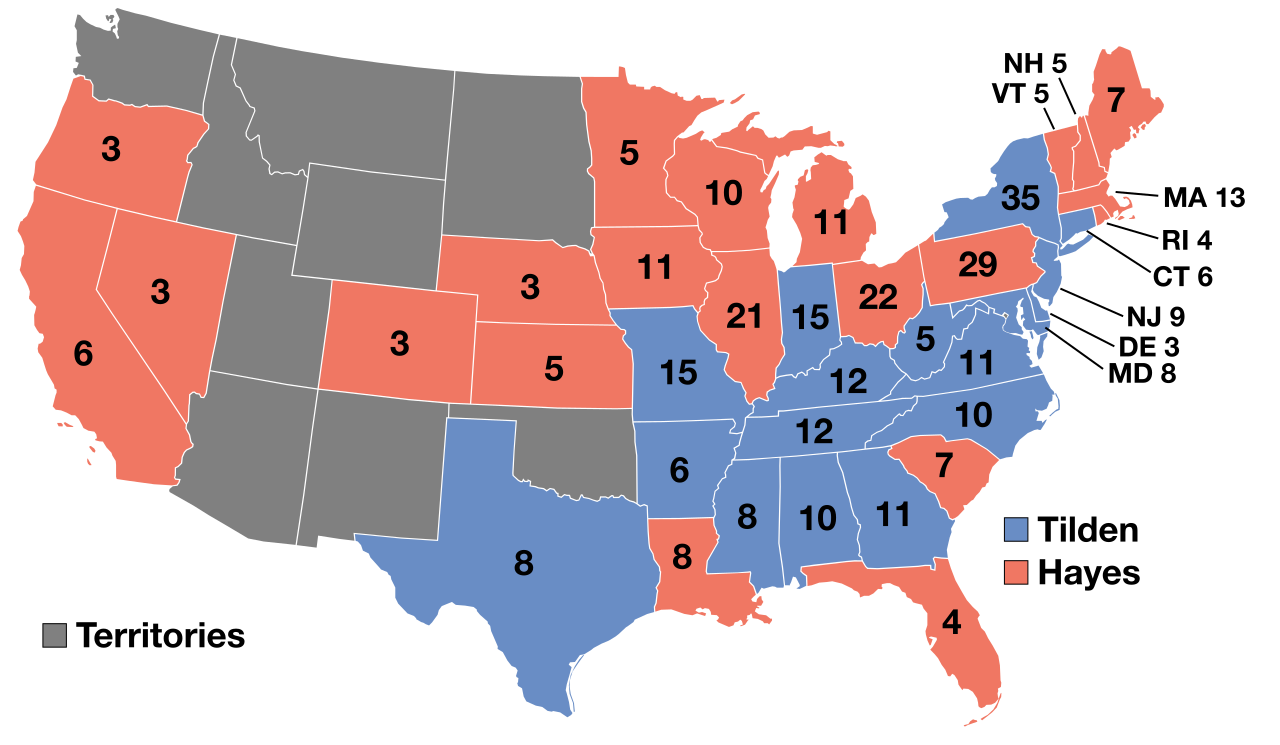
In exchange for conceding the presidency, Southern Democrats demanded a massive concession: The Compromise of 1877 resulted in the total withdrawal of federal military troops from the Southern states.
Without the military to enforce civil rights, the Republican governments in the South collapsed instantly. The withdrawal of federal troops from the South marked the formal and practical end of the Reconstruction era.
This is the tragic epilogue of the era, and the direct setup for the mid-20th-century Civil Rights Movement you will teach in the spring semester. With federal troops gone, Southern Democrats who aggressively regained control of state governments after Reconstruction were known as Redeemers—claiming they had "redeemed" the South from Northern and Black control.
The Redeemers systematically stripped away the rights granted by the 14th and 15th Amendments. They couldn't explicitly ban Black men from voting without violating the 15th Amendment, so they created ingenious, evil workarounds to achieve disenfranchisement:
- Southern states implemented mandatory poll taxes to financially disenfranchise impoverished African American voters.
- Southern states implemented subjective literacy tests as a prerequisite for voting to effectively disenfranchise African Americans. Registrars would give impossible constitutional questions to Black applicants while passing illiterate white ones.
- To protect poor, illiterate white voters from these same traps, Grandfather clauses allowed white voters to bypass literacy tests and poll taxes if their ancestors possessed voting rights before the Civil War.
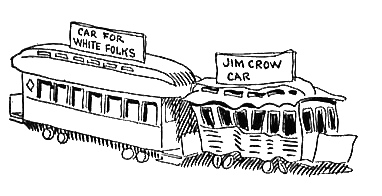
Beyond voting, the Redeemers engineered total social segregation. Jim Crow laws were state and local statutes that legally enforced strict racial segregation in public facilities across the Southern United States.
The legal death blow to the promise of Reconstruction came at the end of the century. The Supreme Court of the United States issued the Plessy v. Ferguson decision in 1896. Homer Plessy challenged a Louisiana law segregating trains. The Court ruled against him, and the Plessy v. Ferguson decision formally established the separate but equal constitutional doctrine, providing the legal justification for institutionalized racism that would stand unchallenged until Brown v. Board of Education in 1954.
As a teacher, you will show your students that Reconstruction was neither a total triumph nor a complete failure. It successfully reunited the nation and established the constitutional framework for equality—but its abandonment allowed white supremacy to adapt, survive, and dominate the Southern landscape for generations.