Properties of Real Numbers
Not sure you’re ready?
Take the ~3-minute readiness diagnostic and see where you stand.
To construct the edifice of modern mathematics, we must first understand the materials with which we build. Numbers are not a monolithic block; they form a nested hierarchy born from human necessity. When early humans needed to track livestock, they utilized basic counting numbers. When they needed a mathematical representation for an empty pasture, they formulated the concept of zero. As human transactions grew mathematically complex—recording financial debts, dividing shared harvests, and measuring the exact diagonal of a unit square—these rudimentary sets reached their structural limits. To teach middle school mathematics is to guide students through this exact cognitive evolution, moving them from the discrete, comfortable certainty of counting numbers to the vast, continuous reality of the real number line.

Understanding the classification of real numbers and the properties that govern them is the bedrock of algebraic thinking. When your students transition from arithmetic to algebra, they are learning the universal grammar of logic. A firm grasp of these concepts separates students who merely memorize algorithms from those who genuinely understand the physical and theoretical space numbers occupy.
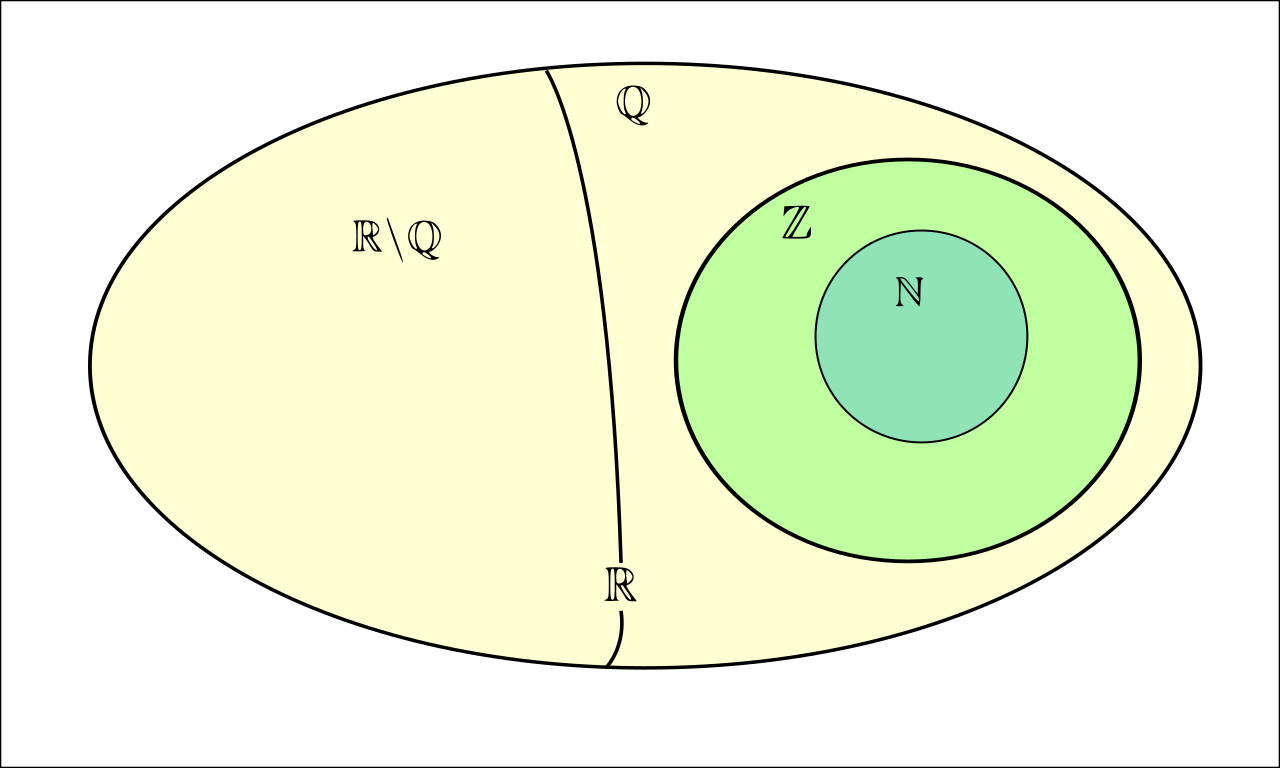
If you want to understand the structure of numbers, imagine a set of nested Matryoshka dolls. Each successive set completely swallows the previous one, expanding the mathematical universe to solve problems the previous set could not handle.

The Nested Sets
- Natural Numbers: The set of natural numbers consists of the positive counting numbers starting from one ({1,2,3,…}). They represent whole, tangible objects.
- Whole Numbers: The set of whole numbers consists of all natural numbers combined with the number zero ({0,1,2,3,…}). The inclusion of zero is a profound philosophical and mathematical leap, giving us an anchor point for the number line.
- Integers: The set of integers consists of all whole numbers combined with the negative opposites of the natural numbers ({…,−3,−2,−1,0,1,2,3,…}). This set allows us to quantify deficits, such as a temperature below zero or a financial debt of $15.
- Rational Numbers: A rational number is any number that can be expressed as a fraction of two integers where the denominator is not equal to zero (ba,b=0). Notice the word ratio within rational. If you share 3 pizzas among 4 students, each gets 43 of a pizza.
- When typed into an on-screen graphing calculator, the decimal representation of a rational number always either terminates or repeats. For example, 41=0.25 (terminates) and 31=0.333... (repeats infinitely).
The Mathematical Outliers: Irrational Numbers
Not all numbers can be neatly packaged into a clean ratio of integers. This discovery famously shattered the worldview of ancient Greek mathematicians.
An irrational number is a real number that cannot be expressed as a fraction of two integers. If you examine their decimal outputs, the decimal representation of an irrational number never terminates and the decimal representation of an irrational number never repeats.
There are infinite irrational numbers, but they often appear in middle school classrooms in two specific forms:
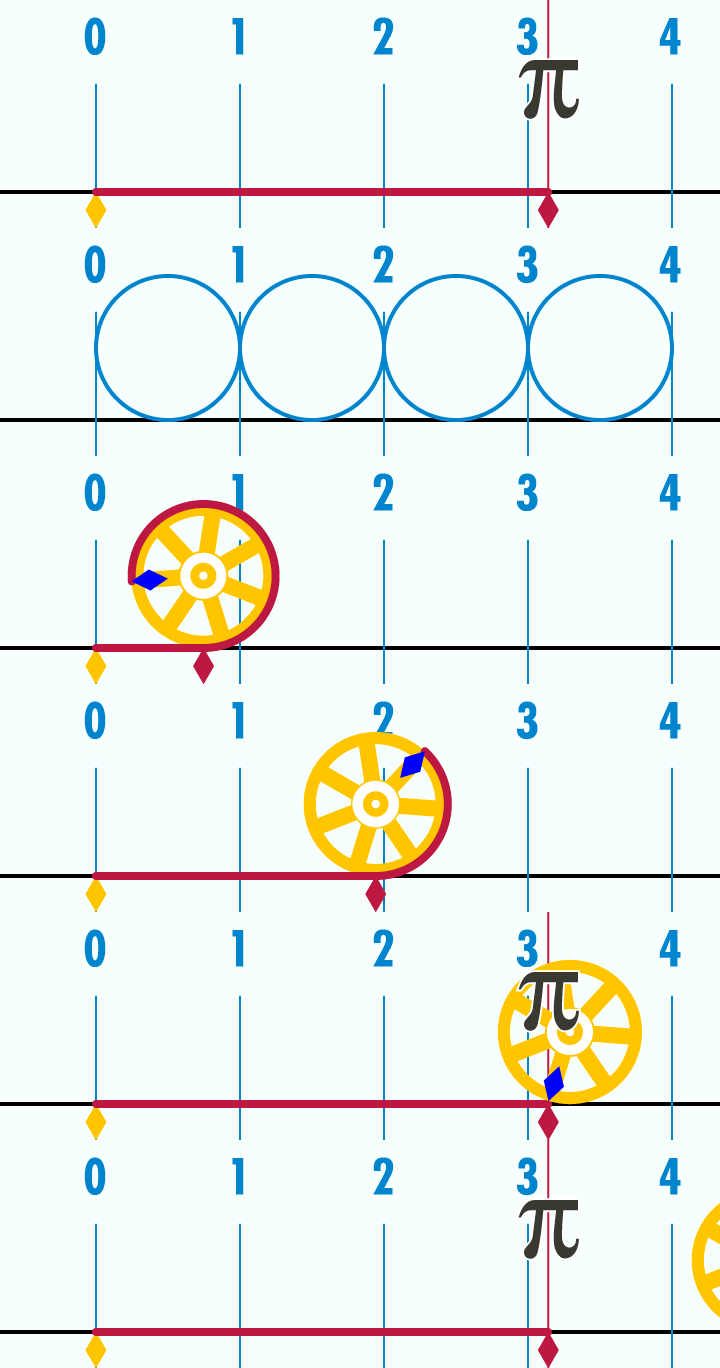
- The mathematical constant pi (π) is an irrational number. It describes the ratio of a circle's circumference to its diameter, stretching on endlessly as 3.14159265… without any repeating pattern.
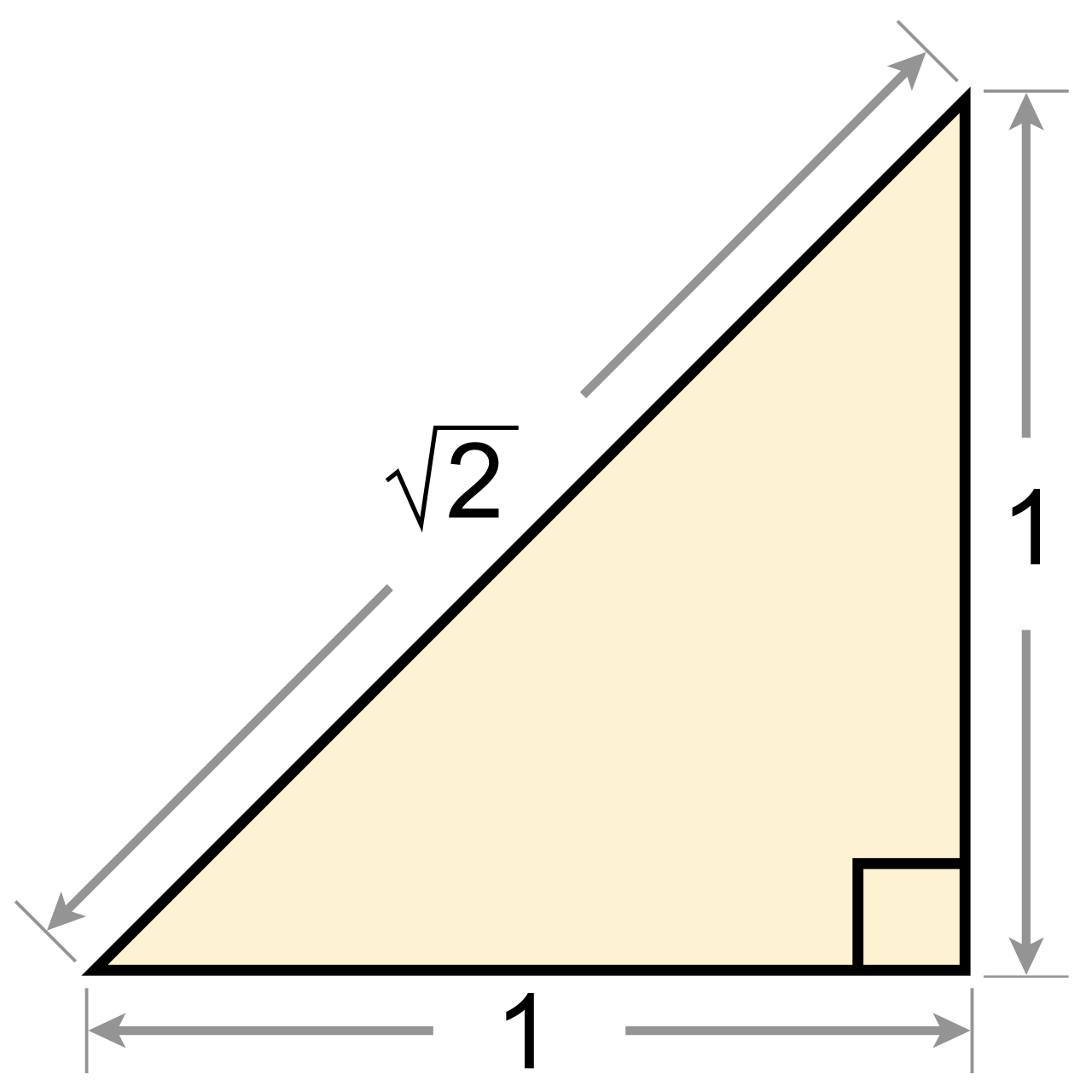
- The square root of any prime number is an irrational number. Because primes possess no positive divisors other than one and themselves, extracting their square roots (2,3,5) yields fundamentally incommensurable, non-repeating decimals.
The Grand Synthesis: The set of real numbers is the union of the set of rational numbers and the set of irrational numbers. Every point on a continuous, infinite number line corresponds to exactly one real number.
Density vs. Discreteness
To help your students visualize the number line, you must teach them the concept of density.
The set of integers is not a dense set. Think of integers like stepping stones across a river. Between the stones 1 and 2, there is empty space.

However, the set of rational numbers is dense, meaning that between any two distinct rational numbers, there exists another rational number. If you take 1.1 and 1.2, you can always find 1.15. Between 1.15 and 1.16, you can find 1.155. Because the rationals are dense, and the irrationals fill in every remaining microscopic gap, the set of real numbers is dense, meaning that between any two distinct real numbers, there exists another real number. The real number line is not a sequence of pebbles; it is a perfectly smooth, unbreakable continuum of sand.
Just as English has rules governing how nouns and verbs interact, algebra has fundamental properties governing operations. These are not arbitrary rules to be memorized; they are logical absolute truths that allow us to manipulate equations safely.
Commutative and Associative Properties
The Commutative Property is about order (moving numbers).
- For any real numbers a and b, the commutative property of addition states that a+b=b+a.
- For any real numbers a and b, the commutative property of multiplication states that a∗b=b∗a.
The Associative Property is about grouping (shifting parentheses).
- For any real numbers a, b, and c, the associative property of addition states that (a+b)+c=a+(b+c).
- For any real numbers a, b, and c, the associative property of multiplication states that (a∗b)∗c=a∗(b∗c).
A Crucial Warning for Teachers: Middle school students often mistakenly assume these properties apply universally. You must explicitly demonstrate why they fail for other operations.
- The operation of subtraction is not commutative (5−3=3−5).
- The operation of division is not commutative (10/2=2/10).
- The operation of subtraction is not associative ((10−5)−2=10−(5−2)).
- The operation of division is not associative ((12/4)/2=12/(4/2)).
The Distributive Property
The distributive property is the golden bridge connecting addition and multiplication. It dictates how multiplication "hands out" its value across terms trapped inside parentheses.
- For any real numbers a, b, and c, the distributive property of multiplication over addition states that a(b+c)=ab+ac.
- For any real numbers a, b, and c, the distributive property of multiplication over subtraction states that a(b−c)=ab−ac.
Identities and Inverses
Identities preserve a number's value; inverses annihilate it, returning the number to an identity state.
- The additive identity property states that adding zero to any real number results in the original real number (a+0=a).
- The multiplicative identity property states that multiplying any real number by one results in the original real number (a∗1=a).
To find an inverse is to ask: What operation brings me back to the identity?
- For any real number a, the additive inverse property states that a+(−a)=0.
- For any non-zero real number a, the multiplicative inverse property states that a∗(1/a)=1.
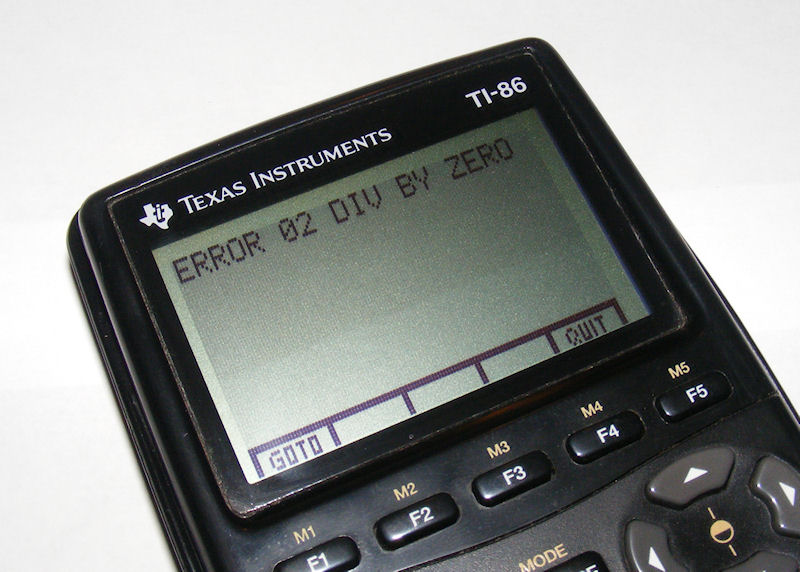
The Zero Exclusivity: The number zero does not have a multiplicative inverse. There is no real number you can multiply by zero to yield one. Consequently, division by zero is mathematically undefined.
Speaking of zero's unique destructive power, the zero product property states that the product of any real number and zero is zero (a∗0=0). This single property is the mechanical engine behind solving quadratic equations. If (x−2)(x+3)=0, we know with absolute certainty that one of those binomials must equal zero.
Imagine a closed, inescapable room. If an operation traps numbers inside their original category, that set is "closed."
A mathematical set is closed under an operation if performing that operation on any two members of the set always results in a member of the same set.
Let's test the boundaries:
- The set of integers is closed under the operation of addition (3+4=7).
- The set of integers is closed under the operation of subtraction (3−7=−4).
- The set of integers is closed under the operation of multiplication (−2∗5=−10).
- However, the set of integers is not closed under the operation of division. If we divide the integer 3 by the integer 2, the result (1.5) escapes the integer room and lands in the rational domain.
Because they accommodate fractions, the set of rational numbers is closed under the operations of addition, subtraction, and multiplication. (They are also closed under non-zero division).
The Fragility of Irrationals
Irrational numbers are highly volatile. They do not hold their form well when interacting with one another.
- The set of irrational numbers is not closed under the operation of addition. If you add π and −π (both irrational), the result is 0, which is entirely rational.
- The set of irrational numbers is not closed under the operation of multiplication. If you multiply 2∗2, the irrationality collapses into exactly 2.
When teaching students to compare numbers, we map arithmetic onto geometry. The number line is not just a visual aid; it is a rigid geometric space where placement dictates value.
Inequalities and the Number Line
On a standard horizontal number line, any real number located to the right of another real number has a greater mathematical value. Thus, −2 is strictly greater than −100, because −2 sits further to the right.
This leads to the foundational rules of comparing quantities:
- The trichotomy property states that for any two real numbers a and b, exactly one of the following relations is true: a is less than b, a equals b, or a is greater than b. (a<b, a=b, or a>b).
- The transitive property of inequality states that if a is less than b and b is less than c, then a is less than c. (a<b and b<c⟹a<c).
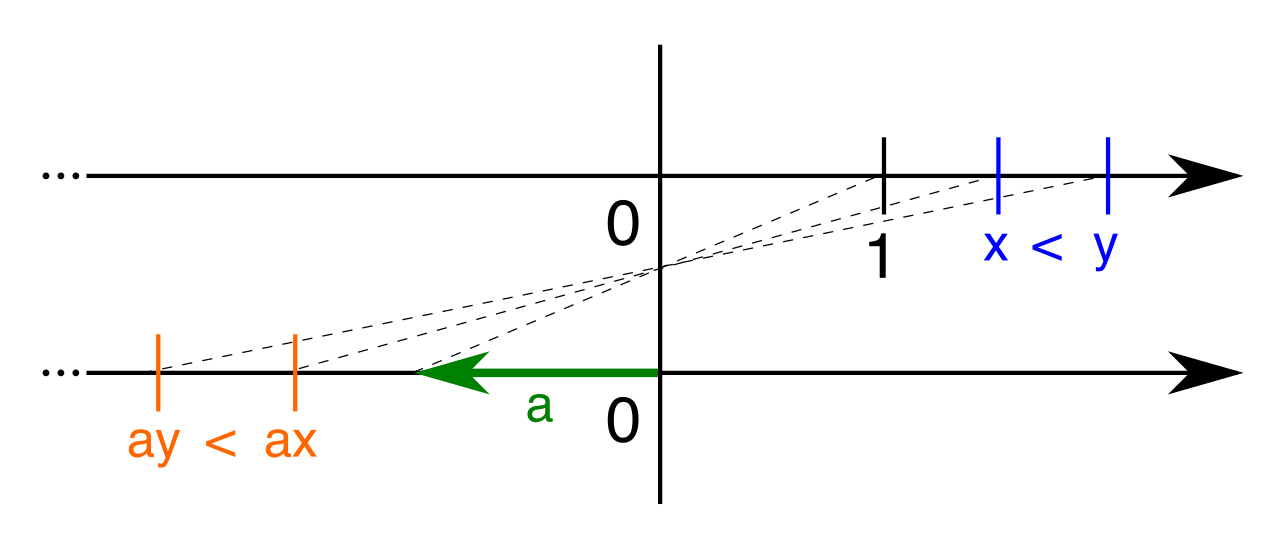
The Inequality Reversal Rule: When solving inequalities, middle schoolers famously forget to flip the sign. You must explain why this happens using the number line. When you multiply or divide a number by a negative, you are physically reflecting that number across zero. What was far on the right is now far on the left.
- Therefore, multiplying both sides of an inequality by a negative real number reverses the direction of the inequality symbol.
- Similarly, dividing both sides of an inequality by a negative real number reverses the direction of the inequality symbol.
The Geometry of Distance: Absolute Value
Absolute value is one of the most mechanically misunderstood concepts in middle school. Students frequently memorize it as "make the number positive" without understanding its geometric soul.
The absolute value of a real number represents the distance of that real number from zero on a number line. Because distance is a physical measurement of length, the absolute value of any real number is always non-negative.
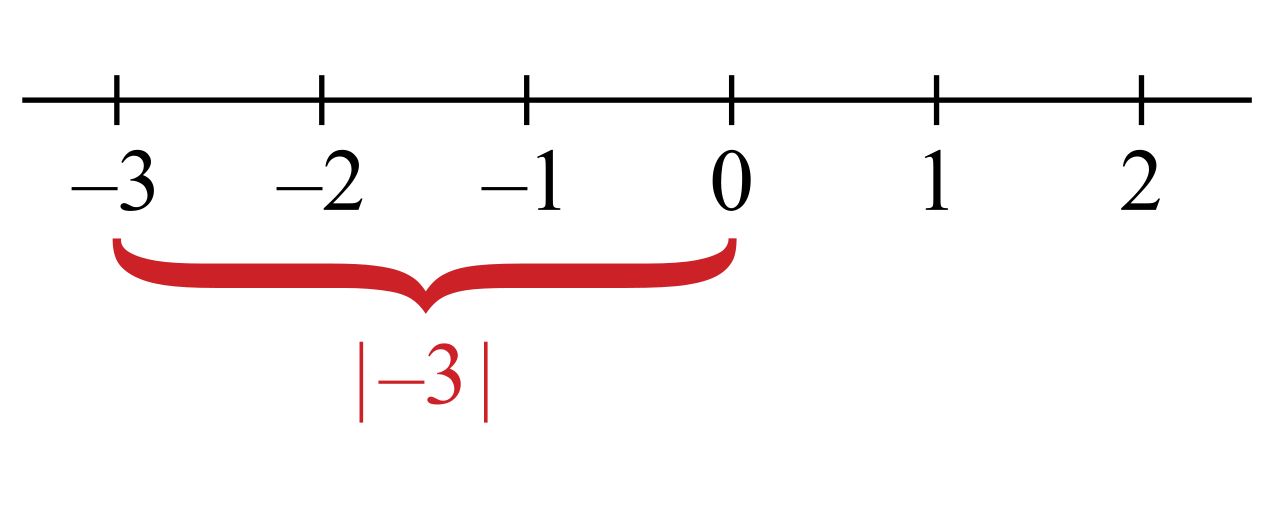
This geometric reality translates into a bipartite algebraic definition:
- The mathematical definition of absolute value states that the absolute value of x equals x for any non-negative real number x. (∣5∣=5).
- The mathematical definition of absolute value states that the absolute value of x equals negative x for any negative real number x. (∣−5∣=−(−5)=5).
Teacher Note: Students will push back on ∣x∣=−x, arguing that absolute value cannot equal a negative. You must elegantly explain that if x is already negative, attaching a negative sign to it acts as an inverse toggle, stripping away the negativity to reveal the positive distance.
Finally, absolute value allows us to quantify the gap between any two points in space. The distance between any two real numbers a and b on a number line is equal to the absolute value of the expression a minus b (∣a−b∣). Whether you subtract 7−3 or 3−7, applying the absolute value guarantees the physical distance between them remains exactly 4.
By internalizing these sets, properties, and geometric truths, you are equipping your students with a compass. They will not merely be manipulating meaningless symbols; they will be navigating the continuous, infinite, and perfectly ordered landscape of the real numbers.