Real Number Operations and Order of Operations
Not sure you’re ready?
Take the ~3-minute readiness diagnostic and see where you stand.
Mathematics is often called the universal language, but like any language, its descriptive power relies entirely on a shared, unambiguous syntax. When a student encounters a mathematical expression or a real-world scenario, the sequence in which they perform operations is not a matter of stylistic preference; it is a rigid grammatical rule. Without these rules, a single expression could yield a half-dozen different results, reducing logic to chaos. For an aspiring middle school educator, mastering and demystifying this syntax is paramount. Your students are transitioning from the simple arithmetic of their childhood into the abstract, structural thinking required for algebra. They will rely on you to explain not just how to calculate a result, but why the rules of computation and the nature of numbers behave the way they do.
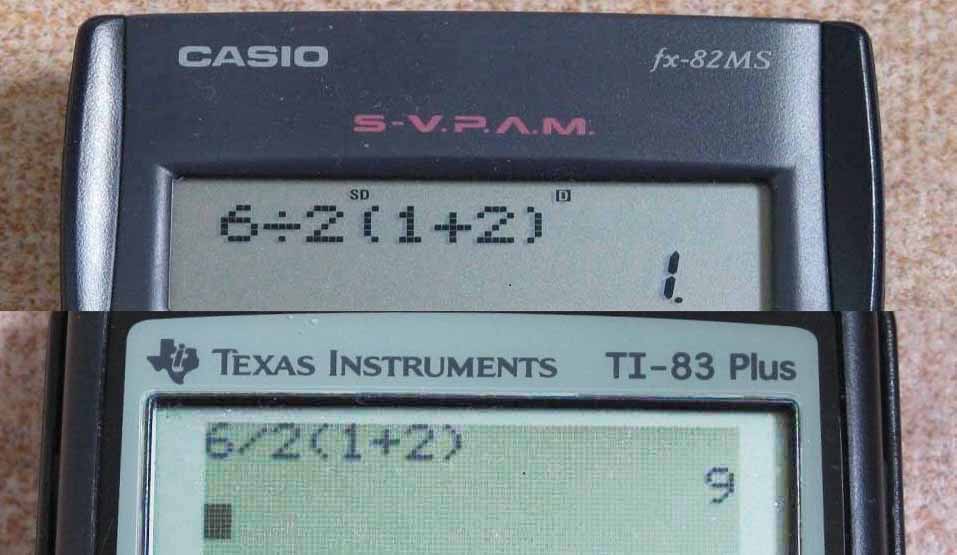
The order of operations determines the specific sequence of steps for evaluating mathematical expressions. It exists to guarantee that every person, or every graphing calculator, arriving at the expression 8−2×3 processes it to equal 2, not 18. In your classroom, you will undoubtedly encounter the acronym PEMDAS. While a helpful mnemonic, it is infamous for creating deep-seated mathematical misconceptions if taught poorly. Let us deconstruct the true hierarchy of operations.
Step 1: Grouping Symbols (The Overrides)
Grouping symbols are evaluated first in the mathematical order of operations. They are the ultimate override command, explicitly telling the reader, "Compute the value inside here before doing anything else."
While students easily recognize parentheses (), brackets [], and braces {}, they frequently fail to identify implicit grouping symbols. As a teacher, you must explicitly teach that grouping symbols include parentheses, brackets, braces, fraction bars, radical symbols, and absolute value bars.
- Fraction Bars: A fraction bar acts as a grouping symbol requiring the numerator and denominator to be fully evaluated before division. In the expression 5−110+2, the bar physically separates the space, demanding we evaluate the top (12) and bottom (4) independently before calculating the quotient (3).
- Radical Symbols: Radical symbols act as grouping symbols requiring the radicand (the expression underneath the root) to be evaluated before extracting the root. You cannot take the square root of 16+9 by rooting 16 and 9 separately; you must evaluate the radicand (25) first to find the root (5).
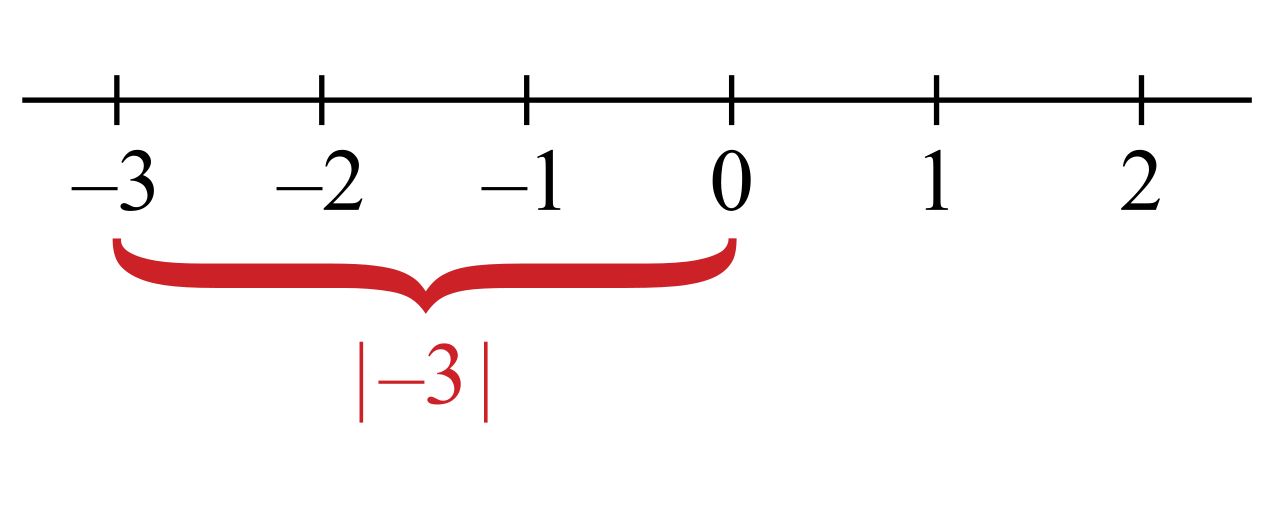
- Absolute Value Bars: Absolute value bars act as grouping symbols requiring the expression inside to be evaluated before finding the absolute value. For ∣3−8∣, we compute 3−8=−5 before applying the absolute value to yield 5.
Step 2: Exponents and Roots
Exponents and roots are evaluated second in the mathematical order of operations. Once all grouped expressions are reduced to single values, we evaluate repeated multiplication (exponents) and their inverses (roots).
Step 3: Multiplication and Division
Multiplication and division are evaluated third in the mathematical order of operations.
Crucial Teaching Warning: Multiplication does not take mathematical precedence over division.
This is the most common casualty of the PEMDAS mnemonic. Students assume "M" comes before "D", therefore multiplication should happen first. This is categorically false. Multiplication and division hold equal rank. Therefore, multiplication and division are evaluated sequentially from left to right as they appear in the mathematical expression. For example, in 12÷3×2, we move left to right: first 12÷3=4, then 4×2=8.
Step 4: Addition and Subtraction
Addition and subtraction are evaluated last in the mathematical order of operations.
Crucial Teaching Warning: Addition does not take mathematical precedence over subtraction.
Exactly like their higher-order counterparts, addition and subtraction share equal rank. Addition and subtraction are evaluated sequentially from left to right as they appear in the mathematical expression. In the expression 10−4+2, we evaluate 10−4=6, then 6+2=8.
Middle school is the battleground where students first seriously encounter the negative side of the number line. The physical intuition of "having 5 apples" breaks down, and students must lean on rules of parity and direction.

Addition and Subtraction
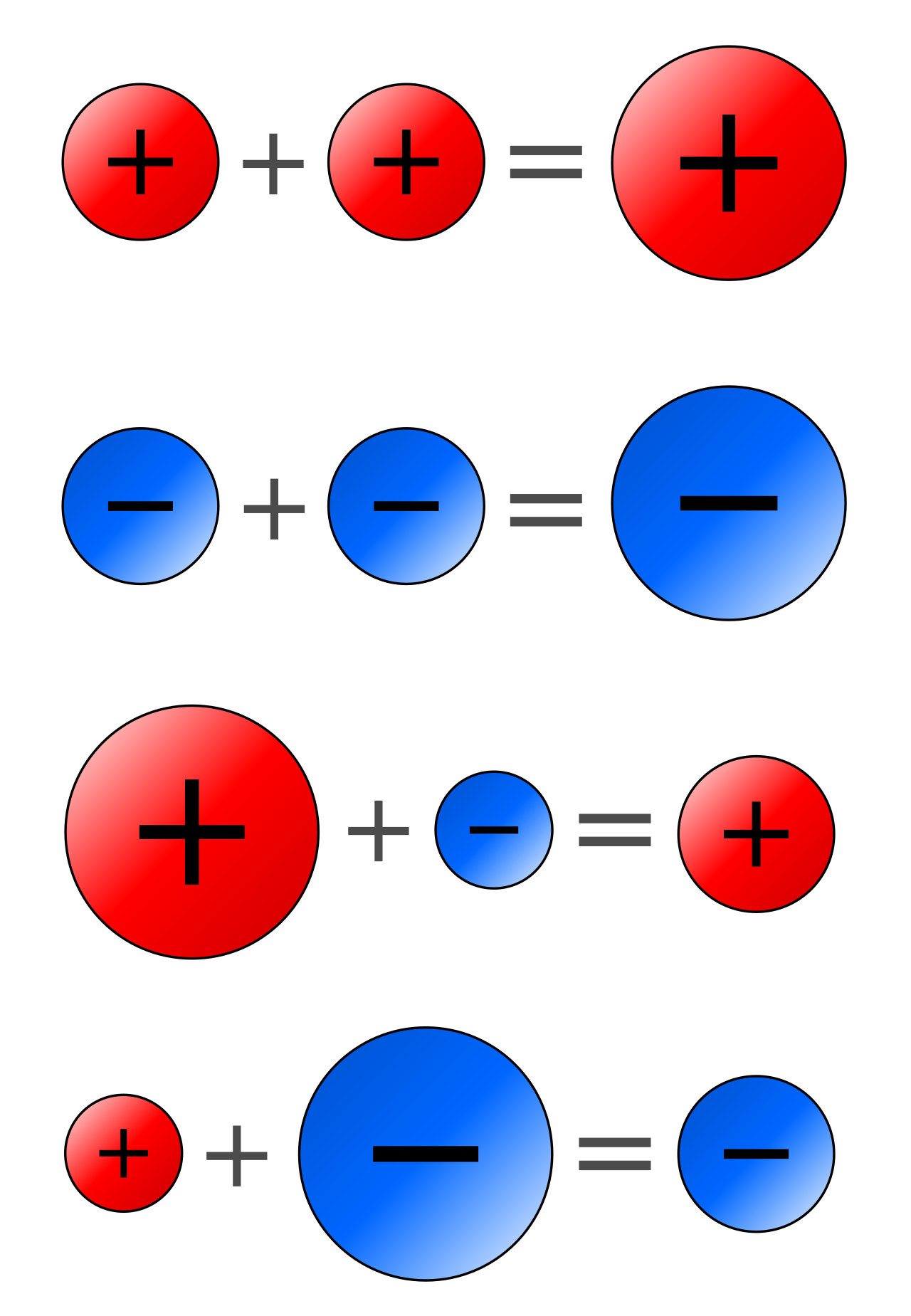
- Adding Negatives: Adding two negative numbers results in a negative sum. If you owe a bank $10 and you borrow $5 more, your debt increases. (−10)+(−5)=−15.
- Mixed Signs in Addition: The sign of the sum of a positive number and a negative number matches the sign of the number with the larger absolute value. Think of it as a tug-of-war. In −12+7, the negative number has the larger absolute value (12>7), so the negatives "win" the tug-of-war, resulting in −5.
- Subtracting Negatives: Subtracting a negative number is mathematically equivalent to adding the corresponding positive number. Removing a debt increases your net worth. 8−(−3) becomes 8+3=11.
Multiplication and Division
The rules for multiplication and division are elegantly symmetric:
- Multiplying or dividing two numbers with the identical sign results in a positive number. (e.g., (−4)×(−5)=20).
- Multiplying or dividing two numbers with opposite signs results in a negative number. (e.g., (−20)÷4=−5).
As students solve algebraic equations, they will generate answers that stretch beyond neat integers. They need to understand the definitions and behaviors of the real number system.
Defining the Categories
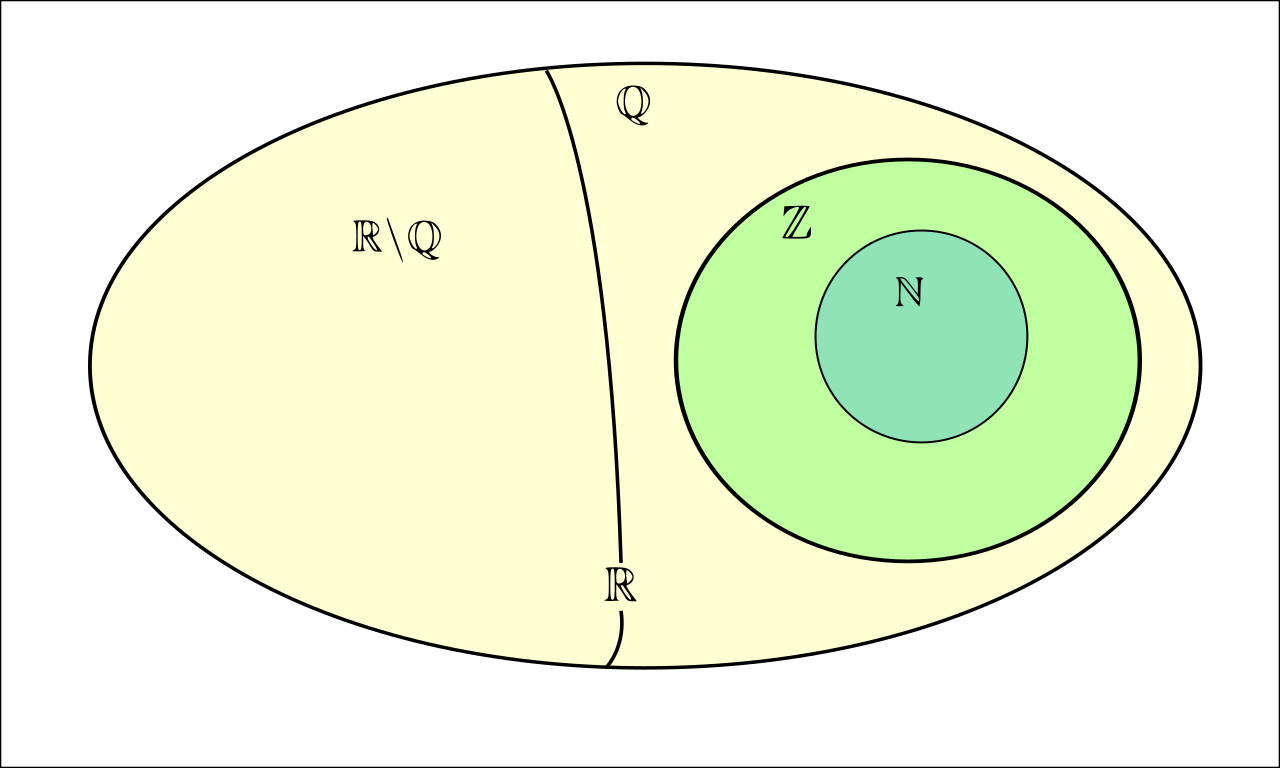
Rational Numbers: A rational number can be expressed as the ratio of two integers where the denominator is not equal to zero (a/b,b=0). These are "predictable" numbers. They include integers, terminating decimals, and repeating decimals. Fact: Zero is a rational number, as it can be expressed as 0/1.
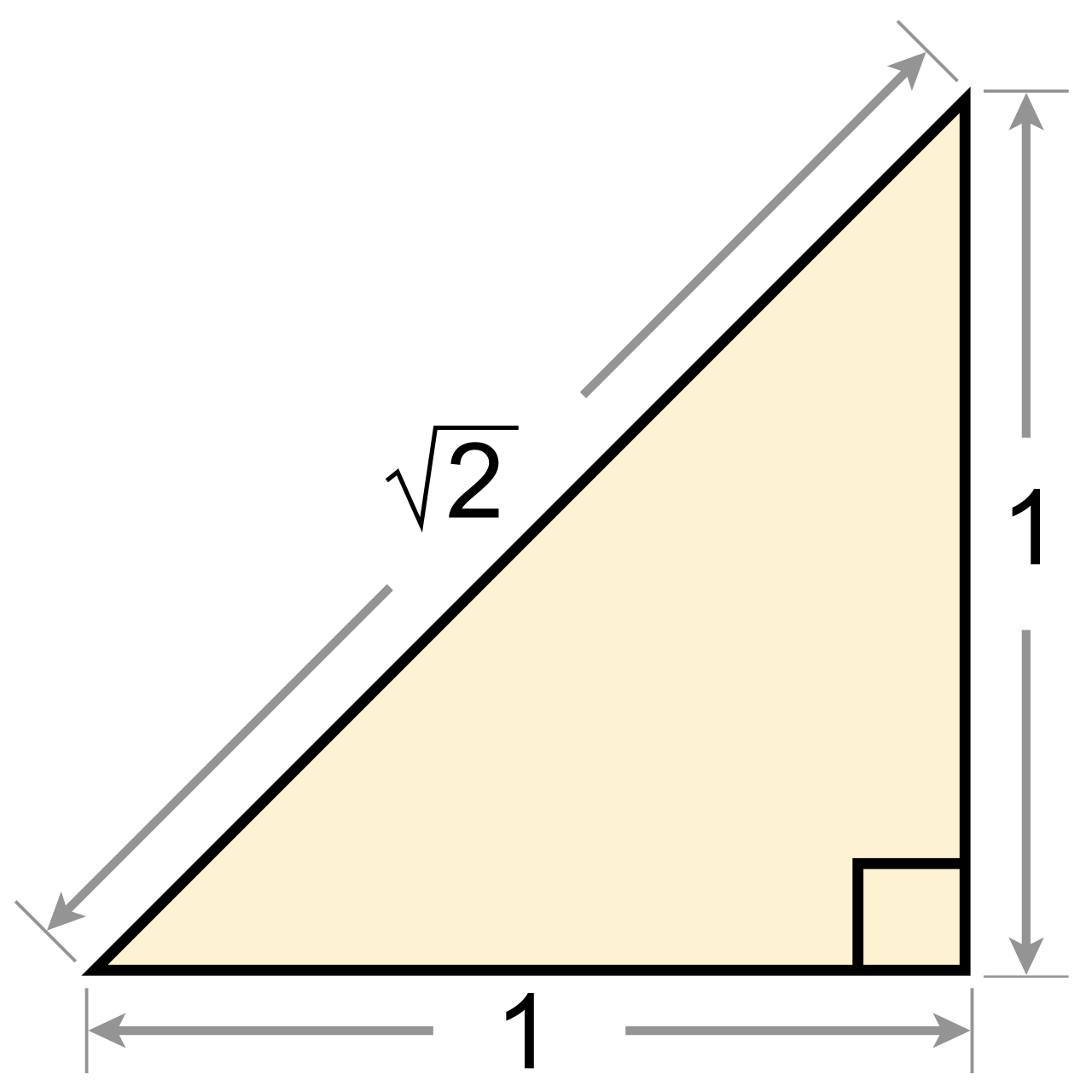
Irrational Numbers: An irrational number cannot be expressed as a simple fraction of two integers. These are decimals that never terminate and never repeat, such as π, 2, or the mathematical constant e.
The Chemistry of Combining Numbers
What happens when we add or multiply these numbers together? It helps to think of irrationality as a dominant trait—a sort of "messiness" that usually infects whatever it touches, with a few vital exceptions.
Combining Rationals:
- The sum of two rational numbers is always a rational number.
- The product of two rational numbers is always a rational number. If you add or multiply two predictable fractions, you just get another predictable fraction.
Mixing Rationals and Irrationals:
- The sum of a rational number and an irrational number is always an irrational number. If you add 3 to π, the infinite, non-repeating decimal tail of π isn't cleaned up; the result (6.14159...) is still irrational.
- The product of a non-zero rational number and an irrational number is always an irrational number. Multiplying 2×5 simply scales the irrationality; it doesn't resolve it.
- The Annihilator: The product of zero and any irrational number is exactly zero. Because zero is a rational number, this is the one scenario where multiplying a rational and an irrational yields a rational result. Zero destroys the irrationality entirely.
Combining Irrationals with Irrationals: When you combine two irrational numbers, their chaotic decimal tails can sometimes perfectly cancel each other out.
- The sum of two irrational numbers can result in an irrational number (e.g., π+π=2π).
- The sum of two irrational numbers can result in a rational number (e.g., (3+2)+(3−2)=6).
- The product of two irrational numbers can result in an irrational number (e.g., 2×3=6).
- The product of two irrational numbers can result in a rational number (e.g., 2×2=2).
Mathematics is essentially a translation exercise. When a student reads a word problem, they must translate English into Algebra. To represent and solve word problems involving addition, subtraction, multiplication, and division, students must identify key operational verbs and nouns.
| English Phrase | Mathematical Translation |
|---|---|
| "Sum of" | The phrase "sum of" in a word problem indicates the operation of mathematical addition. |
| "Difference between" | The phrase "difference between" in a word problem indicates the operation of mathematical subtraction. |
| "Product" | The word "product" in a word problem indicates the operation of mathematical multiplication. |
| "Quotient" | The word "quotient" in a word problem indicates the operation of mathematical division. |
| "Per" | The word "per" in a word problem indicates the operation of mathematical division (e.g., miles per hour = miles ÷ hours). |
| "Of" | The word "of" in a word problem frequently indicates the operation of multiplication when used alongside fractions or percentages (e.g., "half of $50" means 21×50). |
The "Less Than" Trap
There is one linguistic construct that catches nearly every middle school student off-guard.
Translation Warning: The phrase "less than" in a word problem dictates reversing the order of the terms in a subtraction expression.
If a problem says, "What is 5 less than 12?", the literal left-to-right translation would be 5−12. However, logically, starting with 12 and taking 5 away means the expression must be written as 12−5. In algebra, "seven less than twice a number" translates to 2x−7, not 7−2x.
Putting It All Together in Context
Imagine you are guiding a student through a standard Praxis 5164-style context:
"A school buys tablets for $300 each. The school receives a $50 discount per tablet. If they buy half of a 40-unit shipment, and then pay a flat $100 shipping fee for the whole order, write an expression for the total cost."
Watch how the vocabulary dictates the order of operations and setup:
- "discount" implies subtraction: (300−50). Because the discount applies before the total is calculated, parentheses (grouping symbols) are vital.
- "of" alongside a fraction implies multiplication: 21×40.
- "flat fee" implies a final addition: +100.
The resulting expression is: [(300−50)×(21×40)]+100.
By teaching your students the strict order of operations, the laws of signs, the structural behavior of rational and irrational numbers, and the precise vocabulary of mathematical translation, you arm them with the tools to write, debug, and fluently speak the language of mathematics.