Major Legislation
Not sure you’re ready?
Take the ~3-minute readiness diagnostic and see where you stand.
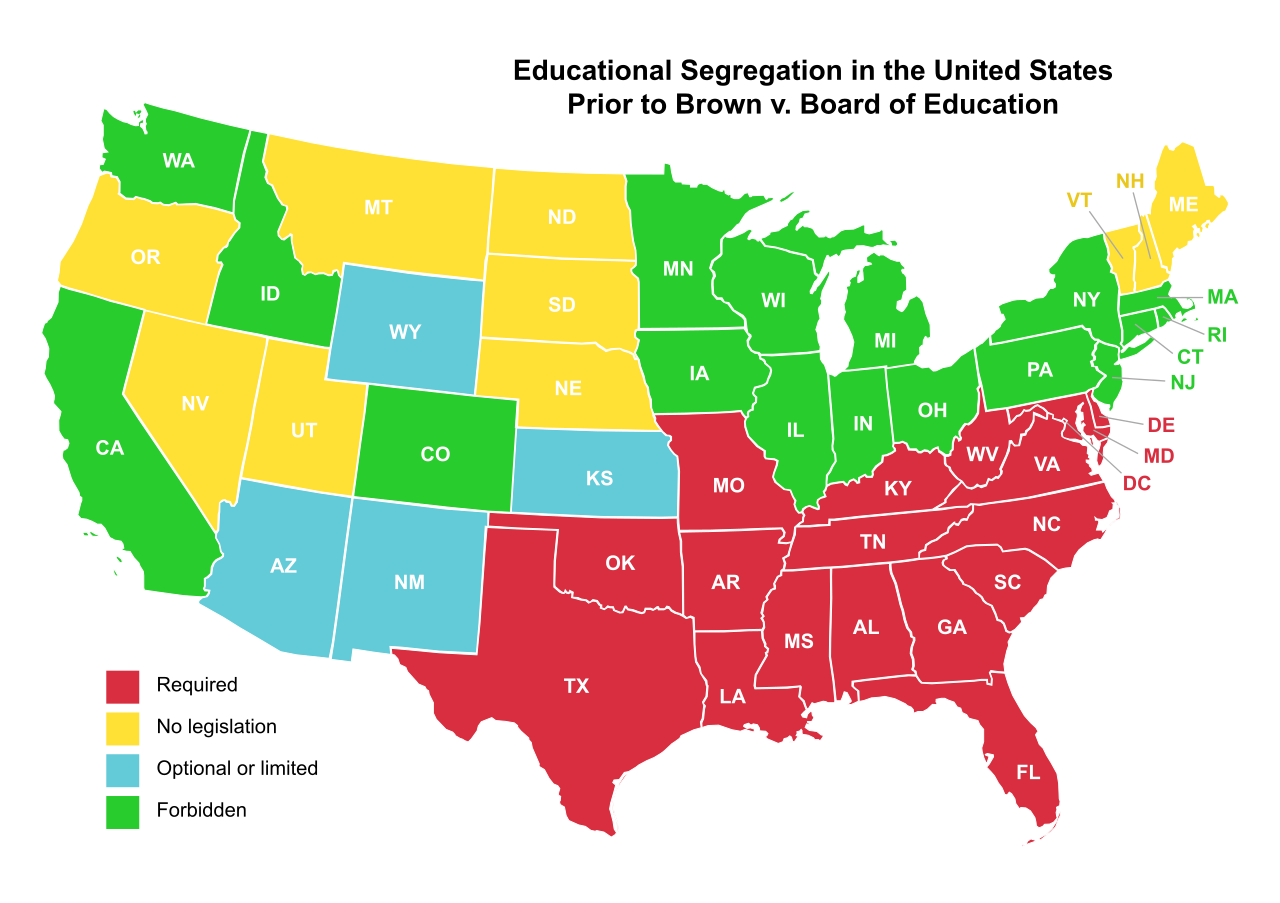
The architecture of modern public education is built upon the premise that a classroom door must be open to everyone, but establishing that access required decades of profound legal and cultural reconstruction. The precedent for equal educational access did not begin with disability law; it began with civil rights law. Brown v. Board of Education was a 1954 United States Supreme Court ruling that established that segregated public schools are unconstitutional. While this ruling centered on race, the Brown v. Board of Education decision established the foundational legal precedent that all children have a right to equal educational opportunities. If a state provides public education to any of its citizens, it must provide it to all of them on equal terms.
For aspiring special educators, the laws we are about to examine—the Individuals with Disabilities Education Act (IDEA), Section 504, and the Americans with Disabilities Act (ADA)—are not just bureaucratic mandates. They are the mechanisms that translate the philosophical promise of Brown into the daily, practical reality of your classroom.
Before the 1970s, millions of children with disabilities were entirely excluded from American public schools. School districts routinely argued that educating children with cognitive or severe physical disabilities was either impossible or too expensive. Two landmark special education court cases shattered these arguments and laid the groundwork for modern legislation.
First came PARC v. Commonwealth of Pennsylvania, decided in 1971. The Pennsylvania Association for Retarded Children (PARC) sued the state over laws that allowed public schools to deny education to children who had not reached the "mental age of five." The PARC v. Commonwealth of Pennsylvania ruling established that students with intellectual disabilities have a right to a free public education. It demolished the myth that some students were "unteachable."
A year later, the courts addressed the financial argument. Mills v. Board of Education of the District of Columbia was a landmark special education court case decided in 1972. The school district admitted they were denying education to thousands of students with behavioral, physical, and mental disabilities, but claimed they simply lacked the funds to accommodate them. The Mills v. Board of Education ruling established that a lack of financial resources cannot be used as an excuse by school districts to deny educational services to students with disabilities.
If a district's funds were constrained, the courts ruled, the cuts had to be distributed equitably across all programs, rather than balancing the budget on the backs of children with disabilities.
These court cases made it clear that states had a constitutional duty to educate children with disabilities. But how would they pay for it? And what were the standards? Enter the federal government.
In 1975, Congress passed the Education for All Handicapped Children Act, signed into law to provide both a structure and financial assistance to states. It is also known by the legal designation Public Law 94-142. The Education for All Handicapped Children Act mandated a free appropriate public education (FAPE) for all children with disabilities.
As our understanding of disability evolved, so did the law's language. The Education for All Handicapped Children Act was officially renamed the Individuals with Disabilities Education Act (IDEA) in 1990. The United States Congress most recently reauthorized the Individuals with Disabilities Education Act in 2004, fine-tuning its mechanisms to align with modern educational standards.
How IDEA Works
To understand your role as a teacher, you must first understand the fundamental nature of IDEA. The Individuals with Disabilities Education Act is a federal educational funding statute. It operates like a highly regulated grant program. The Individuals with Disabilities Education Act requires states to provide a Free Appropriate Public Education (FAPE) to eligible students in exchange for receiving federal education funding. If a state takes the money, it must follow the rules.
IDEA establishes highly specific parameters for how this education is delivered:
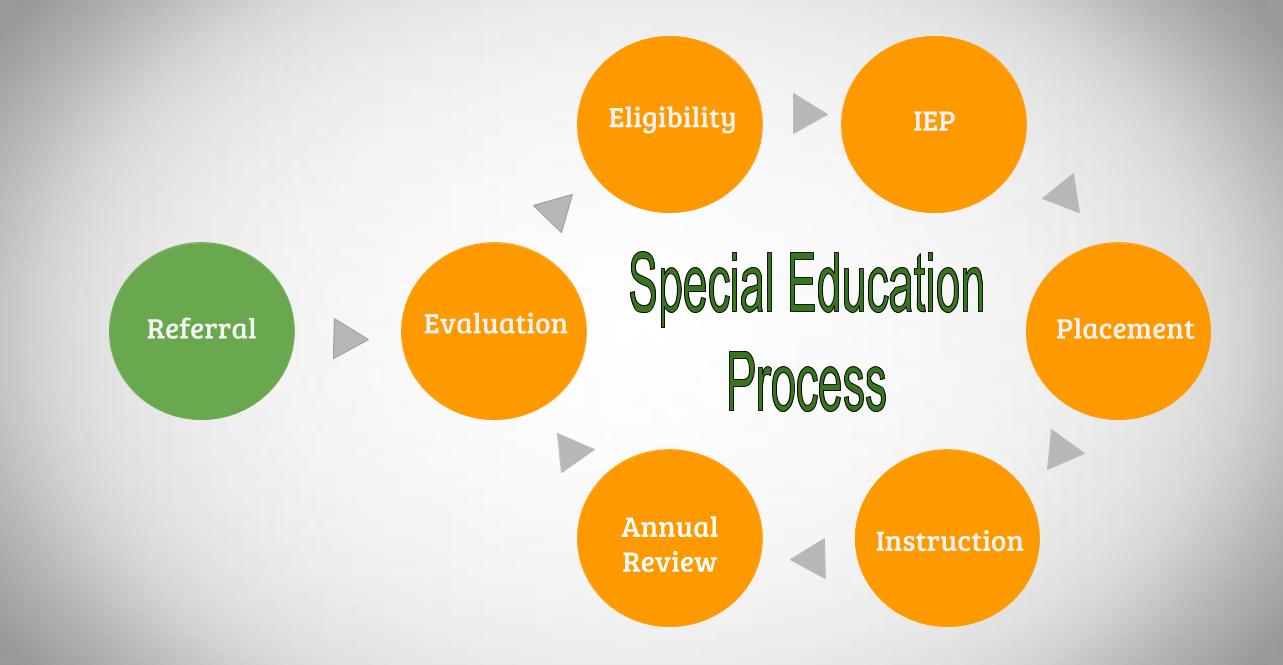
- Individualized Education Program (IEP): The Individuals with Disabilities Education Act requires the development of an Individualized Education Program for every eligible special education student. This is your daily blueprint. It outlines present levels of performance, measurable goals, and the specific services the child will receive.
- Least Restrictive Environment (LRE): The Individuals with Disabilities Education Act mandates that students with disabilities be educated in the Least Restrictive Environment. This means students with disabilities must be educated alongside their nondisabled peers to the maximum extent appropriate. You do not isolate a child simply because they have a disability; removal from the general education classroom only occurs when the severity of the disability prevents satisfactory learning even with supplementary aids.
- Procedural Safeguards: The Individuals with Disabilities Education Act mandates procedural safeguards to protect the rights of parents and children with disabilities during the special education process. This includes the right to review records, the right to participate in meetings, and the right to due process hearings if disputes arise.
Eligibility Under IDEA: The Two-Prong Test
Not every student who struggles in school qualifies for an IEP. The Individuals with Disabilities Education Act identifies 13 specific categories of disability for special education eligibility (such as Specific Learning Disability, Autism, Speech or Language Impairment, etc.).
However, simply having a medical diagnosis of a disability in one of these categories is not enough. Qualifying for IDEA requires meeting a strict, two-pronged educational test:
- Adverse Educational Effect: Eligibility for services under the Individuals with Disabilities Education Act requires that a student's disability adversely affects the student's educational performance. If a student has mild hearing loss but maintains a 4.0 GPA without intervention, they do not qualify for IDEA.
- Specially Designed Instruction: A student must require specially designed instruction to qualify for services under the Individuals with Disabilities Education Act. If a student's needs can be met simply by seating them in the front row, they do not need an IEP. They must require adaptations to the content, methodology, or delivery of instruction.
Age Brackets in IDEA
IDEA partitions its services by age to ensure developmental appropriateness:
- Part C of the Individuals with Disabilities Education Act provides early intervention services for infants and toddlers from birth through age 2. This focuses heavily on family training and early developmental milestones.
- Part B of the Individuals with Disabilities Education Act provides special education guidelines and services for children aged 3 through 21. This is the section governing the preschool and K-12 special education system you will navigate daily.
What happens to the student who has a disability—perhaps severe ADHD or Type 1 Diabetes—but does not require specially designed instruction? Do they just fall through the cracks?
This is where Section 504 steps in. Section 504 of the Rehabilitation Act was passed in 1973, two years before the original IDEA.
Unlike IDEA, Section 504 of the Rehabilitation Act is a federal civil rights law, not a funding statute. Section 504 of the Rehabilitation Act prohibits discrimination on the basis of disability in any program that receives federal financial assistance. Because public schools receive federal funds (like Title I grants or free/reduced lunch subsidies), they are therefore legally mandated to comply with Section 504 of the Rehabilitation Act.
Crucial Distinction: Section 504 of the Rehabilitation Act does not provide dedicated federal funding to school districts to implement student accommodations. If a school needs to purchase a specialized desk or hire a sign language interpreter for a 504 student, those dollars must come from the school's general budget.
Section 504's Definition of Disability
Section 504 uses a functional, rather than categorical, approach to disability. Section 504 of the Rehabilitation Act defines a person with a disability as anyone who has a physical or mental impairment that substantially limits one or more major life activities (such as walking, seeing, hearing, speaking, breathing, or learning).
Because of this language, the definition of a disability under Section 504 of the Rehabilitation Act is broader than the definition of a disability under the Individuals with Disabilities Education Act.
A student can qualify for accommodations under a Section 504 plan without requiring specially designed instruction. For example, a student who uses a wheelchair may be academically brilliant and need zero changes to the curriculum. They do not qualify for IDEA. But their mobility impairment substantially limits a major life activity (walking). Therefore, under Section 504, the school is legally required to provide accommodations—such as an elevator key, accessible seating, or extra time passing between classes—so the student can access the building and the curriculum equally.
Furthermore, Section 504 of the Rehabilitation Act protects eligible individuals from discrimination across their entire lifespan. While IDEA Part B ends at age 21, Section 504 continues to protect that student in college and beyond, provided the institution receives federal funding.
In 1990, Congress recognized that civil rights protections for individuals with disabilities needed to extend beyond the walls of federally funded institutions. The private sector and local governments needed a mandate, too.
The Americans with Disabilities Act was passed in 1990. Like Section 504, the Americans with Disabilities Act is a federal civil rights law.
The Americans with Disabilities Act prohibits discrimination based on disability in employment, state and local government, public accommodations, commercial facilities, transportation, and telecommunications. This means a disabled individual has a legal right to access a privately owned grocery store, a public bus, or a municipal courthouse.
Crucially, the Americans with Disabilities Act applies to public entities regardless of whether those entities receive federal funding. It acts as a universal floor for accessibility. To maintain consistency across the legal landscape, the Americans with Disabilities Act utilizes the same definition of disability as Section 504 of the Rehabilitation Act (a physical or mental impairment that substantially limits one or more major life activities).

The ADA in the School Setting
As an educator, you will primarily intersect with the ADA through its structural and administrative mandates.
- Title II of the Americans with Disabilities Act specifically applies to state and local government entities.
- Because public schools are extensions of local government, Title II of the Americans with Disabilities Act prohibits disability-based discrimination by public school districts.
- The Americans with Disabilities Act mandates accessibility standards for public buildings. When your district constructs a new gymnasium, the ADA dictates the width of the doorways, the slope of the wheelchair ramps, and the height of the drinking fountains.
However, the ADA is a law of access, not a law of pedagogy. The Americans with Disabilities Act does not specifically govern or outline special education curriculum in schools. It ensures the student can physically get into the science lab, but IDEA dictates how the science curriculum is modified to meet their unique cognitive needs once they are inside.

To excel on your exam and in your future IEP meetings, you must clearly understand how these three laws overlap and how they differ.
One of the most vital concepts to master is the "Russian Nesting Doll" effect of legal protection:
- Because IDEA's criteria are the strictest, all students who are eligible for special education under the Individuals with Disabilities Education Act are automatically protected under Section 504 of the Rehabilitation Act.
- However, the reverse is not true. Because Section 504 is broader and does not require a need for specialized instruction, students protected under Section 504 of the Rehabilitation Act are not automatically eligible for special education services under the Individuals with Disabilities Education Act.

Comparative Framework for Aspiring Teachers
| Feature | IDEA (Individuals with Disabilities Education Act) | Section 504 (Rehabilitation Act) | ADA (Americans with Disabilities Act) |
|---|---|---|---|
| Law Type | Educational Funding Statute | Civil Rights Law | Civil Rights Law |
| Federal Funding? | Yes. Provides funds to states for special ed. | No dedicated federal funding for implementation. | No dedicated federal funding for implementation. |
| Who is Protected? | Ages birth-21 who meet one of 13 categories and need specially designed instruction. | Anyone with an impairment substantially limiting a major life activity. Lifespan protection. | Anyone with an impairment substantially limiting a major life activity. Lifespan protection. |
| Mandates | FAPE, LRE, IEP, Procedural Safeguards. | Accommodations to ensure equal access to federally funded programs. | Prohibits discrimination across employment, public spaces, state/local gov (Title II), regardless of funding. Mandates building accessibility. |
| Curriculum Impact | Requires specially designed instruction and individualized curriculum modifications. | Focuses on accommodations (e.g., extra time, quiet room) without changing curriculum standards. | Does not govern or outline special education curriculum. |
Why This Matters in Your Classroom
Imagine you have a 10th-grade student named Sarah who suffers from severe anxiety, which constitutes a mental impairment.
- Does she qualify for IDEA? Only if her anxiety causes a severe adverse effect on her academic performance and requires you, the special education teacher, to deliver specially designed instruction (like a modified curriculum for emotional regulation).
- If she does not need a specialized curriculum, but she does suffer from panic attacks during timed exams, she qualifies for a Section 504 plan. Her anxiety substantially limits a major life activity (learning/concentration). The 504 plan legally compels you to provide her with extended time or a quiet testing space.
- Meanwhile, the ADA is the reason the school's intercom system is equipped with visual flashing lights for deaf students, and the reason Sarah cannot be denied entry into the school's after-school robotics club due to her mental health diagnosis.
Understanding this legal triad allows you to advocate effectively. When you know why a law exists—whether it is leveraging federal dollars to build a specialized curriculum (IDEA) or wielding civil rights to tear down barriers to access (504 and ADA)—you become more than just a teacher. You become the executor of an educational promise that took generations to build.