Ensuring Success in One-to-One, Small, and Large Groups
Not sure you’re ready?
Take the ~3-minute readiness diagnostic and see where you stand.
Instructional grouping is the structural lens through which special educators bend, filter, and focus academic content to meet the unique cognitive profiles of diverse learners. Just as a physicist shifts from a telescope to a microscope depending on the nature of the phenomenon being observed, a teacher must dynamically alter the learning environment—shifting between one-to-one, small group, and large group formats—to optimize student success. The size of the instructional group dictates the pedagogical physics of the classroom: it changes the rate of student response, the immediacy of teacher feedback, and the complexity of peer interactions. Mastering these formats is not merely a matter of classroom logistics; it is the fundamental mechanism for ensuring that students with varying abilities acquire, generalize, and maintain academic and social skills.
When we zoom in to the highest level of instructional resolution, we arrive at one-to-one instruction. By pairing one teacher directly with one student, one-to-one instruction allows a special education teacher to deliver highly individualized academic interventions.
Why is this isolation sometimes necessary? Because learning is fundamentally the building of neural pathways, and for students with severe cognitive or developmental disabilities, the interference of a complex classroom can derail this delicate process. In a one-to-one setting, the teacher is the absolute master of the environment. Most critically, one-to-one instruction allows a teacher to strictly control the pacing of academic content. If a student processes information slowly, the teacher waits. If the student grasps a concept instantly, the teacher accelerates.
Furthermore, this isolated setting drastically reduces the latency between a student's action and the teacher's reaction. One-to-one instructional settings provide immediate opportunities for a teacher to deliver corrective feedback. If a student mispronounces a phoneme, the correction happens in milliseconds, ensuring the error is not encoded into the student's memory.
Evidence-Based One-to-One Strategies
To maximize the efficiency of one-to-one instruction, special educators rely on highly structured, empirical methodologies:
-
Discrete Trial Training (DTT): Derived from applied behavior analysis, discrete trial training is a highly structured one-to-one instructional method involving repeated practice of specific skills. A "trial" consists of a clear teacher directive, a student response, and an immediate consequence (reinforcement or correction). It breaks complex skills into their smallest teachable components.
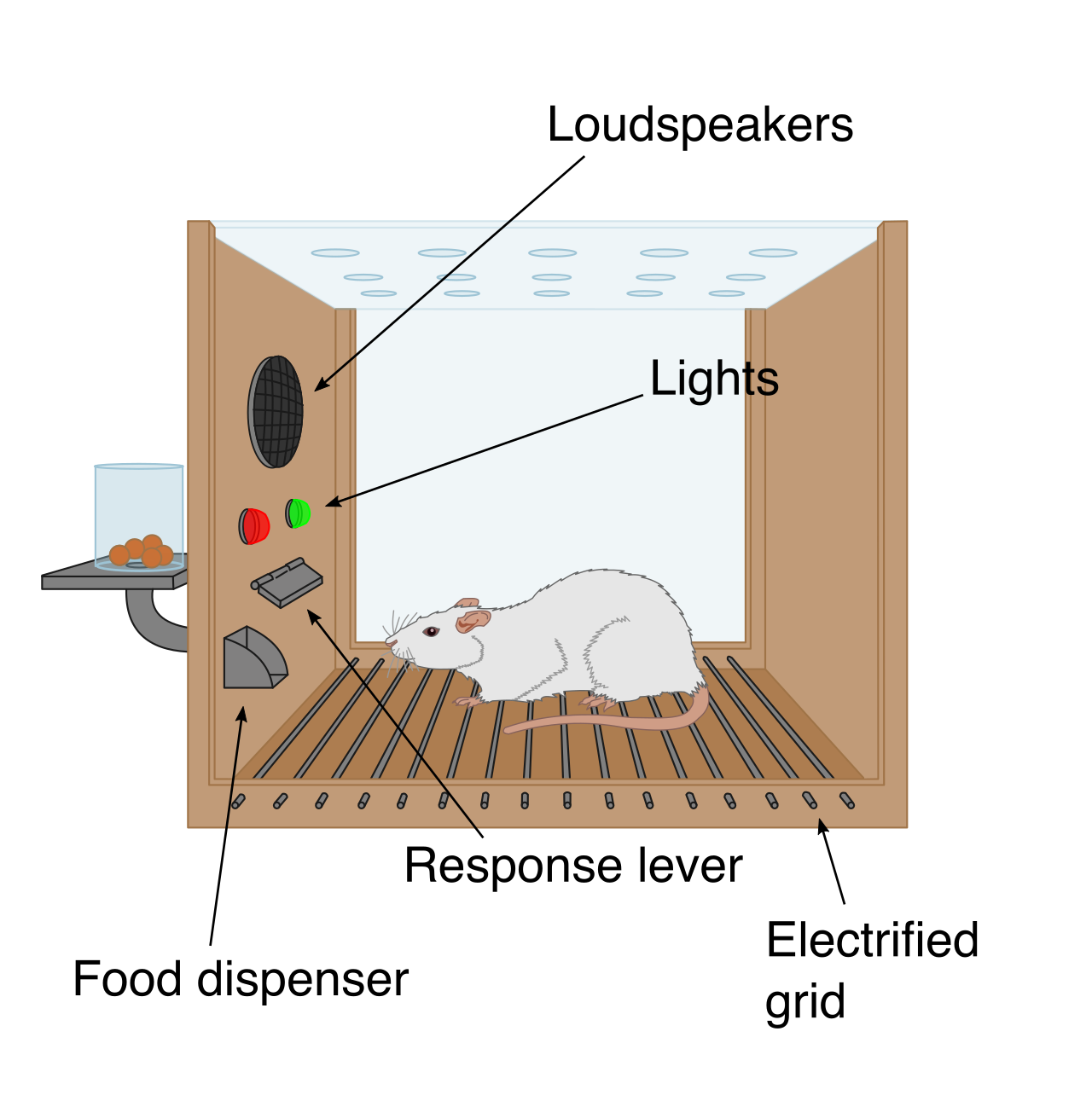
An operant conditioning chamber illustrating the cycle of stimulus, response, and reinforcement. Structured one-to-one strategies like Discrete Trial Training adapt this behavioral loop to isolate and teach discrete academic and social skills. Source: Skinner box scheme 01 by Original: AndreasJS Vector: Pixelsquid, CC BY-SA 3.0. -
Errorless Learning: We often hear that we "learn from our mistakes," but for students with severe cognitive impairments, mistakes can quickly become permanent habits. Errorless learning is an instructional strategy used in one-to-one settings to prevent a student from practicing incorrect responses. The teacher provides an immediate, intrusive prompt to ensure the student answers correctly on the very first try, guaranteeing that only the correct neural pathway is reinforced.
-
Time Delay: Once a student can perform a skill with a prompt, the prompt must be removed so the student becomes independent. Time delay is an evidence-based prompt-fading strategy frequently used to build fluency during one-to-one instruction. Initially, the teacher provides the prompt at "zero seconds" (simultaneously with the instruction). Over successive trials, the teacher introduces a delay (e.g., waiting 3 seconds before prompting), giving the student a brief window to retrieve the answer independently before assistance is given.
While one-to-one instruction is powerful, it is resource-heavy and deprives students of peer interaction. The pedagogical sweet spot for most special education classrooms is the small group. Small group instruction typically involves three to six students.
This specific number is not arbitrary. When a group exceeds six, a student can easily "hide" and become passive. When the group remains small, the social pressure and physical proximity demand participation. Consequently, small group instruction increases the rate of academic engaged time compared to large group instruction.
Structuring the Small Group: Homogeneous vs. Heterogeneous
How you populate your small group radically alters what you can achieve with it. Teachers must intentionally choose between two primary grouping strategies based on their objective.
| Grouping Strategy | Definition | Primary Instructional Advantage |
|---|---|---|
| Homogeneous Grouping | Homogeneous grouping places students with similar academic skill levels together. | Efficiency. Homogeneous grouping allows teachers to efficiently target specific academic skill deficits. If four students all struggle with decoding CVC words, the teacher can deliver a highly concentrated phonics lesson without boring advanced students or overwhelming struggling ones. |
| Heterogeneous Grouping | Heterogeneous grouping places students with varying academic skill levels in the same group. | Modeling. Heterogeneous grouping facilitates the peer modeling of academic skills. The struggling student observes the cognitive processes of the advanced student. Equally important, heterogeneous grouping facilitates the peer modeling of social skills, allowing students with behavioral or communication deficits to observe typical peer interactions. |
Peer-Mediated Small Group Strategies
Students often translate academic concepts into a shared, accessible language better than adults do. By leveraging peer dynamics, teachers can multiply their instructional reach.
- Peer Tutoring: This strategy pairs a student who has mastered a specific skill with a student who is learning that specific skill. It benefits the learner through individualized attention and benefits the tutor by solidifying their mastery through the act of teaching.
- Cross-Age Peer Tutoring: Taking this a step further, cross-age peer tutoring pairs an older student with a younger student for academic instruction. This dynamic is exceptionally powerful because the younger student receives mentorship, while the older student (who may themselves have a disability and struggle with grade-level peers) experiences a profound boost in self-esteem and responsibility by acting as the "expert."
Co-Teaching in Small Groups
In inclusive settings, special and general educators frequently collaborate to manage small groups. Two standard co-teaching models are directly relevant here:
Station Teaching: A co-teaching model where students rotate through small group instructional centers. Both teachers run independent stations (e.g., one teacher handles a guided reading group while the other manages a phonics game), and students cycle through them, ensuring everyone receives focused, small-group instruction.
Alternative Teaching: A model utilized when a specific subset of students requires intense remediation or enrichment. Alternative teaching is a co-teaching model where one teacher instructs a large group, while in the alternative teaching co-teaching model, one teacher provides targeted instruction to a small group of students.
Finally, we zoom out to the macro level. Large group instruction involves teaching the entire class of students simultaneously.
The fundamental risk of large group instruction is passivity. The teacher broadcasts information, but cannot guarantee that the signal is being received by all twenty-five individual minds. To mitigate this, special educators must engineer the environment for universal access and relentless participation.
Designing the Environment: Universal Design for Learning (UDL)
Before a single word is spoken, the lesson must be structurally accessible. Universal Design for Learning frameworks help teachers accommodate diverse learners within large group settings. UDL is based on the premise that barriers to learning are in the design of the environment, not in the student.
A core pillar of this framework is representation. Providing multiple means of representation allows diverse learners in large groups to access content through various formats. If a teacher only lectures (auditory representation), deaf students, auditory processing students, and English language learners are locked out. By simultaneously providing a visual slide deck, tactile models, and captioned videos, the teacher ensures that every cognitive profile in the large group can intercept the concept.

Forcing the Circuit: Active Student Responding (ASR)
In a large group, if you ask a question and call on one student whose hand is raised, one student is learning, and twenty-four students are resting. To prevent this, teachers utilize ASR. Active student responding strategies increase student engagement rates during large group instruction by requiring every student to generate an observable response simultaneously.
-
Choral Responding: This is an active student responding strategy where all students answer a teacher's prompt in unison. (e.g., "Class, what is the capital of Texas? Think... signal... 'AUSTIN!'"). Because the response is collective, choral responding allows teachers to quickly assess the general understanding of an entire large group by listening for the volume and synchronization of the answer.
-
Response Cards: Response cards allow all students to simultaneously display answers to a teacher's question during large group instruction. Whether holding up dry-erase whiteboards, pre-printed A/B/C/D cards, or digital clickers, the teacher can instantly visually scan the room and identify exactly which students comprehend the material and which do not.
-
Guided Notes: Listening and writing simultaneously requires intense working memory. Guided notes are teacher-prepared handouts with missing information for students to complete during a lecture. Instead of copying everything, the student merely fills in key vocabulary or formulas. Crucially, guided notes help students with learning disabilities maintain focus during large group instruction without experiencing cognitive overload.
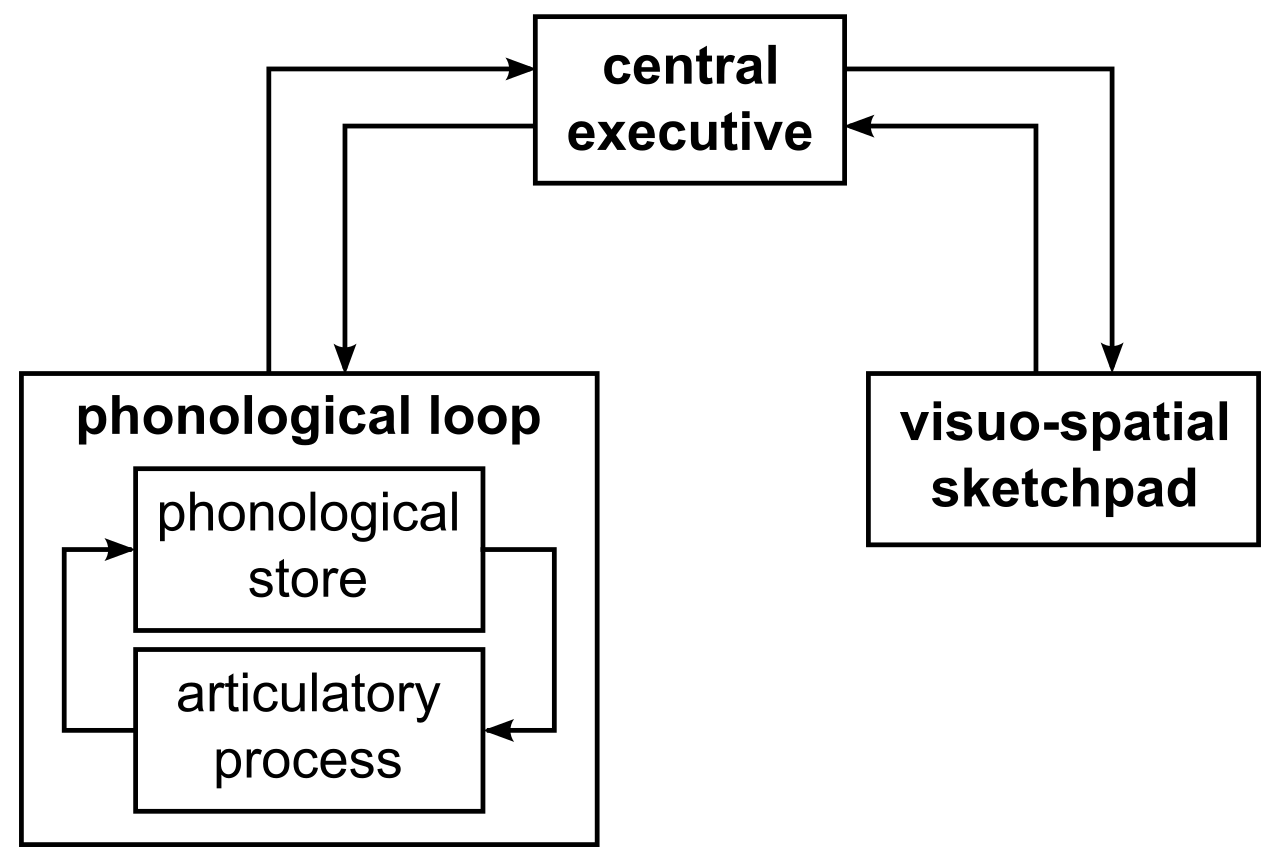
The working memory model demonstrates how processing simultaneous auditory and visual information can cause cognitive overload. Active responding strategies like guided notes mitigate this barrier for students with learning disabilities. -
Think-Pair-Share: Think-pair-share is a collaborative strategy used in large groups to increase individual student participation. The teacher poses a complex question, gives students time to think silently, has them pair with a neighbor to discuss, and then asks them to share with the class. This lowers the affective filter—students are much more willing to speak out loud to the whole class if they have already "test-driven" their answer with a peer.
Whether you are running a highly controlled discrete trial with one student or orchestrating a choral response with thirty, academic instruction cannot occur in the presence of behavioral chaos. Two foundational behavioral strategies transcend all grouping formats:
- Behavior-Specific Praise: "Good job" is useless feedback; it does not tell the student what they did right. Behavior-specific praise increases desired student behaviors across all grouping formats by explicitly naming the correct action. ("Maria, excellent job keeping your eyes on the text while I was reading.") This acts as a precise behavioral reinforcer.
- Proximity Control: Often, the mere physical presence of an authority figure alters human behavior. Proximity control involves a teacher moving physically closer to a student to manage off-task behavior during group instruction. Instead of stopping the lesson to verbally reprimand a student who is tapping their pencil, the teacher simply continues lecturing while walking over and standing next to the student's desk. The off-task behavior almost always ceases immediately, preserving the instructional momentum for the rest of the group.
Mastering special education is mastering the variables of instruction. By purposefully choosing the size of your group—and deploying the precise, evidence-based strategies tailored to that scale—you ensure that the academic content you teach makes a successful landing in the mind of every single student.