Appropriate Instructional Strategies by Age and Ability
Not sure you’re ready?
Take the ~3-minute readiness diagnostic and see where you stand.
At its core, special education is the science of cognitive translation. A curriculum is essentially inert until an educator adapts it into a mechanism that a specific student’s mind can engage. If you present an abstract algebraic formula to a student who has not yet conceptualized basic quantity, the instruction is not merely difficult; it is fundamentally invisible to them. The art of our profession lies in mapping a student’s current cognitive landscape and selecting the precise instructional lever that will move them forward. We do not alter the destination, but we must ruthlessly engineer the path.
To teach effectively, we must first locate the student. This requires Developmentally Appropriate Practice, an approach that tailors instruction to a student's cognitive, physical, and emotional stage of development rather than their chronological age. The fundamental rule here is that instructional strategies must align with a student's developmental age to ensure cognitive accessibility. If a student’s cognitive processing operates at a pre-operational level, handing them a text-heavy worksheet is an exercise in futility.
However, there is a critical caveat to this rule that you will encounter daily, particularly in middle and high school settings. While the cognitive demand of a task must match the student’s developmental level, the materials used must reflect their chronological age. Educators must use age-appropriate materials to ensure social dignity for older students with significant cognitive disabilities.
Crucial Distinction: If you are teaching cause-and-effect to a 16-year-old with a profound intellectual disability, you do not use a plastic baby rattle. You use an adaptive switch connected to a Bluetooth speaker playing their favorite band. The cognitive accessibility is identical; the social dignity is preserved.

The Engine of Growth: ZPD, Scaffolding, and Fading
How does learning actually happen? The Russian psychologist Lev Vygotsky provided us with the blueprint. He identified that learning occurs in a highly specific frontier called the Zone of Proximal Development.
The Zone of Proximal Development is the difference between what a learner can do independently and what the learner can do with guidance. If you teach below the zone, the student is bored. If you teach above the zone, the student is paralyzed. You must teach in the zone.
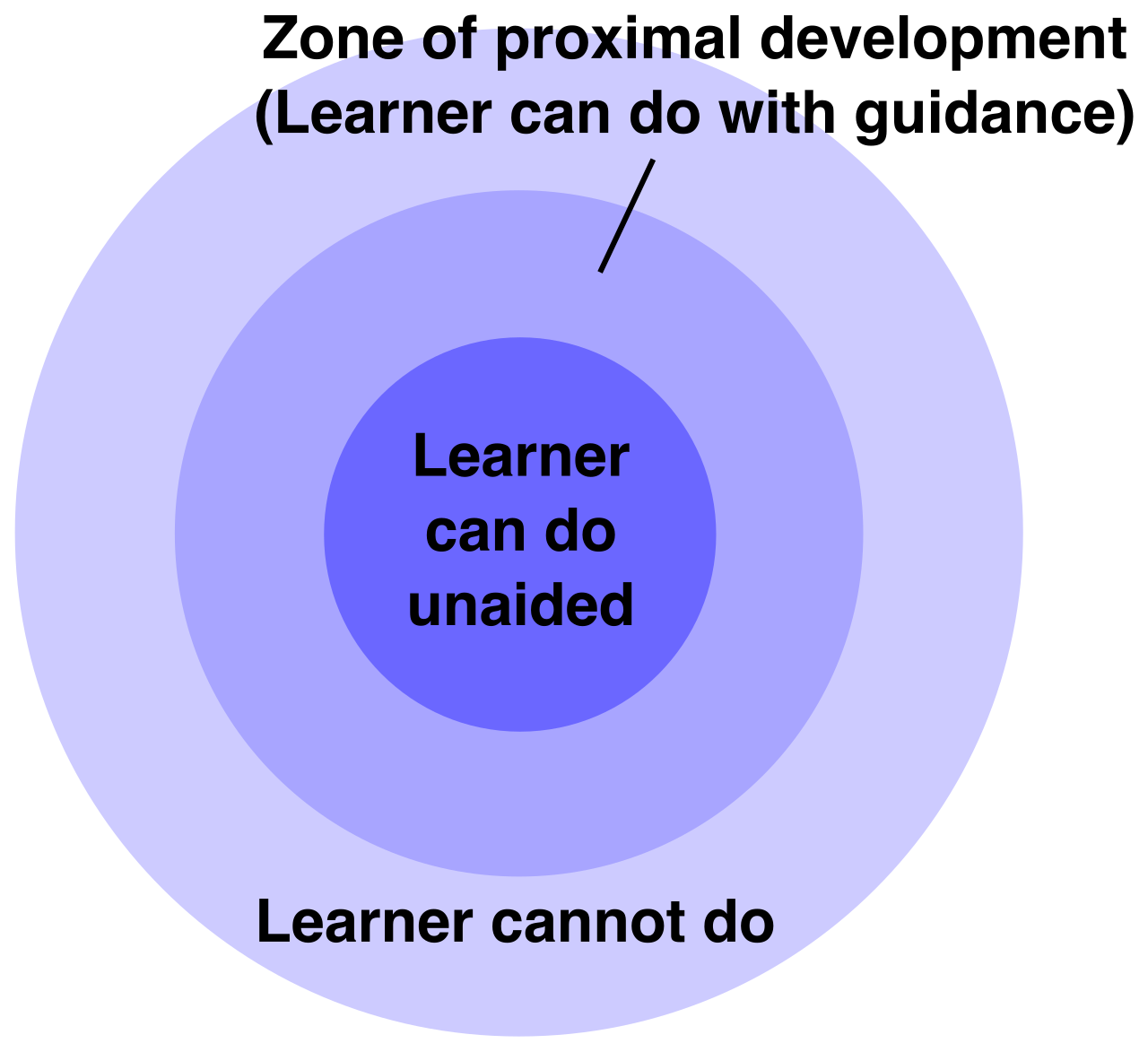
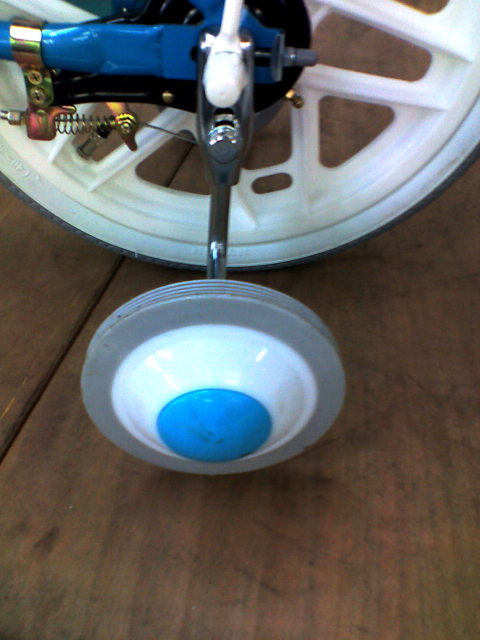
To bridge this gap, educators use scaffolding, which provides temporary support to help a student master a task within their Zone of Proximal Development. Think of it like training wheels on a bicycle. But training wheels are meant to come off. Fading is the gradual removal of prompts or instructional supports as a student gains independence with a skill. Without fading, scaffolding becomes a crutch; with fading, it becomes a bridge to autonomy.
When working with our youngest learners, the environment itself is the primary instructional tool. Early childhood special education relies heavily on play-based learning to teach cognitive and social skills. Children at this stage do not learn the physics of gravity through a lecture; they learn it by knocking over a tower of wooden blocks.

Within this play-based ecosystem, educators utilize two distinct but complementary strategies:
- Embedded instruction integrates targeted skill practice into a child's natural daily routines and activities. If a student's IEP goal is to identify colors, the teacher doesn't pull them aside for a flashcard drill; instead, she asks the child to sort the red and blue crayons during art time, or count the green crackers during snack time. The routine is planned, and the instruction is injected into it.
- Incidental teaching uses natural environmental opportunities and student interests to prompt and reinforce learning. This is highly responsive. If a non-verbal child suddenly reaches with intense interest toward a toy train, the teacher physically blocks access for a split second to prompt a communicative attempt (e.g., signing "more" or vocalizing). The learning is driven entirely by the child's spontaneous interest.
When we move into explicit academic instruction for students with learning disabilities, ambiguity is the enemy. These students often lack the innate ability to intuitively organize academic information, so we must organize it for them.
Direct Instruction and the CRA Sequence
To teach foundational reading and math, educators rely on Direct Instruction, which is highly structured explicit teaching used effectively for teaching basic academic skills to students with learning disabilities. It involves fast-paced, scripted, step-by-step guidance that leaves nothing to chance.
When teaching mathematics, educators must recognize that numbers are highly abstract symbols. To bridge the gap between physical reality and abstract math, we use the Concrete-Representational-Abstract sequence, an instructional sequence used to develop deep mathematical understanding.
| Stage | What it is | Example |
|---|---|---|
| Concrete stage | Manipulating physical objects to solve math problems. | Giving a student 5 physical blocks, having them take away 2, and counting the remaining 3. |
| Representational stage | Uses drawings or pictures to represent mathematical concepts. | Having a student draw 5 circles on a whiteboard, crossing out 2 of them, and counting the remaining 3. |
| Abstract stage | Uses numbers and symbols to solve mathematical problems. | The student solves the written equation: 5−2=3. |
If a student is struggling at the abstract level, the solution is almost always to drop back to the representational or concrete level until the foundational logic is solidified.
Structuring Memory and Metacognition
For students who struggle with working memory or executive functioning, we must provide external structures.
- Multisensory instruction engages visual, auditory, and kinesthetic-tactile pathways simultaneously to enhance memory and learning. (e.g., tracing a letter in sand while saying its sound out loud).
- Mnemonic strategies use memory aids like acronyms or keywords to help students recall specific factual information (e.g., using "PEMDAS" for the order of operations).
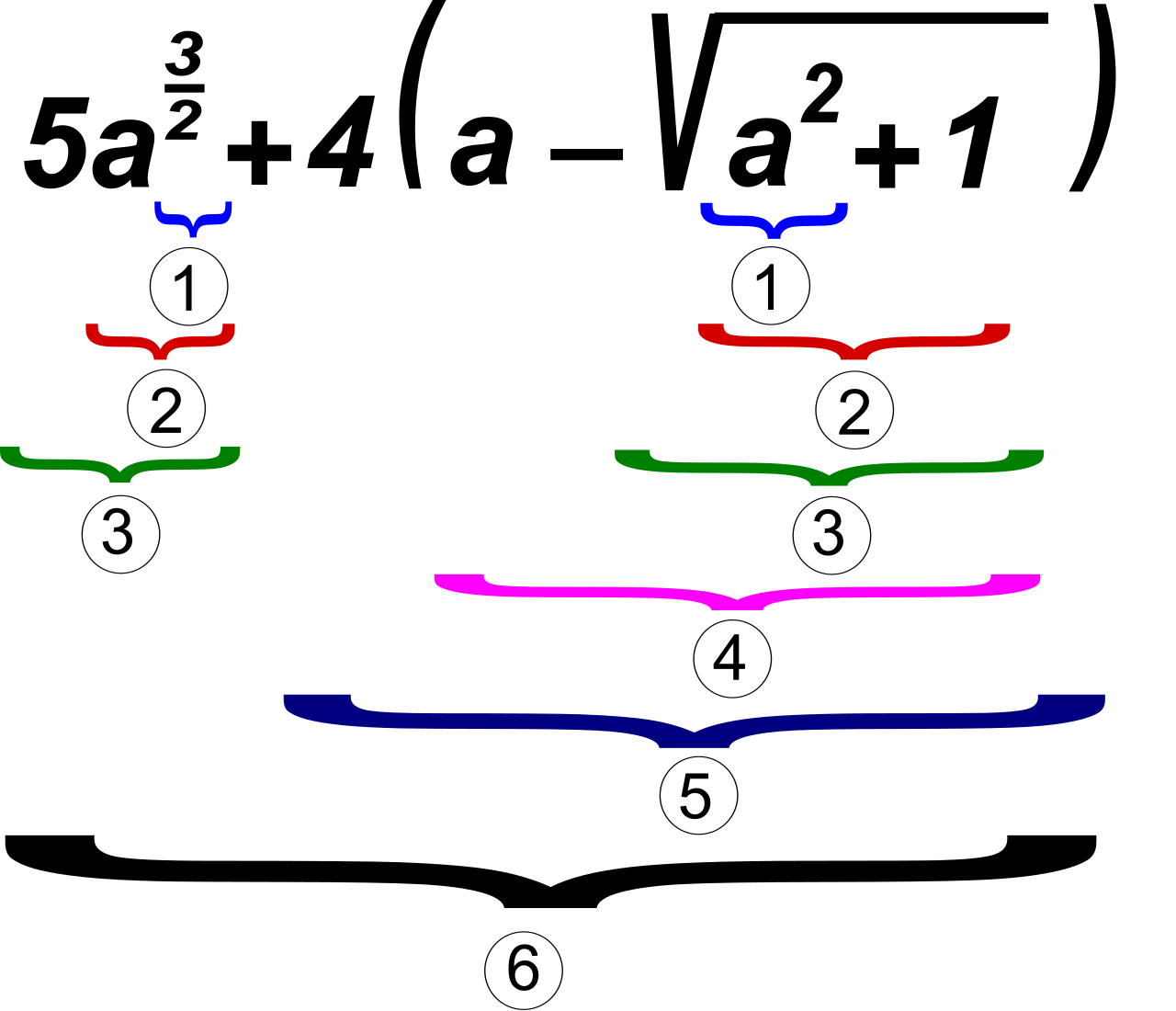
- Graphic organizers visually map relationships between concepts to support students with reading comprehension and writing deficits. They transform a chaotic sea of text into an organized visual blueprint.
To build independence, we teach the brain to manage itself. Cognitive Strategy Instruction teaches students internalized procedures to self-regulate and manage complex academic tasks. A key component of this is self-monitoring, which requires a student to independently observe and record their own specific academic or behavioral performance (e.g., tallying how many times they raised their hand instead of calling out).
For students with moderate to severe cognitive or intellectual disabilities, even a seemingly simple task like washing hands or zipping a jacket can feel overwhelmingly complex. We cannot teach the whole; we must teach the parts.
Task Analysis and Chaining
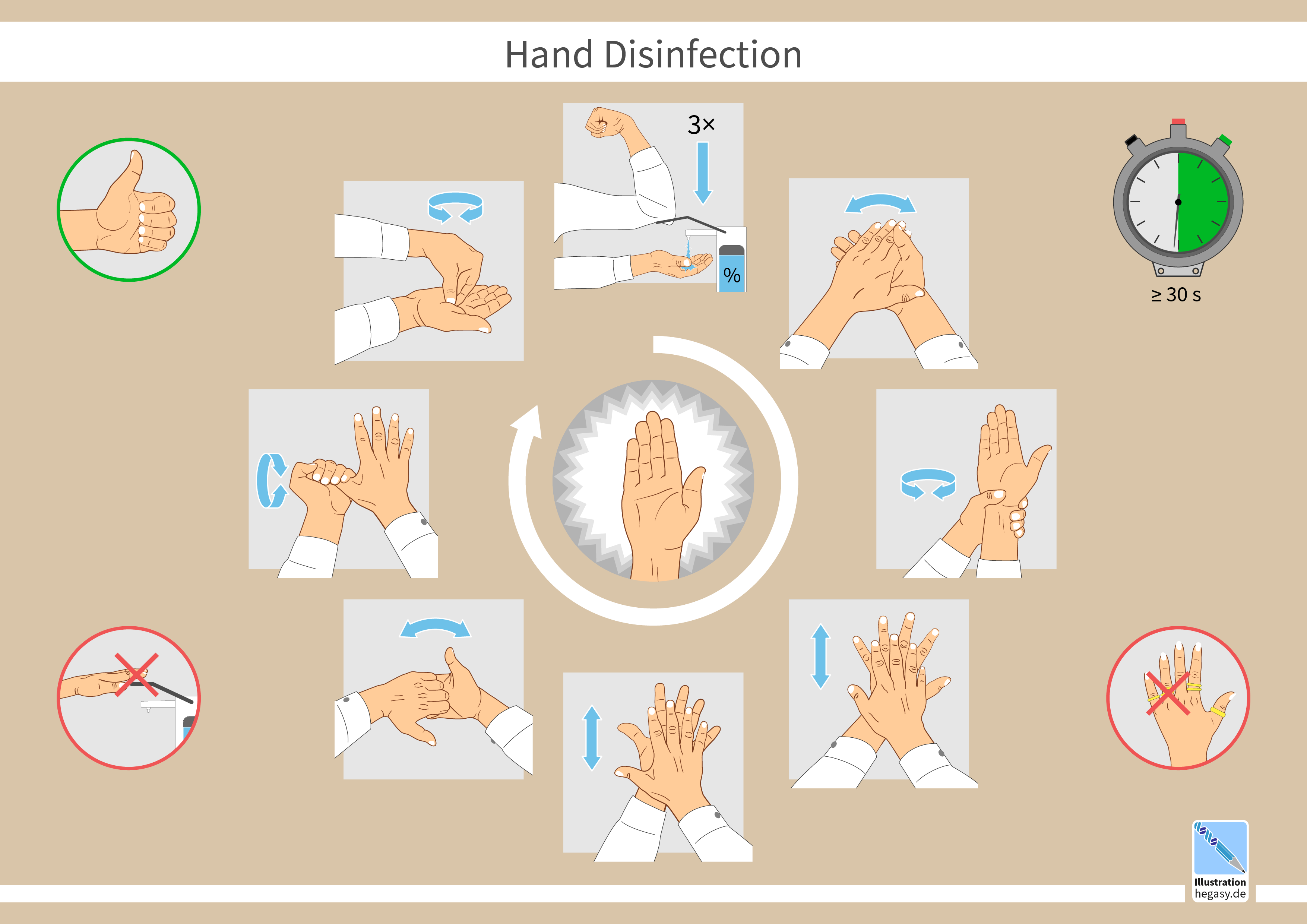
The foundation of systematic instruction is task analysis, which breaks down complex skills into smaller teachable steps for students with significant cognitive disabilities. Once the task is broken down (e.g., Hand washing = 1. Turn on water, 2. Get soap, 3. Rub hands, 4. Rinse, 5. Turn off water, 6. Dry), we teach it using chaining, an instructional strategy that links individual steps of a task analysis together to teach a complex behavior.
There are two primary ways to run a chain:
- Forward chaining teaches the first step of a task analysis to mastery before introducing subsequent steps. The student masters turning on the water. Once mastered, they turn on the water and get soap, while the teacher prompts the rest.
- Backward chaining teaches the last step of a task analysis first to provide immediate access to the natural reinforcement of task completion. If you are teaching a student to tie their shoes, you (the teacher) do all the crossing and looping, and the student only does the final step: pulling the loops tight. The student immediately experiences the success of a tied shoe. Once mastered, they do the last two steps, and so on.
Prompting and Shaping Behavior
When teaching new behaviors to students with severe impairments, frustration can quickly trigger severe maladaptive behaviors. To counter this, educators use errorless learning, a technique that guarantees a correct response by providing immediate prompting to minimize frustration. You do not let the student guess and fail; you physically guide their hand to the correct answer, ensuring success, and then praise them.
As the student begins to learn, you might introduce a time delay, which is a prompting strategy that inserts a progressively longer wait time between the cue and the prompt to promote independent responding. You give the cue ("Touch red"), wait 3 seconds to see if their brain can retrieve the answer independently, and if not, you prompt.
If the goal is a complex or entirely new behavior, we use shaping, which reinforces successive approximations of a desired behavior until the student reaches the final target behavior. If the goal is for a non-verbal child to say "ball," you first reward them for looking at the ball. Then you only reward them for making any vocalization. Then only for a "buh" sound. You are literally "shaping" the behavior toward the target.
Environmental Structure
To support navigation of the day, particularly for students with autism, educators utilize visual schedules. These tools help students with autism spectrum disorder anticipate transitions and understand daily expectations, drastically reducing the anxiety that stems from unpredictable changes in routine.
The modern special education classroom is not a monolith; it is an ecosystem of wildly varying abilities. To manage this without writing 25 entirely different lesson plans, we rely on two distinct paradigms.
Universal Design for Learning (UDL) is proactive. It provides multiple means of engagement, representation, and action and expression from the outset of lesson planning. Think of UDL as building a building with ramps, elevators, and automatic doors from day one. Everyone can access it without having to ask for a special accommodation.
Differentiated instruction, on the other hand, is reactive. It modifies the content, process, product, or learning environment based on student readiness and ability. If UDL is the architecture, differentiation is the interior design adjusting to the specific guests who show up. Within a differentiated classroom, a teacher might use tiered assignments, which allow students of varying abilities to work on the same core content at different levels of complexity.
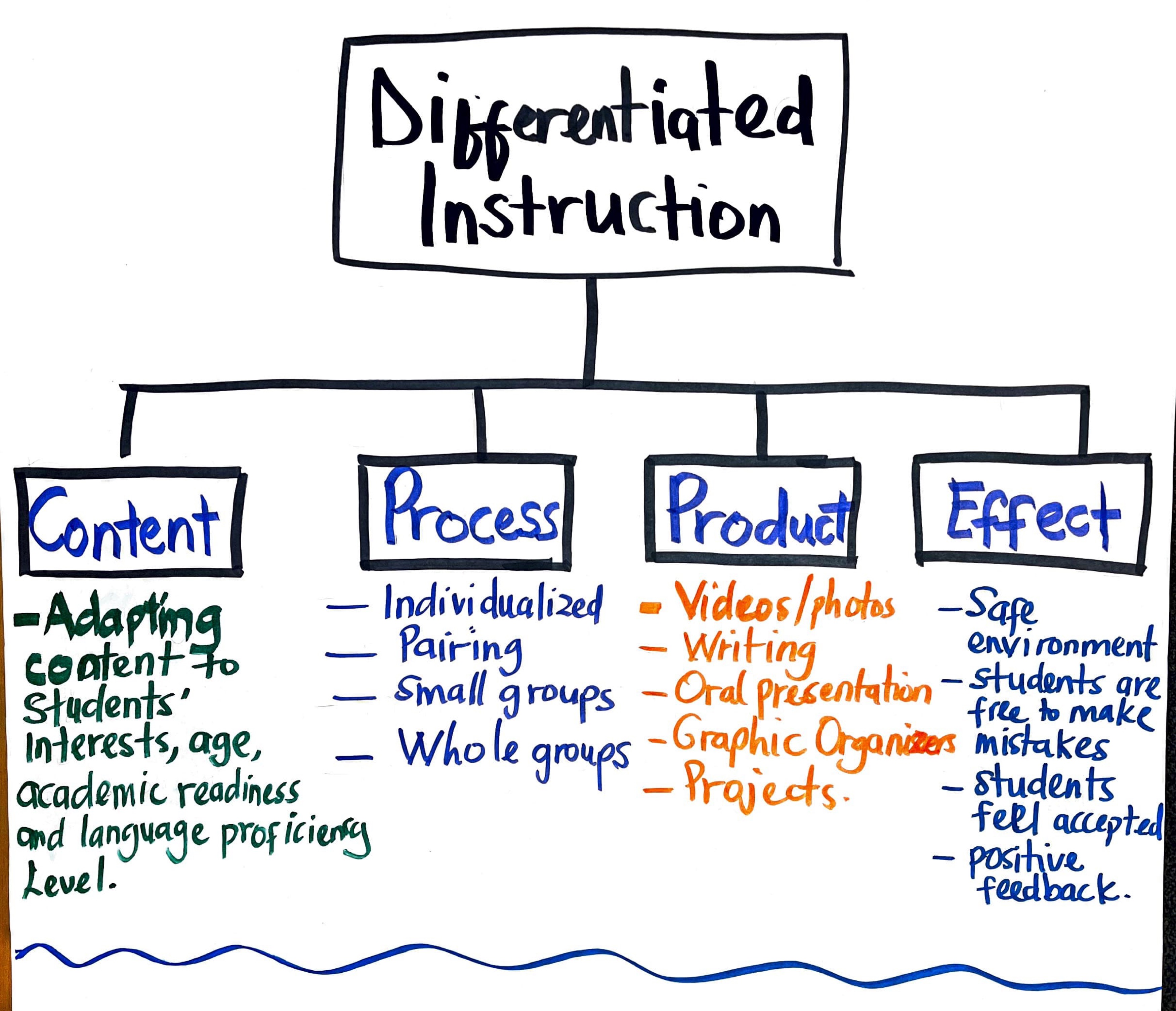
Example of Tiered Assignments: While studying the solar system, Group A might write a research paper on planetary orbits (high complexity), Group B might create a physical model of the planets (moderate complexity), and Group C might match picture cards of planets to their names (foundational complexity). They are all learning about the solar system.
To maximize engagement and support, we deploy:
- Peer-mediated instruction, which pairs students with disabilities with trained typical peers to practice academic or social skills. This benefits both the learner and the peer model, fostering genuine inclusion.
- Assistive technology, which ranges from low-tech options like pencil grips to high-tech options like speech-generating devices. Technology levels the playing field, allowing a student whose motor deficits prevent them from holding a pen to write an essay using eye-gaze software.
As students enter high school, the instructional lens aggressively zooms out from academic theory to real-world survival. For older students with severe intellectual disabilities, a functional curriculum is prioritized to prepare them for independent living.
We shift our focus to functional academic skills, which are applied to real-world situations like managing money or reading a bus schedule. We no longer care if the student can identify the capital of North Dakota; we care intensely if they can read a $10 price tag and know if a $5 bill is enough to buy it.
This era is dominated by transition planning instruction, which focuses on post-secondary education, vocational training, and independent living skills for high school students. The ultimate goal is to render ourselves obsolete. To achieve this, we must emphasize self-determination instruction, which teaches students to make choices, set goals, and advocate for their own needs. A student who can advocate for their own accommodations in a workplace interview has mastered the most vital objective of their educational career.
By mastering these instructional strategies—and knowing precisely when and with whom to deploy them—you are doing much more than teaching a curriculum. You are unlocking human potential, one meticulously engineered interaction at a time.