Strengths and Limitations of Collaborative Approaches
Not sure you’re ready?
Take the ~3-minute readiness diagnostic and see where you stand.
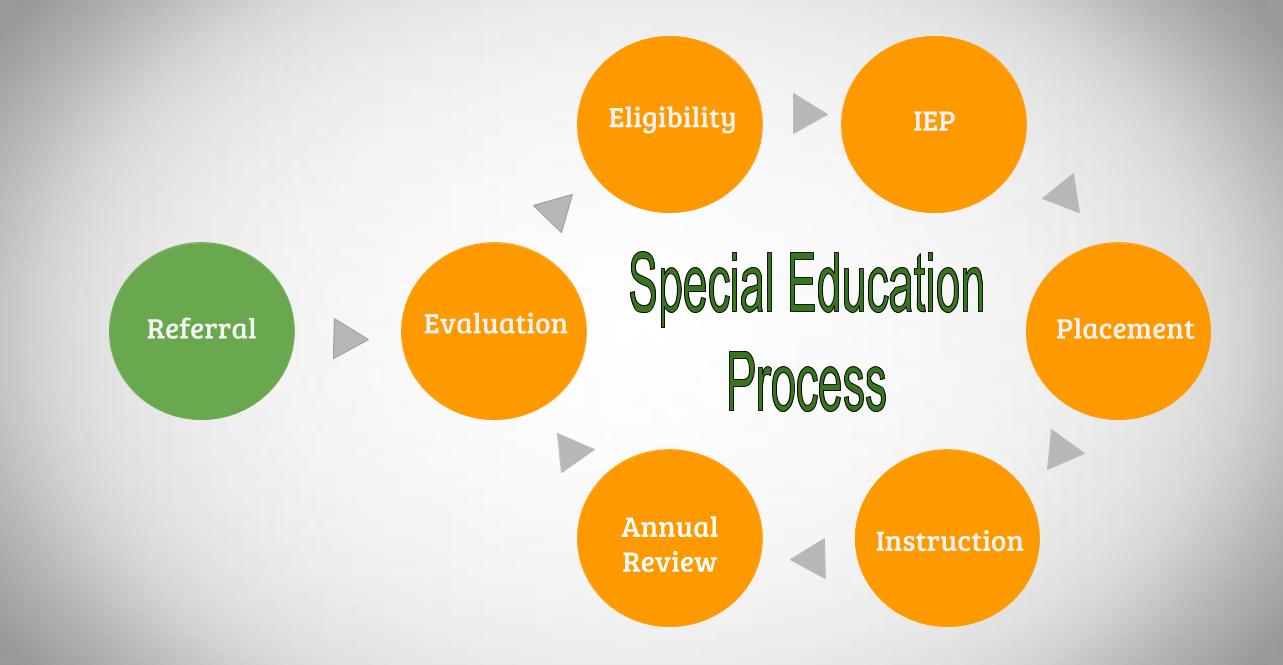
An Individualized Education Program (IEP) is mathematically useless if the instructional environment is not engineered to deliver it. In special education, delivering high-fidelity instruction requires a sophisticated architecture of shared expertise known as collaborative practice. Collaboration is not simply placing two teachers in the same room and hoping for the best; it is a highly calibrated professional relationship designed to dismantle the barriers between general and special education. When we successfully merge these disciplines, we create an environment where the cognitive load of teaching a highly diverse group of learners is distributed, allowing for immediate, targeted interventions that a single educator could never manage alone.
Understanding how to construct, troubleshoot, and evaluate collaborative approaches is perhaps the most critical skill you will develop as a special educator. To do this, we must strip away the buzzwords and look at the actual mechanics of parity, co-teaching models, consultation, and multi-tiered teaming.
Before we examine the specific structures of co-teaching or teaming, we must understand the foundational laws that govern any collaborative effort. If these prerequisites are absent, the structural integrity of your collaborative model will inevitably collapse.
First and foremost, collaboration in special education requires parity among all participating professionals. Parity does not mean that both professionals have the exact same knowledge base; rather, parity in collaboration occurs when each professional's contribution is equally valued regardless of their specific title. If a general educator views the special educator merely as a guest in "their" classroom, parity is broken.
Second, the system demands a shared center of gravity. Effective collaborative approaches require all parties to share accountability for both positive and negative student outcomes. You succeed together, and when an intervention fails, you autopsy the failure together.
Yet, despite the brilliance of these frameworks, human nature and institutional logistics often get in the way. Two fundamental rules dictate whether these partnerships thrive:
- The Voluntariness Principle: For collaborative teaming to be highly effective, the participation of all involved professionals must be strictly voluntary rather than mandated. Forced marriages in collaborative teaching breed resentment, which students instantly detect.
- The Logistical Reality: A common systemic limitation of collaborative teaching approaches is the frequent lack of administrative support for dedicated co-planning time within the master school schedule. You cannot build a synchronized, dual-engine lesson in the five minutes between the warning bell and the start of class.
Co-teaching involves two or more certified professionals delivering instruction to a diverse group of students in a single physical space.
Notice the constraints in that definition: certified professionals, diverse group, single space. It is not one teacher and a paraprofessional, and it is not sending the special education students down the hall.
We have six primary models of co-teaching. As an educator, you must view these models as a toolkit. You do not pick one model and use it all year; you select the specific model that solves the specific instructional problem of the day.
1. One Teach, One Observe
In this model, one teacher delivers academic instruction while the other collects specific data on student behavior or academic progress.
- The Mechanism: Think of this as putting a diagnostic sensor on an engine while it runs.
- The Strength: A major strength of the One Teach, One Observe model is the ability to gather detailed, objective data for Individualized Education Program progress monitoring. You can track exactly how many times a student initiates a distraction, or how long they sustain attention during direct instruction.
- The Limitation: A limitation of the One Teach, One Observe model is the risk of students viewing the observing teacher as an aide with less authority. If you are always the one standing in the back with a clipboard, students will implicitly demote you in the classroom hierarchy.
2. One Teach, One Assist
Here, one teacher leads the primary lesson while the second teacher circulates the room to provide individual support.
- The Mechanism: The lead teacher sets the pace, while the assisting teacher acts as a tactical medic, patching up minor misunderstandings before they become fatal knowledge gaps.
- The Strength: A strength of the One Teach, One Assist model is the immediate provision of individualized academic or behavioral support during a whole-group lesson.
- The Limitation: Similar to the observe model, a limitation of the One Teach, One Assist model is the high risk of the assisting special education teacher being perceived by students as a paraprofessional. Overreliance on this model destroys parity.
3. Parallel Teaching
Parallel teaching divides a class into two equal groups to receive identical instruction simultaneously from two different teachers.
- The Mechanism: You take a class of 24 and turn it into two distinct classes of 12, running side-by-side.
- The Strengths: A primary strength of parallel teaching is the reduction of the student-to-teacher ratio. Why does this matter mathematically? Because a reduced student-to-teacher ratio during parallel teaching increases opportunities for active student response and engagement. Students cannot hide in the back row when the row is only six people wide.
- The Limitations: The laws of acoustics dictate that a limitation of parallel teaching is the potential for elevated classroom noise levels due to two teachers speaking simultaneously. Furthermore, there is a clock-management issue: a logistical limitation of parallel teaching is the necessity for both teachers to pace their instruction to finish the lesson at the exact same time so the class can seamlessly transition to the next activity.
4. Station Teaching
Station teaching divides students into three or more small groups that rotate through distinct instructional centers.
- The Mechanism: Think of an assembly line where the student moves through different cognitive workstations. Teacher A runs a phonics station, Teacher B runs a reading comprehension station, and Station C is independent practice.
- The Strengths: A strength of station teaching is the ability to teach multiple distinct academic skills simultaneously in small group settings. Tactically, station teaching allows educators to separate students with conflicting behavioral profiles into different instructional groups. If Johnny and Sarah are a combustible behavioral mix, you simply schedule them at different stations.
- The Limitation: A limitation of station teaching is the requirement for students to work independently and stay on task at non-teacher-led stations. If your students lack self-regulation, the independent station will rapidly devolve into chaos.
5. Alternative Teaching
Alternative teaching involves one teacher leading a large group while the second teacher pulls a small group for specialized instruction.
- The Mechanism: A localized extraction. You pull three students to a kidney table in the back while the other 21 continue the main lesson.
- The Strengths: A strength of alternative teaching is the ability to provide intensive remediation or enrichment to a targeted group of students. Logistically, alternative teaching provides an effective structure for a special educator to administer missed assessments to a small group of students.
- The Limitation: Social dynamics are fragile. A limitation of alternative teaching is the risk of stigmatizing students who are repeatedly pulled into the small group. If it's always the same three students with IEPs being pulled to the back table, their peers will notice, and the stigma will attach.
6. Team Teaching
Team teaching occurs when two teachers share equal responsibility for leading whole-class instruction simultaneously in a tag-team fashion.
- The Mechanism: The most beautiful and complex of the models. Both teachers are "on stage," finishing each other's sentences, debating concepts, and modeling thought processes.
- The Strength: A strength of team teaching is the ability of educators to explicitly model positive peer interactions and diverse problem-solving strategies for students. (e.g., "Mr. Smith, I see how you solved that equation, but I actually thought about it a different way...")
- The Limitations: This is highly resource-intensive. A limitation of team teaching is the significant amount of shared planning time required to execute synchronized lessons smoothly. Because of the required synchronicity, team teaching requires the highest level of mutual trust and instructional compatibility between educators compared to all other co-teaching models.
You will not always be able to co-teach. Often, your role shifts from direct instructor to architect and advisor. This happens through the collaborative consultation model.
The collaborative consultation model operates as a triadic relationship involving a consultant, a consultee, and a client.
Let’s map this triad directly to your reality: In special education consultation, the special educator typically serves as the consultant providing expertise to the general education teacher (the consultee), for the benefit of the student (the client).
- The Strength: Think of this as teaching a person to fish. A strength of collaborative consultation is the empowerment of general education teachers to independently implement specialized interventions. When you empower a general educator with behavior-management strategies, you improve the environment not just for your target student, but for the entire classroom.
- The Limitation: A limitation of collaborative consultation is the special education teacher's reliance on the general education teacher for accurate and consistent intervention implementation. You are prescribing the medicine, but you are not there to ensure the patient takes it. If the general educator implements a behavioral token economy inconsistently, the intervention fails, and you are left troubleshooting a phantom variable.
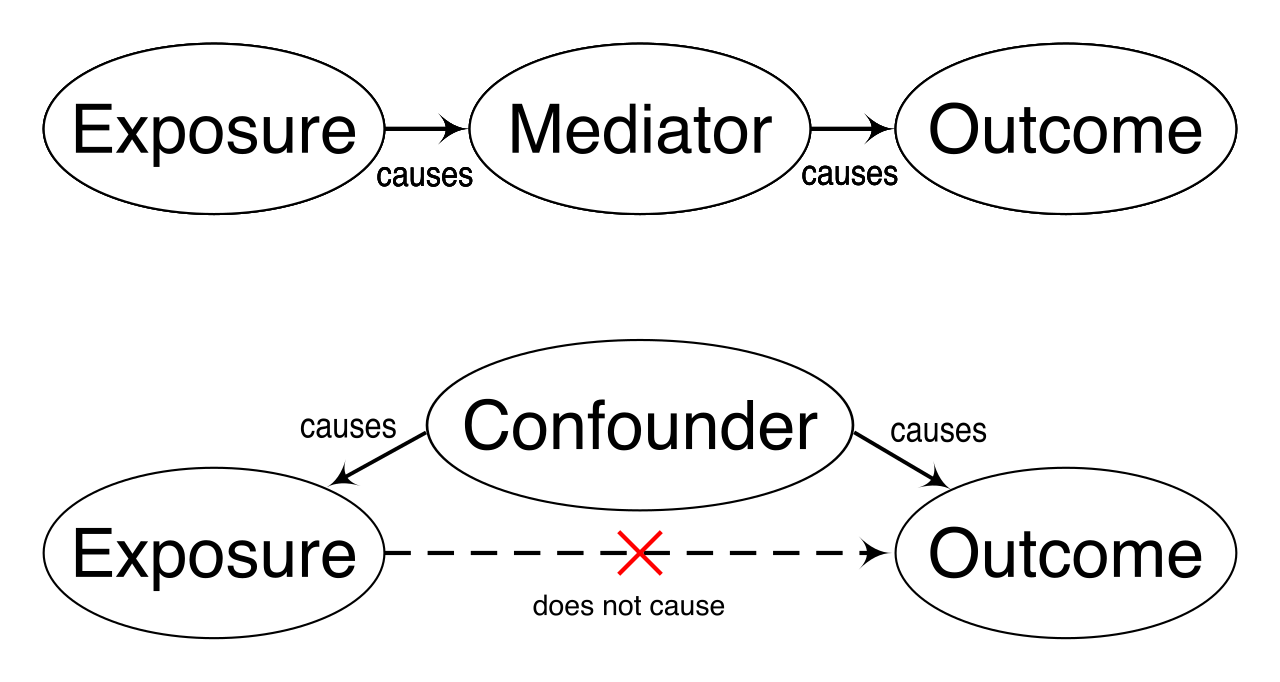
When evaluating students for mild to moderate disabilities and designing their comprehensive IEPs, we rely on teams. However, not all teams are structured identically. The prefix attached to the word "disciplinary" tells you exactly how deeply the professionals integrate their expertise. We evaluate these from the least integrated to the most integrated.
Multidisciplinary Teaming
- The Mechanism: Multidisciplinary teaming involves professionals from various disciplines conducting independent evaluations and sharing the results with the team. The Speech-Language Pathologist (SLP) tests speech, the psychologist tests cognition, and the special educator tests academics. They write their own reports and staple them together.
- The Limitation: Because everyone stays strictly in their own lane, a limitation of multidisciplinary teaming is the frequent lack of integration among different professional disciplines during the student intervention process. The student is treated as a collection of isolated symptoms rather than a whole human being.
Interdisciplinary Teaming
- The Mechanism: A step up in evolution. Interdisciplinary teaming involves professionals conducting independent assessments and subsequently meeting to develop a collaborative, joint intervention plan. They still test independently, but they synthesize the data at the table to create a cohesive strategy. The lanes exist, but the professionals communicate across them.
Transdisciplinary Teaming
- The Mechanism: The highest level of collaborative integration. Transdisciplinary teaming involves professionals deliberately sharing roles across traditional disciplinary boundaries to provide highly integrated student services.
- The Strength: A major strength of transdisciplinary teaming is the reduction of fragmented services for the student through the use of role release.
- Understanding Role Release: What exactly is role release? It is a transfer of tactical power. Role release in a transdisciplinary team occurs when a specialized professional trains another team member to implement specific therapeutic techniques. For example, an occupational therapist trains you, the special educator, to implement a specific grip-strength exercise during your daily handwriting instruction. You don't wait for the OT's 30-minute weekly pull-out session; the therapy becomes a continuous part of the student's day.
- The Limitation: Human ego and professional liability. A limitation of transdisciplinary teaming is the professional discomfort specialists may feel when relinquishing their specialized duties to other team members. An SLP went to graduate school for years to master articulation therapies; they may feel deeply uneasy watching a classroom teacher attempt to implement those techniques, fearing a loss of fidelity.
Summary: Your Role as the Integrator
When you sit down to take your exam, and more importantly, when you step into an IEP meeting or a general education classroom, remember that you are the integrator. Whether you are dividing a crowded room in half for parallel teaching, consulting with a frustrated 8th-grade science teacher, or accepting a "role release" from an occupational therapist, your goal is parity and cohesion. You are taking fragmented educational silos and fusing them into a single, functional ecosystem for the student. Master these dynamics, and you will transform from a participant in the educational system to an architect of it.