Human Development and Behavior
Not sure you’re ready?
Take the ~3-minute readiness diagnostic and see where you stand.
Imagine watching a seven-year-old attempt to tie their shoes while simultaneously recounting the plot of a cartoon and negotiating for an extra minute of recess. In that single, fleeting moment, you are witnessing the collision of physical coordination, cognitive sequencing, expressive language, and social-emotional regulation. As a special educator, you are not merely a teacher of reading or mathematics; you are an applied developmental scientist. To effectively support students with mild to moderate disabilities, you must first master the intricate blueprint of typical human development. Only by understanding the structural integrity of this typical progression can you identify where the foundational cracks lie—and, more importantly, how to build the precise educational scaffolding required to bridge those gaps.
To evaluate human development and behavior, we have to look through a few distinct lenses: the grand theories that map how the mind matures, the behavioral mechanics of how we learn from our environment, and the physiological milestones that signal everything is moving along as expected.
If you want to understand why a third-grader cannot grasp abstract algebraic variables but can perfectly calculate the cost of three apples, you must understand the rules of cognitive and psychosocial growth. The human brain does not just get larger as it ages; it fundamentally restructures how it processes reality.
Piaget’s Architecture of Cognition
Jean Piaget developed a theory of cognitive development with four distinct stages. He realized that children are not just "miniature adults" with less knowledge; they think in entirely different ways depending on their developmental stage.
- The Sensorimotor Stage (Birth to 2 years): Before a child can think with words, they think with their hands and mouths. The sensorimotor stage involves learning through sensory experiences and motor actions. Crucially, object permanence typically develops during the sensorimotor stage of cognitive development. Object permanence is the understanding that objects continue to exist even when hidden from view. Think of the game peek-a-boo: to a newborn, a hidden face ceases to exist. By the end of this stage, they know you are just behind your hands.

- The Preoperational Stage (Ages 2 to 7): Now, the child begins to speak. The preoperational stage is characterized by symbolic thinking and egocentrism. A stick becomes a sword; a block becomes a phone. However, they are bound by egocentrism, which is the inability to perceive a situation from another person's perspective. If a preschooler covers their own eyes, they assume you cannot see them.
- The Concrete Operational Stage (Ages 7 to 11): Here, logic enters the chat, but it requires physical grounding. The concrete operational stage involves the development of logical thought about tangible objects. You can teach them addition using physical blocks, but hypothetical philosophy is still out of reach.
- The Formal Operational Stage (Ages 12 and up): Finally, the mind breaks free from the physical world. The formal operational stage involves the ability to think abstractly and use deductive reasoning.
Vygotsky and the Power of Interaction
While Piaget focused on the solitary child exploring the world, Lev Vygotsky developed the Sociocultural Theory of cognitive development. He argued that learning is fundamentally a social act.
The Zone of Proximal Development (ZPD) represents the difference between what a learner can do independently and what that learner can do with guidance.
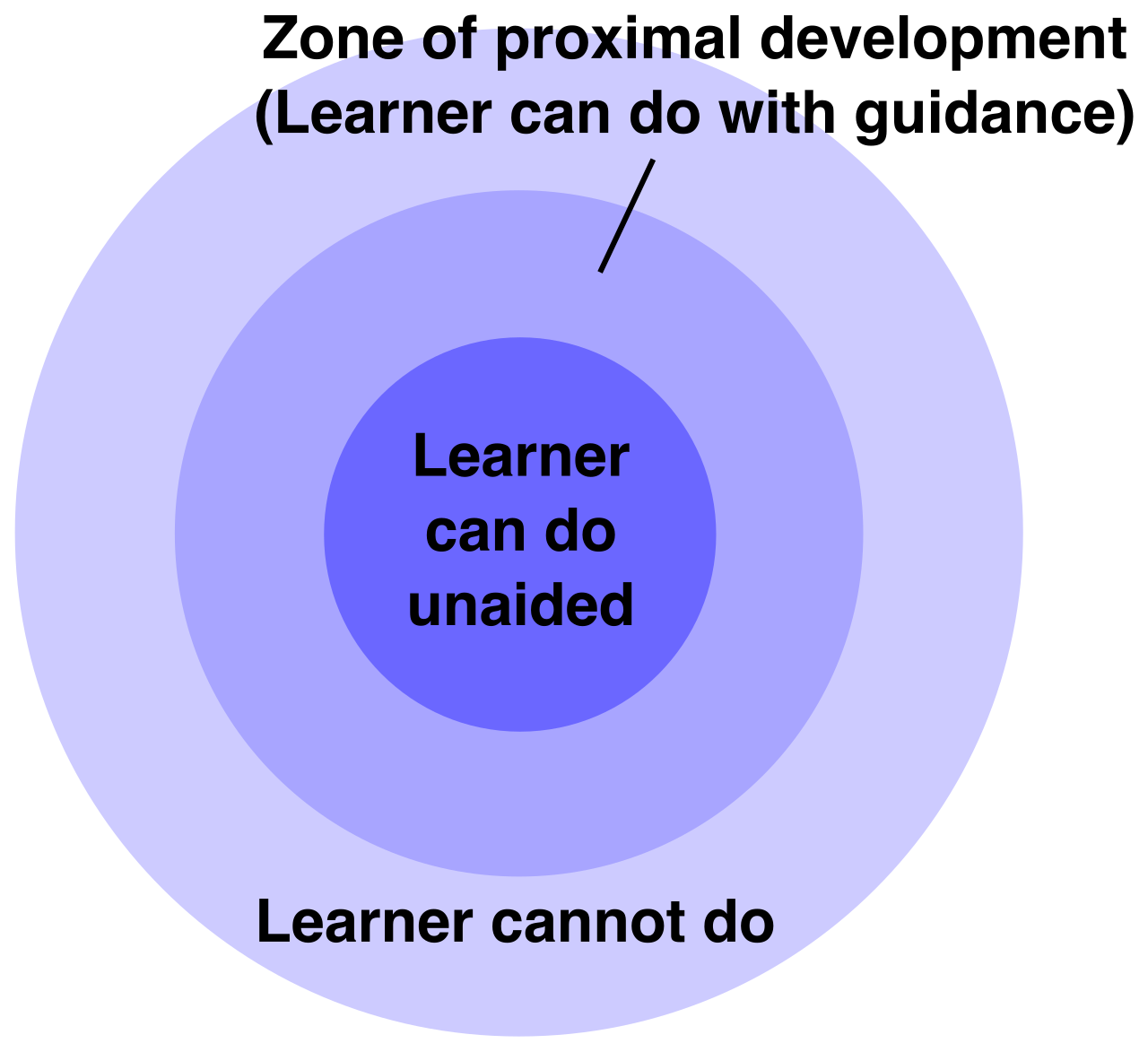
You interact with the ZPD every day. If a task is too easy, the student learns nothing. If it is too hard, they shut down. You must target the sweet spot in the middle, utilizing scaffolding—the temporary support provided by a teacher or peer to help a student learn a new skill. Once the skill is mastered, you remove the scaffold.
Erikson’s Lifespan Identity
Erik Erikson proposed a psychosocial theory of development with eight stages across the human lifespan. For special educators, understanding the specific psychosocial crisis a child is facing helps decode their behavior.
| Age Range | Psychosocial Stage | What It Looks Like |
|---|---|---|
| Birth to 18 months | Trust vs. Mistrust | The Trust versus Mistrust stage focuses on an infant developing a sense of security and trust in caregivers. |
| 1.5 to 3 years | Autonomy vs. Shame and Doubt | The Autonomy versus Shame and Doubt stage involves toddlers asserting independence. ("I do it myself!") |
| 3 to 5 years | Initiative vs. Guilt | The Initiative versus Guilt stage involves preschool children directing play and social interactions. |
| 5 to 12 years | Industry vs. Inferiority | The Industry versus Inferiority stage involves school-aged children developing a sense of pride in academic and social accomplishments. Repeated academic failure here breeds deep-seated inferiority. |
| 12 to 18 years | Identity vs. Role Confusion | The Identity versus Role Confusion stage focuses on adolescents forming a personal identity. |
The Environment: Maslow and Bronfenbrenner
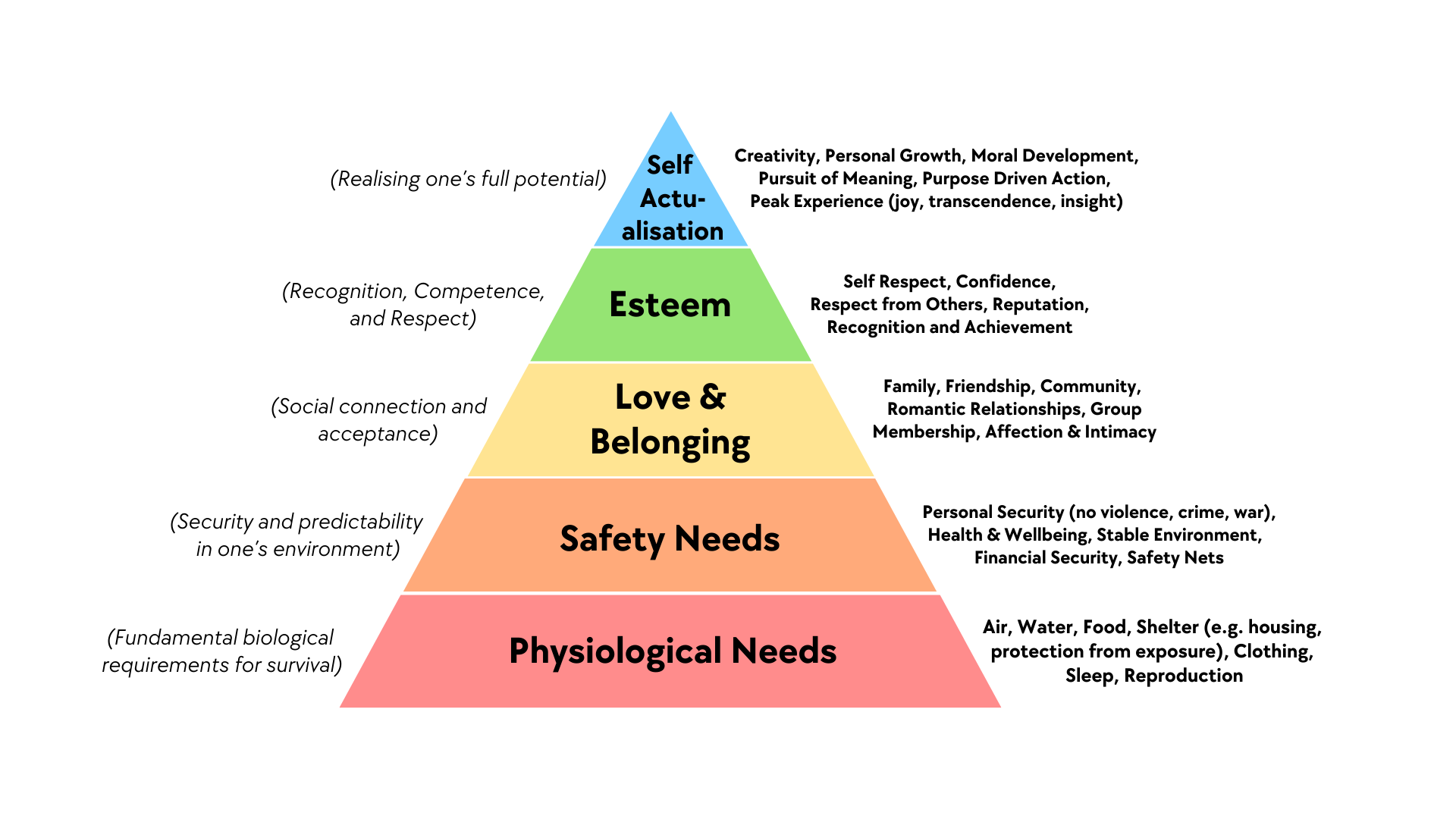
You cannot teach algebra to a starving child. Abraham Maslow developed the Hierarchy of Needs theory, which posits that basic physiological and safety needs must be met before higher-level psychological needs can be addressed.
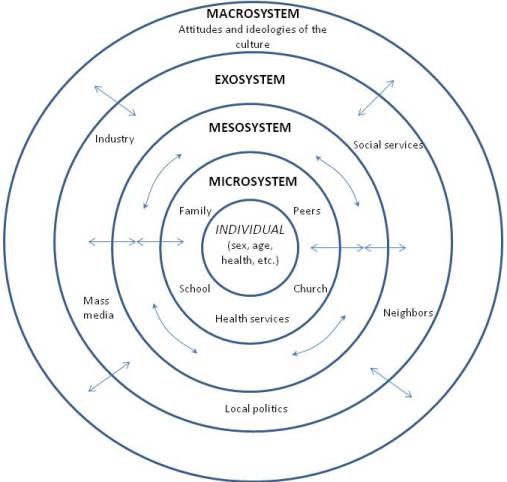
Zooming out even further, Urie Bronfenbrenner developed the Ecological Systems Theory. This theory models child development within a complex system of relationships across multiple environmental layers—from the micro-level of their immediate family to the macro-level of cultural laws and economic systems. When a child enters your classroom, they bring their entire ecological system with them.
Sometimes you need to look past internal psychology and simply ask: What is driving this specific behavior right now?
B.F. Skinner is the primary theorist associated with operant conditioning. Operant conditioning posits that behavior is shaped and maintained by the consequences following that behavior.
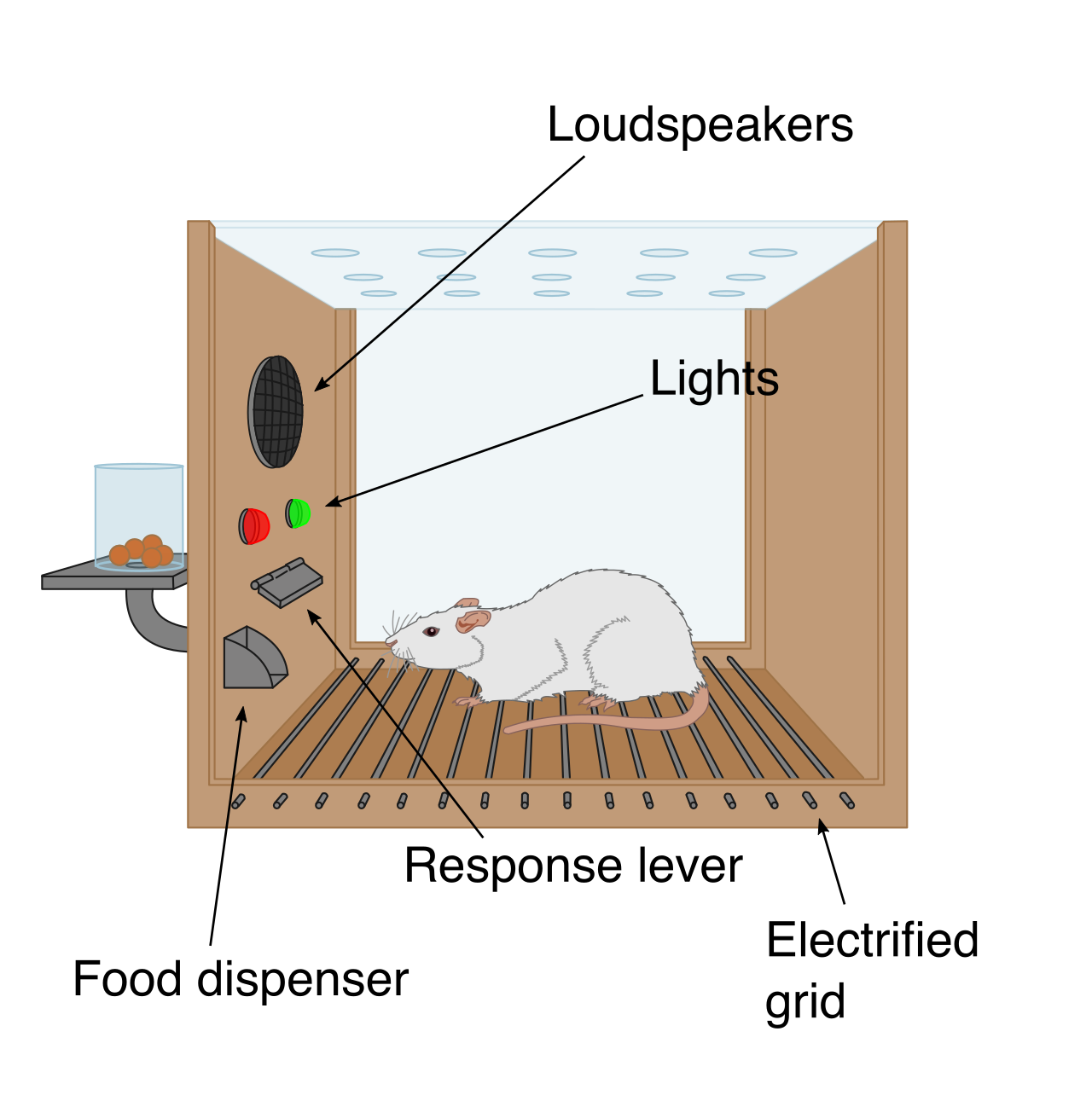
To systematically manage a classroom, we rely on the Antecedent-Behavior-Consequence (ABC) model, which is a framework used to analyze and modify behaviors in educational settings. What triggered the behavior (Antecedent)? What did the student do (Behavior)? What happened immediately after (Consequence)?
By manipulating the consequences, we alter the likelihood of the behavior returning:
- Positive reinforcement involves adding a desirable stimulus after a behavior to increase the likelihood of that behavior occurring again. (e.g., Giving a sticker for raising a hand).
- Negative reinforcement involves removing an aversive stimulus after a behavior to increase the likelihood of that behavior occurring again. (e.g., Excusing a student from a dreaded chore because they finished their math early—the behavior of doing math increases).
- Positive punishment involves adding an aversive stimulus after a behavior to decrease the likelihood of that behavior occurring again. (e.g., Assigning extra detention).
- Negative punishment involves removing a desirable stimulus after a behavior to decrease the likelihood of that behavior occurring again. (e.g., Taking away recess time).
But children do not only learn through direct consequences. Albert Bandura developed the Social Learning Theory, which states that learning can occur through the observation and imitation of others. If a student watches a peer receive praise for sharing, they are highly likely to imitate that sharing behavior.
To recognize atypical development, you must have an ironclad understanding of the baseline. Human development is typically categorized into physical, cognitive, social-emotional, and language domains.
- Physical Development: This domain includes both gross motor skills and fine motor skills.
- Gross motor skills involve the coordination of large muscle groups for activities like walking and jumping.
- Fine motor skills involve the coordination of small muscle groups for activities like writing and buttoning a shirt.
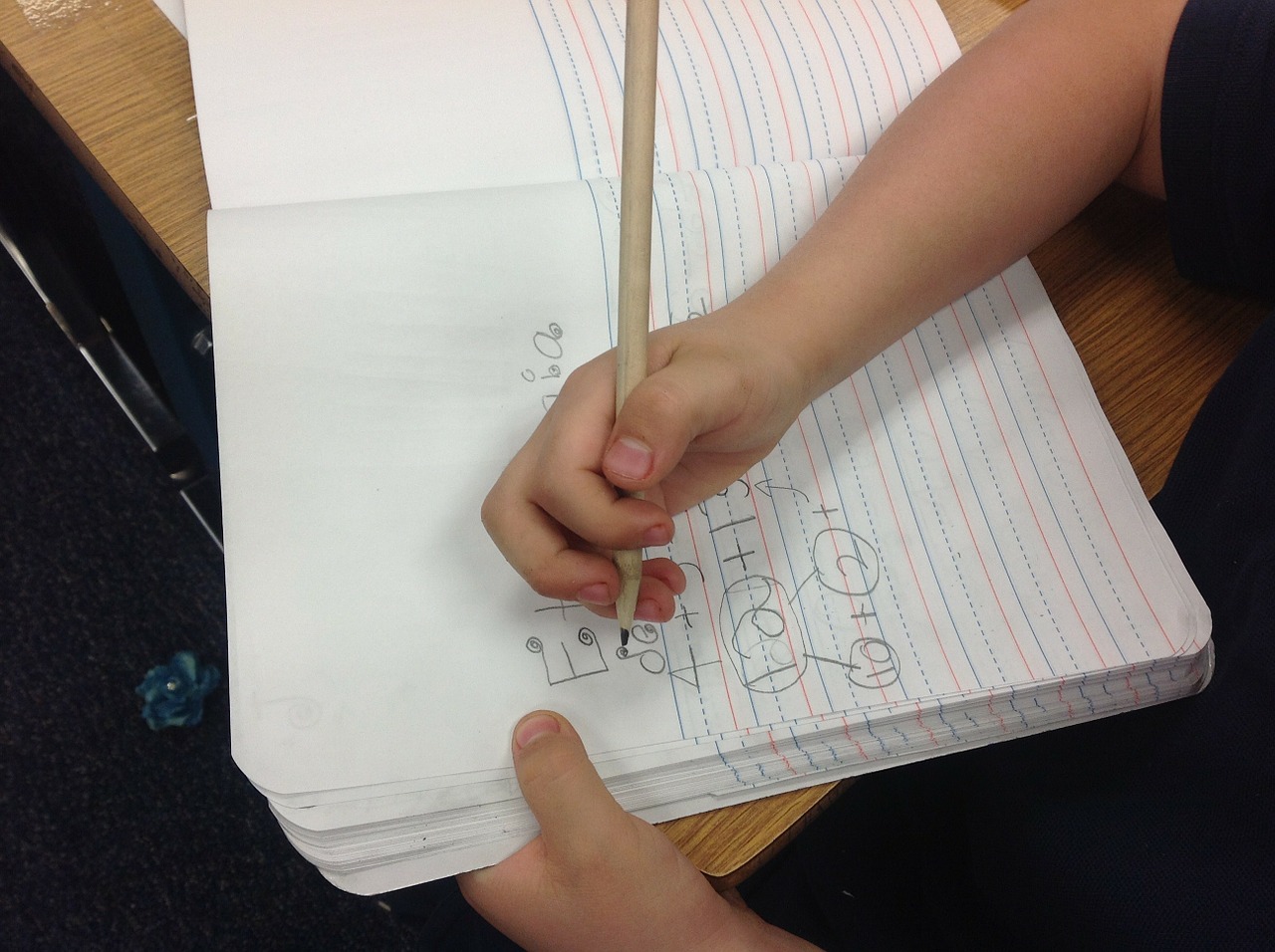
- Cognitive Development: This refers to the growth of thinking, problem-solving, and memory capabilities.
- Social-Emotional Development: This involves the ability to interact with others and regulate personal emotions.
- Language Development: This encompasses both receptive language and expressive language skills.
- Receptive language is the ability to understand spoken or written communication from others. (Input).
- Expressive language is the ability to use words or gestures to communicate thoughts and feelings to others. (Output).
Crucial Developmental Milestones
Keep these milestones etched into your memory; they are the canaries in the coal mine for developmental delays.
- ~6 months: Typical language development includes babbling around six months of age.
- ~12 months: Most children speak their first meaningful word around twelve months of age.
- 12 to 15 months: Most infants learn to walk independently between twelve and fifteen months of age.
- By age 2: Most typically developing children can combine two words to form simple phrases (e.g., "More milk").
- By age 3: Most typically developing preschool-aged children can pedal a tricycle by age three.
Atypical development is indicated when a child significantly lags behind established milestones for their age group. However, missing a milestone by a few weeks is normal variance. We look for specific, glaring red flags.
CRITICAL WARNING: Any loss of previously acquired speech or social skills is a significant red flag for atypical development. If a child was babbling and making eye contact at ten months, but goes silent and withdrawn at fourteen months, immediate intervention is required.
Other vital red flags include:
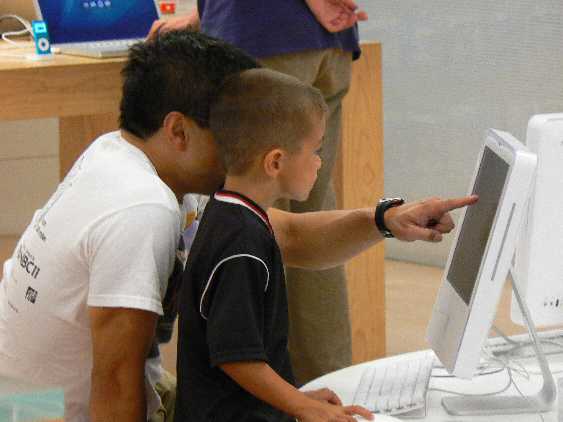
- A lack of pointing or gesturing by twelve months of age indicates a potential delay in language or social development.
- An absence of joint attention by eighteen months of age is a developmental red flag. Joint attention is the shared focus of two individuals on an object (e.g., a child pointing at an airplane and looking back at you to ensure you see it too).
- Difficulty maintaining eye contact is a common characteristic of atypical social-emotional development.
Because brain plasticity is highest in early childhood, the Individuals with Disabilities Education Act (IDEA) mandates early intervention services for infants and toddlers with developmental delays. The entire premise of early intervention aims to minimize developmental delays and reduce the need for special education services later in life.
As a special educator working in mild to moderate settings, you are generally not teaching an entirely different set of academic facts. Mild to moderate disabilities often require instructional accommodations rather than a completely alternate curriculum. You are teaching the same state standards, but you are altering the pathway to get there.
To build those pathways, you must understand the specific architecture of the disabilities you will encounter.
Learning, Intellectual, and Motor Deficits
It is crucial to distinguish between a learning disability and an intellectual disability.
- Specific learning disabilities impact specific cognitive processes such as reading, writing, or mathematics. Importantly, students with specific learning disabilities typically possess average or above-average overall intelligence. The "machine" works beautifully; there is just a frayed wire in one specific subsystem (like phonetic decoding).
- Conversely, intellectual disabilities are characterized by significant limitations in both intellectual functioning and adaptive behavior. Adaptive behaviors are the everyday conceptual, social, and practical skills required to function independently (managing money, personal hygiene, understanding time). Under the Individuals with Disabilities Education Act, an intellectual disability must manifest during the developmental period.
- On the physical side, you may encounter Dyspraxia, which is a neurological disorder impacting motor coordination and the planning of physical movements. A student with dyspraxia knows what they want their body to do, but the signal gets scrambled on the way to the muscles.
Attention and Executive Function
Many learning profiles are complicated by biological roadblocks in self-regulation.
- Hyperactivity involves excessive motor movement or verbal activity in inappropriate situations.
- Impulsivity is characterized by hasty actions occurring without forethought of potential consequences.
- Hyperactivity and impulsivity are core symptoms of Attention Deficit Hyperactivity Disorder (ADHD).
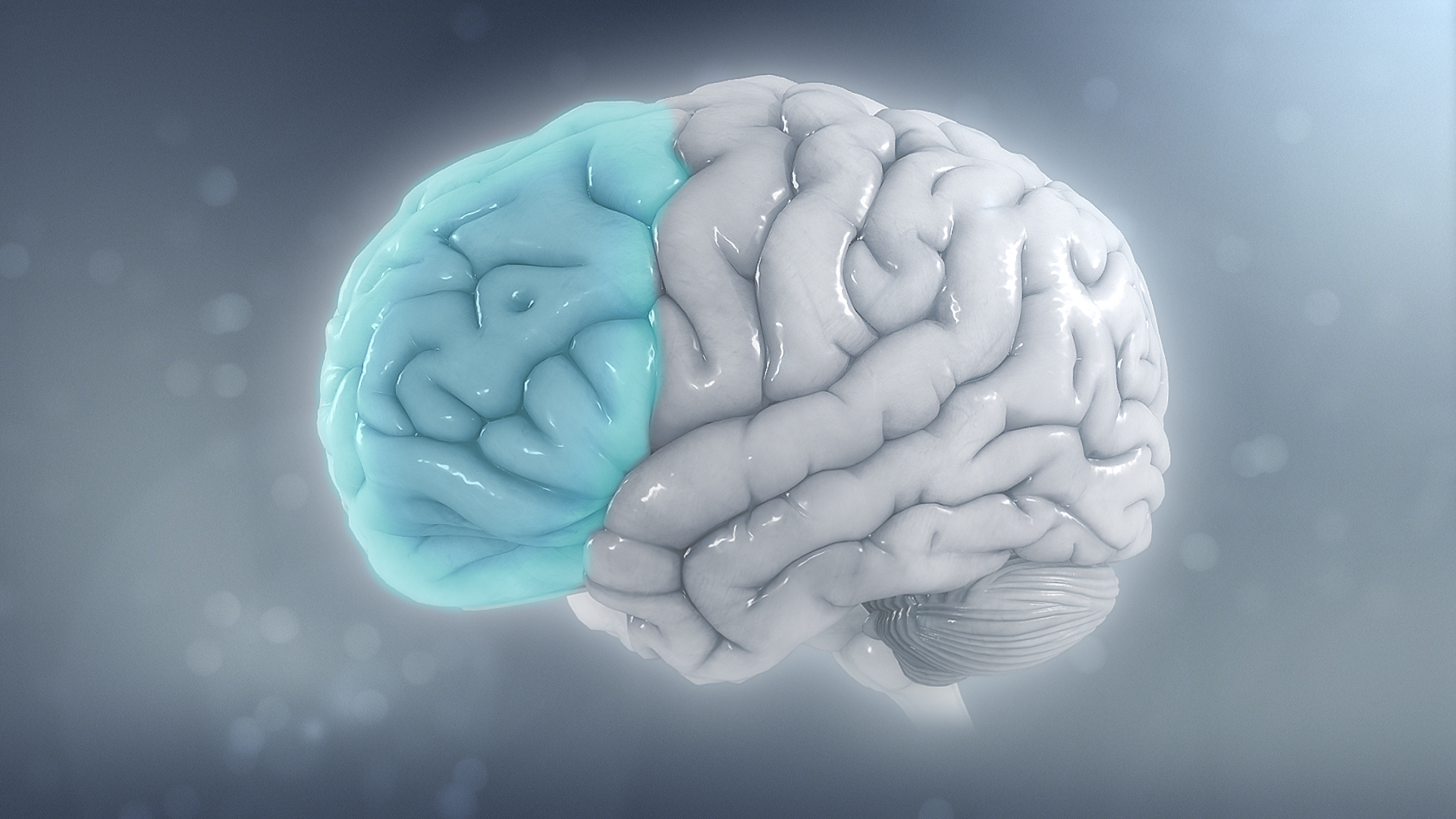
- Underpinning ADHD and many learning disabilities are deficits in the brain's management system. Executive functioning refers to the mental processes that enable individuals to plan, focus attention, and juggle multiple tasks. Deficits in executive functioning frequently accompany learning disabilities and attention disorders. When a student forgets their homework, it is rarely defiance; it is an executive functioning failure.
Communication and Autism Spectrum Disorders
Communication breakdowns take many forms.
- Speech impairments involve difficulties with vocal articulation, fluency, or voice quality. (e.g., A stutter or a lisp).
- Language impairments involve difficulties with processing and understanding receptive or expressive communication. (e.g., An inability to follow a two-step direction).
With Autism Spectrum Disorders (ASD), the mechanics of speech might be perfectly intact, but the application is atypical.
- Echolalia is the repetitive echoing of words or phrases spoken by others. Echolalia is a potential early indicator of autism spectrum disorder.
- Pragmatic language refers to the social use of language in everyday interactions (knowing how close to stand to someone, taking turns in conversation, matching volume to the room). Difficulty with pragmatic language is a common characteristic of autism spectrum disorder.
- Underneath these social challenges lies a cognitive concept known as Theory of Mind. Theory of Mind is the ability to understand that other people hold different beliefs and perspectives from oneself. Deficits in Theory of Mind are commonly associated with social communication challenges in students with autism.
Emotional and Behavioral Disorders (EBD)
Finally, when a child's ecological system or internal psychology is fractured, it manifests behaviorally. Emotional and Behavioral Disorders can manifest as externalizing behaviors such as physical aggression, where the distress is directed outward at the environment. Alternatively, emotional and behavioral disorders can manifest as internalizing behaviors such as severe anxiety, where the distress is directed inward, quietly dismantling the child's ability to participate.
Your job is to look past the externalizing aggression or the internalizing withdrawal, find the ABCs driving the operant conditioning, evaluate the cognitive and language scaffolding the student possesses, and build a bridge. That is the true physics of special education.