Patterns of Economic Activities
Not sure you’re ready?
Take the ~3-minute readiness diagnostic and see where you stand.
When an eight-year-old stares at a crumpled piece of green paper and asks, "Why can I trade this for a candy bar?", they are probing the fundamental architecture of the global economy. As an educator, your task is not merely to define vocabulary terms on a whiteboard, but to make the invisible mechanics of human exchange visible. To teach macroeconomics effectively at the elementary level, we must strip away the complex jargon and reveal the elegant, interlocking systems of taxation, currency, and global trade that govern our daily lives. Understanding these patterns is what allows us to explain to a child why a dollar has value, why their school is built where it is, and why the toys they buy crossed an ocean to reach them.
To understand any economy, we must first look at how we pay for the things we share. At its core, taxation is the mechanism through which a society pools its resources. Governments levy taxes to generate revenue for public goods and services.
But what makes a good "public"? Unlike a bicycle or a sandwich, public goods are non-excludable and non-rivalrous—meaning one person's use doesn't stop another from using it, and we can't easily stop non-payers from benefiting. Classic examples of public goods funded by taxes include national defense, public infrastructure, and public education.
When teaching students about taxation, it is helpful to categorize taxes by what is being taxed: income, consumption, or wealth.
| Tax Type | What is Taxed? | Definition & Mechanism |
|---|---|---|
| Income Tax | Earnings | Income taxes are levied on the financial earnings of individuals and corporations. This is the primary revenue engine for the federal government. |
| Sales Tax | Consumption | Sales taxes are consumption taxes imposed on the sale of retail goods and services. Students encounter this directly when a $5 toy rings up as $5.40 at the register. |
| Property Tax | Wealth/Assets | Property taxes are assessed on the financial value of real estate. This is tied to the physical land and buildings a person or business owns. |
Pedagogical Connection: Why do some school districts have brand-new science labs while others struggle to buy textbooks? This inequity stems directly from tax structures. Local governments primarily use property taxes to fund local public schools. Because property values fluctuate drastically by zip code, school funding does, too. This is a vital concept for future teachers to internalize regarding educational equity.
The Bathtub Analogy: Deficit vs. Debt
When discussing government spending, adults and children alike frequently conflate two distinct concepts. A common elementary student misconception is confusing a single-year budget deficit with the total accumulated national debt.
To untangle this for young learners, use the "Bathtub Analogy":
- The Faucet and the Drain: Water flowing in is government revenue (taxes). Water draining out is government spending.
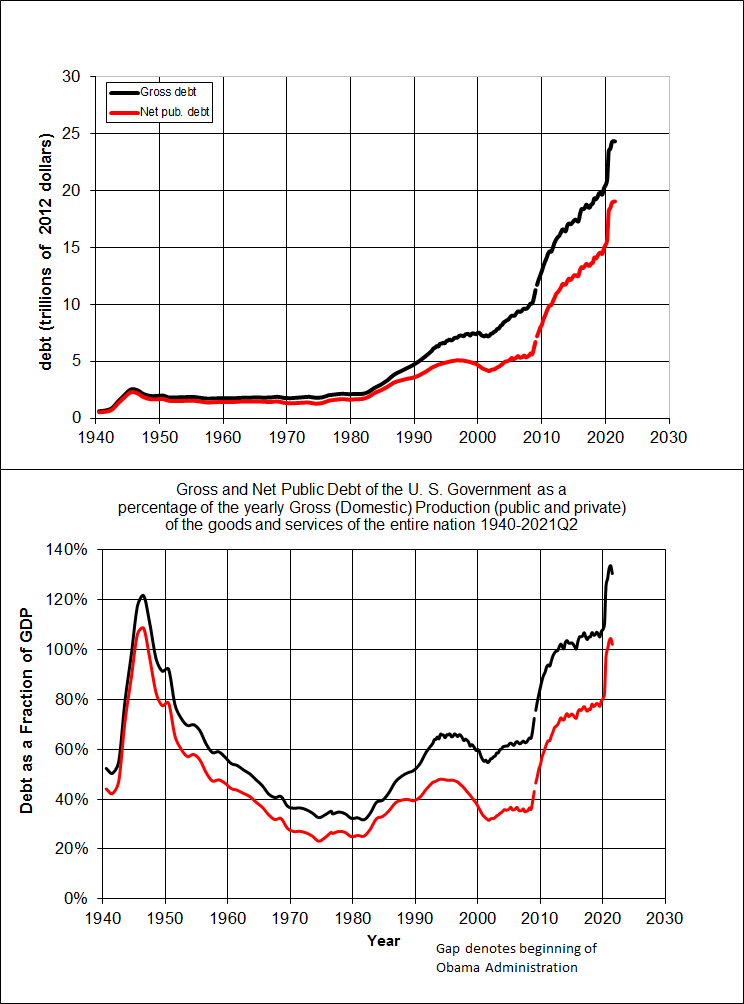
- The Deficit: If the drain is letting out water faster than the faucet is pouring it in over a set amount of time, you have a deficit. Formally, a federal budget deficit occurs when the federal government spends more money than the federal government collects in revenue within a single fiscal year.
- The Debt: Now, look at the total amount of water sitting in the tub. The national debt is the total accumulation of all past annual federal budget deficits minus any budget surpluses. The deficit is a rate of change; the debt is the historical total.
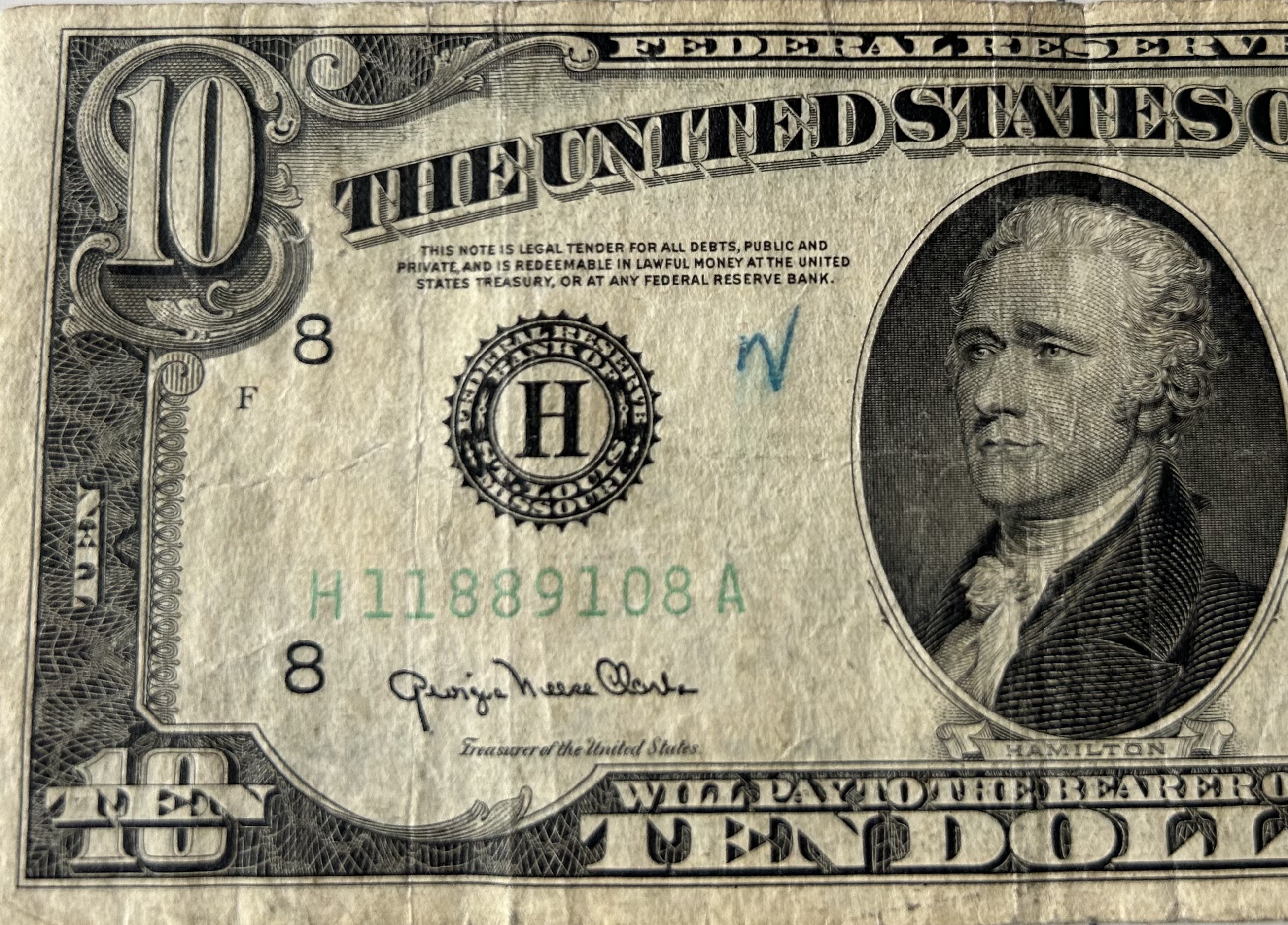
Let us return to that child's crumpled green bill. Why does it hold purchasing power?
Historically, money was backed by physical commodities. You could walk into a bank and exchange paper for a specific weight of gold. Today, the United States government uses a fiat currency system. The word fiat means "by decree." Fiat currency has value because a government declares the currency is legal tender, and, crucially, because citizens collectively believe in that decree and use the currency to pay their taxes. It is vital to teach students that modern fiat currency is not backed by physical commodities like gold or silver.
Managing the Illusion: The Federal Reserve
If money is just paper and belief, who makes sure the system doesn't collapse? That responsibility falls to a central bank. The Federal Reserve System serves as the central bank of the United States.
The "Fed" functions like the thermostat of the American economy. It does not control the economy directly, but it adjusts the temperature by managing the money supply and interest rates. It operates under a specific dual mandate:
- The Federal Reserve regulates the United States money supply to promote economic growth. (Keeping the economy warm enough to create jobs).
- The Federal Reserve regulates the United States money supply to keep consumer prices stable. (Preventing the economy from overheating into hyperinflation).
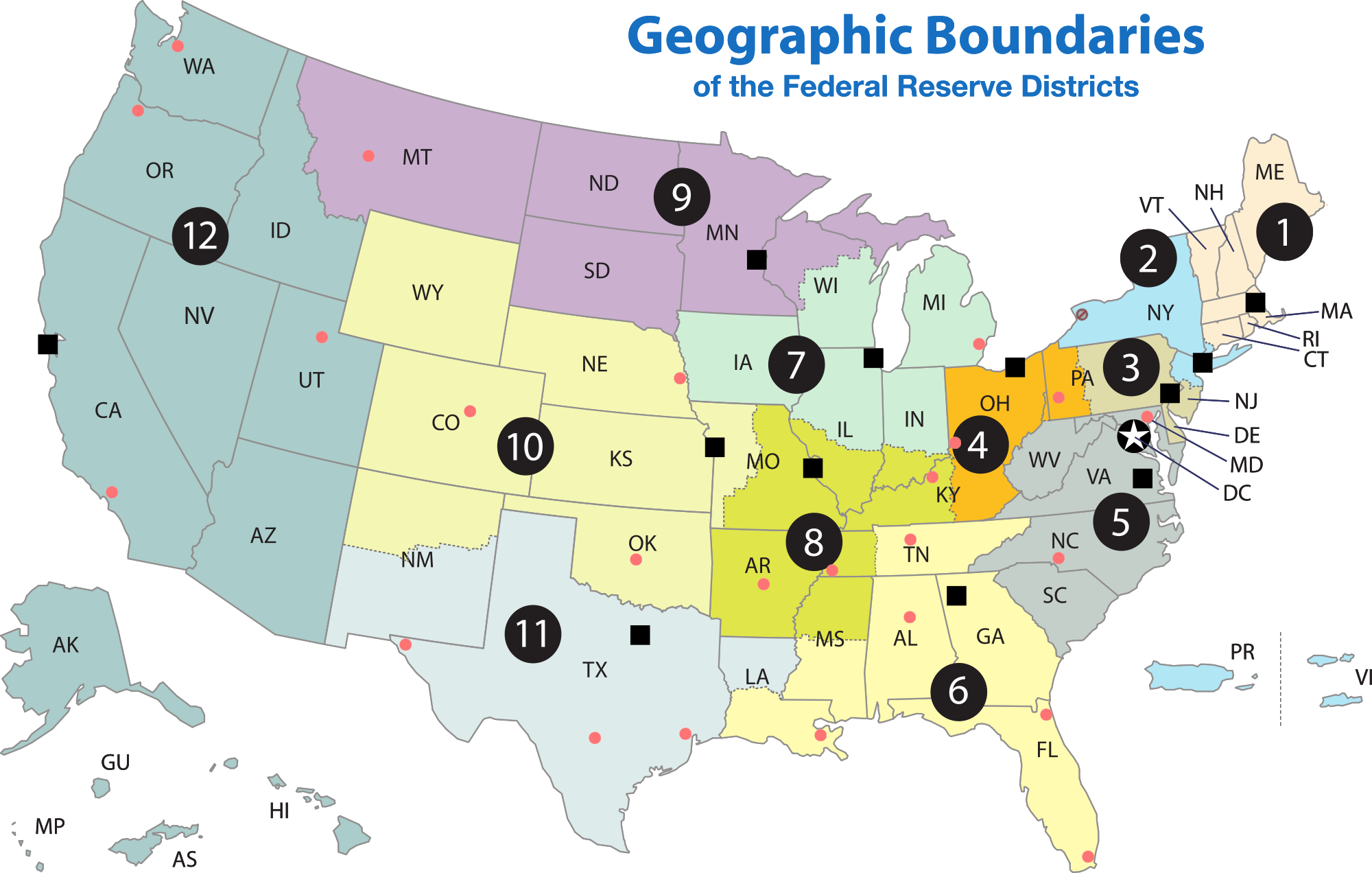
To prevent too much power from concentrating in one place, the system's architecture is deliberately decentralized. The Federal Reserve System structure includes a central Board of Governors in Washington, D.C., but it also includes twelve regional Federal Reserve Banks spread across the country to represent diverse geographic and economic interests.
Untangling the "Money Printing" Myth
A common student misconception is the belief that the Federal Reserve directly prints physical paper money.
When students hear that the Fed "expands the money supply," they picture bankers cranking levers on giant printing presses. As a teacher, you must correct this mechanical misunderstanding. The Fed expands the money supply digitally, by purchasing bonds and crediting bank accounts with keystrokes.
The actual physical manufacturing of money is handled by completely different agencies within the Department of the Treasury:
- The Bureau of Engraving and Printing is the government agency responsible for physically producing United States paper currency.
- The United States Mint is the government agency responsible for physically producing United States coins.
No nation is an economic island. As students look at the tags on their clothing or the origins of their classroom supplies, they will notice they are surrounded by foreign goods. International trade allows countries to obtain goods those countries cannot produce efficiently themselves.
The driving force behind this exchange is the principle of comparative advantage—an economic principle where a country produces a specific good at a lower opportunity cost than another country. Think of it this way: Even if a brilliant lawyer is also the fastest typist in the world, it makes mathematical sense for her to hire an assistant to type her documents. By spending her time doing legal work instead of typing, she maximizes her value. Nations do the same. By specializing in what they are most efficient at and trading for the rest, the global economic pie grows.
Because of this specialization, we live in a state of global economic interdependence, which occurs when different countries rely on each other for essential resources and finished goods. When a microchip factory slows down in Asia, car manufacturing halts in Detroit.
Imports, Exports, and the Trade Deficit Misconception
The flow of goods has strict definitions:
- An export is a product or service produced in one country and sold to buyers in a different country. (Goods exiting).
- An import is a product or service brought into a country from a foreign producer. (Goods entering).
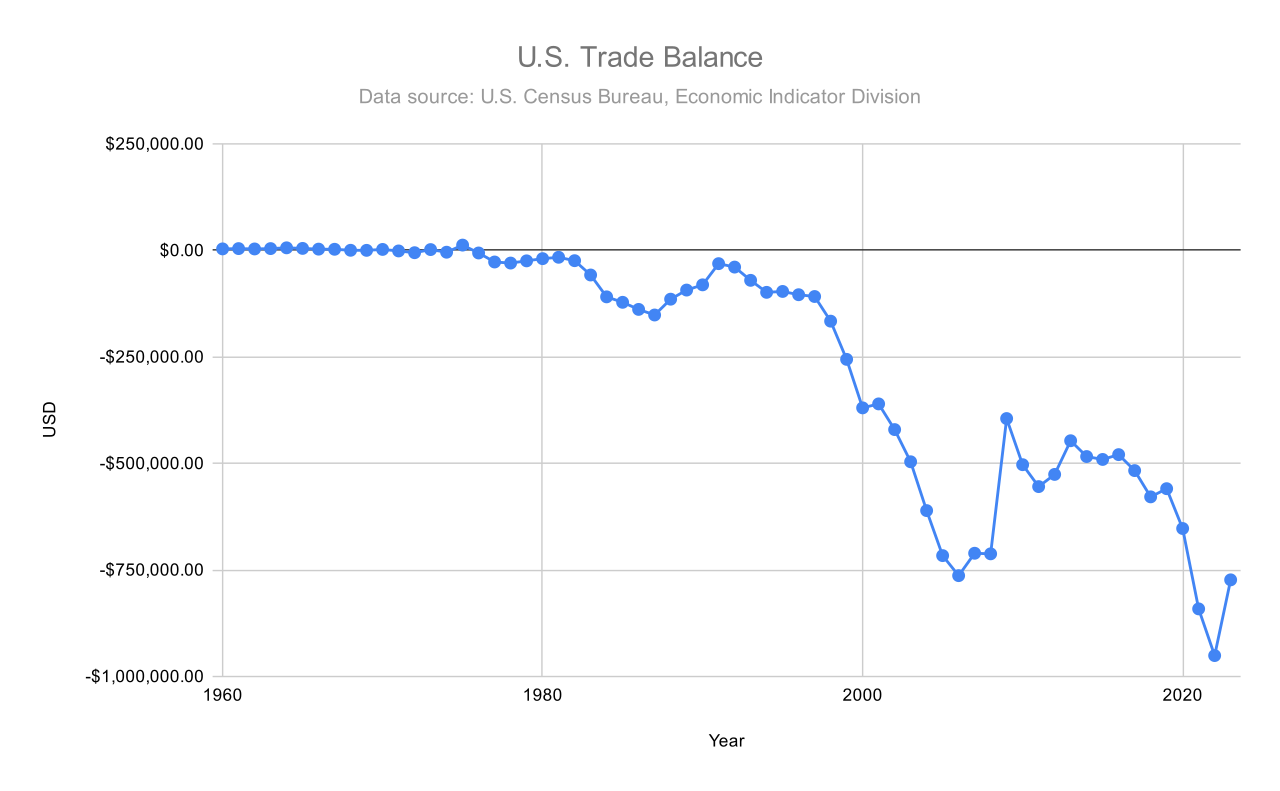
When we tally these up, we look at the balance of trade. A trade deficit occurs when the financial value of a country's imports exceeds the financial value of the country's exports.
Instructional Warning: A common student misconception is the assumption that a trade deficit strictly means a country is losing total wealth. Students often view a deficit as a "loss" on a scoreboard. In reality, a trade deficit means a country is trading fiat currency for tangible, usable goods. The foreign countries that receive those dollars often reinvest them back into the deficit country's economy (buying government bonds or real estate). It is not money "lost" down a drain, but a complex exchange of goods, currency, and capital.
The Shield and the Tax: Tariffs
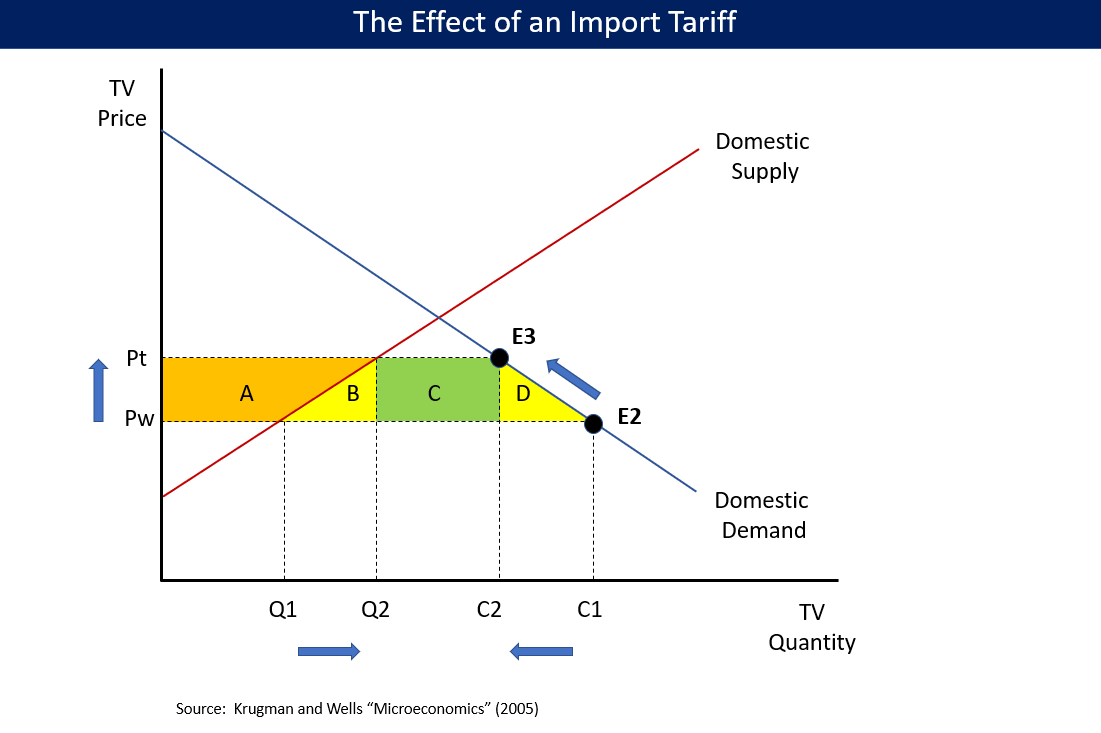
Sometimes, governments want to alter the natural flow of international trade. To do this, they use tariffs. A tariff is a direct tax placed by a government on imported goods.
Why would a government intentionally tax goods coming into its own country?
- Governments implement tariffs to make imported foreign goods more expensive for domestic consumers.
- By making foreign goods artificially expensive, governments implement tariffs to protect domestic industries from foreign market competition.
If a $10 imported t-shirt gets slapped with a $5 tariff, it now costs $15. Suddenly, the domestic t-shirt manufacturer charging $12 looks like the better bargain. Tariffs save domestic manufacturing jobs but force domestic consumers to pay higher prices at the checkout counter.
Who are the key players in this intricate dance with the US? Geography and massive manufacturing capacity dictate our closest ties: Major international trading partners of the United States include Canada, Mexico, and China.
As students grasp how nations trade, they will inevitably notice vast disparities in global wealth. How do economists formally categorize nations?
The defining yardstick is economic output per person. Economists use Gross Domestic Product (GDP) per capita as a primary metric to distinguish between developed and developing nations. GDP per capita takes the total value of all goods and services produced in a country and divides it by the population.
_per_capita_in_2024.svg)
This financial metric correlates with a cascade of societal realities:
- Developed Nations: These countries generally possess highly industrialized economies and typically feature advanced technological infrastructure. Because of these economic engines, developed nations statistically exhibit higher average life expectancy rates than developing nations, as well as higher adult literacy rates. The wealth buys better healthcare, sanitation, and public education.
- Developing Nations: Conversely, developing nations generally exhibit lower levels of industrialization compared to developed nations. They often rely more heavily on agriculture or raw material extraction, resulting in lower GDP per capita, which in turn leads to systemic challenges in funding those vital public goods we discussed at the very beginning.
By mastering these concepts—from the local property taxes funding your elementary school to the macroeconomic trade policies spanning the globe—you are not just learning definitions. You are acquiring the conceptual tools necessary to help young minds make sense of the world they inhabit.