Phonological Awareness
Not sure you’re ready?
Take the ~3-minute readiness diagnostic and see where you stand.
Imagine a child listening to a spoken sentence. To an untrained ear, human language is a continuous, unbroken river of acoustic waves. The human brain evolved beautifully to extract meaning from this acoustic river, but it did not evolve to consciously dissect its physical mechanics. Yet, for a child to eventually master the entirely human-invented technologies of reading and writing, they must first learn to consciously halt that river of sound, examine its currents, and slice it into distinct, manageable units.
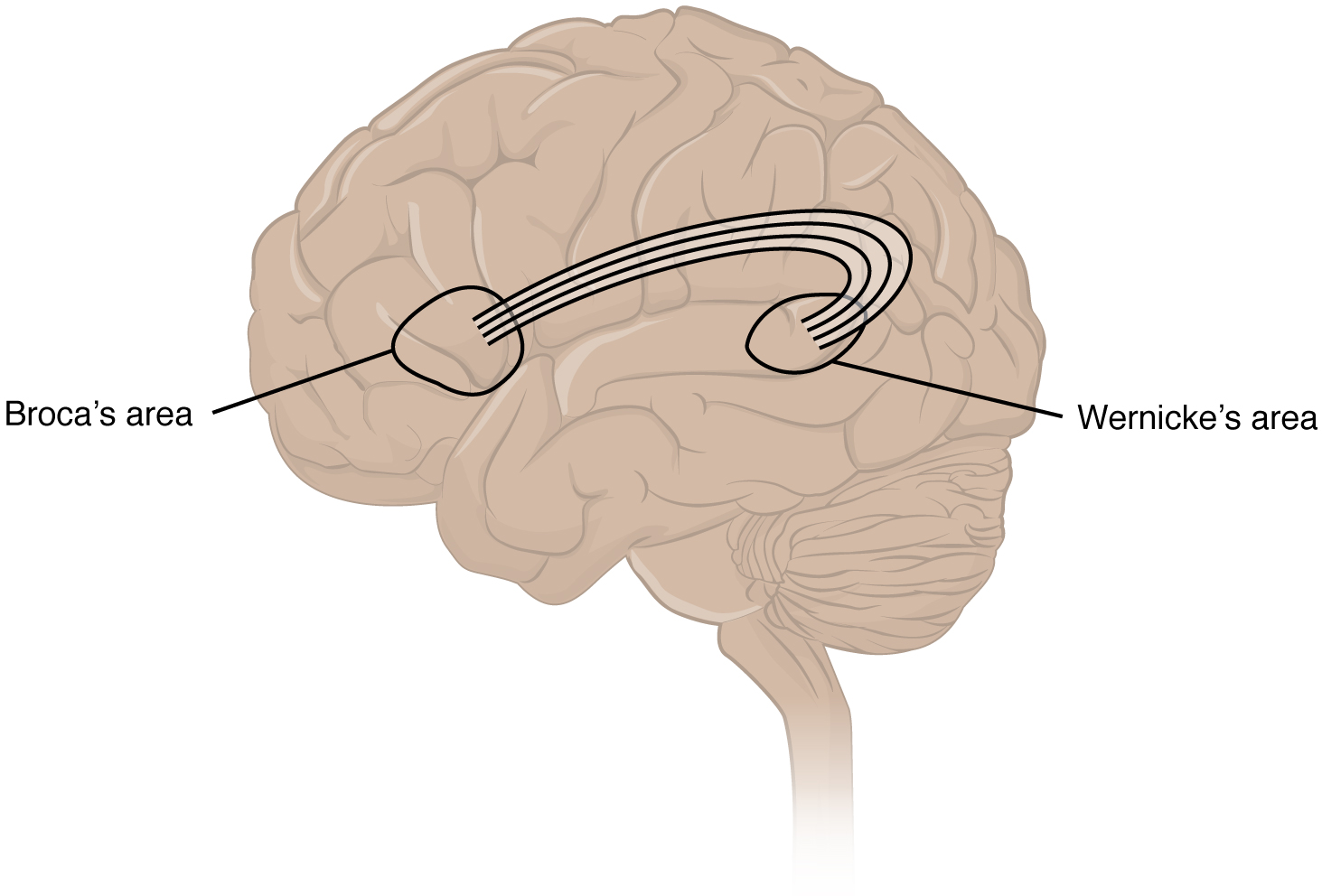
As a teacher, your job is not merely to show students how to read; it is to rewire their auditory perception. You must help them "see" the invisible architecture of spoken language long before you hand them a pencil or a book. This foundational rewiring is what we call phonological awareness.
Phonological awareness is the ability to recognize and manipulate the spoken parts of words and sentences. It is the broad umbrella under which all sound-manipulation skills live.
To understand how students learn this, we must establish an ironclad rule: phonological awareness is exclusively an auditory and oral skill that does not involve reading or writing letters. If you are showing a child a flashcard with the letter "B" on it, you have left the realm of pure phonological awareness and entered the realm of phonics—which involves the relationship between sounds and written letters or symbols.

The "Lights Out" Test You could assess and teach phonological awareness in a pitch-black room. If a task requires the lights to be on so the student can look at text, it is not pure phonological awareness.
Children do not wake up one day suddenly able to isolate the tiniest sounds in a word. Instead, they travel along the phonological awareness continuum, which represents the typical developmental progression of oral language sound manipulation. The phonological awareness continuum progresses predictably from manipulating larger units of sound to manipulating smaller units of sound. We start with the macro and zoom in to the micro.
Before a child can analyze a word, they must realize that words exist as separate entities. Word awareness is the ability to detect and track the number of distinct words in a spoken sentence. Because this relies on the largest chunks of meaning, segmenting spoken sentences into distinct words is typically the earliest phonological awareness skill to develop.
At this early stage, children also begin to notice patterns across multiple words. They begin to hear alliteration, which is the repetition of initial consonant sounds in consecutive or closely positioned spoken words (e.g., "Peter Piper picked...").
They also discover rhyming, the ability to identify words that have identical ending sound structures (e.g., cat and hat). Instructionally, remember that receptive language outpaces expressive language: recognizing rhyming words typically develops in students before the ability to produce rhyming words. You will ask a student, "Do bear and chair rhyme?" long before you ask them, "Tell me a word that rhymes with frog."
Moving slightly deeper, we reach compound words. Because compound words are made of two stand-alone concepts, they are relatively easy for young minds to manipulate.
- Blending: Compound words can be blended by orally combining two distinct whole words (Teacher: "Say rain. Now say bow. Put them together." Student: "Rainbow!").
- Segmenting: Segmenting a compound word involves separating the spoken word into its two smaller constituent words (Teacher: "Say cowboy without saying boy." Student: "Cow!").
When we zoom in past whole words, we hit the rhythmic pulse of language: the syllable. A syllable is a unit of spoken language organized around a single vowel sound.
Here is a non-negotiable linguistic rule to remember for your teaching practice: every spoken syllable must contain exactly one vowel sound. Vowels are the biological anchors of syllables because they are produced with an open, unobstructed vocal tract, allowing for maximum volume and duration. Consonants merely frame the vowels.
Because syllables provide the natural "beat" of a word, clapping or tapping for each beat in a spoken word is a common pedagogical strategy for assessing syllable segmentation skills.
At this level, students practice several critical operations:
- Syllable blending involves combining separate spoken parts into a whole word (e.g., combining /pock/ and /et/ to make pocket).
- Syllable segmenting involves breaking a spoken word into its distinct syllable parts.
- Syllable deletion involves removing a syllable from a spoken word to form a new word or word part (e.g., "Say remember. Now say it without the re.").
If we take a single syllable and split it exactly where the consonant framing meets the vowel anchor, we get the onset and the rime.
- An onset is the initial consonant or consonant cluster of a spoken syllable (e.g., the /str/ in street).
- A rime is the part of a spoken syllable containing the vowel sound and any subsequent consonant sounds (e.g., the /eet/ in street).
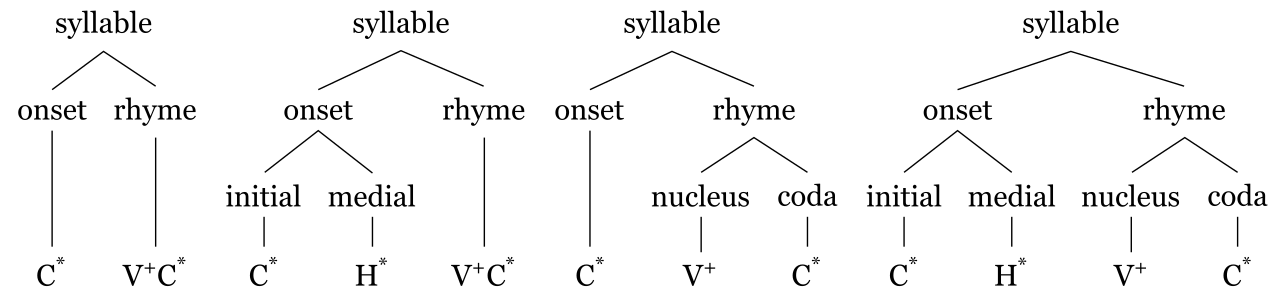
Onset-rime blending involves combining an initial consonant sound with a vowel and ending sounds to form a whole word. This is a vital stepping stone. It trains the brain to combine sounds without requiring the cognitive overload of blending every individual letter-sound at once.
Now we zoom in as far as the physics of language will allow. We have arrived at phonemic awareness, which is a specialized subset of phonological awareness. While phonological awareness covers everything from rhyming to syllables, phonemic awareness focuses specifically on recognizing and manipulating individual sounds in spoken words.
Because it requires isolating the smallest, most deeply buried acoustic features of speech, phonemic awareness represents the most advanced and difficult level of the phonological awareness continuum.
A phoneme is the smallest indivisible unit of sound in a spoken language. To give you a sense of the scale of this task: the English language contains approximately 44 distinct phonemes (depending slightly on dialect), despite having only 26 letters.
The Engine of Literacy: Phoneme Operations
Once a student can detect phonemes, we ask them to perform cognitive gymnastics with them. These tasks are not just academic parlor tricks; they are the exact mental mechanics required for literacy.
- Phoneme Isolation: This involves identifying specific individual sounds within a spoken word. From an assessment standpoint, asking a student to identify the first sound in a spoken word assesses phoneme isolation skills.
- Phoneme Blending: This involves listening to a sequence of separately spoken phonemes and combining them to form a whole word (Teacher says /c/ /a/ /t/, student says cat). Phoneme blending is a critical foundational skill for decoding words during reading. If a child cannot blend sounds orally, they will not be able to sound out words on a page.
- Phoneme Segmentation: This involves breaking a spoken word into its separate individual phonemes. Phoneme segmentation is a critical foundational skill for spelling words during writing. To write dog, the child must be able to stretch the spoken word into /d/ /o/ /g/ to know which letters to retrieve.
- Phoneme Deletion: This involves recognizing the spoken word that remains when a specific phoneme is removed (e.g., "Say flame without the /l/" -> fame).
- Phoneme Addition: This involves making a new word by adding a phoneme to an existing spoken word (e.g., "Say tar. Add /s/ to the beginning" -> star).
- Phoneme Substitution: This involves replacing one phoneme in a spoken word with a different phoneme to form a new word (e.g., "Change the /m/ in map to /t/" -> tap).
Knowing the structure of language is only half the battle; knowing how students experience it is what separates a novice teacher from a master. Let us look at the common friction points and pedagogical tools you will use.
The Physics of Phonemes: Continuants vs. Stops
Not all sounds are created equal in the human mouth.
- Continuant sounds are speech sounds that can be stretched out or held continuously without a breath break (e.g., /m/, /s/, /f/, /v/, and all vowels).
- Stop sounds are speech sounds made with a quick burst of air (e.g., /p/, /b/, /t/, /d/, /k/, /g/).
Because of their burst-like acoustic nature, stop sounds cannot be held continuously without distorting the sound. If you try to hold the /p/ sound, you invariably add an intrusive "uh" vowel sound to the end of it (schwa), saying "puhhhhh," which deeply confuses children trying to blend words. Therefore, introducing phoneme blending is easier for students when the initial sounds of the target words are continuant sounds. Blending /m/ /a/ /t/ is a smooth, continuous slide. Blending /b/ /a/ /t/ requires jumping across acoustic gaps.
The Coarticulation Problem
You will find that students often struggle to segment words containing consonant blends because the individual consonant sounds are coarticulated. When we say the word frog, our mouths are already forming the /r/ shape while our lips are making the /f/. The sounds overlap in physical time. A student might hear frog and segment it as /fr/ /o/ /g/. You must train them to slow down and isolate the deeply entwined /f/ and /r/.
The Greatest Misconception: Letters vs. Sounds
As students begin learning to read, their visual system will often hijack their auditory system. A common student misconception involves confusing the number of written letters in a word with the number of spoken phonemes in that word.
They see the word thought and think it has seven sounds because it has seven letters. You must remind them of the reality of speech. For instance, a consonant digraph contains two letters that represent a single phoneme (e.g., "sh", "ch", "th").
The inverse is also true! Consider the letter 'x'. The spoken word 'box' contains four phonemes despite having only three written letters. If you segment box, the sounds are /b/ /o/ /k/ /s/. The letter 'x' is actually two phonemes stacked on top of each other.
Making the Invisible Visible: Instructional Tools
How do you teach something a child cannot see or hold? You build scaffolding.
- Elkonin Boxes: These are instructional tools used to visually represent the distinct phonemes in a spoken word. You draw a series of empty squares on a board—one for each phoneme in the target word.
- Manipulatives: As the child hears each sound, they slide a token into an Elkonin box. Using physical manipulatives like counters helps students make the abstract concept of spoken phonemes more concrete. It maps an invisible slice of time to a physical object in space.
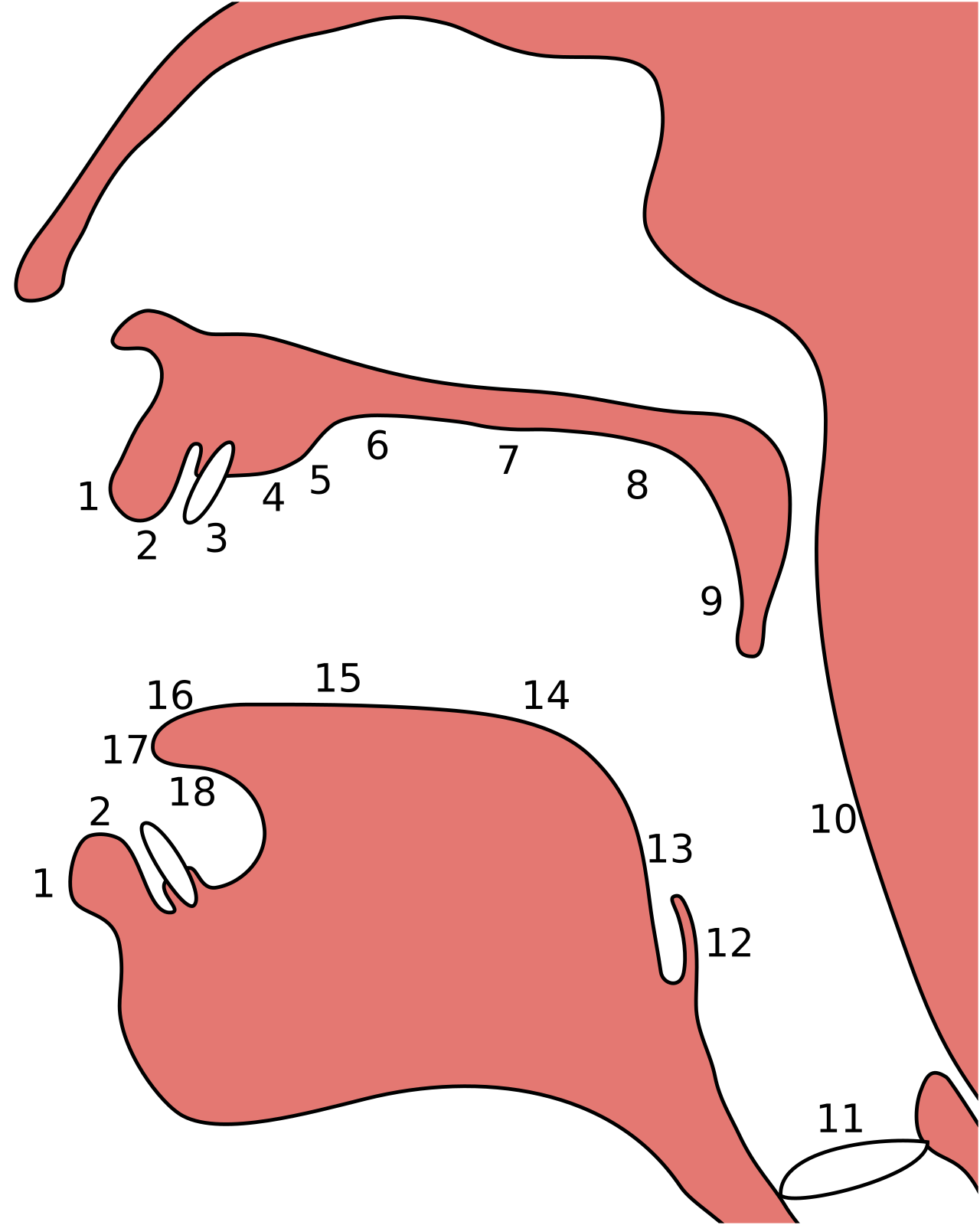
- Mirrors: Phonemes are ultimately just configurations of teeth, tongue, and lips. Having students look in a mirror while making sounds helps build awareness of mouth shapes and articulatory gestures. If a student cannot tell the difference between /f/ and /th/ by ear, they can instantly see the difference in the mirror: one uses the lower lip, the other uses the tongue.
By mastering the mechanics of phonological awareness, you are giving your students the keys to decode the complex, beautiful puzzle of human language. You are teaching them not just to hear the river of sound, but to navigate it.