Understanding Slope and Intercepts
Not sure you’re ready?
Take the ~3-minute readiness diagnostic and see where you stand.
Imagine observing a heavily loaded aircraft ascending into the sky. The steepness of its climb dictates whether it safely clears the mountains ahead or falls perilously short. In mathematics, we do not leave this steepness to intuition; we capture it using a strict, quantifiable measurement. The geometry of a straight line is defined entirely by its invariant rate of change and the specific anchor points where it tethers itself to the underlying coordinate system. By distilling a continuous trajectory into numerical ratios and fixed intersections, we gain the ability to precisely model physical, financial, and theoretical behaviors—from the velocity of an object in motion to the depreciation of a fixed asset over time.

At the heart of any linear relationship is a fundamental concept: the slope. The slope of a line represents the ratio of the vertical change to the horizontal change between any two points on the line.
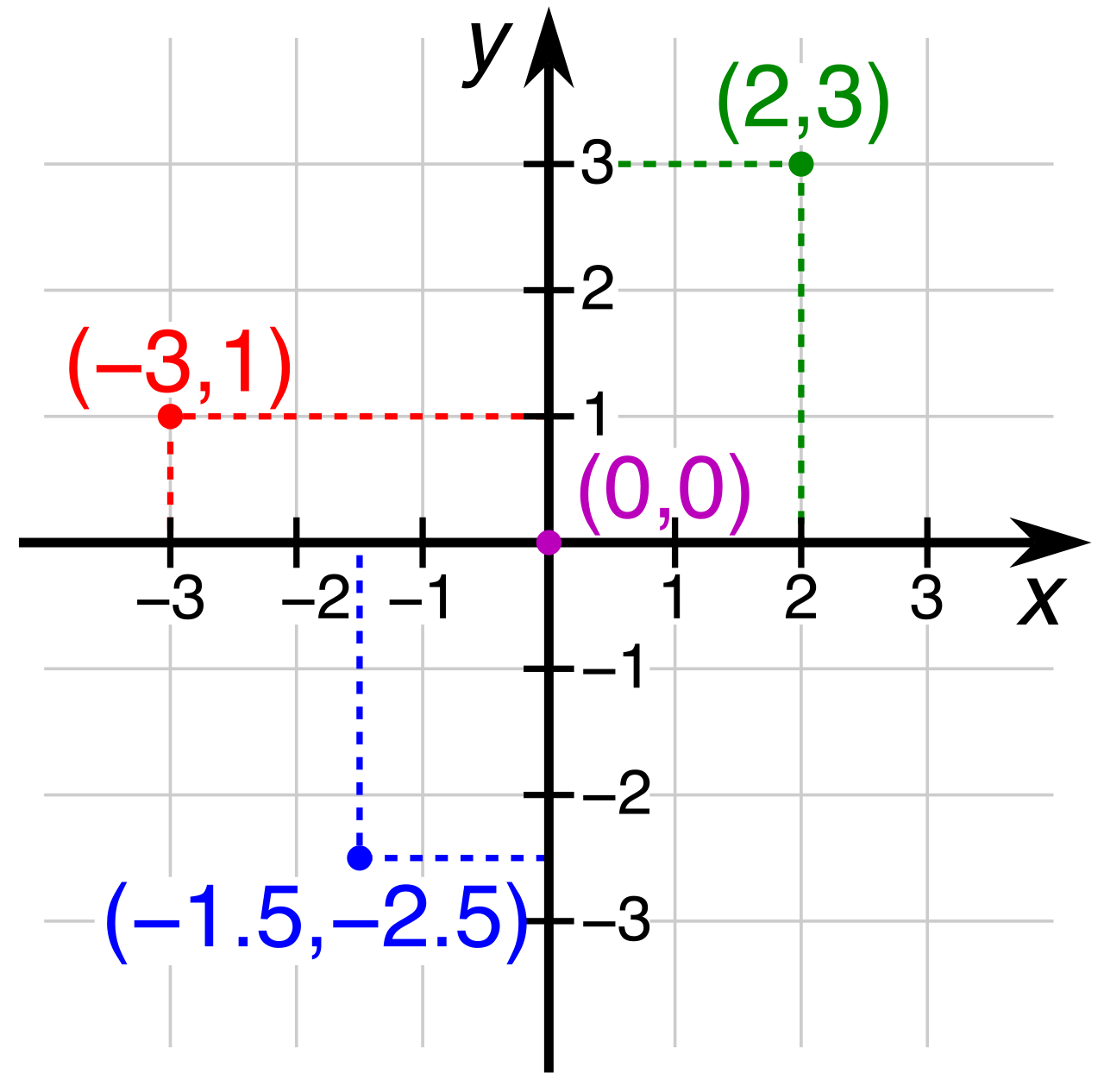
When we analyze movement on a standard Cartesian coordinate plane, we assign specific terminology to these dimensional shifts. The vertical change between two points on a coordinate plane is referred to as the rise, which aligns with the y-axis. Conversely, the horizontal change between two points on a coordinate plane is referred to as the run, which aligns with the x-axis. Because of this direct relationship, the slope of a line is commonly referred to as the "rise over the run."
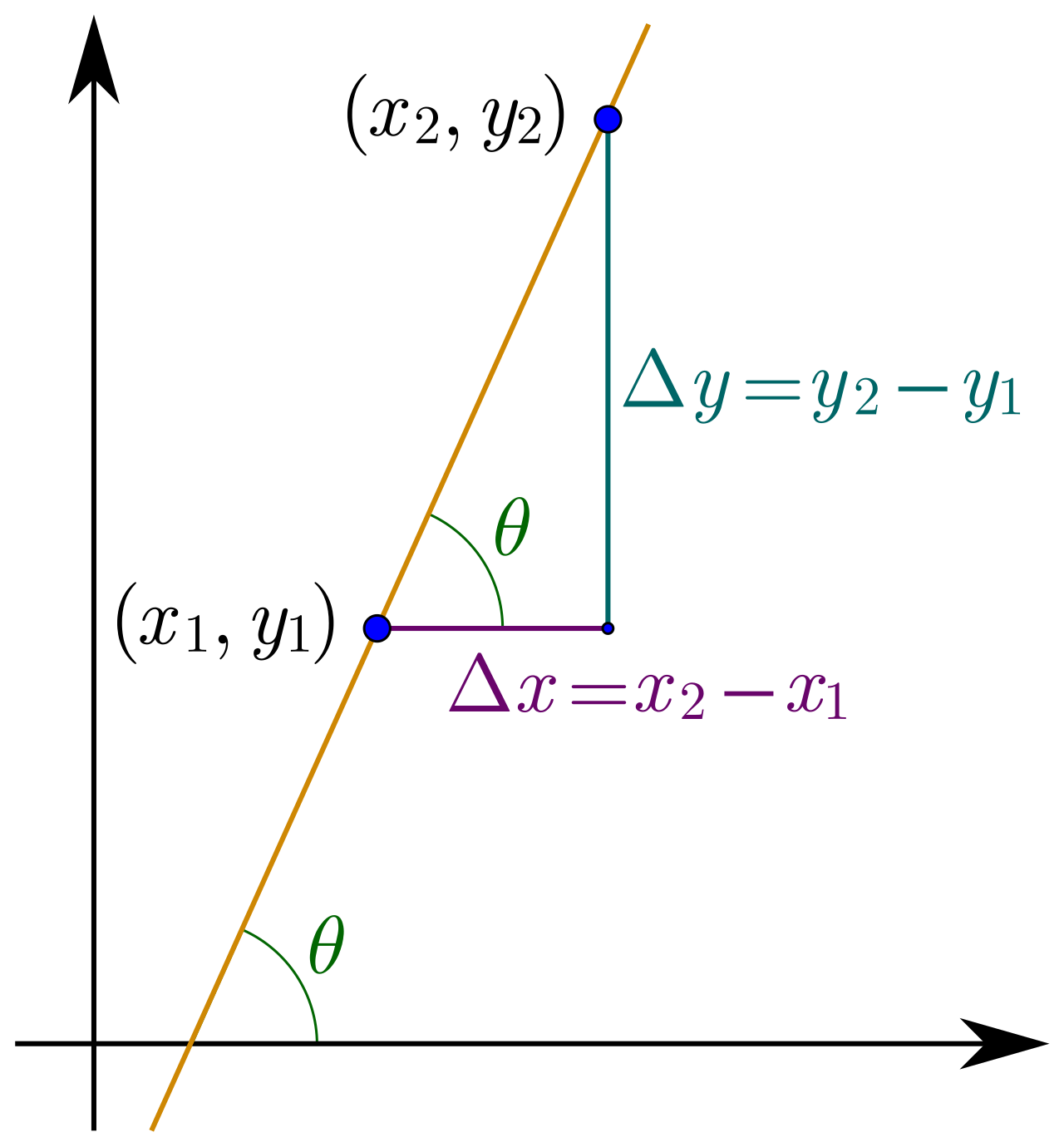
The Slope Formula The formula to calculate the slope of a line from two distinct points (x1,y1) and (x2,y2) is mathematically defined as: m=x2−x1y2−y1
One of the most profound geometric truths of a linear relationship is its consistency. Unlike a curve, which bends and alters its trajectory, the slope of a straight line remains constant regardless of which two points on the line are chosen for the calculation. Whether you measure the rise and run over a microscopic distance or across thousands of units on the grid, the resulting ratio simplifies to the exact same value.
Extracting Slope from Visuals and Data
How do we practically determine this value when handed raw information?
To determine the slope of a line from a graph, pick two distinct points on the line and divide the vertical distance between them by the horizontal distance between them. You literally count the units up or down (the rise) and divide by the units left or right (the run).
When dealing with raw numeric data, a table of (x,y) values represents a linear relationship if the ratio of the change in y to the change in x is identical across all adjacent pairs of points. If the output y jumps by 4 every time the input x increases by 2, the ratio (4/2=2) must hold for every subsequent interval. If the ratio fluctuates, the relationship is nonlinear.
The Four Orientations of Slope
A slope is not merely a number; its sign dictates the visual orientation of the line. We categorize lines into four distinct behavioral states:
| Slope State | Visual Behavior | Explanation |
|---|---|---|
| Positive | A line with a positive slope slants upward from left to right. | As x increases, y also increases. The rise and run share the same sign. |
| Negative | A line with a negative slope slants downward from left to right. | As x increases, y decreases. The rise and run have opposing signs. |
| Zero | A perfectly horizontal line has a slope of exactly zero. | The rise is zero. Since 0 divided by any non-zero run is 0, the line remains flat. |
| Undefined | A perfectly vertical line has an undefined slope. | The run is zero. Because division by zero is mathematically undefined, the slope calculation collapses. |
If the slope is the line's rate of travel, the intercepts are its geographical landmarks—the exact moments the line crosses the foundational axes of our coordinate system.
The X-Intercept
The x-intercept of a line is the exact point where the line crosses the x-axis. Because the x-axis itself acts as the "ground floor" of the vertical dimension, the equation of the x-axis is y=0. Consequently, the y-coordinate of any x-intercept is always exactly zero.
When documenting this intersection, an x-intercept is written as an ordered pair in the format (x,0). To calculate the x-intercept of a linear equation algebraically, substitute zero for the y variable and solve for the x variable.
The Y-Intercept
Similarly, the y-intercept of a line is the exact point where the line crosses the y-axis. Because the y-axis represents the center line of the horizontal dimension, the equation of the y-axis is x=0. Therefore, the x-coordinate of any y-intercept is always exactly zero.
A y-intercept is written as an ordered pair in the format (0,y). To calculate the y-intercept of a linear equation algebraically, substitute zero for the x variable and solve for the y variable.
A line can be expressed algebraically in several equivalent forms. The mastery of algebra lies in recognizing how each form uniquely reveals the line's geometric properties.
Slope-Intercept Form
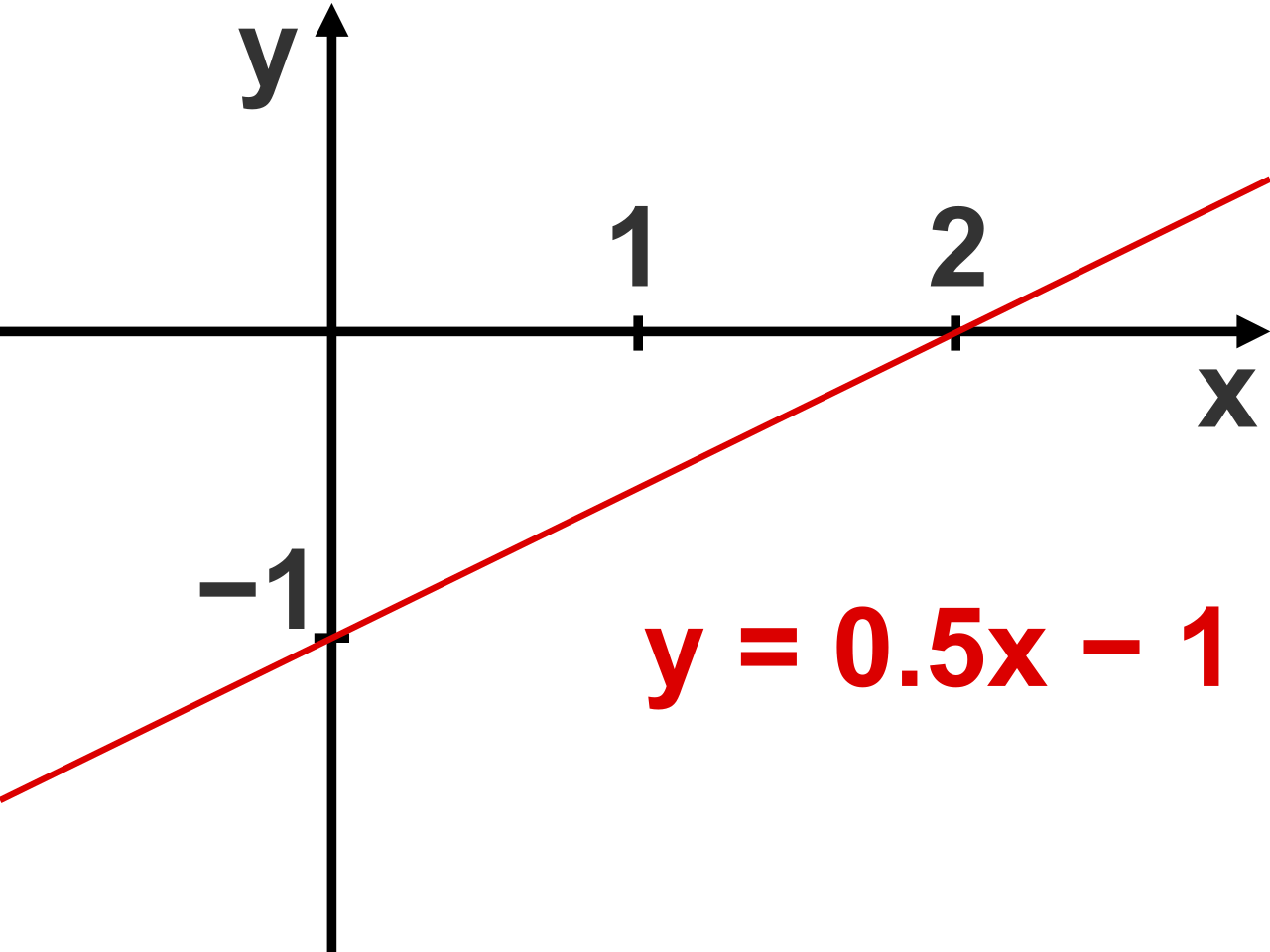
The slope-intercept form of a linear equation is written as y=mx+b. This is arguably the most intuitive algebraic structure because it hands you the line's key attributes on a silver platter.
- In the slope-intercept equation y=mx+b, the variable m represents the slope of the line.
- In the slope-intercept equation y=mx+b, the variable b represents the y-coordinate of the y-intercept.
Standard Form
Alternatively, the standard form of a linear equation is written as Ax+By=C, where A, B, and C are typically integers. While this form is excellent for quickly solving systems of equations, its geometric properties are slightly hidden. However, by mentally manipulating the algebra, we can extract the line's traits instantly:
- For a linear equation in the standard form Ax+By=C, the slope of the line equals the negative of A divided by B (Slope =−BA).
- For a linear equation in the standard form Ax+By=C, the y-coordinate of the y-intercept equals C divided by B (y-int =BC).
- For a linear equation in the standard form Ax+By=C, the x-coordinate of the x-intercept equals C divided by A (x-int =AC).
Single-Variable Equations
What happens when a variable goes entirely missing?
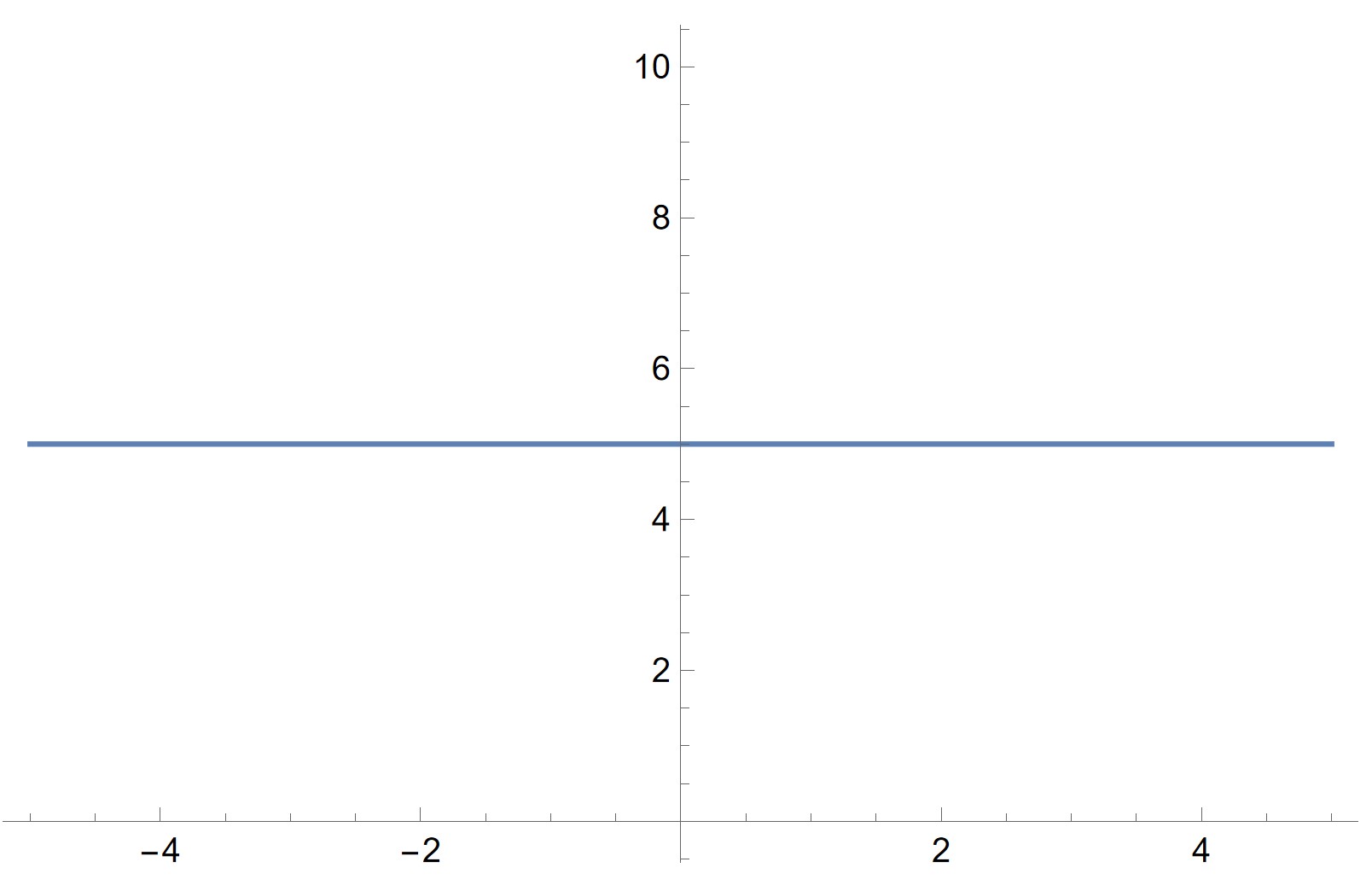
- A linear equation containing only a y variable and a constant value (e.g., y=5) represents a horizontal line. Since x can be any value without altering y, the line never rises nor falls.
- A linear equation containing only an x variable and a constant value (e.g., x=−3) represents a vertical line. The x position is fixed, meaning the graph shoots straight up and down across all possible y-values.
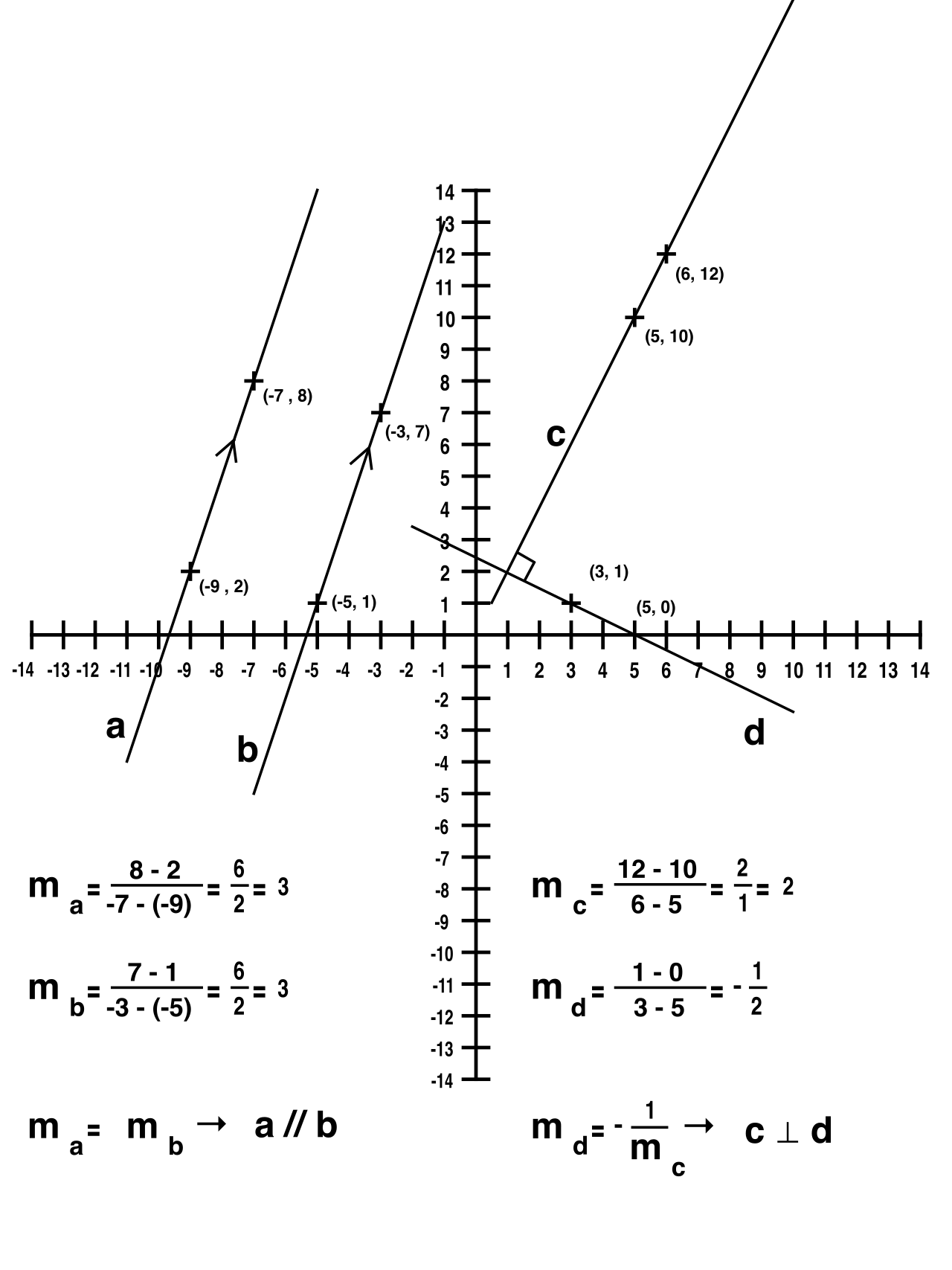
Lines rarely exist in isolation. When two lines share a coordinate plane, the interplay of their slopes reveals exactly how they relate to one another mathematically.
Parallel Lines Two distinct parallel lines have exactly the same slope. Because their rates of vertical change relative to horizontal change are identical, they will travel alongside one another infinitely into the horizon without ever intersecting. If line L1 has a slope of 3/4, any line parallel to L1 must also possess a slope of 3/4.
Perpendicular Lines Conversely, two perpendicular lines intersect at a perfect 90-degree angle. This severe geometric rotation flips the structural ratio of the slope on its head. Mathematically, two perpendicular lines have slopes that are negative reciprocals of each other. If one line has a slope of a/b, a perpendicular line must have a slope of −b/a.
Because of this reciprocal relationship, a fascinating algebraic truth emerges: the product of the slopes of two non-vertical perpendicular lines is always exactly negative one. For instance, if line A has a slope of 4 (which is 4/1), the perpendicular line B will have a slope of −1/4. Multiplying them together yields: 4×(−41)=−1
By mastering these rules, you no longer see an equation as mere symbols on a page. You see the steepness, the anchors, and the strict geometric reality of the lines they represent.