Identifying Points of Agreement and Disagreement Between Texts
Not sure you’re ready?
Take the ~3-minute readiness diagnostic and see where you stand.
Imagine sitting in a grade-level team meeting. You and a colleague are discussing a student who is failing mathematics. You argue the student is struggling because the current curriculum moves too rapidly through foundational concepts. Your colleague argues the student is failing because they lack at-home support for their assignments. Listen closely to the geometry of this debate: you both agree on the existence of a general problem—the student is failing—but you hold mutually exclusive views on the cause, and subsequently, the solution.
This daily professional reality is the exact intellectual muscle tested by the Praxis 5713 Core Reading exam. As an educator, your ability to synthesize disparate viewpoints, isolate shared premises, and pinpoint exact deviations in logic is paramount. The Praxis 5713 Core Reading exam features paired passages to test comparative reading skills, evaluating your capacity to navigate two distinct voices speaking on a shared subject.
To pass, you must move beyond simply understanding what a single author says. You must map the intersection of two distinct minds.
When the test makers place two passages side-by-side, they are inviting you to observe a conversation. These paired passages do not exist in isolation; they are carefully engineered to interact.
Broadly, these interactions take one of two forms. Sometimes, paired passages often feature contrasting viewpoints on a single shared subject, presenting a clear debate. Think of two editorials arguing for and against standardized testing. Other times, paired passages may feature complementary viewpoints exploring different aspects of the same topic. In this case, Text 1 might detail the historical origins of a specific educational philosophy, while Text 2 explores its modern classroom applications.
To navigate these relationships, the Praxis Core Reading test includes selected-response questions asking to identify topics both authors would agree upon, as well as questions asking to identify issues the authors disagree about. Answering them correctly requires a highly specific set of analytical tools.
Before you can compare two texts, you must understand their individual compositions. High-level evaluative reading requires distinguishing between the objective facts presented and the subjective opinions of the authors.
A fact is an observable reality; an opinion is a value judgment applied to that reality. If Text 1 states, "The district allocated $1.5 million to new literacy programs," that is a fact. If Text 1 follows up with, "This allocation is a reckless waste of taxpayer funds," that is an opinion.
To untangle these threads, recognizing authorial bias is necessary to accurately identify the underlying disagreements between two subjective texts. Bias is not inherently a negative trait; it is simply the lens through which an author views the world. By identifying an author’s core values (e.g., prioritizing student autonomy vs. prioritizing strict academic rigor), you can predict exactly where they will clash with an opposing viewpoint.
Finding agreement between two argumentative texts is often a test of subtlety. Point of agreement questions require finding a statement supported by the arguments of both passages. However, authors rarely express their agreements using identical language.
Levels of Agreement
Agreement is rarely universal; it usually exists at specific, isolated layers of an argument.
- The Shared Problem: Two authors may agree on the existence of a general problem. For example, both authors might explicitly state that teacher burnout is accelerating at alarming rates.
- The Divergent Solution: Do not assume that recognizing a problem means agreeing on how to fix it. Very often, two authors agreeing on a general problem may entirely disagree on the proposed solution to that problem.
- The Shared Premise: Similarly, two authors may agree on a shared factual premise. Both might cite the exact same statistic regarding high school dropout rates.
- The Divergent Interpretation: Again, shared data does not mean shared conclusions. Two authors agreeing on a factual premise may hold mutually exclusive interpretations of that fact. One author sees the dropout rate as evidence of a failing curriculum; the other sees it as evidence of shifting economic pressures requiring teenagers to enter the workforce.
Advanced Agreement: Implication and Concession
Sometimes, an agreement is not stated outright. Implicit agreement occurs when an author's stated premises logically align with a conclusion explicitly drawn by another author. If Passage A states that effective phonics instruction requires explicit, daily modeling, and Passage B states that explicit modeling is the only way young readers master phonetic relationships, Passage A implicitly agrees with Passage B, even if Passage A never uses the phrase "the only way."
Furthermore, watch for concessions. In robust argumentation, an author will often acknowledge the validity of an opponent's minor point before refuting their major conclusion. An author's concession to an opposing viewpoint can serve as a point of agreement with a contrasting passage. If Author 1 hates standardized tests but admits they provide "a baseline metric of district performance," and Author 2 loves standardized tests because of those "baseline metrics," you have found a point of agreement buried within a broader disagreement.
Crucial Rule: Regardless of whether the agreement is explicit, implicit, or a concession, textual evidence from both passages is strictly required to confirm a shared perspective. You cannot assume an author agrees with something simply because they seem like a reasonable person. If it is not in the text, it does not exist.
When the exam asks you to identify where authors clash, you are looking for a point of contention. A point of contention is the exact specific issue on which two authors hold mutually exclusive views.
Point of disagreement questions require finding a statement that one author supports and the opposing author rejects. This requires laser precision. It is not enough for the authors to merely talk about different things. A correct answer for a point of disagreement must represent a direct clash of ideas rather than a simple difference in passage focus.
If Author A writes an essay about the benefits of teaching reading through phonics, and Author B writes an essay about the benefits of teaching math through spatial reasoning, they do not disagree on how to teach reading. Author B simply hasn't addressed it. For a true disagreement to exist, Author B must explicitly advocate for a non-phonics approach to reading (like whole language), directly clashing with Author A.
Ultimately, comparative reading requires synthesis. Synthesis involves combining discrete pieces of information from two distinct texts to form a cohesive conclusion. You are acting as a judge synthesizing the testimonies of two different expert witnesses.
To succeed on the Praxis, you must view the answer choices not as standalone facts, but as hypotheses that must be run against the data set of both passages. A valid point of agreement or disagreement must survive the cross-examination of Text 1 and Text 2.
Because the Praxis Core Reading exam utilizes selected-response (multiple choice) questions, your ability to eliminate incorrect options is just as vital as your ability to identify the correct one. The test makers rely on predictable traps.
The Law of Bilateral Scope
Every valid answer must relate to both texts. A valid point of agreement must fall within the scope of both analyzed texts. If an answer choice brings up a concept that only one author mentioned, it is a trap.
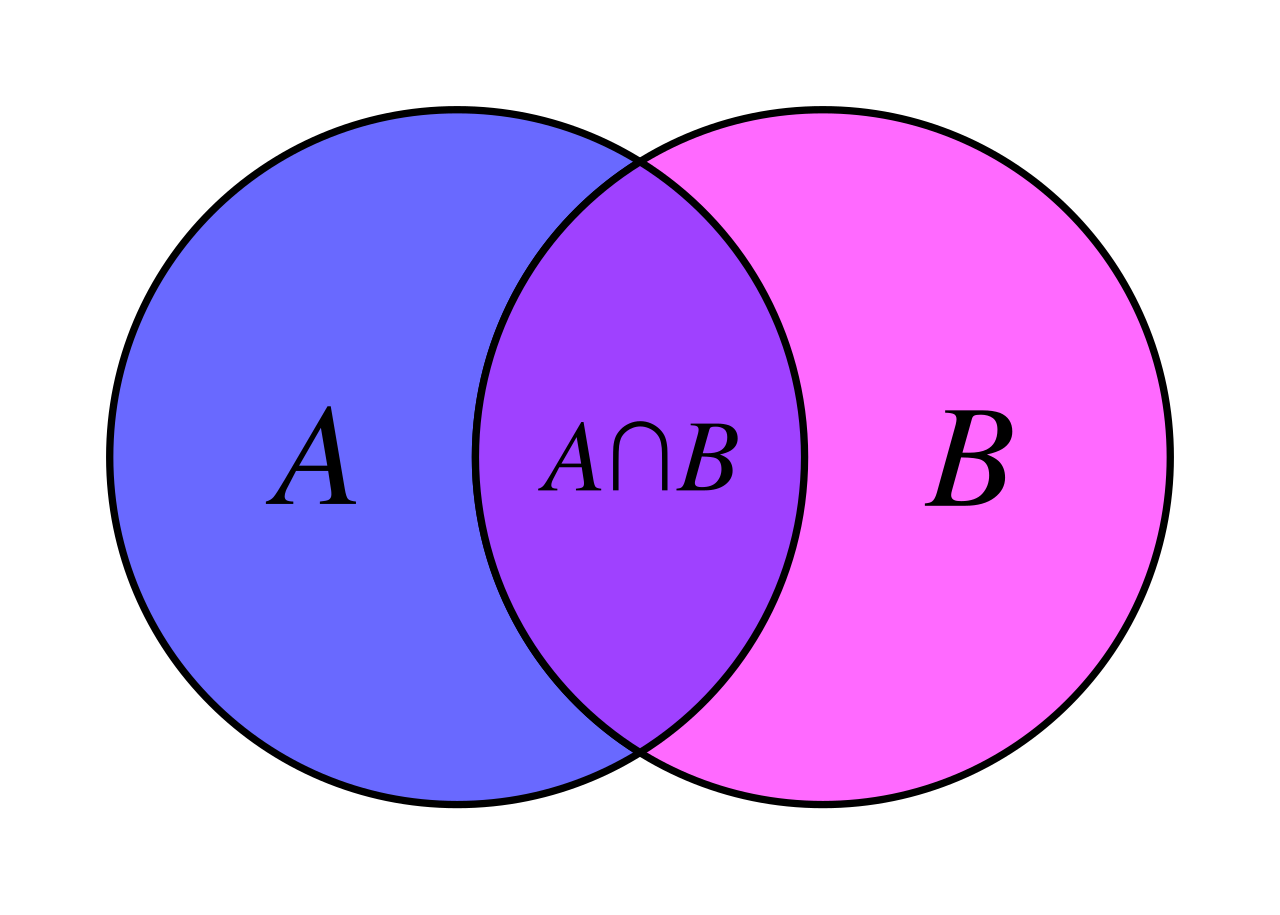
- Options discussing a topic mentioned in only one passage cannot serve as points of agreement. If Text 1 discusses school funding and Text 2 only discusses curriculum design, they cannot possibly agree on school funding.
- Exactly the same logic applies to points of contention: options discussing a topic mentioned in only one passage cannot serve as points of disagreement. You cannot disagree with a claim you never addressed.
Therefore, eliminating answer choices in agreement questions involves crossing out options supported by only one text. If you see an answer choice that flawlessly summarizes Text 1, but Text 2 never mentions it, strike it out immediately.
The Synonymous Phrasing Translation
When you find the right answer, do not expect it to be a direct copy-paste from the passage. Correct answers for comparative reading questions often use synonymous phrasing rather than exact quotes from the passages. The test makers are translating the authors' specific language into broader, more abstract academic phrasing. If the text says, "Students are exhausted by the endless barrage of multiple-choice exams," the correct answer choice might read, "Standardized assessments contribute to learner fatigue."
Verifying Precise Wording
Because synonymous phrasing is used, you must be rigorous in your validation. Verifying an agreement requires checking the precise wording of an answer choice against the specific claims of both texts. Does "learner fatigue" accurately capture "exhausted by"? Yes. But if the answer choice said, "Standardized assessments cause clinical depression," that wording is too extreme and fails the verification check.
Beware Extreme Vocabulary
This leads to the most common trap on the exam. Comparative reading questions frequently use extreme vocabulary to create incorrect unsupported answer choices.
Look out for words like always, never, impossible, completely, solely, must, and all.
| Passage Claim | Trap Answer Choice (Extreme) | Correct Answer Choice (Moderate) |
|---|---|---|
| "Technology can sometimes distract students during lectures." | Authors agree that technology destroys attention spans. | Authors agree that technology has the potential to disrupt learning. |
| "Most teachers prefer having a dedicated planning period." | Authors agree that all teachers demand daily planning periods. | Authors agree that dedicated planning time is generally favored by educators. |
If an answer choice contains an absolute, the passages must contain absolute textual evidence to back it up. Because most academic writing is nuanced, extreme answer choices are almost always incorrect.
As a teacher, you will constantly synthesize conflicting information. A parent will email you with one perspective on a behavioral incident; a guidance counselor will provide another. A district mandate will emphasize one pedagogical strategy; your classroom reality will suggest another.
The Praxis 5713 Core Reading exam is simply testing your readiness for this professional reality. When you face paired passages:
- Read for the shared subject, noting whether the texts complement or contrast.
- Separate the objective facts from the authors' subjective opinions and biases.
- Remember that authors can share a premise or a problem, while fiercely disagreeing on the interpretation or solution.
- Ruthlessly eliminate answer choices that fall outside the scope of both texts—an idea mentioned by only one author can never be a point of agreement or disagreement.
- Watch out for extreme vocabulary that overstates the authors' claims, and embrace synonymous phrasing that accurately captures their shared logical premises.
Master this, and you won't just pass the Praxis—you will master the art of critical educational synthesis.