Argumentative Essays: Development and Support
Not sure you’re ready?
Take the ~3-minute readiness diagnostic and see where you stand.
When a school district administrator proposes a sweeping change to the mathematics curriculum, they do not simply hand the school board a stack of textbooks and hope the merits of the new program are self-evident. They must construct a case. They present data on student performance, offer narratives of classroom success, acknowledge the financial cost, and systematically demonstrate why the benefits outweigh the drawbacks. This process of organizing ideas to construct a compelling, logical case is the essence of academic argumentation. As future educators, your ability to dismantle a complex issue, organize its constituent parts, and present a reasoned conclusion is not just an examination requirement; it is a fundamental tool of your profession. You will use it to advocate for resources, justify pedagogical choices to parents, and teach your own students how to think critically.
The Praxis Core Writing exam requires test-takers to compose one argumentative essay based on a provided prompt. You are given a strict 30-minute time limit for planning and writing.
Many developing writers panic at the constraints of a ticking clock, fixating on achieving flawless punctuation at the expense of their actual argument. This is a strategic error. The Praxis Core argumentative essay is scored holistically on a scale of 1 to 6.
Holistic Scoring: An evaluation method that assesses the overall quality and logical progression of an essay rather than focusing solely on isolated grammatical errors.
The graders are looking at the intellectual architecture of your argument. If your ideas flow coherently and your claims are well-supported, a misplaced comma will not sink your score. They want to see that you can think sequentially and argue persuasively.
The Historical Foundations of Persuasion
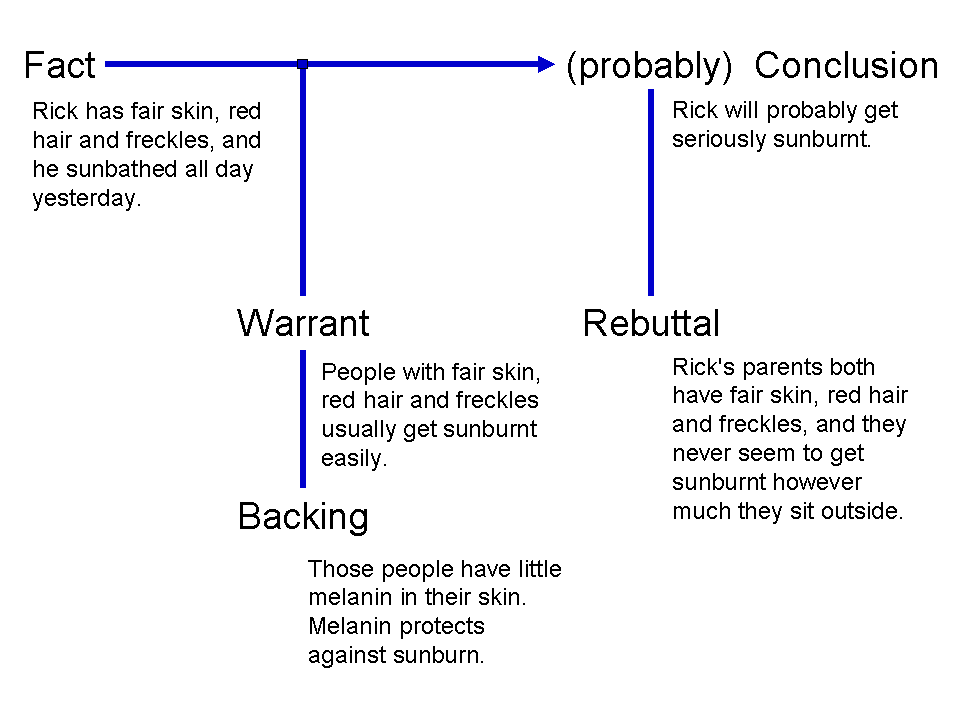
We are not inventing these structures from scratch. The frameworks we use to build arguments have been refined over millennia. The classical argument structure was originally developed by the ancient Greek philosopher Aristotle, emphasizing the introduction, narration, confirmation, refutation, and conclusion. Much later, British philosopher Stephen Toulmin introduced the Toulmin method of argumentation in 1958, which formalized the relationships between claims, data, and the underlying assumptions that connect them. Understanding these blueprints helps us see the essay not as a chore, but as a mechanism for transferring a conviction from your mind into the mind of your reader.
Every argument is built upon a premise, which is a foundational statement assumed to be true for the purpose of constructing a logical argument. For example, "Students require a safe environment to learn effectively" is a premise. From our premises, we synthesize our primary argument.
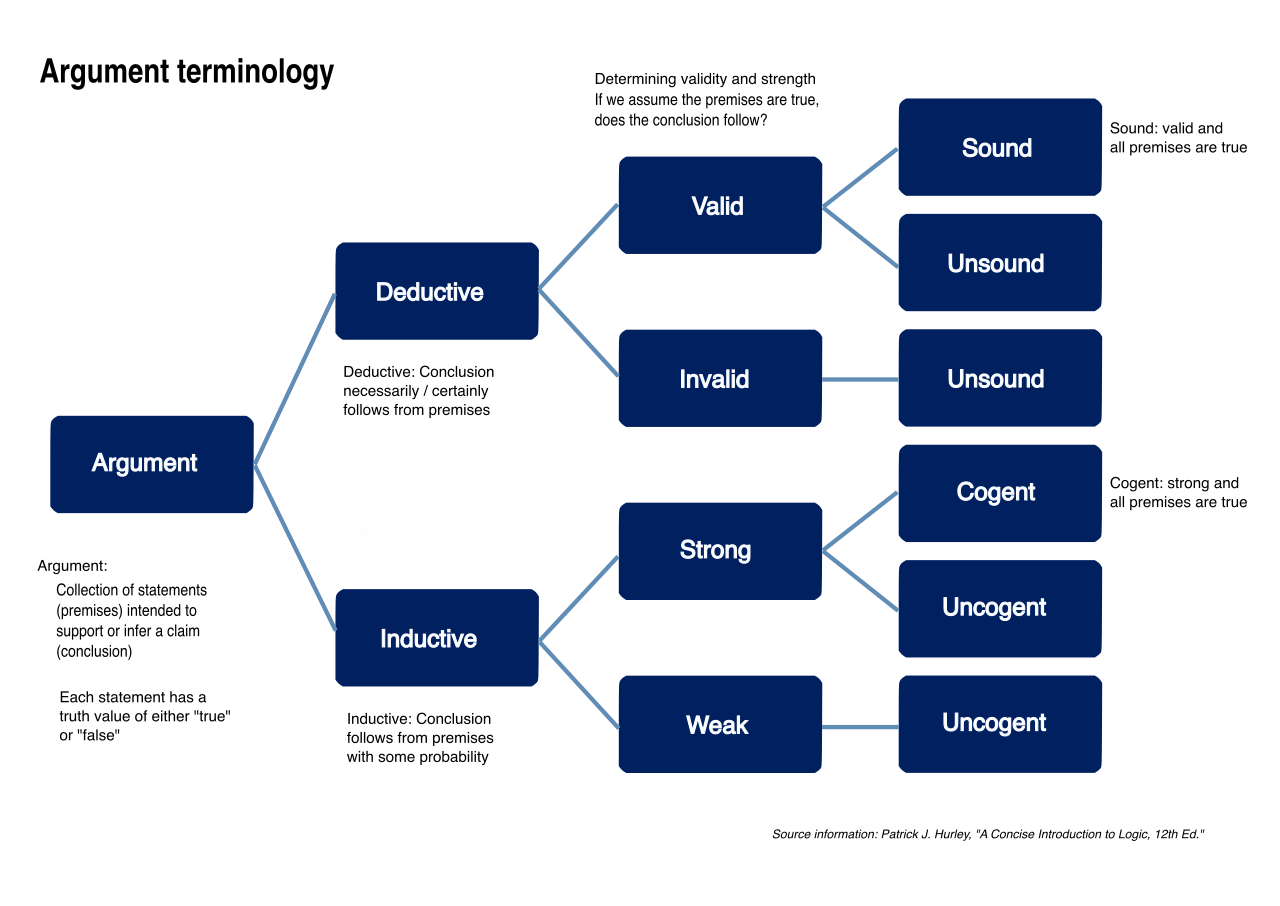
An argumentative essay requires a clear, concise, and defined thesis statement. The thesis statement establishes the primary claim of an argumentative essay. It is the absolute center of gravity for your writing; every subsequent sentence you write exists solely to support it. By convention, the thesis statement is conventionally located in the introductory paragraph, serving as a roadmap for the reader before the detailed exposition begins.
The Mechanics of Reasoning
How do we arrive at a thesis? We do so through two primary avenues of reasoning:
- Deductive reasoning: Formulates a specific conclusion from broad, general premises. (e.g., All successful reading programs require phonics. This proposed program lacks phonics. Therefore, this proposed program will not be successful.)
- Inductive reasoning: Formulates a broad generalization from specific observations. (e.g., My third-period students improved their scores after using interactive whiteboards, and so did the fourth-period students. Therefore, interactive whiteboards improve student engagement.)
Once the thesis is set, we must prove it. The body of your essay is where the actual labor of persuasion occurs. A fundamental rule of structural integrity in writing is that each body paragraph in an argumentative essay must focus on a single central idea.
Why? Because focusing a body paragraph on a single idea prevents confusion for the reader. If you are writing to a parent about a student's behavioral challenges and, in the same breath, begin analyzing their math scores, the parent loses the thread of the conversation.
We signal this single idea using a topic sentence, which introduces the specific claim discussed within a single body paragraph. Crucially, every topic sentence must establish a logical connection to the essay's thesis statement. If a topic sentence does not clearly advance the thesis, it belongs in a different essay.
Frameworks for Paragraph Construction: TEEL and MEAL
To maintain strict discipline within your body paragraphs, academic writers utilize specific frameworks. Two of the most highly effective are the TEEL and MEAL structures.
| Component | TEEL Structure | MEAL Structure | Purpose |
|---|---|---|---|
| 1 | Topic sentence | Main idea | Establishes the single central claim of the paragraph. |
| 2 | Evidence | Evidence | Provides the factual backing for the claim. |
| 3 | Explanation | Analysis | Explains why the evidence proves the claim. |
| 4 | Link | Link | Connects the paragraph back to the overarching thesis. |
Notice the final step in both frameworks. The "Link" component of a paragraph structure connects the paragraph's main point directly back to the essay's overarching thesis statement. This ensures your essay remains a tightly knit unit rather than a sequence of random thoughts.
A claim without evidence is merely an opinion. Evidentiary support involves using facts, statistics, or examples to validate a claim. To be persuasive, you must deploy the correct type of evidence for your specific argument:
- Anecdotal evidence: Consists of personal stories used to illustrate a specific argumentative point. (e.g., Recounting how a specific student finally understood fractions after using physical manipulatives.)
- Statistical evidence: Utilizes numerical data to substantiate a logical claim. (e.g., Citing that schools with later start times saw a 14% decrease in tardiness.)
- Expert testimony: Involves utilizing statements from recognized authorities to support an argument. (e.g., Quoting a published cognitive psychologist on the effects of sleep deprivation on adolescent learning.)
However, dropping a statistic into a paragraph is not enough. The data cannot speak for itself. Writers must provide explicit reasoning to explain how specific evidence supports a claim. This is where the magic happens.
The Warrant: The logical connection explaining how evidence supports the thesis is called a warrant.
If your thesis is that recess should be extended, and your evidence is a statistic showing that physical activity increases blood flow to the brain, your warrant is the explanation: "Because increased blood flow enhances cognitive focus, extending recess directly equips students to absorb complex academic material more efficiently upon returning to the classroom."
An essay is not a pile of bricks; it is a constructed wall. The mortar holding it together is your transitional logic. Logical progression requires ideas to build upon one another sequentially without abrupt shifts in topic.
To guide the reader seamlessly, we use transitions. Note the vital distinction between micro and macro transitions:
- Transitional phrases create logical coherence between sequential sentences.
- Transitional words establish logical relationships between separate paragraphs.
These transitions act as signposts, telling the reader exactly how to process the relationship between the ideas you are presenting.
Categories of Transitions
- Cause-and-effect: Words like "therefore" and "consequently" signal a cause-and-effect relationship between ideas.
- Addition: Words like "furthermore" and "additionally" signal the addition of supplementary information.
- Contrast: Words like "conversely" and "nevertheless" signal a logical contrast between ideas.
Macro-Organization of the Argument
When you have three strong points to make, in what order should you present them? You have two primary strategies:
- Emphatic order organizes an essay's supporting points from the least important argument to the most important argument. This builds momentum, leaving the reader with your most powerful point ringing in their ears.
- Reverse emphatic order organizes an essay's supporting points from the most important argument to the least important argument. This is highly effective under tight time constraints (like a 30-minute exam) because it ensures your strongest material is guaranteed to be fully developed before time expires.
Many novice writers fear that acknowledging the other side of an issue will weaken their own essay. The exact opposite is true in academic writing. A counterargument acknowledges a valid opposing viewpoint regarding the essay's topic.
By anticipating what a skeptic might say, you take control of the narrative. More importantly, addressing a counterargument demonstrates objectivity in an argumentative essay. It signals to the holistic scorer that you are a rational thinker who has evaluated the totality of the issue, not just your own preferred slice of it.
But you do not simply let the opposition speak and leave it at that. You must neutralize it. A rebuttal is a specific argument used to systematically disprove a counterargument.
- Counterargument: "Critics of extending the school day point out that it will increase municipal transportation costs by roughly $400,000 annually."
- Rebuttal: "Nevertheless, this upfront cost is offset by the long-term economic benefit to the community, as after-school programs are proven to reduce juvenile delinquency and lower civic property damage costs."
When you reach the final paragraph, the heavy lifting of persuasion is complete. The conclusion paragraph synthesizes the information presented throughout the body of the essay.
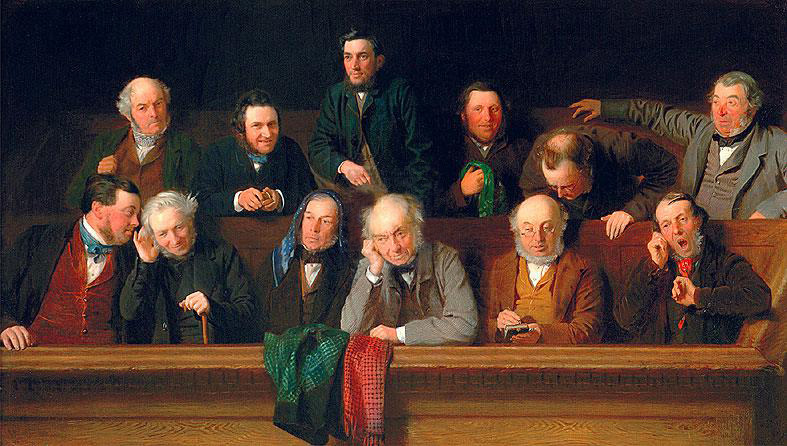
Think of a lawyer delivering closing remarks to a jury. They do not call new witnesses at this stage; they remind the jury of what has already been proven. Therefore, writers must strictly avoid introducing new evidentiary support within the conclusion paragraph. Introducing new evidence here creates a hanging thread that you have no time to resolve, fracturing the logical progression of the piece.
Instead, a conclusion paragraph typically restates the thesis statement using different phrasing. You are bringing the reader back to the primary claim, but you are now showing it to them in the light of all the magnificent evidence and reasoning you have just provided. They should now accept your premise not because you told them to, but because you have systematically built an unassailable case.