A formal citation provides the standardized information necessary for a reader to locate a specific source. It is not an arbitrary hoop invented by grammarians to torment undergraduates; rather, it is the exact set of GPS coordinates required to track down a specific piece of human knowledge. Imagine handing a substitute teacher a note that simply says, "Give this to Sarah." Without a last name, a grade level, or a classroom number, the instruction is useless. Academic writing operates on the same principle. When you present a claim, your reader needs a precise, verifiable map to the evidence.
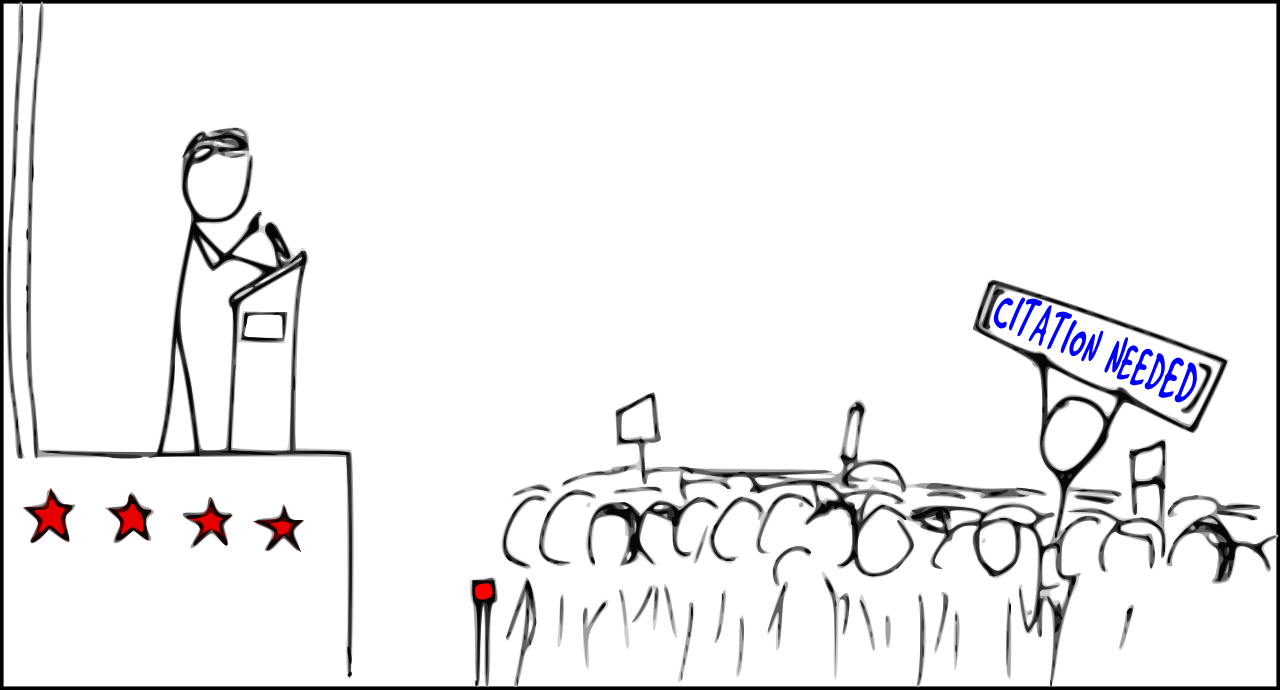
The demand for a citation is a fundamental requirement in academic writing, ensuring that claims can be traced back to verifiable evidence.
To master the Praxis Core Writing exam and effectively teach source-based writing in your future classrooms, you must be able to instantly recognize and deploy the structural elements of these citations.
Every citation is built from a predictable set of components. By learning to identify these structural elements, you can decode any reference list, regardless of the specific formatting style applied.
The Creator: The Author Element
Before we care about what was written, we usually need to know who wrote it. The author element of a citation identifies the individual or group responsible for creating the referenced work.
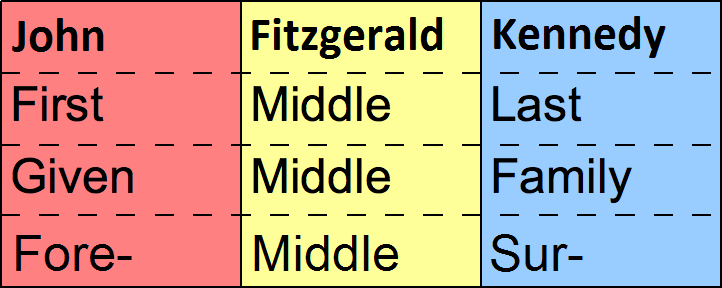
Think about how you will eventually organize your class roster. You will not sort your students by their first names; you will sort them by their surnames. Standard citation formats mandate exactly this: listing the primary author's last name before the first name.
Citation styles dissect standard naming conventions, isolating and prioritizing the surname so that reference lists can be easily sorted and navigated.
Concept Connection: Listing the primary author's last name first allows reference list entries to be organized alphabetically. This ensures that a reader can seamlessly jump from a name mentioned in the body of an essay directly to the correct entry in a massive bibliography.
When research is highly collaborative, listing every contributor becomes unwieldy. To solve this, the Latin abbreviation "et al." is used in citation entries to indicate the presence of multiple additional authors. Translating literally to "and others," it functions exactly like the "and guests" phrasing on a wedding invitation, saving space while acknowledging a broader team.
The Russian Nesting Dolls: Titles and Containers
Once we have the author, we need the name of the work. The title element provides the specific name of the sourced material being referenced. However, titles rarely exist in a vacuum. Most information you read is part of something larger.
To navigate this, scholars use the concept of a container. The container element represents the larger host publication that holds the smaller cited source.
Because of this relationship, citation styles use typography to visually signal to the reader whether a work is a "small doll" or a "large doll."
Shorter Works:Articles, individual book chapters, and specific web pages are categorized as shorter works in citation formatting. To indicate their status as pieces of a larger puzzle, titles of shorter works are traditionally enclosed in quotation marks in MLA citation style.
Larger Works:Books, academic journals, anthologies, and entire websites are categorized as larger, independent works. To indicate their standalone nature, titles of larger, independent works are formatted in italics across major standard citation styles.
If you see "The Impact of Phonics" inside The Journal of Early Childhood Education, you immediately know that the quoted text is the specific article, and the italicized text is the journal container.
Time and Origin: Dates and Publishers
Knowledge is not static. A book on planetary science written in 1985 will confidently declare Pluto a planet; a book written in 2015 will not. Therefore, the publication date element indicates the specific year the referenced source was published or last updated.
How this date is prioritized tells you a great deal about the academic discipline:
APA Style: Because the social sciences prioritize the most current research, the APA citation style places the publication year in parentheses immediately following the author element. The date is treated as the second most important piece of information.
MLA Style: Because the humanities focus on literature and history where the age of a text is less urgent to its validity, the MLA citation style places the publication date near the end of the citation entry after the publisher element.
When dealing with academic journals—which publish new editions continuously, much like a magazinesubscription—we need a way to track the timeline. We do this through volumes and issues.
The Volume: Think of the volume as a student's grade level. The volume number in a journal citation indicates the sequential number of years the journal has been in circulation. If a journal began publishing in 2020, anything published in 2024 belongs to Volume 5.
The Issue: Think of the issue as the specific marking period or month within that school year. The issue number in a journal citation identifies the specific edition released within a given volume.
X Marks the Spot: Location Elements
We have the author, the article title, the journal container, the publisher, and the date. Now, the reader needs to know exactly where to look. The location element of a citation specifies the exact place a reader can find the referenced material within the source.
The location element changes based on the medium of the source:
Print and Static Mediums:Page numbers serve as the standard location element for print sources and static PDF documents.
Standard Internet Sources:A Uniform Resource Locator (URL) acts as the digital location element for a standard internet source. It is the web address in the browser bar.
Online Academic Sources: URLs are notorious for breaking when websites redesign. To fix this "link rot," academia created the DOI. A Digital Object Identifier (DOI) acts as a permanent digital location for an online academic source. It functions like a Social Security Number for a research paper; even if the journal moves to a different web address, the DOI will always redirect to the article.
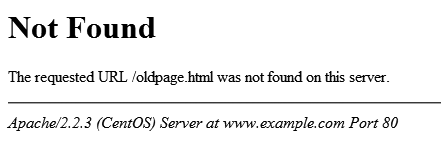
Standard web URLs frequently lead to dead ends when websites change, a frustrating problem known as 'link rot' that permanent DOIs were created to solve for academic research.
The Moving Target: Access Dates
Sometimes, a source does not have a formal publication date, such as a Wikipedia page, a dynamic data dashboard, or a personal blog. These pages can be edited five minutes from now.
To protect your academic integrity, you must capture the source in a specific moment in time. The word "accessed" followed by a calendar date indicates the exact day a researcher viewed a dynamically changing online source. If the page changes tomorrow, your access date proves what the page said when you used it. Therefore, providing an access date is necessary for comprehensive citations of online sources lacking a formal publication date.
All the detailed elements we have discussed so far build the massive entries at the end of a paper—the Bibliography, Works Cited, or References page. But how does a reader reading the actual essay know when an idea belongs to someone else?
They use the breadcrumb trail. An in-text citation is a brief attribution within the body of an essay. It is a shorthand whisper to the reader, saying, "I didn't invent this fact; look at the back of the book for the full details."
Similar to digital breadcrumb navigation menus, an in-text citation provides a shorthand trail that leads the reader directly to the full source information.
The Golden Rule of Citation:Every in-text citation must directly correspond to a full, detailed entry in the final bibliography. You cannot have a breadcrumb that leads nowhere, and you cannot have a bibliography entry that is never mentioned in the text.
Because APA and MLA prioritize different information, their in-text breadcrumbs look different:
Feature
APA (Social Sciences / Education)
MLA (Humanities / Language Arts)
Focus
Author and Time (Currency of data)
Author and Page (Location of text)
Rule
A standard APA in-text citation requires the author's last name and the year of publication.
A standard MLA in-text citation requires the author's last name and the specific page number of the referenced material.
Example
Studies show phonics improves reading speed (Smith, 2023).
The protagonist feels a "deep sense of dread" (Smith 42).
When you sit for the Praxis Core Writing exam, you will not just be asked to identify a dangling modifier or a comma splice. You will be asked to recognize proper research skills. You might see a multiple-choice question asking you to identify which part of a citation is the "container," or why a specific title is italicized while another is in quotation marks.
More importantly, you will soon be the authoritative figure standing at the front of a classroom. When your future high schoolers or middle schoolers turn in a research paper with a chaotic list of URLs instead of a proper bibliography, you will not just dock points. You will be able to explain the architecture of knowledge. You will teach them that formatting the author's last name first, tracing the container, and identifying the exact location element are not chores—they are the vital tools we use to keep human knowledge transparent, organized, and true.