Revision: Word Choice, Style, and Tone
Not sure you’re ready?
Take the ~3-minute readiness diagnostic and see where you stand.
When an optician calibrates a telescope, they do not simply wipe the glass and hope the stars appear clearer; they adjust the focal length, align the mirrors, and eliminate chromatic aberration until the image is razor-sharp. Writing an effective essay—or drafting a clear communication to parents, colleagues, or students—requires the exact same discipline. The initial draft merely points the telescope at the sky. What transforms a blurry, scattered cluster of ideas into a brilliant, undeniable constellation is the deliberate, rigorous manipulation of language. For future educators facing the Praxis Core Academic Skills for Educators exam, mastering this calibration is not merely about passing a test; it is about guaranteeing that the knowledge in your mind survives the perilous journey onto the page and into the mind of your reader.
To fix a piece of writing, you must first know what tool to reach for. Writers often conflate revision and editing, but they are entirely different intellectual exercises.
Revision is the process of improving the overall content, organization, and focus of a piece of writing. Think of revision as moving the walls in a house. It involves large-scale choices: Does this paragraph belong here? Is my central argument sound? One highly effective method to establish the logical flow during this macro-level stage is the use of transitional words. These words and phrases clarify the logical relationships between sentences and paragraphs. Therefore, adding appropriate transitions is a key strategy for strengthening a passage during revision.
Editing, on the other hand, is the process of correcting sentence-level errors such as grammar, punctuation, and word choice. If revision is moving the walls, editing is fixing a leaky faucet or painting the trim. Once the foundational logic is sound, we zoom in on the exact phrasing to ensure it functions perfectly.
Every word you write carries a specific weight. The sum of these choices is known as diction, which refers to the specific word choices a writer makes to convey meaning and establish a specific tone.
To manipulate diction effectively, you must understand two properties of language:
- Denotation is the literal, dictionary definition of a specific word.
- Connotation refers to the emotional or cultural associations attached to a word beyond the literal definition of that word.
Imagine you are writing a note home to a parent. Describing a student as curious versus nosy relies entirely on connotation. Both words share a similar denotation (an interest in finding out information), but "curious" carries a positive, intellectual connotation, while "nosy" carries a negative, intrusive connotation.
Writers strengthen passages by replacing vague words with precise, descriptive vocabulary. Furthermore, replacing excessive adjectives and adverbs with strong, specific nouns and verbs improves sentence clarity. Instead of writing, "The student ran really fast to the cafeteria," write, "The student sprinted to the cafeteria." By swapping a weak verb and an adverb ("ran really fast") for one precise verb ("sprinted"), the sentence becomes sharper. Similarly, replacing forms of the verb "to be" with active, descriptive verbs strengthens sentence engagement.
In physical systems, energy lost to friction is wasted. In writing, energy lost to unnecessary words drains the reader's attention.
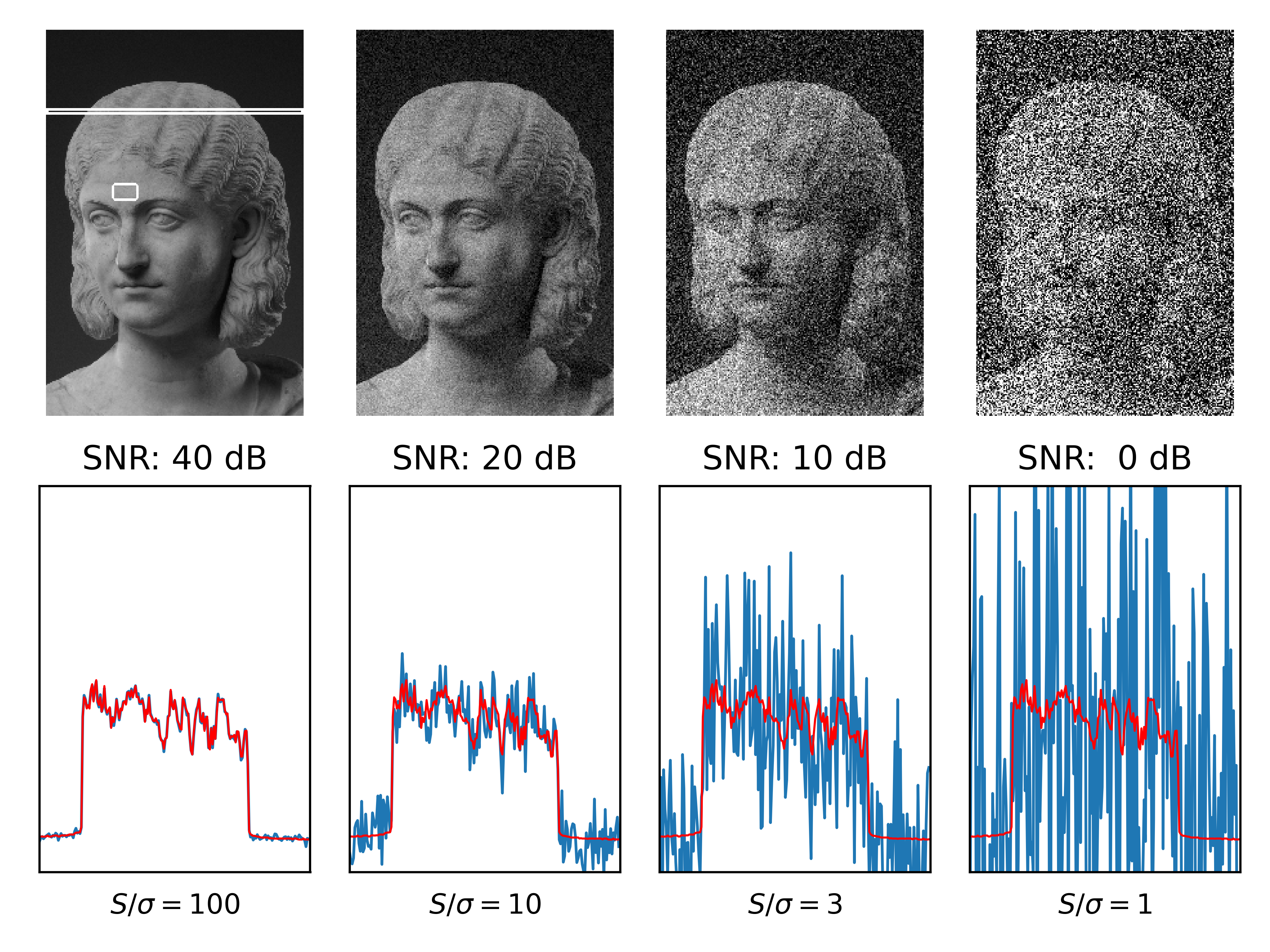
Editing for wordiness involves removing unnecessary words to make a sentence more concise. A specific subset of this is redundancy, which occurs when a writer unnecessarily uses multiple words that share the same meaning.
Example: The phrase "past history" is an example of a redundant phrase. Because all history is inherently in the past, the word "past" adds zero information. It is linguistic friction.
Similarly, we must ruthlessly hunt down and eliminate clichés. Clichés are overused expressions that have lost their original impact. If you write that a new teaching initiative is "thinking outside the box," your reader's brain glosses over it. Writers should edit out clichés in favor of original, precise phrasing.
This brings us to the danger of the mixed metaphor, which occurs when a writer combines two incompatible metaphorical expressions. For example, "We need to iron out the bottlenecks before this project gets off the ground." You are simultaneously doing laundry, managing traffic, and flying an airplane. Mixed metaphors cause logical confusion and should be corrected during the editing process.
If diction is the bricks, style is the architecture. Style refers to the distinctive way a writer uses language. A writer's style encompasses sentence structure, syntax, and vocabulary choices.
Closely related is tone, which is the writer's attitude toward the subject matter or the audience. A writer establishes tone primarily through diction and sentence structure.
The Praxis Writing exam—and the professional world of education—demands a specific register. Academic writing generally requires a formal and objective tone.
- A formal tone avoids slang, colloquialisms, and conversational language.
- An objective tone avoids personal bias and highly emotional language.
When drafting, a writer might accidentally slip out of this register. A tone shift occurs when a writer abruptly changes the attitude or level of formality within a single text. If you are writing an analytical essay on educational policy and suddenly declare, "The school board's decision was totally bonkers," you have committed a tone shift. Replacing informal phrases with academic vocabulary corrects inappropriate tone shifts in formal essays. Maintaining a consistent tone prevents reader confusion and preserves your authority.
Knowing Your Audience: Colloquialisms and Jargon
When maintaining a formal tone, there are two distinct traps to avoid, depending on who your reader is:
- Colloquialisms are informal words or phrases typically used in everyday conversational speech (e.g., "gonna," "y'all," "hanging out"). Colloquialisms should generally be avoided in formal academic essays.
- Jargon refers to specialized terminology used exclusively by a specific profession or group. As educators, we use jargon constantly: IEP, pedagogy, formative assessment, scaffolding. However, using excessive jargon can alienate general audiences. If you are writing an essay meant for the general public, using the term "pedagogical differentiation" instead of "adapting lessons for different learners" creates a barrier.
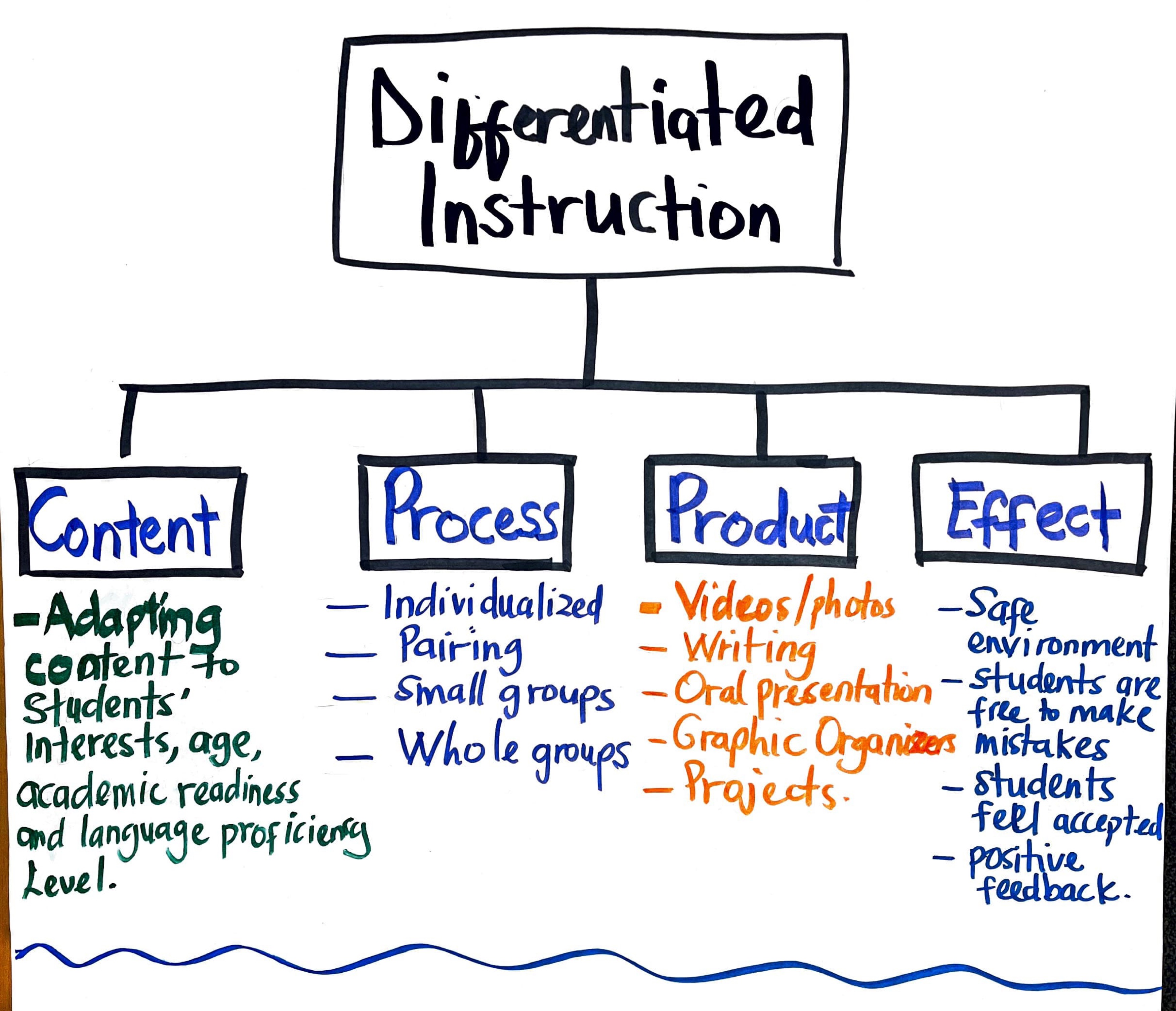
Let us look at the internal mechanics of a sentence. A sentence is a transfer of energy from a subject to an object.
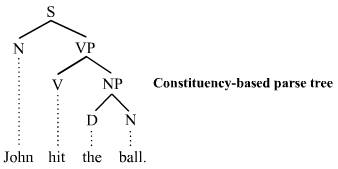
Active voice occurs when the subject of a sentence performs the action expressed by the verb. (e.g., The teacher graded the exams.) Active voice typically makes sentences clearer and more direct than sentences written in the passive voice.
Passive voice occurs when the subject of a sentence receives the action expressed by the verb. (e.g., The exams were graded by the teacher.) Notice the mechanics: The passive voice is constructed using a form of the verb "to be" and a past participle. Furthermore, the preposition "by" often indicates the actor in a passive voice sentence.
Does this mean the passive voice is inherently wrong? No. Passive voice is appropriate when the actor performing the verb is unknown (e.g., The school's window was broken overnight.) Furthermore, passive voice is appropriate when the action itself is more important than the person performing the action (e.g., The new educational standards were adopted nationwide.) But as a default, active voice propels your writing forward.
Sentence Variety and Parallelism
Even if every sentence is grammatically perfect and written in the active voice, reading fifty identical sentences in a row is exhausting. Sentence variety involves using a mix of different sentence lengths and sentence structures. Varying sentence structures prevents writing from sounding monotonous or robotic.
Finally, when you present a list of ideas within those sentences, you must maintain structural balance. Parallel structure involves using the same grammatical form for elements in a list or comparison.
- Not Parallel: The new curriculum focuses on reading, to write, and mathematics.
- Parallel: The new curriculum focuses on reading, writing, and arithmetic.
Editing for parallel structure improves the rhythm and readability of sentences. It aligns your thoughts mathematically, allowing the reader's brain to process the list without stumbling over mismatched syntax.
Mastering revision, diction, style, and tone is not about memorizing arbitrary rules. It is about respecting your reader's time and attention. When you edit rigorously, you strip away the static, allowing the pure signal of your intellect to shine through.