Transfer of Title on the Arizona Real Estate Salesperson Exam: What's Tested and How to Study It
In short
Transfer of title covers how ownership legally moves from one person to another: the deed that carries it, the recording that protects it, the title search that proves it, and the forced transfers that follow a default. It carries 4 scored questions on the General exam and a further 8 across two Arizona State areas. We suggest about 4 hours on it.
What makes a deed valid, and what recording adds
A deed is the instrument that transfers ownership. Title is the ownership itself. The exam keeps separating these two, so hold them apart: you hand over a deed, and by handing it over you pass title. Alienation is the word the outline uses for that transfer, and it means nothing more than ownership changing hands.
The outline lists the elements of a valid deed as a tested item, so learn them as a set. A deed needs a competent grantor — of legal age and sound mind — and a grantee named clearly enough to be identified. It needs a granting clause, which is where the grantor states the transfer in words like "grant and convey". It needs a legal description good enough to locate the property, and the grantor's signature. Deeds normally recite consideration, often a nominal sum, though a gift deed with no real consideration behind it still transfers ownership. Two acts then finish the job: delivery by the grantor and acceptance by the grantee. The grantee does not need to sign, but a signed deed that is never delivered transfers nothing.
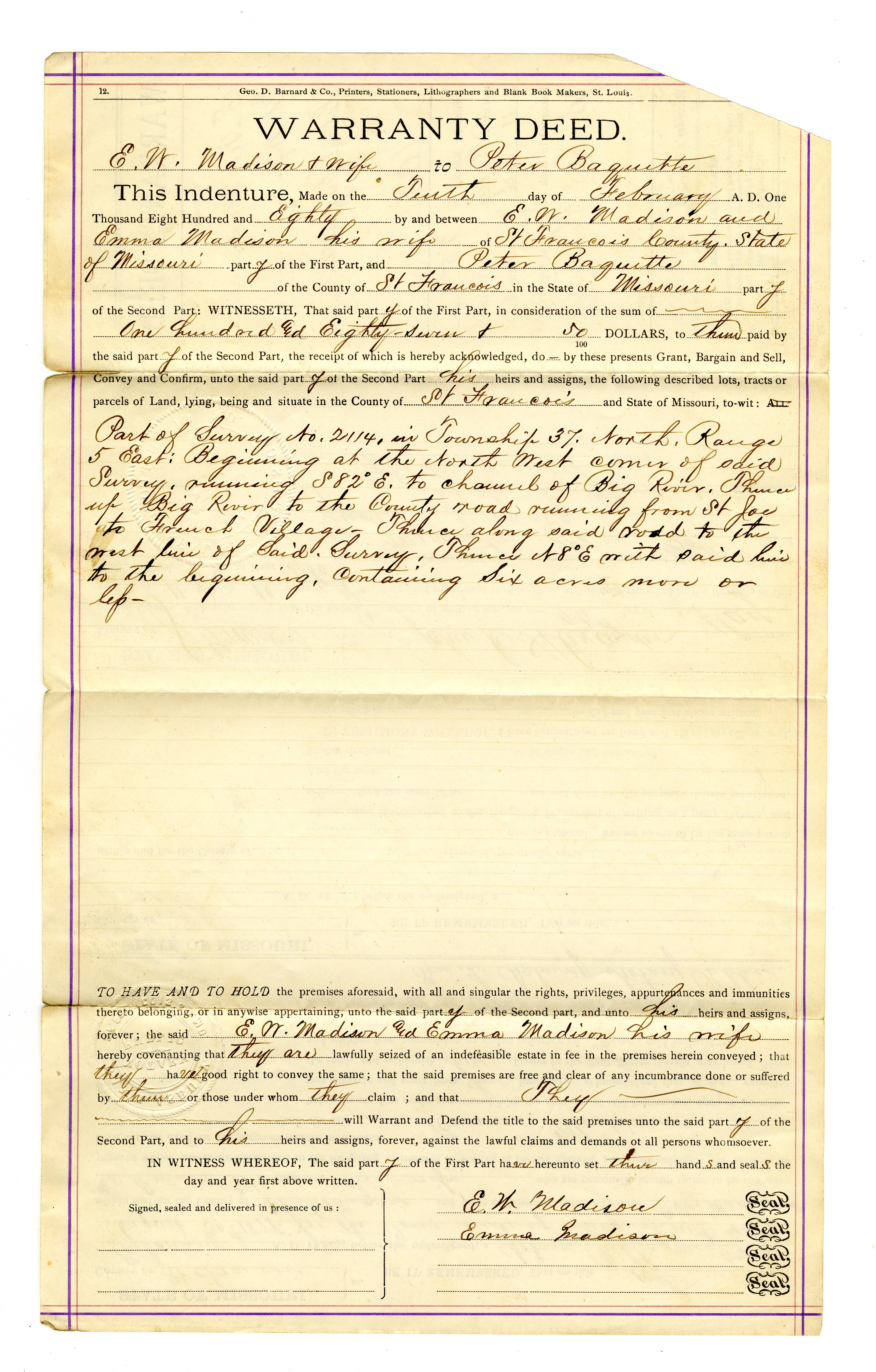
Deeds differ by how much the grantor promises, and that ladder of protection is what deed questions test. A warranty is a promise about the title: that the grantor owns the property, has the right to sell it, that no undisclosed encumbrances sit against it — an encumbrance being any claim on the property short of ownership, such as a mortgage, a tax lien or an easement — that the buyer's possession will not be disturbed by someone with a better claim, and that the grantor will defend the buyer if such a claim appears.
A general warranty deed makes all of those promises and extends them back through every owner in the property's history. Arizona's statute of short deed forms, ARS 33-402, captures it in one phrase: a conveyance becomes a general warranty by adding the words "and I warrant the title against all persons whomsoever". A special warranty deed makes the same promises but limits them to the grantor's own period of ownership, leaving anything that went wrong before they arrived outside the guarantee — an instrument Arizona recognizes by usage, with no statutory short form of its own. A quitclaim deed promises nothing. It passes whatever interest the grantor happens to hold, which may be none. That is why quitclaims are used to clear a doubtful claim off the record or to move a share between divorcing spouses.
Arizona adds one deed worth knowing by name. A beneficiary deed under ARS 33-405 lets an owner name someone to receive the property on death, and the transfer takes effect only then. It has to be recorded before the owner dies to work at all, and the owner can revoke it at any time — also by recording — which is what keeps it different from a gift made during life.
Transfers also split by whether the owner agreed. Voluntary alienation is a sale or a gift by deed, or a transfer by will after death. Involuntary alienation happens without consent: adverse possession, where someone who occupies land openly and continuously for a period set by statute can claim ownership of it; eminent domain, the government's power to take private property for public use on payment of compensation; escheat, where property passes to the state when an owner dies with no heirs; and foreclosure. Probate is the court process that supervises a deceased person's estate, so it carries out a transfer by will on the voluntary side, and administers intestate succession — death without a will — on the involuntary side.
Recording and validity are two different things, and the exam tests the gap between them. Recording a deed at the county recorder's office does not make it valid, since a delivered deed is good between grantor and grantee whether or not anyone records it. What recording does is give constructive notice: the legal presumption that the whole world knows what the public record says, whether or not anyone looked. Actual notice is what a person knows.

That distinction settles the double-sale problem — where a dishonest seller deeds the same property to two buyers. Arizona answers it in two subsections of statute. Under ARS 33-412(A) an unrecorded conveyance is void against creditors and against later purchasers who pay value and have no notice of it. Under ARS 33-412(B) that same unrecorded deed stays valid and binding between the original parties and against anyone who did know about it. So the property goes to the buyer who paid value, searched the record, found nothing, and recorded. Knowledge of the earlier sale destroys that protection.
One Arizona filing requirement sits on top of all this. Under ARS 11-1133 most deeds must have an affidavit of legal value attached when they are recorded — the form that reports the sale price and terms — and the county recorder will refuse a deed that arrives without one, unless the deed is marked with a statutory exemption. Gifts, court-ordered conveyances, leases and quitclaims used to quiet title are among the exempt transfers.
The public record is what a title search reads. Following the successive owners backward produces the chain of title, and an abstract of title is the written summary of everything the search turned up. What a buyer wants at the end is marketable title — title clear enough that a reasonable buyer would accept it without fear of litigation. Anything casting doubt on it is a cloud on title, and a quiet title lawsuit is the court action that clears one. Title insurance then covers what the search might have missed. An owner's policy protects the buyer for as long as they hold an interest; a lender's policy protects the lender for the outstanding loan balance. Both are a one-time premium paid at closing.
Forced transfers
Forced transfers are the last thread, and Arizona gives them their own content area. Foreclosure is the process by which a lender forces a sale after a borrower defaults.
The instrument matters here. A deed of trust is Arizona's standard security document for a home loan, and it has three parties rather than two: the borrower conveys title to a neutral third party, the trustee, who holds it until the loan is paid. That third party is what lets a lender force a sale without going to court. A judicial foreclosure runs through the courts; a non-judicial foreclosure runs under a power-of-sale clause in the deed of trust, with the trustee conducting the sale. Arizona law preserves both routes, and the deed of trust is the standard Arizona security instrument.
Four Arizona numbers are worth memorizing here.
A trustee's sale cannot be held before the 91st day after the notice of sale is recorded (ARS 33-807). That clock runs from the recording of the notice, not from the default →
the borrower can stop the sale by paying what is owed and curing the default, up to 5:00 p.m. on the last business day before the sale (ARS 33-813) →
once the sale happens the winning bidder takes a trustee's deed, which passes clear of subordinate claims — the ones ranking below the foreclosing loan (ARS 33-811).
Redemption is the separate right of a former owner to buy the property back after the sale by paying the debt and costs. After an Arizona trustee's sale there is no right of redemption at all. After a judicial foreclosure there is one, generally six months from the sale, though a court finding that the property was abandoned shortens it.
Two alternatives let a borrower avoid the process: a short sale, where the lender agrees to accept less than the loan balance from a sale to a third party, and a deed in lieu of foreclosure, where the borrower conveys the property straight to the lender. When a sale brings less than the debt, the shortfall is a deficiency. Arizona's anti-deficiency statute, ARS 33-814(G), blocks the lender from chasing it when the property is two and a half acres or less and is "limited to and utilized for" a single one-family or single two-family dwelling — so a house or a duplex used as a dwelling meets the test, while a triplex falls outside it. For loans originated after 31 December 2014 the protection falls away if the dwelling was never substantially completed or never actually used as a dwelling, which closes it to unfinished and builder-held homes.
How it shows up on the exam
On the General exam this material sits in area II, "Forms of Ownership, Transfer, and Recording of Title", worth 9 scored questions. Four of those belong to the transfer-and-recording subsection; the other five cover ownership forms and estates. Arizona then tests the same ground from the state side:
| Exam | Content area | Scored questions |
|---|---|---|
| General | Deed, title, transfer and recording (within area II) | 4 |
| Arizona State | Ownership and Encumbrances, including deeds | 5 |
| Arizona State | Foreclosure, short sale and deed-in-lieu process | 3 |
That is the 12 questions this guide is sized against. Two neighbouring areas overlap the material without belonging to it, so we have not counted them: the other five questions in General area II cover ownership forms and estates, and the Arizona State area on critical business services — escrow, title insurance and lending — carries 5 of its own, of which only the title-insurance slice is touched here.
Foreclosure earns a whole Arizona content area, which the national exam folds into a single subsection.
Four hours is our own figure; the board publishes no study-time guidance. Four study topics carry it:
- types of deeds
- title searches, insurance and marketable title
- the closing process, recordation and warranties
- foreclosures, short sales and probate transactions
Work it in this order:
Learn the elements of a valid deed until you can list them cold, since every deed question assumes them →
rank the deed types by how much the grantor warrants, from general warranty down to quitclaim →
sort the transfer methods into voluntary and involuntary →
finish on recording, notice and the foreclosure trio, where the trick questions live.
Common questions
What is the difference between a deed and title? The deed is the document that transfers ownership. Title is the ownership. You sign and deliver a deed; you hold title.
Does a deed have to be recorded to be valid? No. A properly executed and delivered deed transfers ownership between the parties without recording. Recording protects the new owner against later claims by giving constructive notice to everyone else.
Which deed gives a buyer the most protection? A general warranty deed, because its promises reach back through the property's entire ownership history.
What is the difference between a short sale and a deed in lieu? In a short sale the property is sold to a third party for less than the loan balance, with the lender's agreement. In a deed in lieu, the borrower hands the property directly to the lender and no sale takes place.
How long does an Arizona trustee's sale take? The sale cannot be held before the 91st day after the notice of sale is recorded. A borrower can reinstate the loan up to 5:00 p.m. on the last business day before that sale, and once the sale is held there is no right of redemption.
When can a lender pursue the shortfall after a foreclosure? On the exam, not where the anti-deficiency statute applies. ARS 33-814(G) removes the deficiency where the property is two and a half acres or less and is limited to and used as a single one-family or two-family dwelling. Loans originated after 2014 lose that protection if the dwelling was never substantially completed or never used as a dwelling. This is exam material rather than advice about any particular loan, and the statute turns on facts specific to each property.
How many questions cover this on the Arizona exam? Four scored General questions sit in the transfer-and-recording subsection, inside a 9-question area. The Arizona State exam adds 3 on foreclosure, short sales and deeds in lieu, plus deeds within its 5-question ownership area.
What score do I need to pass? 75% of the scored questions, with the General and State exams scored separately.
When a question describes a transfer, find the grantor's promise before you read the answer options — the warranty level tells you what the grantor is on the hook for, which is the axis most of these items turn on. Our full question bank and study guides for this exam are free, where the big providers charge for them. Try the free practice questions.