Maternal-Child Nursing on the NHRA Nursing Licensing: What's Tested and How to Study It
In short
If you trained on adult patients, this is the domain where your instincts are the wrong ruler. Maternal-Child Nursing spans five topics in Only Ever's map of the NHRA nursing licensing exam, running from pregnancy through childhood. Learn each one against the norms that apply to a pregnant patient, a newborn or a growing child. We allow the domain 45 hours.
The big ideas
Five topics sit inside this domain: Maternity Nursing, Gynecology, Neonatal Nursing, Pediatric Medical and Pediatric Surgical. The grouping is Only Ever's own, scoped from a standard nursing curriculum and NHRA's Scope of Nursing and Midwifery Practice.
Read in order, they are one story: a pregnancy, a birth, a first breath, a childhood. Study them in that order, grouped by developmental stage, and ask at each stage what counts as normal there.
Pregnancy moves the baseline
Begin with the placenta, because a lot of maternity nursing hangs off it. Maternal blood pools in a space around the fetal villi, and oxygen, nutrients, waste, antibodies and most drugs cross there. The two circulations trade across that membrane without ever mixing.
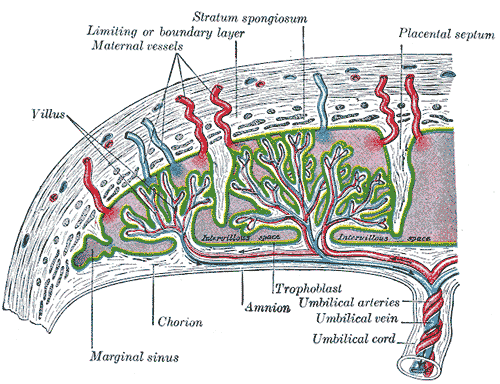
Once that exchange is running, the mother's own physiology adapts to supply it. Plasma volume expands, so her hemoglobin concentration can fall while her total red cell mass rises. The heart works harder and faster. The growing uterus presses the diaphragm upward and crowds the stomach, so breathlessness and reflux are expected findings here. Blood clots more readily, which protects her at delivery and raises her risk in the weeks around it.
Each of those adaptations has a clinical consequence you can reason out. Slower gastric emptying is why a pregnant patient going for anesthesia is treated as a full stomach. Calf pain late in pregnancy gets taken seriously because of that same change in clotting.
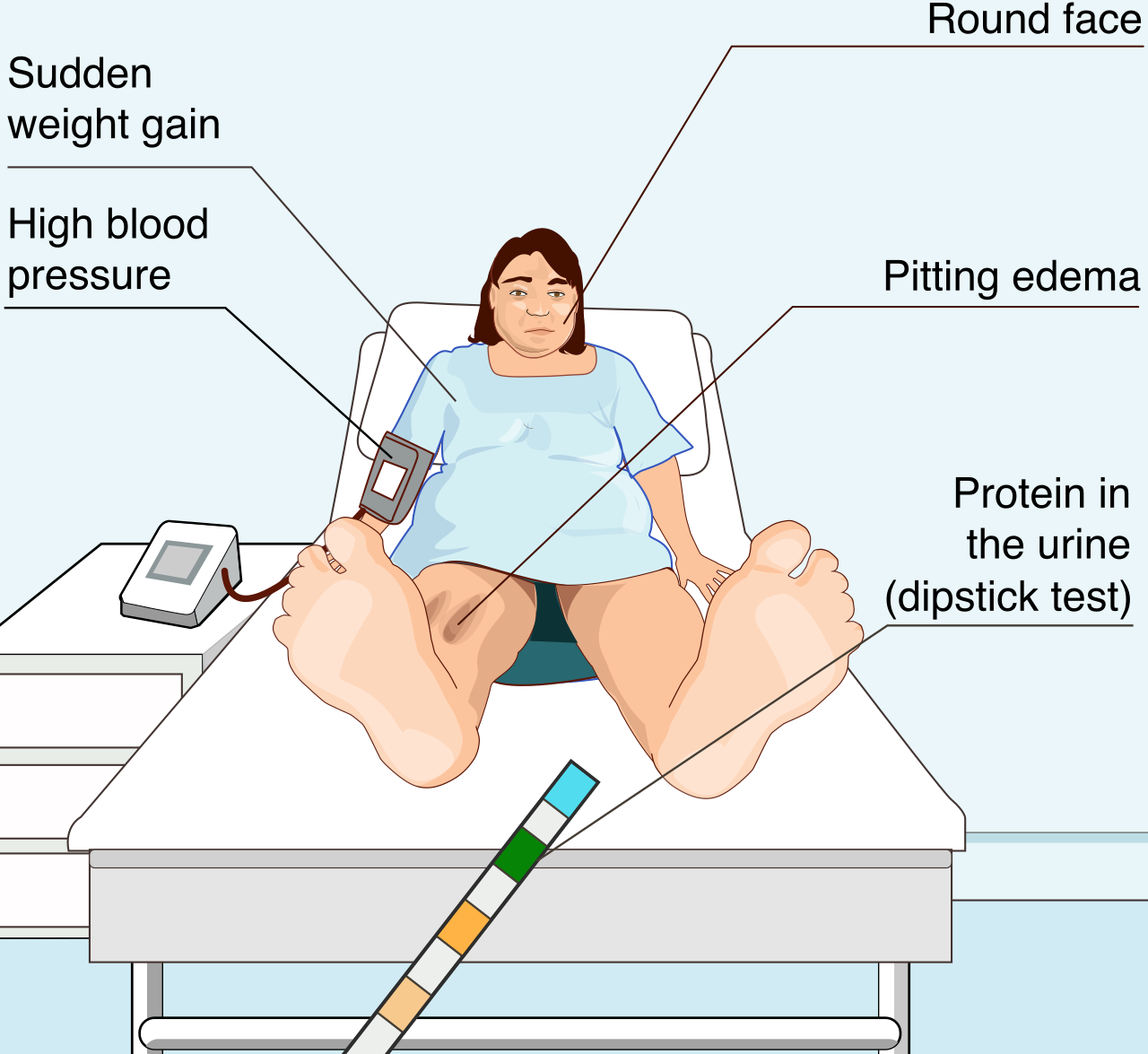
Hypertensive disease in pregnancy opens up once you treat it as a blood vessel problem. The vessel lining stops working properly, vessels constrict, and the organs downstream suffer. The kidneys leak protein, the liver capsule stretches and hurts, the brain becomes irritable, and the placenta itself gets underfed. The blood pressure reading is the sign that brings the patient in.
Labor, in the order it happens
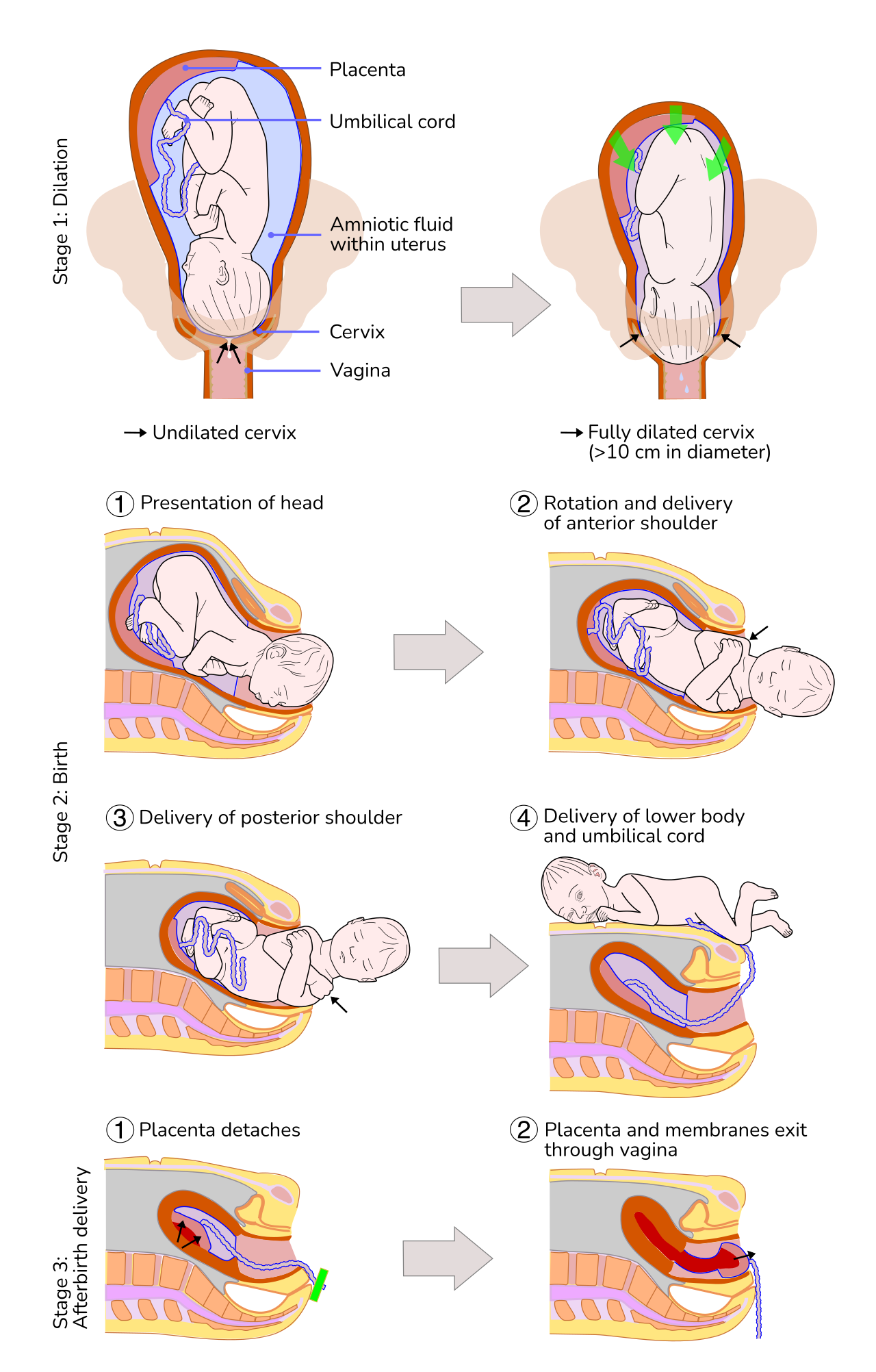
Memorize the stages of labor as a sequence, and attach to each one what the nurse is watching:
the cervix softens, thins and opens while contractions build — you are tracking her progress and the baby's tolerance of it →
the mother pushes and the baby is delivered — breathing and warmth make the newborn a second patient →
the placenta separates and is delivered — the check is that it came away complete →
the uterus clamps down on the vessels that fed it — bleeding is the thing you are watching now.
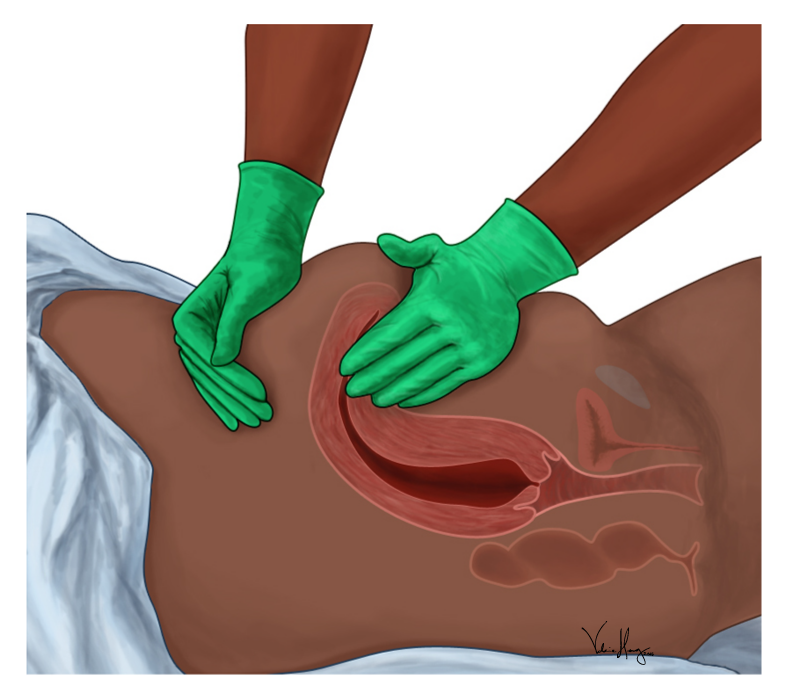
That last step is the one to understand properly. The placental site is an open wound with the mother's full circulation behind it, and muscle contraction is what closes it, so a uterus that stays soft keeps bleeding. That single fact explains why the fundus is checked and rubbed after delivery. It is also why a full bladder matters enough to be a nursing intervention, and why blood loss after birth is quantified by weight and volume.
Gynecology covers the rest of the lifespan
Gynecology holds together around the hormonal cycle, because so many of its presentations are a variation on it. The ovary and the pituitary run a feedback loop, hormone levels rise and fall in a pattern, and the lining of the uterus builds and sheds in response.
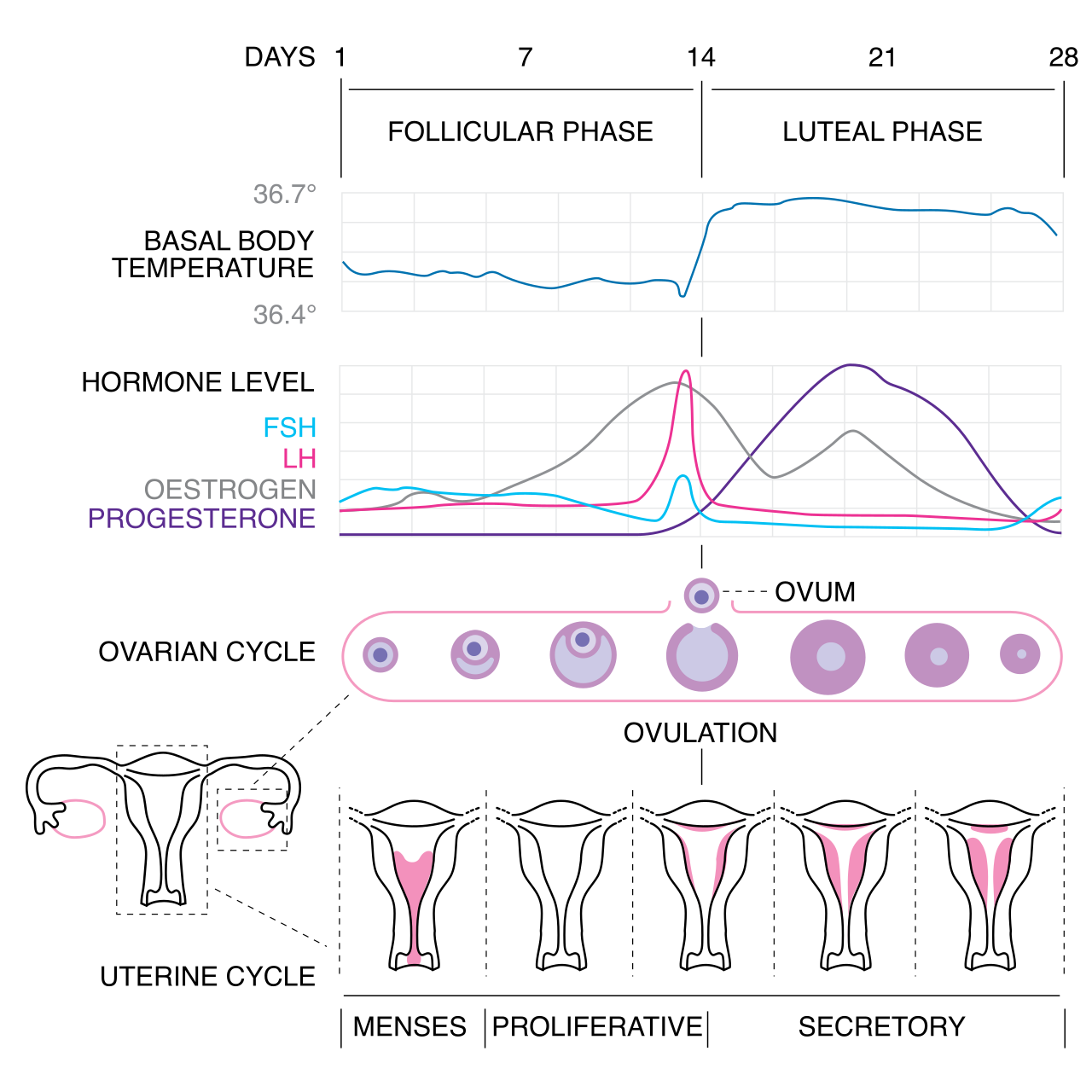
With that pattern clear, the complaints become easier to place. Bleeding that is too heavy, too long, or badly timed within the cycle is a question about that loop or about the structures it acts on. Pain that tracks the cycle points back at the loop itself. Discharge and pelvic infection bring their own reasoning, from the route an infection takes upward to the counseling that goes with it.
Screening and prevention sit here too, and the nursing role runs past the procedure: explaining what the test looks for, and what happens next. Contraception is the same kind of teaching work, matching a method to the life the patient is living.
The newborn's first minutes
Birth is a physiological switch. In the womb the lungs are fluid-filled and largely bypassed. At birth they inflate, pressures reverse, and the fetal shunts that diverted blood around them close. Warmth matters immediately, because a newborn loses heat fast and burns energy making more.
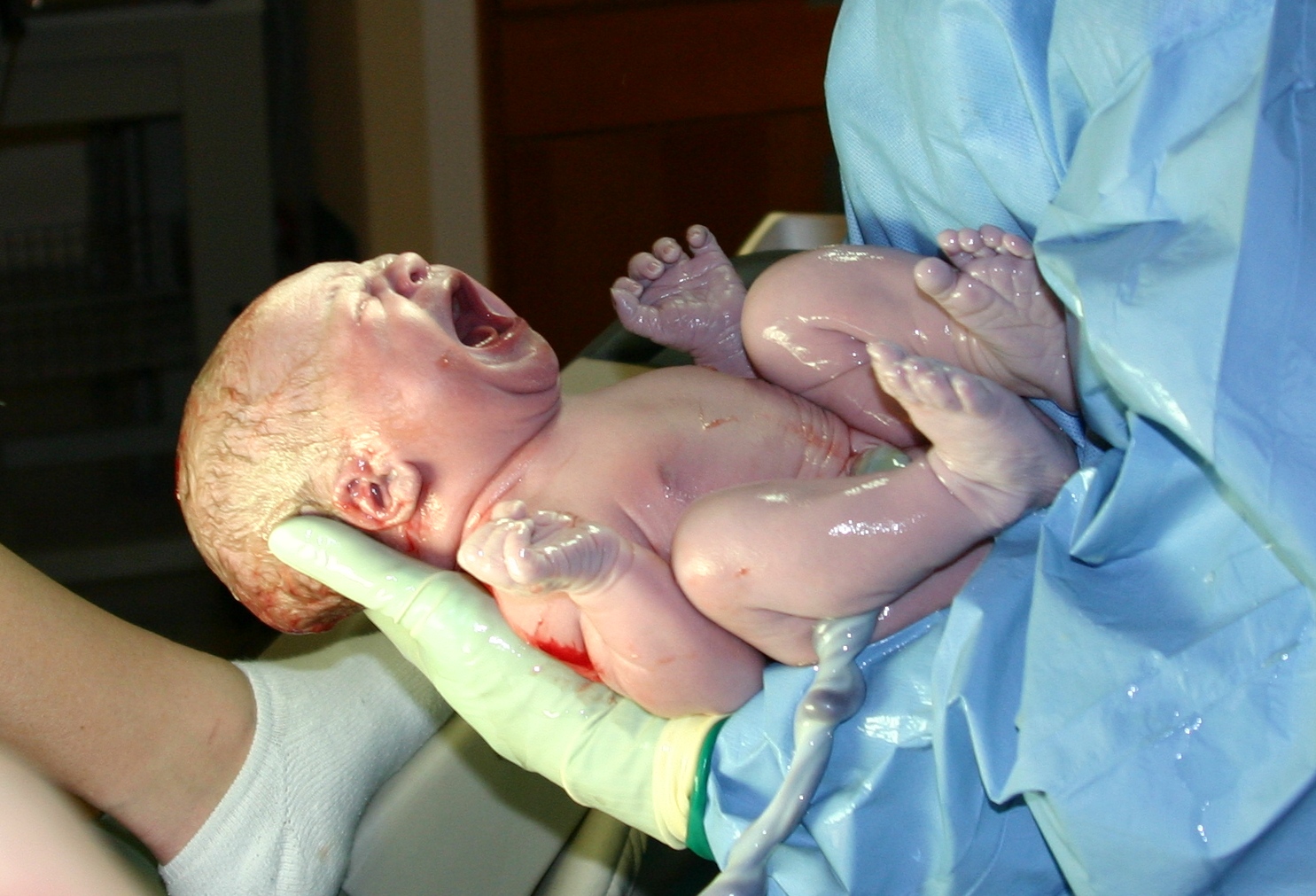
Most of neonatal nursing follows from that transition. Airway and breathing lead. Temperature is a nursing intervention. Feeding, weight, blood sugar, jaundice and infection risk are the recurring themes, and the assessment skill underneath them is spotting the newborn who is struggling early.
Children get their own numbers
Pediatric medical and pediatric surgical nursing ask you to re-scale what you already know. The dose depends on the child's weight. Fluid volumes are calculated by weight too. The airway is smaller and swells more easily, so a degree of inflammation an adult would shrug off can obstruct it. Vital signs have age-specific ranges. A child compensates well for a long time and then deteriorates quickly.
Two things in this topic reward straight memorization: the standard immunization schedules, and the rules for adjusting medication to pediatric patients. The rest can be reasoned from development. A toddler's fear of separation, a school-age child's need to be told what is coming, an adolescent's need for privacy — each changes the care plan as much as the diagnosis does.
Surgical care for children adds the family to every stage. Preparation is developmental. Fasting rules are harder on a small child. Pain assessment uses tools matched to age, and recovery is measured in feeding, playing and behavior returning to what the parents call normal.
How it shows up on the exam
Nobody outside NHRA can tell you how many Maternal-Child Nursing questions you will see. NHRA publishes no content blueprint and no question count for this exam, and Prometric publishes neither. So the plan below is built on hours. What NHRA does publish sits on its licensure exams page.
What Only Ever publishes is an hours recommendation. We allow 45 hours for Maternal-Child Nursing across its five topics, which starts everyone at 9 hours each. Against a full-syllabus plan of 150 hours, the domain takes 30%. That 30% is our judgment about where your effort goes, not a weighting NHRA has ever published. The practice questions and study guides behind the plan are free.
How to spend the 45 hours:
group your sessions by developmental stage, so prenatal, neonatal and pediatric norms get learned against the adult ones →
bank the pure recall early — the standard immunization schedules, the pediatric medication adjustments, the stages of labor →
work the reasoning topics as whole cases, one patient carried from admission to discharge →
close each topic with scored practice questions, and let the scores move the hours you have left.
Two questions tell you whether the 45 hours have landed. Can you walk a pregnancy through trimester by trimester, naming what changes physiologically in each, and put the stages of labor in order? And can you take an adult intervention and re-scale it for a child's anatomy and stage of development?
One caution shapes how you plan all of it. The pass mark is disputed. Two official sources give a nurse different figures: 50% in NHRA's licensure-examination booklet, and 60% on Prometric's NHRA page, which applies that number to every Bahrain licensure exam. Ask NHRA which one governs your sitting, at licensure@nhra.bh or nursing@nhra.bh. Revise toward 60% until they answer.
Common questions
How many maternal-child questions are on the NHRA nursing exam? No official count exists, for this domain or any other, so a per-topic target is not something you can study toward. The clock is published, though: a three-hour seating, of which 2.5 hours are testing.
Is 30% NHRA's official weight for this domain? No. The 30% is Only Ever's own study-hour allocation — 45 hours out of 150 — scoped from a standard nursing curriculum and NHRA's Scope of Nursing and Midwifery Practice.
How should I split 45 hours across the five topics? Nine each is a starting position. Sit a scored set across all five topics, then move hours out of the ones you cleared comfortably and into the ones you did not.
How much immunization detail do I need? Know the standard schedules cold. That material is pure recall, which makes it the cheapest thing in the domain to learn, and our study advice for this topic names it directly.
Is gynecology part of a maternal-child domain? In this curriculum, yes. Gynecology is one of the five topics here, alongside maternity, neonatal, pediatric medical and pediatric surgical nursing.
When should I request my eligibility code? The eligibility code comes from NHRA, through its Mehan portal. It lasts four months and buys one attempt. Our full plan runs 21 weeks, a little under five months, so a code requested in week one expires before you sit. Start studying first, and apply once your intended date is inside four months.
Our practice questions and study guides for this exam are free, including the AI-generated sets other providers charge for. Try the free practice questions and mark them topic by topic. If the pediatric items are the ones coming back wrong, you have found an adult reflex that needs unlearning. The exam page carries a study guide for each of the five topics.