Network Cost Optimization
Not sure you’re ready?
Take the ~3-minute readiness diagnostic and see where you stand.
Imagine a vast, globally distributed pipeline system where resources flow into your central reservoir entirely free of charge, but every single drop pumped back out to the surrounding world passes through a highly precise, tiered meter. This is the fundamental economic physics of the AWS network. For solutions architects, designing a cloud network is not merely about ensuring packets successfully reach their destination; it is about plotting the exact trajectory of those packets to avoid invisible, accumulating tolls. Every architectural decision—whether data crosses an availability boundary, traverses a managed egress gateway, or resolves via a specific DNS record—carries a distinct financial weight. Mastering network cost optimization requires us to visualize the meters attached to AWS resources and manipulate routing, peering, and caching to keep data flowing through the most economically advantageous channels.
To understand AWS networking costs, we must start with the baseline realities of how data enters and exits the cloud.
The most beautiful rule in AWS networking is that AWS does not charge for data transfer into AWS from the internet. Whether your users upload a megabyte or a petabyte of raw video files into your Virtual Private Cloud (VPC), the ingress itself is effectively free.
The meter only spins when data leaves. AWS charges for data transfer out from AWS to the internet based on tiered pricing. As your outbound volume increases, the cost per gigabyte steps down, but it remains one of the most significant line items on a cloud bill. Therefore, the grand, overarching strategy of network cost optimization is simple: minimizing traffic traversing the internet reduces AWS data transfer outbound costs. Every optimization we discuss below is a localized application of this single, unifying concept.
Inside an AWS Region, your architectural choices dictate whether your data travels for free or incurs a micro-tax on every gigabyte.
Think of an Availability Zone (AZ) as a discrete, physical building. Data transfer between Amazon EC2 instances in different Availability Zones within the same region incurs a cost per gigabyte. You are crossing the street, and AWS charges you for using the municipal fiber connecting those buildings.

However, if you keep your instances in the same building, the rules change—provided you use the right doors. Data transfer between Amazon EC2 instances in the same Availability Zone using private IP addresses is free of charge. This is the optimal state. Keeping AWS network traffic within a single Availability Zone using private IP addresses minimizes data transfer costs.
But here is where many practitioners stumble. What happens if two instances sit in the exact same AZ, but they communicate using their public IP addresses? Because the traffic must logically route out toward the internet gateway and back in, data transfer between Amazon EC2 instances in the same Availability Zone using public IP addresses incurs standard data transfer charges. It is the architectural equivalent of taking a commercial flight to visit the neighbor living in the apartment next to yours. Always route internally via private IPs.
When your private subnets need to download patches or communicate with external APIs, they require Network Address Translation (NAT). AWS offers two primary vehicles for this: the Managed NAT Gateway and the EC2 NAT Instance. Choosing between them requires balancing operational overhead against distinct pricing dimensions.
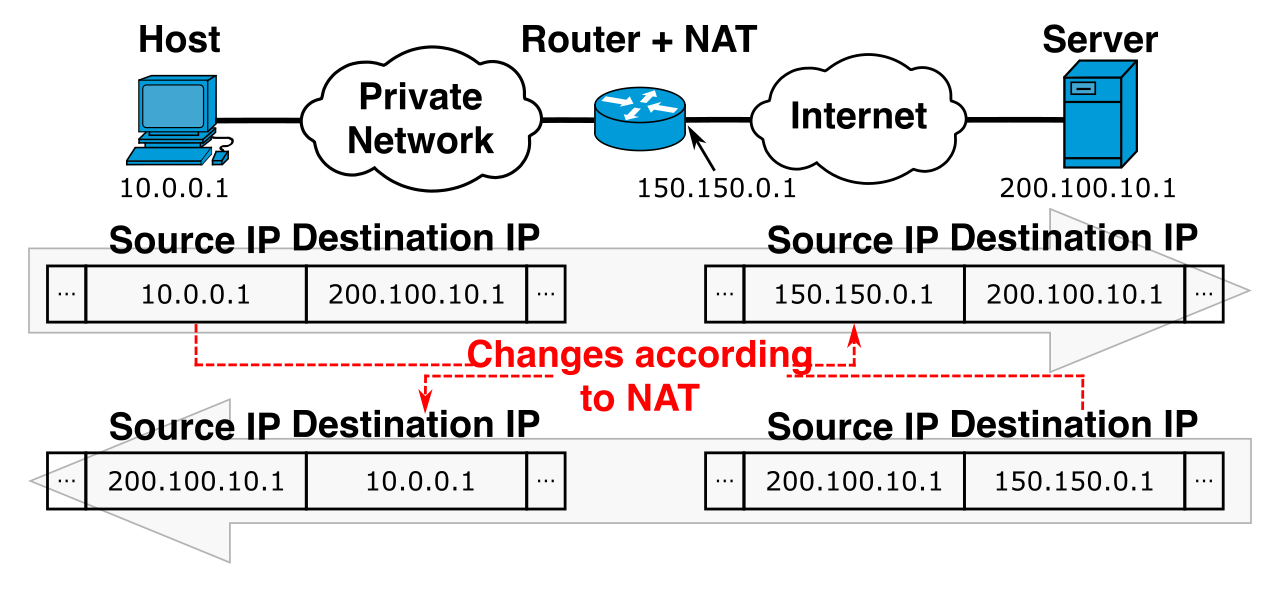
A Managed NAT Gateway incurs an hourly charge for each hour the NAT Gateway is provisioned, alongside a per-gigabyte data processing charge for all data passing through the NAT Gateway. It scales beautifully, handles massive throughput natively, and requires zero maintenance.
Conversely, an EC2 NAT Instance incurs standard Amazon EC2 instance hourly compute charges based on its size, plus standard AWS internet outbound data transfer charges. It requires you to manage the operating system, handle high availability, and monitor bandwidth constraints.
So, when do we use which?
| NAT Solution | Pricing Model | Optimal Use Case |
|---|---|---|
| Managed NAT Gateway | Hourly uptime rate + Per-GB processing fee | High-bandwidth sustained internet workloads. It is more cost-effective and operationally efficient at scale. |
| EC2 NAT Instance | EC2 Compute rate + Standard Outbound fee | Workloads with very low or intermittent outbound internet traffic. It avoids the fixed hourly premium and per-GB processing fee of the managed service, making it typically more cost-effective for these lightweight scenarios. |
If we accept that NAT Gateways charge a per-gigabyte processing fee, we must hunt down unnecessary traffic flowing through them. The most common culprit is AWS API traffic—specifically to Amazon S3 and Amazon DynamoDB.
Crucial Concept: Routing Amazon S3 or Amazon DynamoDB traffic through a Managed NAT Gateway incurs unnecessary NAT Gateway data processing charges. You are paying a premium to route AWS-bound traffic out to the internet just to come right back into the AWS network.
AWS provides a brilliant solution to this: the Gateway Endpoint. VPC Gateway Endpoints for Amazon S3 and Amazon DynamoDB are provided at no additional hourly or data processing charge. They act as a wormhole, routing traffic from your private subnet directly to the S3 or DynamoDB service fabric. Therefore, replacing a Managed NAT Gateway with a VPC Gateway Endpoint for S3 or DynamoDB eliminates NAT Gateway data processing charges for that traffic.
For other AWS services (like SQS, SNS, or KMS), AWS offers Interface Endpoints. Unlike their Gateway cousins, VPC Interface Endpoints powered by AWS PrivateLink incur an hourly usage charge per Availability Zone, as well as a per-gigabyte data processing charge. While they do not bypass costs entirely like a Gateway Endpoint, they keep traffic off the public internet and simplify private network architectures.
When delivering web content, routing every single user request back to your EC2 instances or S3 buckets in a central region is mathematically inefficient. This is where Content Delivery Networks (CDNs) alter the equation.
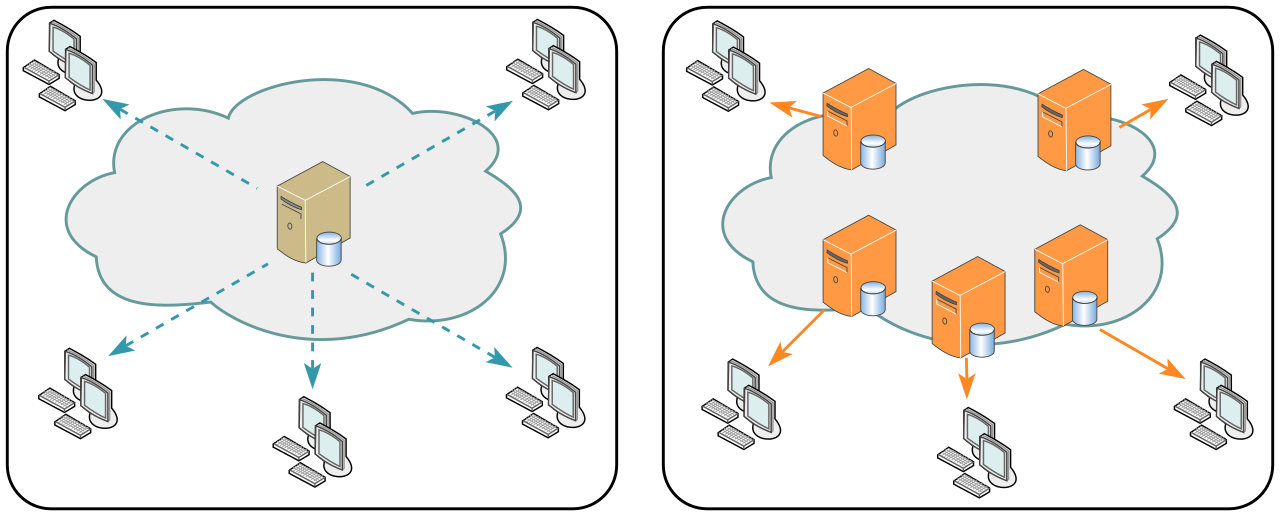
Data transfer from an AWS origin such as Amazon EC2 or Amazon S3 to Amazon CloudFront is free of charge. The regional origin freely hands the data to the global edge network. From there, Amazon CloudFront charges for outbound data transfer to the internet and for HTTP or HTTPS requests.
Why add this layer? Because CloudFront's outbound internet rates are often lower than standard regional EC2/S3 outbound rates. Serving content through Amazon CloudFront reduces overall outbound data transfer costs compared to serving directly from an AWS origin to the internet.
But the savings compound further due to caching. Caching content at Amazon CloudFront Edge locations reduces the total number of requests sent to the backend origin. Every time an edge location serves a cached image to a user in Tokyo, your Application Load Balancer and EC2 instances in us-east-1 do absolutely nothing. Reducing requests to an AWS origin via Amazon CloudFront edge caching lowers overall origin compute and data transfer costs. You are not just saving on bandwidth; you are effectively shrinking the required size of your origin infrastructure.
As architectures grow, VPCs and on-premises data centers must connect. The way we physically wire these connections dictates their long-term cost.
VPC to VPC Connectivity
If you have multiple VPCs, you can connect them via VPC Peering or an AWS Transit Gateway.
- VPC Peering does not charge hourly attachment fees or data processing fees.
- AWS Transit Gateway incurs an hourly charge for each connected network attachment and a per-gigabyte data processing charge for all traffic passing through the Transit Gateway.
Because of these distinct models, VPC Peering is generally more cost-effective than AWS Transit Gateway for simple network architectures. Transit Gateway is magnificent for complex, hub-and-spoke routing, but for a simple connection between two VPCs, peering is financially vastly superior.
Keep in mind, while the peering connection itself is free, the data flowing through it obeys the physics of the local neighborhood:
- Intra-region VPC Peering data transfer between instances in the same Availability Zone is free of charge.
- Intra-region VPC Peering data transfer between instances in different Availability Zones incurs standard inter-AZ data transfer charges.
- Cross-region VPC Peering data transfer incurs standard inter-region data transfer charges.
Hybrid Connectivity: Direct Connect
When connecting an on-premises data center to AWS, many engineers default to a Site-to-Site VPN over the public internet. However, if your on-premises servers are pulling massive amounts of data out of AWS, you are paying standard, premium internet outbound rates.
Enter AWS Direct Connect (DX). Because DX is a dedicated, private physical line into the AWS backbone, AWS Direct Connect data transfer out pricing per gigabyte is significantly lower than standard AWS internet data transfer out pricing. Consequently, routing heavy on-premises outbound data transfers over AWS Direct Connect instead of an internet-based Site-to-Site VPN reduces data transfer costs. The fixed port hour costs of DX are rapidly offset by the sheer savings on wholesale egress rates.
Our final frontier of optimization lies at the application entry points.
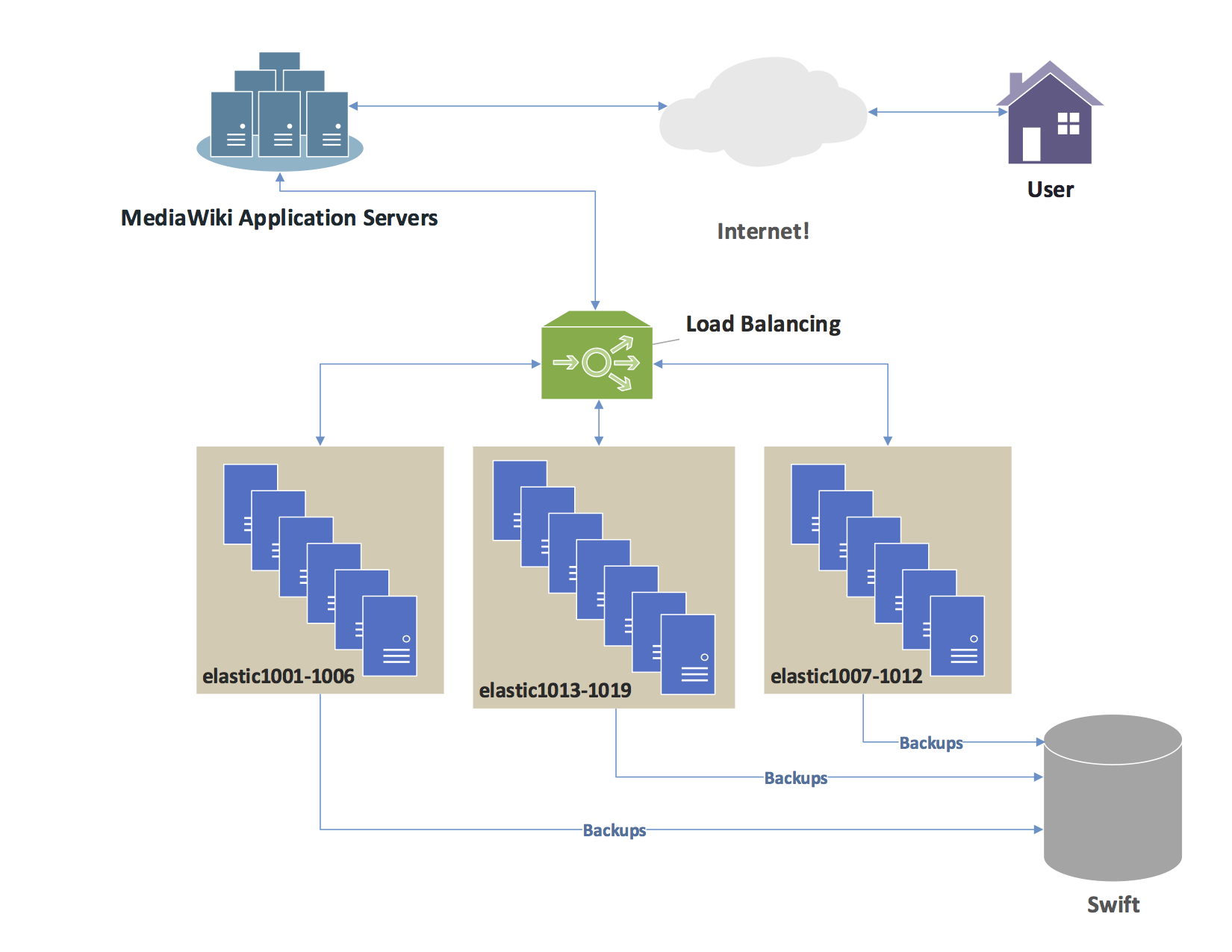
Elastic Load Balancing incurs an hourly charge and a charge based on the capacity processed through the load balancer (measured in Load Balancer Capacity Units, or LCUs). If you spin up a dedicated Application Load Balancer (ALB) for every microservice you deploy, you will drown in hourly baseline charges.
Instead, look at the Layer 7 capabilities of the ALB. Consolidating applications behind a single Application Load Balancer using host-based routing reduces the hourly costs of running multiple load balancers. A single ALB can evaluate the incoming HTTP host header (e.g., api.example.com vs. app.example.com) and route to entirely different target groups, halving or quartering your base load balancing footprint.
Finally, we look at the DNS layer—Amazon Route 53. When mapping your domain names to AWS resources like ALBs or CloudFront distributions, you have a choice between standard CNAME records and AWS-specific Alias records.
Amazon Route 53 standard CNAME records incur a charge for DNS queries. But AWS rewards you for staying deeply integrated within its ecosystem: Amazon Route 53 Alias records pointing to AWS resources are free of charge for DNS queries. Therefore, using Amazon Route 53 Alias records instead of CNAME records reduces DNS resolution costs.
Network cost optimization is not a single configuration box you check; it is a discipline of understanding flow. By mastering when to bypass the internet, how to bridge Availability Zones without triggering tolls, and where to deploy edge caches, you transform from a builder of infrastructure into a true architect of efficiency.