Cloud Deployment Models and Use Cases
Not sure you’re ready?
Take the ~3-minute readiness diagnostic and see where you stand.
Imagine a rapidly expanding retail enterprise that urgently needs operational space to process millions of transactions. The leadership faces a profound architectural choice: they can purchase land and build a highly secure, custom headquarters from the ground up; they can lease floors in a bustling commercial skyscraper managed by a dedicated landlord; or they can retain a smaller private building for their most sensitive operations while renting temporary global storefronts whenever holiday traffic surges. This spatial dilemma perfectly mirrors the foundational decision every organization makes when adopting cloud computing. The choice between public, private, and hybrid cloud models is not merely a technical specification; it is a strategic maneuver that determines how a business allocates capital, navigates regulatory risk, and scales to meet the unpredictable physics of market demand. For the financial controller auditing expenditures, the project manager scoping a system migration, or the solutions architect designing infrastructure, mastering these deployment models is the baseline for translating technical capability into operational reality.
To understand cloud computing, we must strip away the abstract terminology and look at what is physically happening. At its core, the "cloud" still relies on physical servers, flashing hard drives, miles of fiber-optic cables, and massive air-conditioning units. The deployment model you choose simply answers three critical questions: Who owns the hardware? Who is allowed to use it? Who is responsible for keeping the lights on?

Depending on how an organization answers these questions, they will land on one of three primary cloud deployment models: Public, Private, or Hybrid, occasionally extending into a Multi-cloud strategy. Let us examine the mechanics and ideal use cases of each.
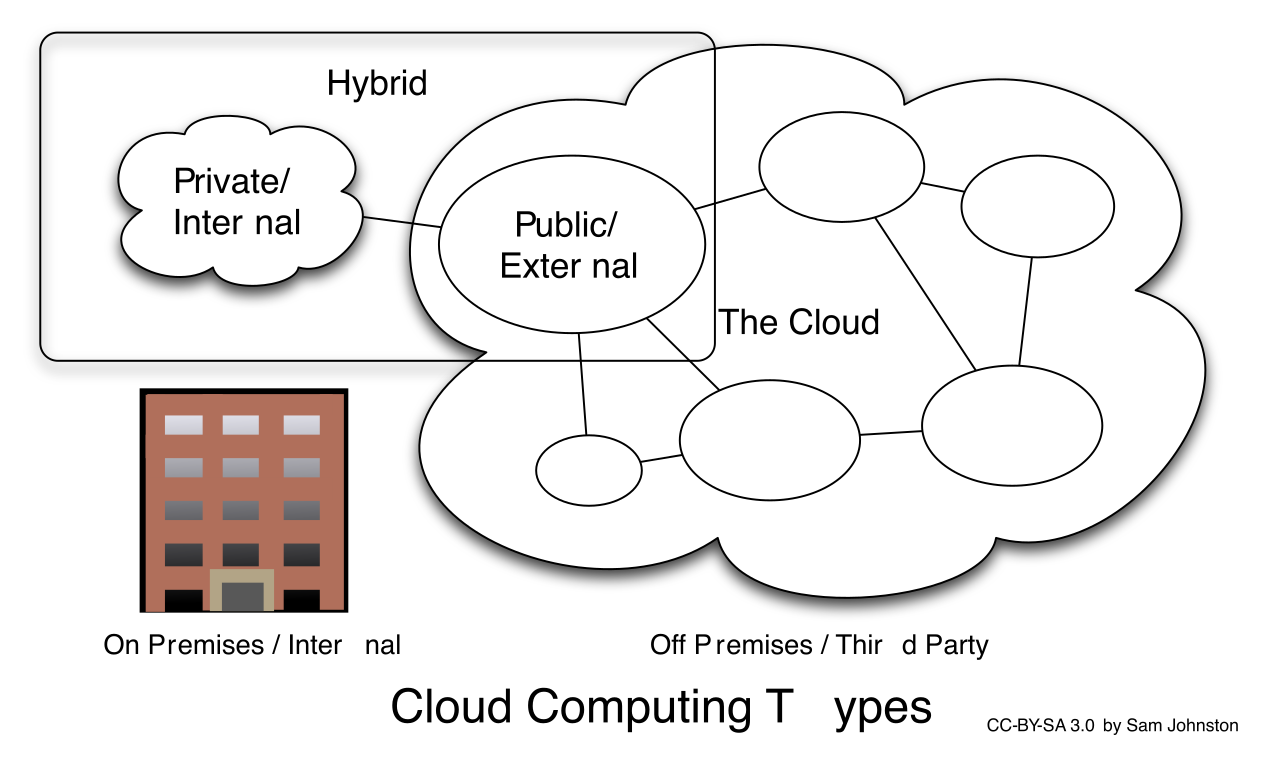
The Public Cloud: The Multi-Tenant Skyscraper
A public cloud is a computing model where a third-party provider manages and delivers cloud services over the internet.
When you utilize a public cloud—and it is crucial to note that Microsoft Azure is a public cloud computing platform—you are stepping into a massive, highly optimized ecosystem. In a public cloud model, the cloud service provider owns all underlying hardware and supporting infrastructure. You do not buy the servers; you lease the computing power they generate.
The fundamental principle that makes the public cloud economically viable is its multi-tenant architecture.
In a multi-tenant architecture, multiple distinct organizations share the same underlying physical computing resources.
Picture a towering commercial skyscraper. Your business might lease the 40th floor, while a completely different company leases the 41st floor. You share the building's foundation, the elevators, and the plumbing, but your office doors are locked, and your environments are strictly isolated from one another. Because you are simply leasing space, public cloud providers are solely responsible for all hardware maintenance and data center physical security. If a server’s motherboard burns out at 3:00 AM, a technician employed by the cloud provider replaces it. Your organization never lifts a screwdriver.
When to Apply the Public Cloud
Why do businesses flock to this model? From a financial and operational perspective, public cloud models solve two massive problems:
- CapEx Elimination: Public cloud models are highly suitable for organizations seeking to eliminate upfront capital expenditures on hardware. Instead of sinking $500,000 into physical servers that will depreciate over five years, a business only pays for the computing power it consumes, shifting costs to operational expenditures (OpEx).
- Elasticity for the Unpredictable: Public cloud models are ideal for applications with unpredictable or fluctuating resource demands. If a viral marketing campaign suddenly drives ten times the normal traffic to your website, the public cloud can automatically allocate more shared resources to keep your site online, and then scale back down when the rush ends.
The Private Cloud: The Custom-Built Fortress
While the shared skyscraper is efficient, some organizations require a fortress.
A private cloud consists of computing resources used exclusively by one single organization.
Unlike the public cloud, private clouds use a single-tenant architecture dedicated entirely to one organization. No other company's data or applications will ever reside on that specific hardware.
How does an organization obtain a private cloud? They generally have two geographic options:
- On-premises: An organization can locate a private cloud physically at the organization's on-site data center.
- Third-party Hosted: Alternatively, a third-party service provider can host a private cloud on behalf of a single organization in a remote facility.
If an organization chooses the traditional route of an on-premises private cloud, they assume absolute responsibility for the physical universe of their technology. The organization must purchase all physical computing hardware. Furthermore, the organization must perform all hardware maintenance, cooling, and power management.
When to Apply the Private Cloud
If building a private cloud requires so much capital and effort, why do organizations do it? The answer usually boils down to control, compliance, and legacy constraints:
- Absolute Control: Private clouds offer an organization the highest degree of control over the computing infrastructure and security configurations. Every firewall rule, network switch, and physical lock is dictated by the organization.
- Strict Regulation: Highly regulated industries—such as banking, healthcare, and national defense—use private cloud models to meet strict data compliance and geographic data residency requirements. Sometimes, the law states that certain data legally cannot sit on shared physical servers.
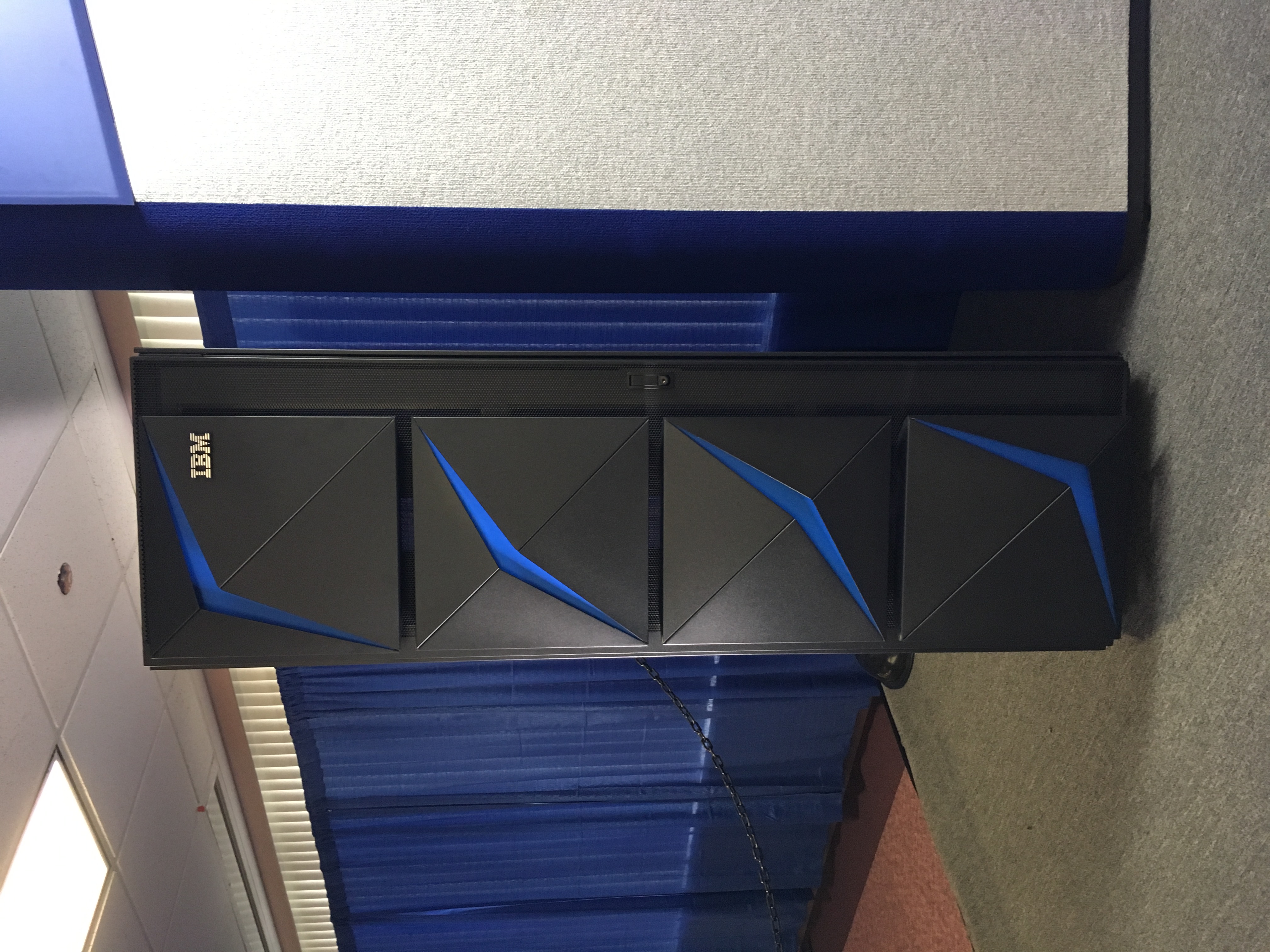
- Legacy Constraints: Private cloud models are appropriate for legacy applications lacking the technical compatibility to run in a public cloud environment. An application written twenty years ago for a highly specific mainframe might simply fail to operate in modern public cloud data centers.
The Hybrid Cloud: The Bridge Between Worlds
In the real world, rigid binaries rarely survive. Most established enterprises realize they have legacy systems that demand the control of a private cloud, alongside modern web applications that desperately need the elasticity of a public cloud.
A hybrid cloud is a computing environment combining a public cloud and a private cloud.
By utilizing secure networking protocols, hybrid clouds allow data and applications to move securely between public and private cloud environments. This bridging of worlds provides an organization with more deployment flexibility than standalone public or private clouds.
When to Apply the Hybrid Cloud
Hybrid models are incredibly common in large enterprises because they solve practical, transitional, and security-based problems:
- Strategic Segregation: Hybrid clouds allow organizations to store highly sensitive data in a private cloud while hosting customer-facing web applications in a public cloud. An online banking portal can scale up in Azure to handle thousands of simultaneous user logins, while the actual customer financial records remain locked in the bank's on-premises private cloud.
- Gradual Modernization: It is rarely feasible to move a massive enterprise to the cloud overnight. Hybrid clouds enable organizations to migrate existing on-premises applications to the public cloud in a gradual, phased approach, minimizing operational risk.
- Cloud Bursting: Hybrid clouds support an elegant engineering configuration known as cloud bursting. Cloud bursting is a configuration where an application runs in a private cloud and automatically extends into a public cloud during spikes in demand. Imagine a retailer whose private servers easily handle 11 months of standard traffic. Rather than buying millions of dollars in extra hardware just for the holiday shopping season, their architecture simply "bursts" into the public cloud for the month of December, renting overflow capacity only when mathematically necessary.
The Multi-Cloud Strategy: Diversifying the Portfolio
As cloud computing matures, organizations have begun applying financial portfolio theory to their infrastructure, leading to the multi-cloud model.
A multi-cloud model involves an organization utilizing cloud computing services from more than one public cloud provider.
Instead of committing exclusively to Microsoft Azure, an organization might use Azure for its enterprise identity management and machine learning, while utilizing another provider for specific database hosting.
When to Apply the Multi-Cloud Model
- Risk Mitigation: Organizations implement multi-cloud architectures to avoid relying entirely on a single cloud service provider. This prevents "vendor lock-in" and ensures that if one global provider experiences a rare systemic outage, the organization's entire business does not halt.
- Optimization: Organizations use multi-cloud models to leverage specialized features or pricing advantages offered by different public cloud providers. They shop the market, placing workloads wherever the technology is most optimized or cost-effective.
Tying the Complexity Together: Enter Azure Arc
Operating a mix of private datacenters, Microsoft Azure, and competing public clouds creates immense complexity for IT and security teams. How do you govern a sprawling infrastructure that lives in five different places at once?
To solve this, Microsoft developed a unifying bridge. Azure Arc is a Microsoft service designed to manage resources across hybrid cloud and multi-cloud environments. It allows administrators to project their on-premises, edge, and multi-cloud resources into Azure, treating them all as if they were natively running within the Azure ecosystem. Through a single pane of glass, governance and security policies can be applied universally, bringing order to the beautiful, complex physics of modern computing architectures.
Summary of Cloud Deployment Use Cases
| Model | Architecture Type | Hardware Ownership | Ideal Use Cases |
|---|---|---|---|
| Public Cloud | Multi-tenant | Cloud Service Provider | Eliminating CapEx; highly fluctuating demand; modern, scalable applications. |
| Private Cloud | Single-tenant | The Organization | Strict regulatory compliance; absolute infrastructure control; incompatible legacy apps. |
| Hybrid Cloud | Combined | Shared across both | Gradual cloud migration; security segregation; cloud bursting. |
| Multi-Cloud | Multiple Public | Multiple Providers | Mitigating single-vendor reliance; leveraging specialized pricing/features. |