Efficiency and Process Improvement
Not sure you’re ready?
Take the ~3-minute readiness diagnostic and see where you stand.
Imagine standing at the mouth of a raging river, tasked with identifying exactly which drops of water carry a specific, microscopic toxin. You cannot dip a cup in, look at the water, and pour it out fast enough to matter. The volume of data flowing into a modern Security Operations Center (SOC) is identical to that river. If human analysts attempt to manually filter, analyze, and categorize every incoming event, they will simply drown in the noise. The solution is not to hire more humans to look at more cups of water; the solution is to build a filtration plant that automatically removes the clean water and routes the toxins to a specialized laboratory.
In a security environment, ambiguity is the enemy of speed. When an alert fires, the response cannot be improvised. Standardization in security operations ensures that all analysts follow identical procedures when investigating a specific type of alert. If Analyst A and Analyst B handle the same ransomware alert in entirely different ways, the organization cannot accurately measure its response time, nor can it guarantee a successful containment.
But standardizing human behavior is only the first step. To handle the scale of modern networks, we must implement automation in security operations, which replaces repetitive manual tasks with machine-executed scripts or tools.
To bridge the gap between process and automation, SOCs utilize two critical types of documentation:
Playbooks are high-level overarching documents defining the step-by-step procedures for responding to specific security incidents. Think of this as the strategic battle plan.
Runbooks contain the specific technical scripts to execute the strategy defined in a playbook. If the playbook says "Isolate the compromised machine," the runbook contains the precise command-line arguments to achieve that isolation.
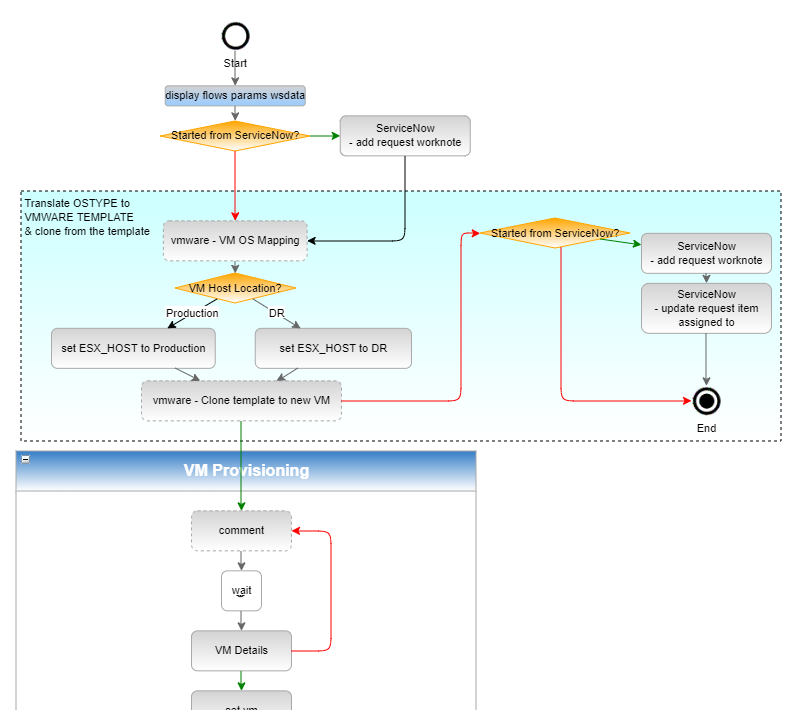
The ultimate manifestation of this philosophy is the deployment of Security Orchestration, Automation, and Response (SOAR) platforms. These systems combine security tools into a centralized system to automate incident response processes, acting as the central nervous system of the modern SOC.
Human analysts possess a unique capability that machines currently lack: lateral thinking and complex contextual reasoning. Therefore, we must automate everything that does not require those traits. Let us follow the lifecycle of security telemetry and identify exactly where automation transforms our workflow.
1. Ingestion and Triage
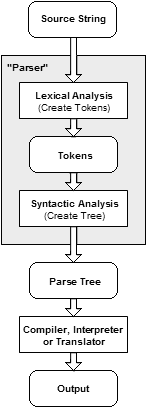
Before data can be analyzed, it must be uniform. Log parsing automation standardizes incoming event logs into a uniform format for efficient analysis. Whether a log comes from a Linux server, a Windows domain controller, or a Cisco firewall, it is mapped to a common schema.
Once the data is uniform, alerts begin to fire. Left unchecked, the sheer volume of alerts leads to cognitive exhaustion. Automated alert triage reduces analyst alert fatigue by filtering out known false positives before human review.
2. Contextual Enrichment
When an analyst opens an alert, they immediately need more information. Who owns this IP? Is this file hash known to be malicious? Instead of making the human manually query multiple databases, threat intelligence enrichment is highly suitable for automation by automatically querying external intelligence feeds upon receiving an alert. The data is waiting for the analyst, not the other way around.
Consider the classic email vector: Phishing analysis automation automatically extracts email headers and checks embedded URLs against threat intelligence feeds. If the email contains a suspicious attachment, automated malware sandboxing detonates suspicious files in an isolated environment to observe behavioral characteristics, passing the resulting analysis back to the analyst in seconds.
3. Containment and Response
When malicious activity is confirmed, speed is the only metric that matters. A human logging into a console, finding an endpoint, and clicking "isolate" takes minutes. Automated endpoint isolation immediately disconnects a compromised host from the network to prevent lateral movement the millisecond a severe behavioral threshold is crossed.
4. Administrative and Preventative Maintenance
Automation also eliminates administrative friction. Automated ticket generation creates incident records in an IT Service Management (ITSM) tool without requiring manual analyst input, ensuring no alert is lost in the shuffle and eliminating the need to copy-paste data between screens.
Proactively, vulnerability scanning automation enables continuous scanning of an environment at scheduled intervals without manual initiation, ensuring that the security posture is constantly monitored without human babysitting.
Furthermore, we must automate the underlying infrastructure itself. Continuous Integration and Continuous Deployment (CI/CD) pipelines automate the testing and deployment of code updates, catching security flaws before code hits production. This is heavily supported by Infrastructure as Code (IaC), which standardizes the provisioning of computing resources through machine-readable definition files, guaranteeing that every deployed server meets baseline security requirements.
If a SOAR platform is the brain and the security tools are the limbs, how do they talk to each other?
An Application Programming Interface (API) allows distinct software applications to communicate and share data with one another. It is the standardized contract that says, "If you send me data structured exactly like this, I will perform that action."

REST vs. SOAP
There are two primary paradigms you will encounter when integrating tools:
- Representational State Transfer (REST) is a software architectural style utilizing standard HTTP methods (GET, POST, PUT, DELETE) for web-based APIs. Because of its simplicity, REST is the dominant style in modern security tools. Crucially, REST APIs typically return data in JavaScript Object Notation (JSON) format, which is lightweight and easily readable by both humans and machines.
- Simple Object Access Protocol (SOAP) is an older protocol for exchanging structured information in web services using Extensible Markup Language (XML). While heavier and more rigid than REST, it is still found in legacy enterprise applications.
Authenticating API Communication
Because APIs can query sensitive data or execute highly privileged commands (like shutting down a server), their communications must be strictly authenticated.
-
API keys are unique identifiers (long alphanumeric strings) used to authenticate a client program to an API server. They act as a silent password for machines.
-
OAuth 2.0 is an industry-standard authorization protocol used to grant limited access to user resources on a server without exposing credentials. It allows one application to say, "I have been granted permission to read this user's email, but I do not know their password."
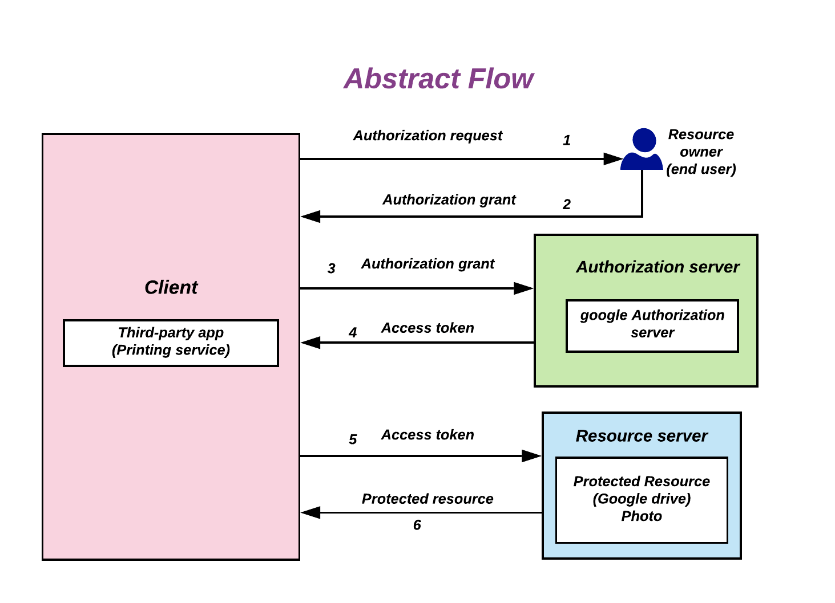
An overview of the OAuth 2.0 authorization flow, where an authorization server issues an access token so the client can access resources without exposing the user's password. Source: Abstract-flow by Devansvd, CC BY-SA 4.0. -
For the highest level of security, Mutual Transport Layer Security (mTLS) authenticates both the API client and the API server to ensure secure bidirectional communication. In mTLS, the server verifies the client's cryptographic certificate, and the client verifies the server's certificate.
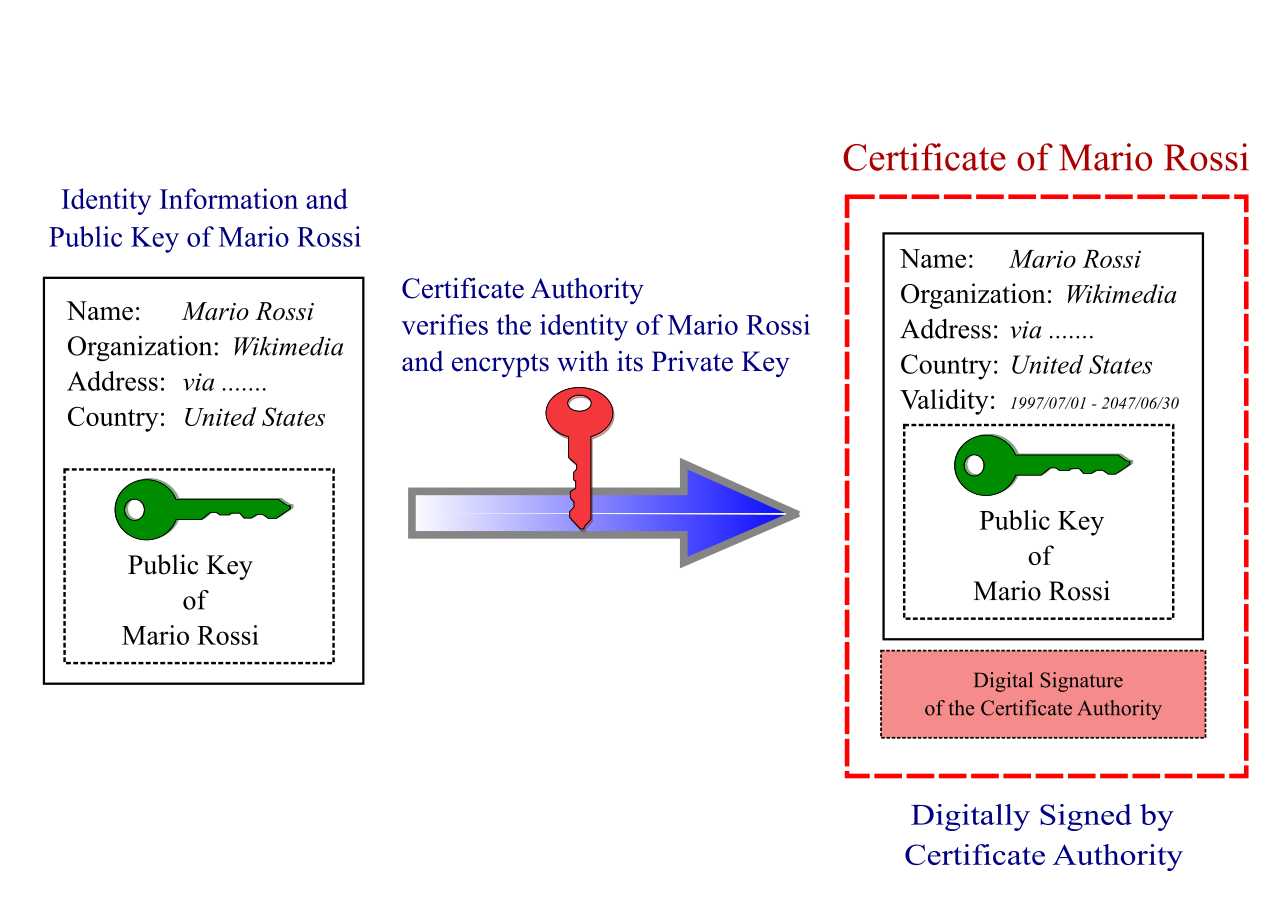
The procedure of obtaining a public key certificate. In mutual TLS, both the client and server exchange and verify these certificates to ensure highly authenticated bidirectional communication. Source: PublicKeyCertificateDiagram It by Giaros, CC BY-SA 3.0.
To test these API connections directly from a terminal, security analysts frequently use the cURL utility, which is a command-line tool used to transfer data to or from a server via various protocols including HTTP and HTTPS.
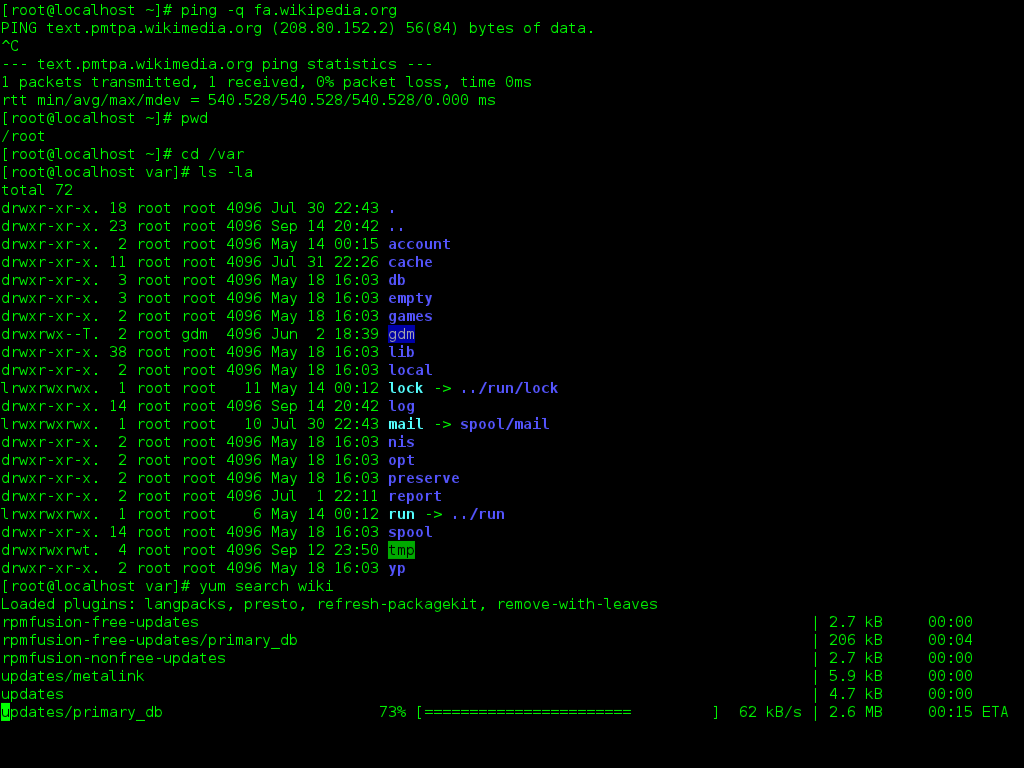
Understanding exactly how tools exchange data is critical for system efficiency.
APIs typically use a pull model, requiring the client to explicitly request data from the server. If a SOAR platform wants to know if a firewall has detected a new threat, it must ask the firewall. This is often implemented via polling, an API communication method requiring a client to repeatedly request data from a server at regular intervals to check for updates.
Imagine a child in the backseat of a car asking, "Are we there yet?" every five seconds. The parent (the server) has to process the question and say "No" almost every time. This creates massive computational overhead.
A webhook, by contrast, is a user-defined HTTP callback triggered by a specific event occurring in a source system. Webhooks utilize a push model where a server sends data to a client immediately upon an event occurrence. The child only speaks when the car has actually arrived at the destination.
| Feature | API Polling (Pull) | Webhooks (Push) |
|---|---|---|
| Communication Model | Client asks server for updates. | Server sends update to client upon event. |
| Resource Usage | High (constant requests and responses). | Low (only communicates when necessary). |
| Latency | Dependent on polling interval (e.g., every 5 mins). | Near zero (immediate execution). |
Because of this architectural difference, webhooks are more efficient than API polling for real-time alerts. By relying on the source system to broadcast the event, webhooks eliminate the need for constant client requests to check for new security events, saving massive amounts of bandwidth and compute power.
Just as we standardize our internal logs and processes, we must standardize how we communicate about threats with the outside world. If a government agency warns your SOC about a new threat actor, the data must be instantly machine-readable so your SOAR can immediately hunt for it.
- The Structured Threat Information Expression (STIX) is a standardized language used to describe cyber threat information. It provides a universal syntax for describing campaigns, threat actors, indicators of compromise, and observables.
- The modern iteration, STIX 2.0, utilizes JavaScript Object Notation (JSON) for formatting cyber threat intelligence data, making it directly compatible with modern REST APIs.
If STIX is the language, we need a method of transport.
- The Trusted Automated Exchange of Indicator Information (TAXII) is the application protocol used to transport STIX data over HTTPS.
When your threat intelligence platform automatically pulls down the latest indicators from a government feed, it is using the TAXII protocol to securely transport a STIX-formatted JSON payload.
By mastering the integration of SOAR platforms, REST APIs, webhooks, and standardized frameworks like STIX/TAXII, you transition from manually reacting to incidents to architecting an environment where the infrastructure defends itself at machine speed.