Inhibitors to Remediation
Not sure you’re ready?
Take the ~3-minute readiness diagnostic and see where you stand.
In classical mechanics, an object in motion stays in motion unless acted upon by an external force. In the reality of a Security Operations Center (SOC), a known vulnerability remains vulnerable unless acted upon by a patch. But just as physicists must account for the friction of the real world, security analysts must account for the institutional friction that prevents a straightforward fix. When your vulnerability scanner lights up with a critical Common Vulnerabilities and Exposures (CVE) alert, the mathematical severity of that flaw—its Common Vulnerability Scoring System (CVSS) base score—evaluates only the theoretical risk. The CVSS base score does not account for an organization's internal remediation inhibitors.

Vulnerability remediation inhibitors are the real-world organizational or technical factors that prevent the immediate application of security fixes. For the SOC analyst or incident responder, understanding these inhibitors is just as critical as analyzing the malicious payload of an exploit. If you cannot understand why a system administrator refuses to apply a patch, you cannot properly defend the network.
Let us break down the anatomy of why things cannot simply be "fixed," dividing these forces into organizational boundaries, technical physics, and the legacy weight of past decisions.
When an enterprise network is compromised, the failure is rarely due to a lack of technical knowledge; it is often the result of bureaucratic gridlock. Organizational governance establishes the formal rules and approval processes that direct all IT operations. While governance exists to maintain order, it inherently slows down rapid response.
Change Management and Risk Appetite
In a mature environment, you cannot simply push an update because a new exploit is trending. Strict change management processes within organizational governance significantly delay the deployment of urgent security patches. Before IT staff can implement system patches, Change Advisory Boards (CAB) must formally review and approve the remediation actions. The CAB evaluates the operational risk of the patch against the security risk of the vulnerability.
This evaluation is governed by the organization's risk appetite, which is a documented metric that dictates the threshold at which a vulnerability will be remediated. If an organization is highly tolerant of risk, it will allocate its resources elsewhere. Thus, a high risk appetite acts as an organizational inhibitor by endlessly delaying the remediation of lower-severity vulnerabilities. When the friction of patching outweighs the perceived threat, the board may choose risk acceptance—a formal governance decision to ignore a vulnerability due to overwhelming operational inhibitors.
The Constraint of Resources
Sometimes the inhibitor is not philosophical, but purely mathematical. A lack of dedicated security funding acts as a direct organizational inhibitor to vulnerability remediation. Without capital, you cannot buy the tools to automate patching or hire the people to manage it. Consequently, insufficient IT personnel resources delay the necessary testing and deployment phases of vulnerability management. A small team buried in help-desk tickets simply does not have the bandwidth to manually patch a fleet of servers.
An enterprise network does not exist in a vacuum; it is a web of legal and service obligations. As an analyst, you will quickly find that the law of contracts often supersedes the law of cybersecurity.
Service Level Agreements (SLAs)
A Service Level Agreement (SLA) defines the expected level of service and uptime between a provider and a client. Crucially, an SLA explicitly states the maximum allowable downtime for a contracted service.
If applying an urgent security patch requires taking a database offline for twenty minutes, and your contract allows for only five minutes of downtime a month, you are legally prohibited from securing the system at that moment. SLA uptime guarantees prevent immediate vulnerability patching if the required patch deployment causes system reboots.

Memorandums of Understanding (MOUs)
When dealing with integrated or federated networks, you will encounter the Memorandum of Understanding (MOU), which is a formal agreement outlining shared responsibilities between multiple parties.
The MOU Bottleneck: An MOU can delay vulnerability remediation by requiring mutual agreement before applying security changes to shared network systems. If Agency A discovers a vulnerability on a shared gateway, they cannot patch it until Agency B reviews the patch, assesses its impact on their side of the network, and formally agrees to the change window.
Regulatory Compliance
Paradoxically, the very frameworks designed to ensure security can slow down security operations. Regulatory compliance frameworks can inhibit remediation by requiring comprehensive system recertification after applying any software updates. In environments like healthcare or military defense, applying a simple Microsoft Windows patch might invalidate a system's compliance certification, forcing the organization to spend weeks proving the system still meets regulatory standards before the patch can go live in production.
If organizational inhibitors are the red tape, technical inhibitors are the physical walls of the network. These are the operational realities where patching a system actively breaks the business.
Business Process Interruption and Downstream Impact
Revenue is the lifeblood of any organization. Business process interruption occurs when remediation efforts cause downtime for critical revenue-generating operations. If an e-commerce database is vulnerable, you cannot patch it on Cyber Monday. Organizations frequently postpone vulnerability remediation to avoid business process interruption during peak operational hours.
Furthermore, networks are highly interdependent ecosystems. Analysts must be wary of downstream impact, which occurs when patching one system disrupts the standard data flow to a dependent secondary system. You might successfully patch a web server, but in doing so, alter its API output format, instantly crashing the billing server that relies on that data.
Because of these catastrophic possibilities, mandatory patch testing introduces an intentional delay between vulnerability discovery and production system remediation. We wait, we test in a sandbox, and only then do we deploy.
The House of Cards: Software Dependencies
Modern applications are built like a Jenga tower of interdependent libraries and third-party code.
- Software dependency conflicts occur when a security patch requires a newer version of a shared library than the main application supports.
- If you update the library to fix the vulnerability, the main application instantly fails.
- Therefore, dependency conflicts act as a technical inhibitor by requiring full application redevelopment before patch deployment.

Similarly, you will face third-party vendor dependencies. These delay remediation when a software vendor refuses to authorize specific operating system patches. If the vendor states, "Our software is only guaranteed to run on Windows Server 2019 without Patch X," applying Patch X violates your support agreement.
For proprietary software systems, standard fixes rarely apply. These systems often require customized security updates instead of standard vendor patch deployments. If an overzealous IT admin forces a standard update, disaster strikes: applying standard operating system patches can break core functionality within custom proprietary business applications.
Every SOC analyst eventually battles the ghosts of IT past. Legacy systems are outdated computing software or hardware components that remain active in a production environment. They are the old mainframes running the factory floor or the ancient payroll servers tucked away in a closet.
Legacy systems are the ultimate remediation inhibitor because the cure is often deadlier than the disease.
- Vendor Abandonment: Software vendors completely cease the development of security patches for End-of-Life (EOL) legacy systems. There is no patch to download because the code is no longer maintained.
- System Fragility: Even if you attempt a workaround, applying modern security patches to legacy systems frequently causes unexpected system instability.
- The Cost of Progress: Why not just replace them? Because upgrading a legacy system to support new security patches requires significant financial investment from the organization—often to the tune of hundreds of thousands, or even millions, of dollars ($500,000+ to re-architect an industrial control environment is entirely common).

If the inhibitors are absolute—if the SLA forbids a reboot, if the CAB denies the change, if the system is an EOL legacy nightmare—what does the SOC analyst do? We cannot simply surrender.
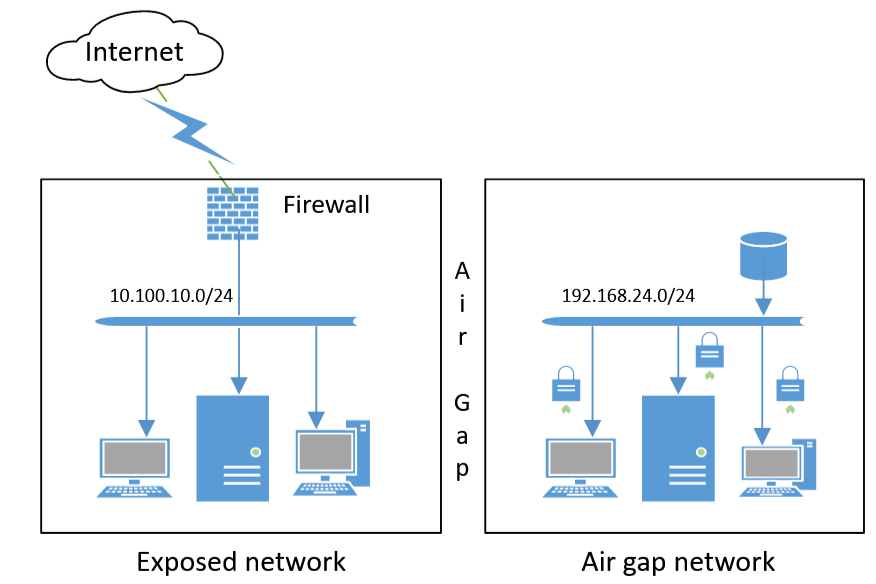
When a primary vulnerability remediation inhibitor prevents immediate patching, security analysts must implement compensating controls. A compensating control is an alternative mechanism that achieves the same security objective when the ideal control is impossible.
Network Isolation
If a machine cannot be cured, it must be quarantined. Network isolation acts as a standard compensating control for highly vulnerable legacy systems. By placing the unpatchable legacy server into a heavily restricted Virtual Local Area Network (VLAN), stripping its internet access, and allowing only strictly necessary internal traffic, you drastically reduce its attack surface.
Virtual Patching
When dealing with strict uptime requirements, we look to the network layer. Virtual patching utilizes network intrusion prevention systems (NIPS) to intercept and block exploits aimed at a specific vulnerability.
Instead of altering the vulnerable application itself (which would require downtime), you write a custom rule on your NIPS to detect the exact traffic pattern of the exploit. If the attacker fires the payload, the NIPS drops the packets before they ever reach the vulnerable server. Virtual patching serves as a temporary compensating control when formal software patching is inhibited by SLA requirements, buying the organization critical time until a scheduled, legally permissible maintenance window arrives.
Summary of Inhibitors vs. Controls
| Inhibitor Type | Root Cause | Common Compensating Control |
|---|---|---|
| SLA/Uptime Guarantees | Rebooting violates contract | Virtual Patching (via NIPS) |
| Legacy/EOL Systems | Vendor ceased patch development | Network Isolation / Air-Gapping |
| Dependency Conflicts | Patch breaks core proprietary app | Strict Application Whitelisting & WAF |
| Organizational Governance | CAB reviewing change request | Enhanced SIEM Monitoring & Alerting |
Understanding inhibitors transforms you from a technician who blindly shouts "patch it!" into an elite security professional who understands the complex physics of an enterprise network. By mastering these concepts, you learn how to protect the environment not just in a pristine lab, but in the chaotic, friction-heavy reality of the modern business world.