Vulnerability Management Reporting
Not sure you’re ready?
Take the ~3-minute readiness diagnostic and see where you stand.
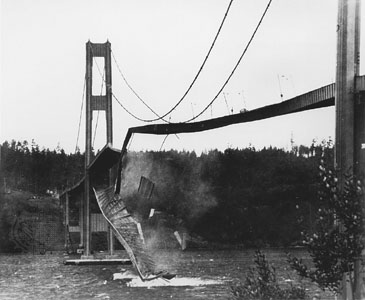
In civil engineering, discovering a stress fracture in a suspension bridge is only a fraction of the challenge. The true complexity lies in calculating the threshold of failure, communicating that specific danger to both the welders and the city planners, and orchestrating the repair without collapsing the structure or crippling the city's traffic. In a Security Operations Center, a vulnerability scan is merely the discovery of the fracture. The network infrastructure is your bridge, and the real engineering discipline that stands between stable operations and a catastrophic breach is vulnerability management reporting and remediation. Identifying a flaw means nothing if you cannot quantify its risk, translate that risk to the appropriate stakeholders, and meticulously plan its removal.
When a scanner finishes sweeping your network, it does not hand you a solution; it hands you raw data. A vulnerability management report details security weaknesses discovered within an organization's systems to guide remediation efforts. Crucially, these vulnerability reports identify affected hosts to determine the scope of exposure across the network infrastructure. Knowing that a flaw exists is useless unless you know exactly which servers, workstations, or routers are carrying the disease.
But you cannot hand the same report to every person in the organization. Giving a Chief Executive Officer a 500-page packet of raw scan data is like handing them a schematic of every copper wire in a building when they just asked if the power is on. Information must be tailored to the audience.
| Report Type | Primary Audience | Purpose and Characteristics |
|---|---|---|
| Technical vulnerability reports | System Administrators, SOC Analysts | Provide system administrators with the granular details required to locate and patch specific flaws. |
| Executive vulnerability reports | C-Suite, Board of Directors | Focus on high-level metrics and risk trends rather than technical remediation steps. |
| Compliance reports | Auditors, Regulators | Demonstrate adherence to specific regulatory requirements and internal organizational security policies. |
When your analysts are drowning in thousands of alerts, broad reports are not enough. In these moments of operational paralysis, a top ten vulnerability report highlights the most prevalent critical flaws across the enterprise to focus immediate security operations center efforts. It is the triage list for your emergency room.
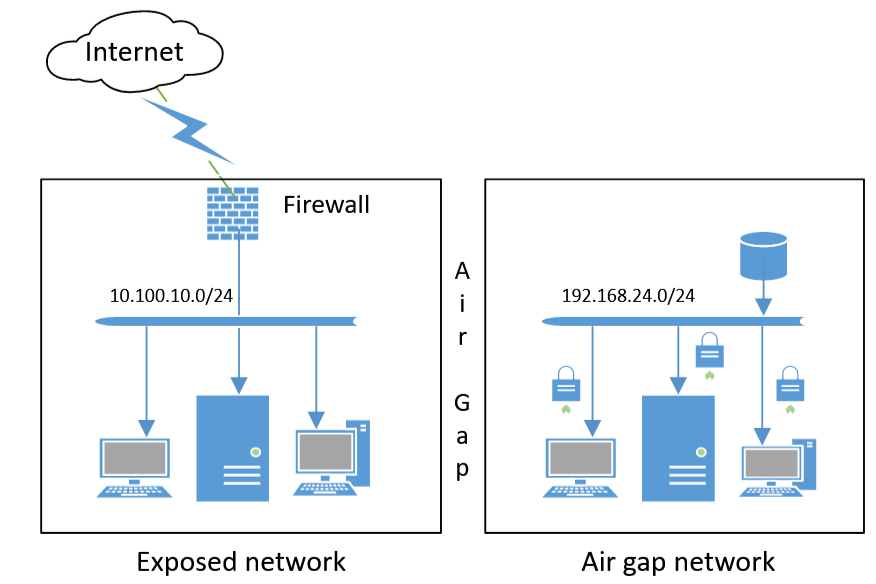
Not all vulnerabilities are created equal. A missing patch on a public-facing web server is a critical emergency; the same missing patch on a disconnected, air-gapped laboratory machine is a footnote.
To measure this, we use a risk score, which quantifies the potential impact and likelihood of a vulnerability being exploited. To ensure the global cybersecurity community speaks the same mathematical language, the Common Vulnerability Scoring System (CVSS) provides a standardized method for calculating vulnerability risk scores.
However, a raw CVSS score calculates risk in a vacuum. It does not know what your servers do. This is why analysts must perform prioritization, which ranks vulnerabilities based on risk scores and business context to determine the exact order of remediation tasks.
The Prioritization Equation A critical CVSS score of 9.8 + A system with zero critical data or network access = Low Priority. A medium CVSS score of 5.5 + A system processing $1,000,000 in transactions daily = High Priority.
To measure how effectively our triage process works over time, we watch the clocks. We rely on two primary temporal metrics:
- Mean Time to Detect (MTTD) measures the average time required for a security team to discover a new security vulnerability.
- Mean Time to Remediate (MTTR) measures the average time taken to fully resolve a vulnerability after the initial discovery date.
Over months and years, graphing these metrics produces vulnerability trends, which track the historical increase or decrease of security flaws to measure the overall effectiveness of a vulnerability management program.
Once the priorities are set, the actual repair begins. If the vulnerability report is the diagnosis, an action plan is the surgery schedule. An action plan outlines the specific tasks, timelines, and responsibilities required to address identified vulnerabilities.
At the center of most action plans is software correction. NIST SP 800-40 Revision 4 frames enterprise patch management as a critical component of preventive maintenance for technology. To execute this, enterprise patch management involves identifying, prioritizing, acquiring, installing, and verifying software updates.
When dealing with application flaws, patching action plans schedule the structured deployment of software updates to fix code-level vulnerabilities. Because applying a patch fundamentally alters the underlying code of a system, it carries the inherent risk of breaking the machine. Therefore, we impose strict controls on how and when we patch:
- Maintenance window: A pre-approved time block for applying patches and configuration changes to minimize business disruption.
- Testing phase: The step in a patch action plan that validates that a software update does not negatively impact system functionality before production deployment.
- Rollback plan: A safety net that ensures systems can be restored to their previous state if a deployed patch causes critical operational failures.
What happens if an adversary is actively exploiting a flaw today, and you cannot wait for the scheduled Sunday night maintenance window? You declare an emergency and deploy an out-of-band patch—an emergency software update deployed outside of the normal maintenance window to address a critical and actively exploited vulnerability.

Configurations and Human Variables
Software code is only half the battle. A system’s security relies heavily on configuration management, which tracks and maintains the authorized baseline settings of all hardware and software assets. Over time, administrators make ad-hoc changes, software updates alter registry keys, and users tweak settings. When a system deviates from its authorized baseline security settings over time, it is known as configuration drift.
This drift makes recurrence tracking a vital SOC activity. Recurrence tracking identifies specific security vulnerabilities that reappear in scans after an initial remediation attempt. If a vulnerability keeps coming back, your patch likely failed, or configuration drift is continuously undoing your secure baseline.
Finally, because the most complex components of any network are the humans operating it, security awareness and training programs are included in action plans to reduce vulnerabilities caused by human error. You cannot install a software patch for gullibility; you must train the user.

It is a beautiful, but naive, idea that once a vulnerability is found and a patch is released, you simply apply it. In reality, the enterprise environment pushes back. We call these roadblocks inhibitors to remediation—the business or technical obstacles that delay the application of security patches.
Why would a business intentionally delay fixing a security hole?
- Business interruption: These concerns inhibit remediation when the financial cost of system downtime outweighs the immediate security risk. You do not take the primary e-commerce database offline for patching in the middle of Black Friday.
- Changing business requirements: The enterprise is a living organism. Changing business requirements force adjustments to remediation action plans by altering the acceptable downtime for enterprise assets.
- Service-Level Agreements (SLAs): Legal contracts can act as inhibitors if mandatory uptime requirements prevent systems from being taken offline for necessary patching.
- Memorandum of Understanding (MOU): In complex environments where infrastructure is shared, an MOU can delay remediation if multi-party agreement is required before altering shared IT infrastructure.
- Organizational governance: Sometimes the friction is pure bureaucracy. Governance inhibits rapid remediation through lengthy Change Advisory Board (CAB) approval processes for new system configurations.
- Proprietary systems: Technical friction exists when standard operating system patches cannot be applied without specialized vendor updates, severely inhibiting remediation timelines.
When You Cannot Patch
If an inhibitor prevents you from applying a patch, you cannot simply leave the door wide open. You must look to the mitigation details in a vulnerability report, which provide temporary countermeasures to reduce risk before a full software patch is deployed.
Often, this involves implementing compensating controls—alternative security measures applied when direct patching or configuration changes are not immediately feasible. If you cannot patch a vulnerable web server due to an SLA, a compensating control might be writing a strict new rule on your Web Application Firewall to block the specific exploit payload.
When all else fails—when a system cannot be patched, and mitigating controls are insufficient—the business must formally accept the danger. An exception process formally documents an executive business decision to accept the risk of not remediating a specific vulnerability.
However, regulatory bodies are increasingly intolerant of endless exceptions. In the federal space, friction is frequently overridden by mandate: CISA Binding Operational Directives require federal agencies to remediate vulnerabilities from the Known Exploited Vulnerabilities catalog within specific timeframes. In these cases, business interruption is no longer a valid excuse; the bridge must be repaired immediately, regardless of the traffic.