Types and Purposes of Audits and Assessments
Not sure you’re ready?
Take the ~3-minute readiness diagnostic and see where you stand.
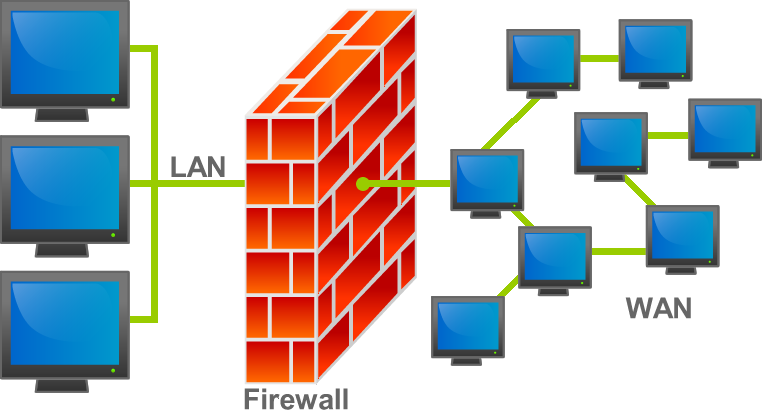
Knowing the mathematical specifications of a firewall is vastly different from knowing what that firewall will do when a malicious payload impacts its outer interface. In the physical sciences, we design a hypothesis and then ruthlessly test it against reality to see where it breaks. In enterprise information technology, your network architecture is the hypothesis. The reality is the unceasing barrage of external threats, insider errors, and rigid compliance mandates. To bridge the gap between how a system should behave and how it actually behaves under duress, we must subject our environments to systemic measurement and simulated destruction. This rigorous process of validation—through structured audits and adversarial testing—is the only mechanism that transforms theoretical security into empirical resilience.
At its core, an audit is a formal inspection of an organization's security controls. We do not conduct audits simply to generate paperwork; audits are performed to verify that an organization complies with established security policies or external regulations.
When managing a complex IT environment, it is easy to assume that because a protocol was implemented, it is functioning correctly. But security degrades over time. Configurations drift, patches are missed, and employee turnover leads to forgotten access privileges. We use various tiers of evaluation to catch these drifts before they become catastrophic breaches.
To understand the health of a network, we must also distinguish between looking for a flaw and actively exploiting it.
Vulnerability assessments identify potential security weaknesses without actively exploiting the discovered flaws. They are like walking around a building, noting that a window is unlocked, and writing it down on a clipboard.
A penetration test, however, is a simulated cyberattack against a system to check for exploitable vulnerabilities. Penetration tests actively exploit vulnerabilities to demonstrate the potential impact of a system breach. In our building analogy, the tester doesn't just note the unlocked window; they climb through it, access the filing cabinet, and show management exactly what data could be stolen.
Before you invite an outsider to critique your network, you must inspect it yourself. We do this in two stages: informal self-assessments and formal internal audits.
Self-Assessments
A self-assessment is an informal evaluation conducted by system owners or internal teams. Imagine you administer the Active Directory environment. If you and your senior engineers spend an afternoon reviewing your password complexity enforcement against the company's internal baseline, you are conducting a self-assessment.
Self-assessments measure the effectiveness of specific security controls within a department. Because they are informal, self-assessments allow organizations to proactively correct security deficiencies without facing formal penalties. You find the broken process, you fix it, and you move on.
Internal Audits
Eventually, the organization needs a wider, more structured view. Internal audits are conducted by an organization's own personnel or hired internal contractors.
While more formal than a self-assessment, the internal audit remains within the family. Internal auditors report assessment findings directly to the organization's own management team. Why does this matter to you as a security practitioner? Because internal audits help an organization identify security gaps before an external regulatory examination occurs. They are the dress rehearsal. They give you the political and financial capital to patch your systems and rewrite your firewall rules before a governing body gets involved.
It is human nature to grade one’s own homework favorably. To achieve true assurance, we must eliminate internal bias.
An external audit is conducted by an independent third-party organization. Because the auditors have no financial stake in the IT department's operational budget or internal office politics, external audits provide an objective validation of an organization's security posture without internal bias.
When external audits are tied to law or industry mandates, they elevate to a different category. Regulatory examinations are external audits mandated by government or industry authorities. Whether it is HIPAA in healthcare, PCI-DSS in payment processing, or GDPR for data privacy, regulatory examinations verify an organization's compliance with specific legal or industry standards.
As an IT administrator, preparing for a regulatory examination requires documenting security policies, procedures, and evidence of control implementation. You cannot simply tell a regulatory examiner that your databases are encrypted; you must provide the configuration files, the key rotation logs, and the documented policy mandating that encryption. In regulatory exams, if it is not documented, it does not exist.
If audits measure your compliance with policies, penetration testing measures your survival against a determined adversary.
The Absolute Necessity of Authorization
Before a single packet is fired at a target network, there is an absolute legal and ethical requirement that cannot be bypassed. A penetration test must have explicit written authorization from the system owner before any testing activities begin. Without this signature, a simulated cyberattack is indistinguishable from a felony under computer crime laws.
This authorization is codified in a highly specific contract. The rules of engagement document defines the scope, timing, and approved methods for a penetration test. It tells the tester what IP ranges they can target, whether they are allowed to conduct social engineering, and what times of day they are permitted to launch high-bandwidth attacks to avoid disrupting production servers.
Tiers of Target Knowledge
The perspective of an attacker drastically changes how a penetration test is performed. We categorize these perspectives into three "boxes":
| Testing Type | Description & Practical Application |
|---|---|
| Black-box | A Black-box penetration test is conducted with no prior knowledge of the target system or network infrastructure. The tester acts as a completely blind external attacker, relying purely on open-source intelligence and active reconnaissance. |
| Gray-box | A Gray-box penetration test is conducted with partial knowledge of the target environment. Practically, Gray-box penetration testers are often provided with standard user credentials to simulate an insider threat. This matters profoundly to administrators because the vast majority of modern breaches originate not from brilliant external hacks, but from compromised credentials belonging to regular employees. |
| White-box | A White-box penetration test is conducted with full knowledge of the target system. To save time and test the absolute logical limits of the system, White-box penetration test resources often include source code and detailed network diagrams. |
When organizations run advanced simulations, they divide their security personnel into distinct teams based on their objectives.
Red Teams
Offensive penetration testing focuses on actively attacking systems to uncover exploitable security flaws. The professionals who carry out these aggressive, adversarial simulations operate with the singular goal of compromising the target. Offensive security testing teams are commonly referred to as Red Teams.
Blue Teams
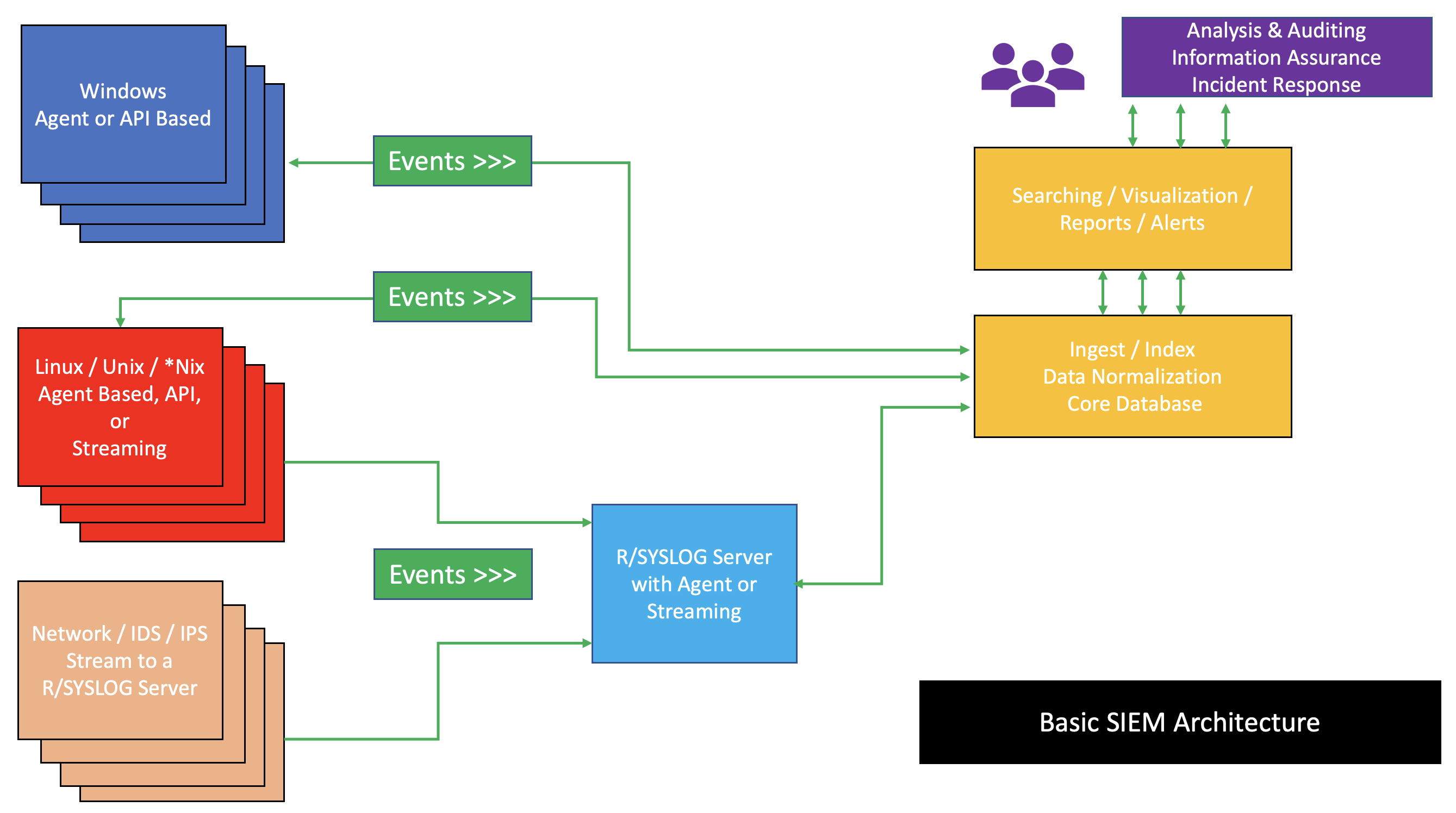
However, watching a system get broken is only half the science; we must also practice defending it in real-time. Defensive penetration testing focuses on detecting, responding to, and mitigating active cyberattacks. The analysts watching the SIEM dashboards, isolating compromised endpoints, and blocking malicious IP addresses are the defensive counterparts to the attackers. Defensive security monitoring and incident response teams are commonly referred to as Blue Teams.
Purple Teams
Historically, Red Teams and Blue Teams operated in silos, leading to friction. The Red Team would successfully breach the network, drop a massive report on the Blue Team's desk, and walk away. The Blue Team would feel demoralized and defensive.
The modern, highly effective approach relies on integration. Integrated penetration testing combines offensive attack strategies with defensive response strategies. To execute this, organizations create temporary or permanent collaborative units. Integrated security teams are commonly referred to as Purple Teams.
Purple teams facilitate communication between attackers and defenders to improve the organization's overall security posture. In a Purple Team exercise, the Red Team tester might execute a PowerShell payload, and immediately turn to the Blue Team analyst to ask, "Did your Endpoint Detection and Response (EDR) system catch that?" If the answer is no, they write a detection rule together right then and there. It is the scientific method applied to cybersecurity: hypothesize an attack, test it, observe the failure, and engineer a solution.
Finally, we must recognize that information technology exists in the physical world. The most sophisticated multi-factor authentication and zero-trust network architecture will not protect a server if a malicious actor can simply walk into the data center and plug a USB drive directly into the rack.
Physical penetration testing involves attempting to bypass physical security controls to gain unauthorized access to a facility. These testers evaluate the strength of doors, the vigilance of security guards, and the configuration of surveillance systems.
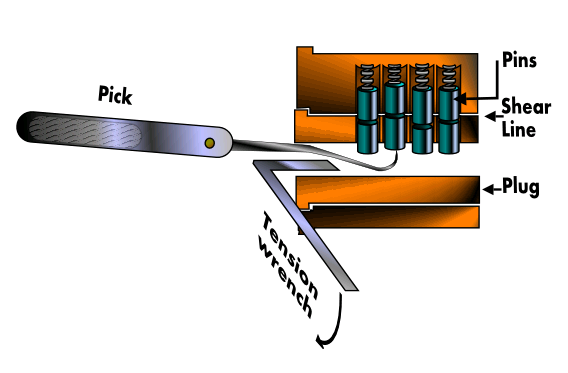
Physical penetration testing techniques include tailgating, picking locks, and bypassing badge readers. Tailgating—following an authorized employee through a secured door before it closes—is remarkably effective because it exploits human politeness. As an IT professional, you must remember that your logical defenses are entirely dependent on the physical integrity of the hardware running them. Assessing that physical boundary is just as vital as scanning for unpatched software.