Root Cause Analysis and Digital Forensics
Not sure you’re ready?
Take the ~3-minute readiness diagnostic and see where you stand.
When a skyscraper suddenly collapses, structural engineers do not begin their investigation by sweeping away the rubble. They freeze the site, document the precise placement of every fractured steel beam, and work backward to understand the exact physics of the failure. In the domain of network administration and cybersecurity, a server breach or a sudden ransomware encryption event is your collapsed building. The evidence of how the adversary entered, moved, and executed their payload is scattered across volatile memory registers, network logs, and fragmented hard drive sectors. The discipline of digital forensics, threat hunting, and root cause analysis is the science of freezing the digital crime scene, safely extracting the microscopic clues before they vanish, and mathematically proving the precise sequence of events that led to the compromise.
To defend a network, you must understand not just how to configure a firewall, but how to hunt for the adversaries who have already bypassed it, how to legally preserve the evidence of their actions, and how to dissect the underlying failures of your environment.
Standard security tools—like Intrusion Detection Systems (IDS) and antivirus software—operate on known signatures and predefined thresholds. But what happens when an advanced persistent threat (APT) uses stolen credentials to log in legitimately, avoiding automated security alerts entirely?
This is where threat hunting becomes essential. Threat hunting is a proactive cybersecurity technique aimed at detecting hidden attackers that evade automated security alerts. It requires a fundamental shift in perspective: threat hunting relies on the underlying assumption that the network environment is already compromised. Instead of waiting for an alarm, you act as the investigator, sweeping your systems for the faint footprints of an intruder.
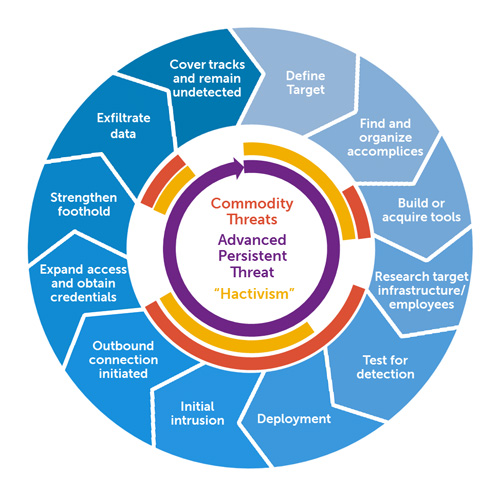
There are two primary methodologies you will use in the field:
- Intelligence-Driven Threat Hunts: This approach is reactive to new information. An intelligence-driven threat hunt uses indicators of compromise (IoCs) and threat intelligence feeds to search for specific adversary behaviors. If a global cybersecurity firm publishes a report on a new malware strain, providing its IP addresses and file hashes, you immediately query your own SIEM (Security Information and Event Management) logs to see if those exact IoCs exist in your network.
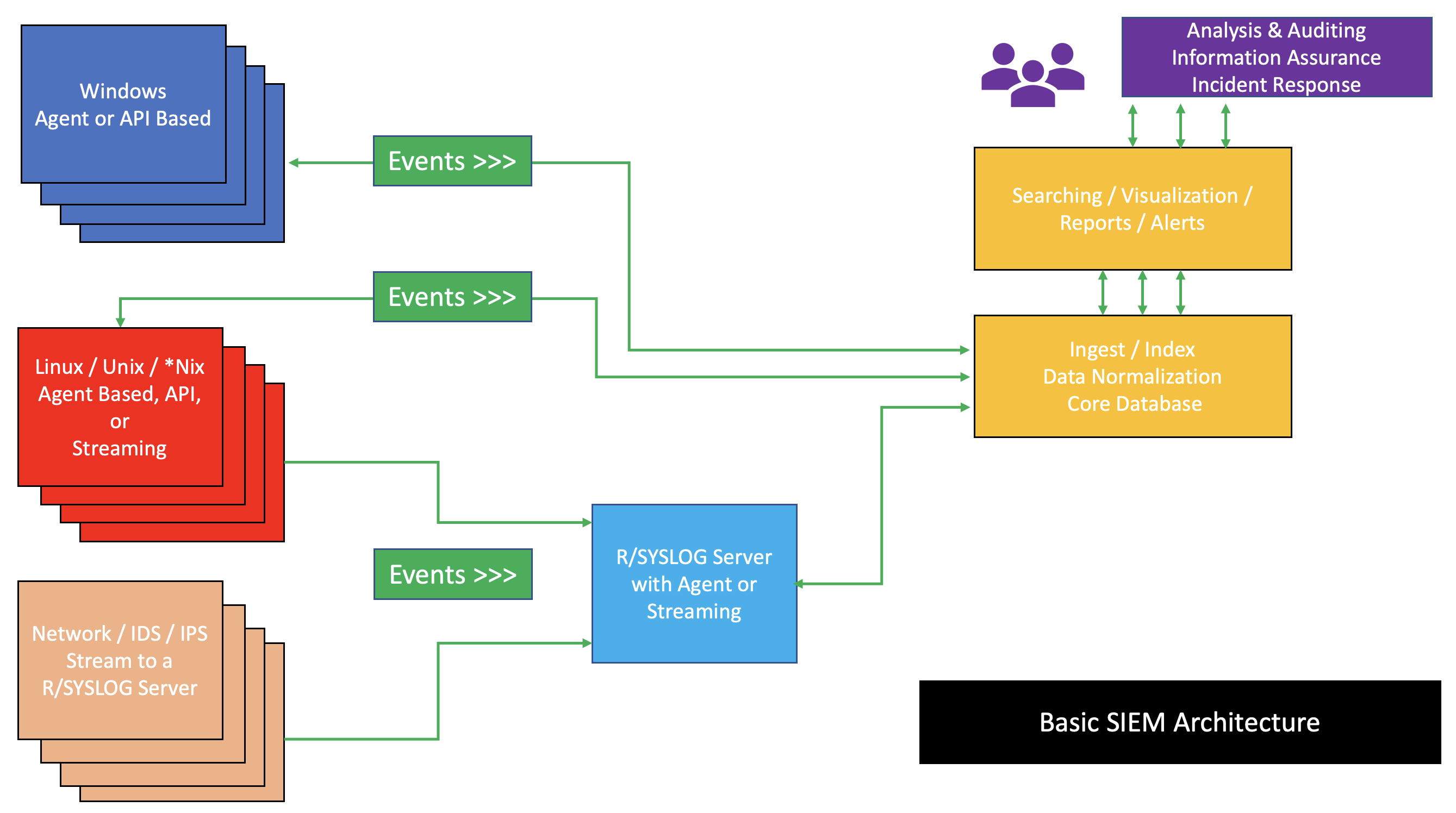
- Hypothesis-Driven Threat Hunts: This is a purely proactive, analytical approach. A hypothesis-driven threat hunt is initiated by an analyst postulating a specific attack methodology based on the organization's unique vulnerabilities. To build this hypothesis, analysts study Adversary Tactics, Techniques, and Procedures (TTPs), which describe the behavioral patterns attackers use. For example, knowing that your company recently acquired a new subsidiary with a weakly segmented network, you might hypothesize: "An attacker is utilizing the new trust relationship to execute lateral movement via Windows Management Instrumentation (WMI)." You then hunt specifically for that behavior.
When a compromise is discovered, the transition from incident response to digital forensics begins. NIST Special Publication 800-86 provides the definitive government and industry guidelines for integrating digital forensic techniques into the incident response life cycle.
Before you pull a server's power cable or hastily copy a hard drive, you must pause. The initial state of the machine is highly fragile.
First, capturing photographs or video recordings of a compromised system monitor preserves the visual state of the machine before isolation or power down. If a ransomware demand is on the screen, or a specific terminal window is open, photograph it. Second, a time offset must be recorded during digital forensics. Because servers and devices might be configured to local time zones or have drifting internal clocks, recording this offset allows you to accurately map local device timestamps to a standard time zone like Coordinated Universal Time (UTC). This ensures that log entries from a router in Tokyo can be precisely aligned with server logs in New York.

The Order of Volatility
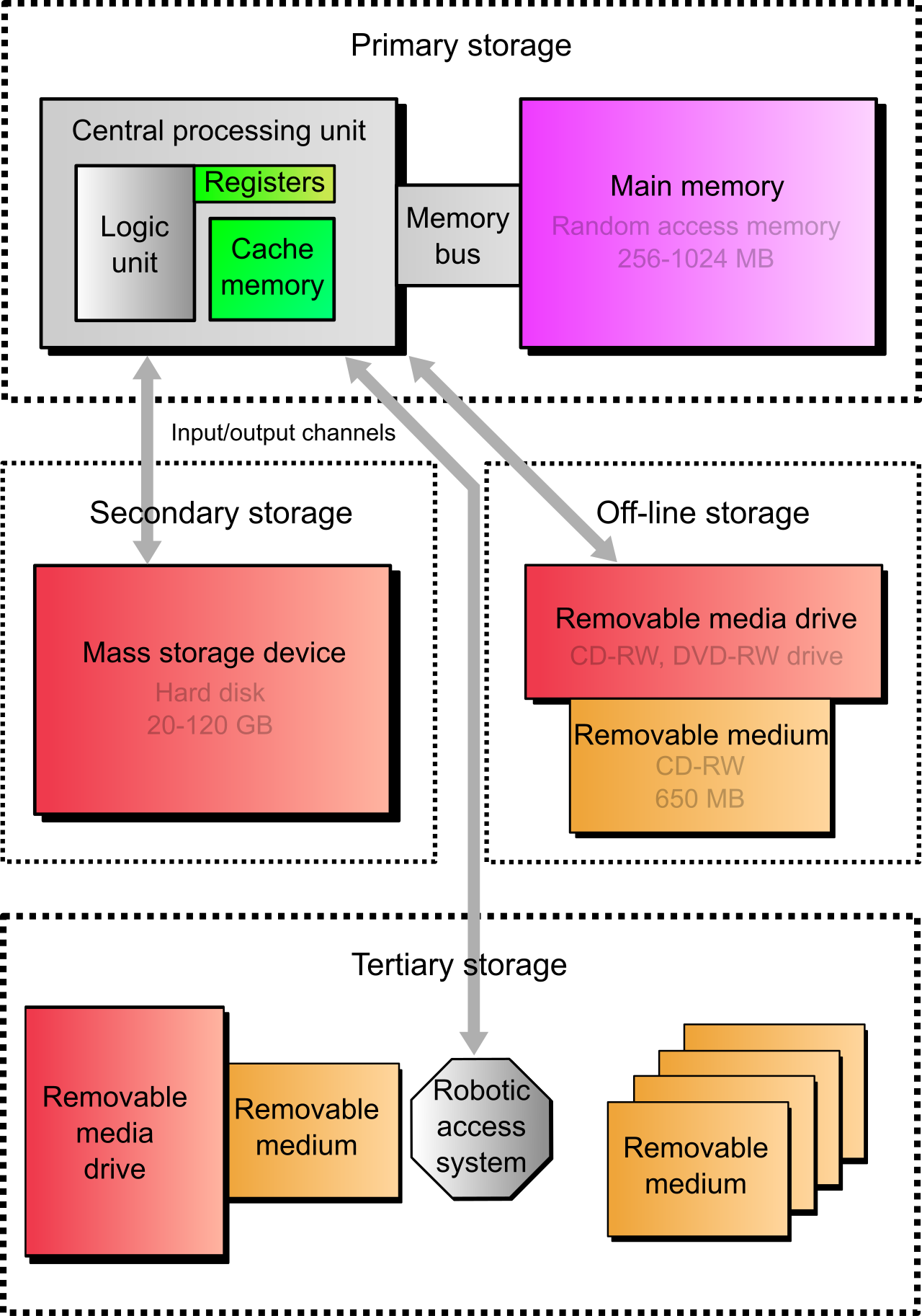
If you pull the plug on a compromised server, you instantly destroy crucial evidence. Why? Because data storage has different lifespans. The order of volatility determines the sequence in which digital evidence must be collected to prevent data loss. You must collect the most fragile data before moving to the stable data.
The Order of Volatility (From Most to Least Volatile)
- CPU Registers and Cache Memory: These are the most volatile forms of digital evidence and must be collected first. Data here changes in nanoseconds.
- Random Access Memory (RAM): RAM contains highly volatile data such as active network connections, encryption keys, and running processes. If a fileless malware is running, or if a ransomware decryption key is currently in memory, losing RAM power means losing the case.
- Disk Drives and Solid-State Drives (SSDs): These contain persistent, non-volatile data that survives power loss.
- Archival Media and Offline Backups: Tapes and disconnected drives are the least volatile forms of digital evidence. They are physically static.
Forensic Acquisition: Creating the Image
When you finally collect data from persistent storage, you cannot simply drag and drop files in Windows Explorer. Standard file copying only copies files the operating system wants you to see. It modifies metadata, like "Last Accessed" times, ruining the evidence.
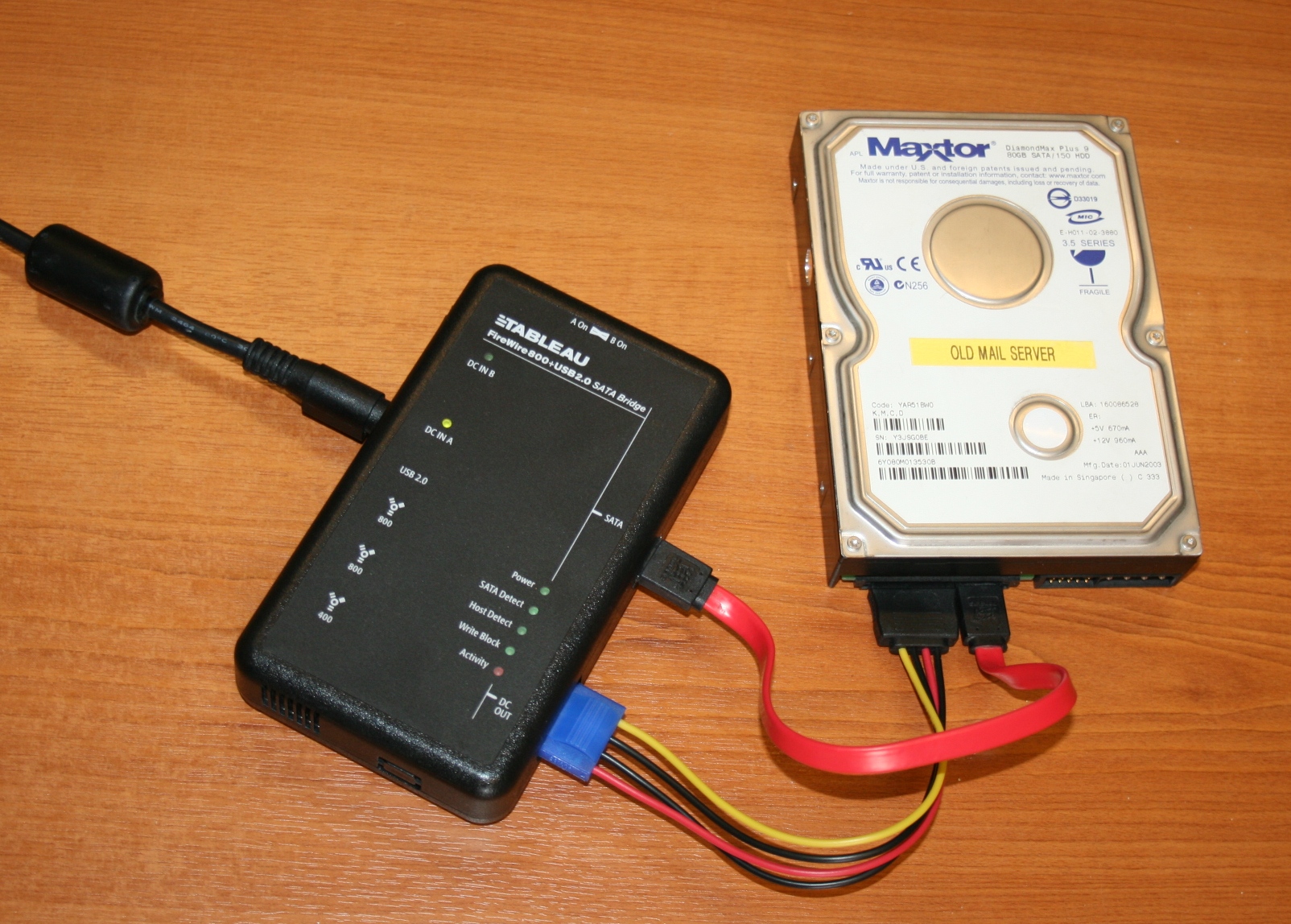
Instead, digital evidence acquisition must use bit-by-bit imaging rather than standard file copying to capture hidden data, unallocated space, and deleted files. Every single 1 and 0 on the physical disk is cloned.
To ensure the process of imaging does not accidentally write data to the suspect's drive, investigators use a hardware write blocker. This physical device intercepts write commands sent by the operating system, preventing a forensic workstation from modifying the contents of a suspect drive during the data imaging process.
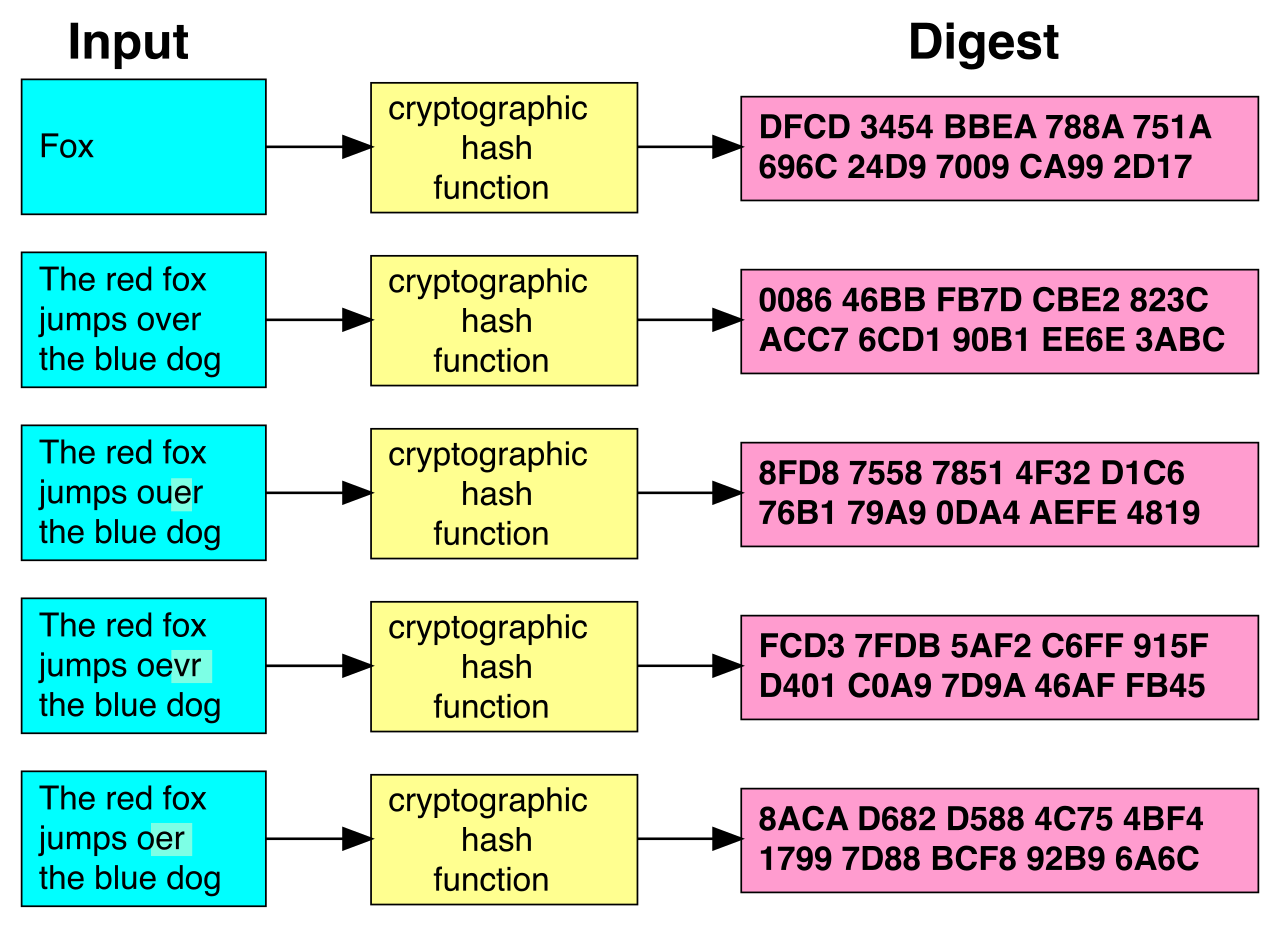
Finally, we must prove mathematically that the image we captured is a perfect, identical clone of the original disk. Cryptographic hashing is used before and after forensic imaging to prove that the acquired data exactly matches the original source data. Investigators calculate the hash of the original drive, then calculate the hash of the forensic image. If they match, the image is forensically sound. SHA-256 and MD5 are the standard hashing algorithms used in digital forensics to verify this data integrity.
Why do we insist on bit-by-bit imaging? Because adversaries hide in the physical architecture of the hard drive.
Imagine you have a shipping box that holds exactly 4,000 bytes. Your operating system divides a hard drive into these standardized boxes, called "clusters." Now, suppose you save a small text file that is only 1,000 bytes. That file is placed into the 4,000-byte cluster. What happens to the remaining 3,000 bytes?
This leftover room is called slack space. Slack space is the residual storage area located between the end of a logical file and the end of the allocated physical storage cluster. Forensic analysts actively examine slack space because attackers frequently use this hidden storage area to conceal malicious payloads. The operating system ignores it, making it invisible to casual file browsing, but bit-by-bit imaging captures it entirely.
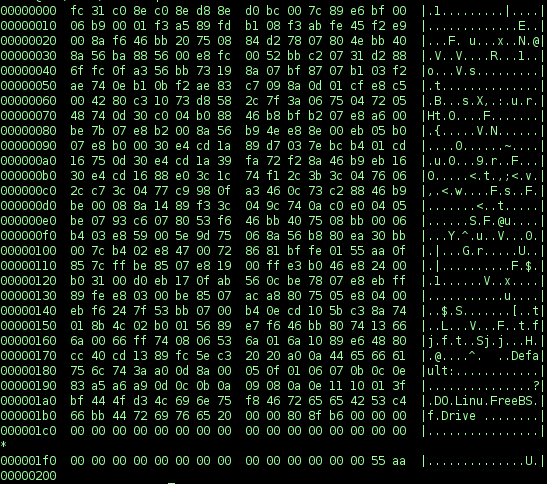
If an attacker deletes a file, the operating system simply removes the file's entry from the master directory; the actual 1s and 0s remain on the disk in what is now "unallocated space" until overwritten. Data carving is a forensic technique used to recover files directly from unallocated storage space without relying on the file system directory. Analysts search for specific file headers (like the hexadecimal signature of a PDF or an executable) and "carve" the data out of the raw bytes.
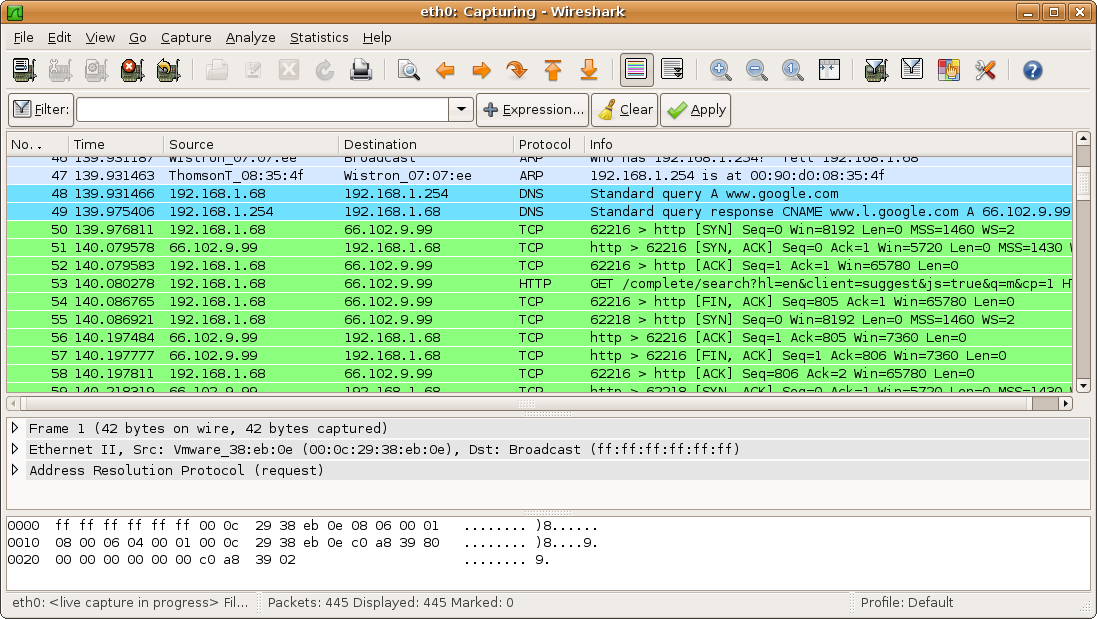
Furthermore, not all evidence is on a disk. Network forensics involves capturing and analyzing packet capture (PCAP) data to trace adversary lateral movement and identify exfiltrated data. While disk forensics shows you what the attacker did on a specific machine, PCAP data acts as the flight recorder of the network, showing exactly how they moved between machines.
In a corporate environment, forensics is rarely just an IT exercise; it is deeply tied to human resources and legal proceedings. For evidence to be admissible in a court of law, its integrity must be unimpeachable.
This relies entirely on a chain of custody. A chain of custody is a chronological document detailing the seizure, custody, transfer, and analysis of digital evidence. Every time a hard drive is moved from a safe, handed to an analyst, or imaged, the time, date, and person responsible must be logged. Maintaining a strict chain of custody is necessary to prove that digital evidence has not been tampered with and is admissible in a court of law. A broken chain means a skilled defense attorney can have the evidence thrown out, arguing that the data could have been altered.
When corporate litigation occurs—such as intellectual property theft or a breach of contract—companies enter a phase called electronic discovery (e-discovery). E-discovery is the process of identifying, collecting, and producing electronically stored information (ESI) for litigation.
For IT administrators, the immediate consequence of anticipated litigation is the legal hold. A legal hold is a formal process used by an organization to preserve all forms of relevant information when litigation is anticipated.
This directly impacts your daily operations. Implementing a legal hold supersedes and suspends standard data retention and automated deletion policies for the targeted data. If your mail server is configured to automatically purge emails older than 90 days to save space, a legal hold requires you to immediately pause that script. Allowing an automated script to destroy data during a legal hold can lead to massive legal penalties for the organization, a concept known as "spoliation of evidence."
Once the fire is out, the attacker is evicted, and the evidence is secured, the final task begins. You must figure out exactly how the breach happened so you can permanently close the door.
Root cause analysis (RCA) is a structured problem-solving method used to identify the fundamental, underlying origin of a security incident. The distinction between fixing a symptom and fixing a root cause is critical. If a server is infected with malware, formatting the server and restoring from a backup fixes the symptom. If the attacker got in because a firewall rule allowed unrestricted RDP access from the internet, and you don't change that rule, they will simply infect the server again tomorrow. The primary goal of root cause analysis is to implement corrective actions that prevent the exact same security incident from occurring again.
To drill down to the fundamental truth, professionals use several structured RCA frameworks:
The Five Whys
This is an iterative interrogative technique. The Five Whys is a root cause analysis technique that involves asking "why" repeatedly until the fundamental cause of a problem is identified.
- Problem: The database server was hit with ransomware.
- Why? Because an administrator clicked a phishing link and executed a payload.
- Why? Because the payload bypassed the email filter.
- Why? Because the email filter definitions had not been updated in six months.
- Why? Because the automated update script failed.
- Why? Because the service account password expired and was never rotated. (Root Cause)
The Ishikawa (Fishbone) Diagram
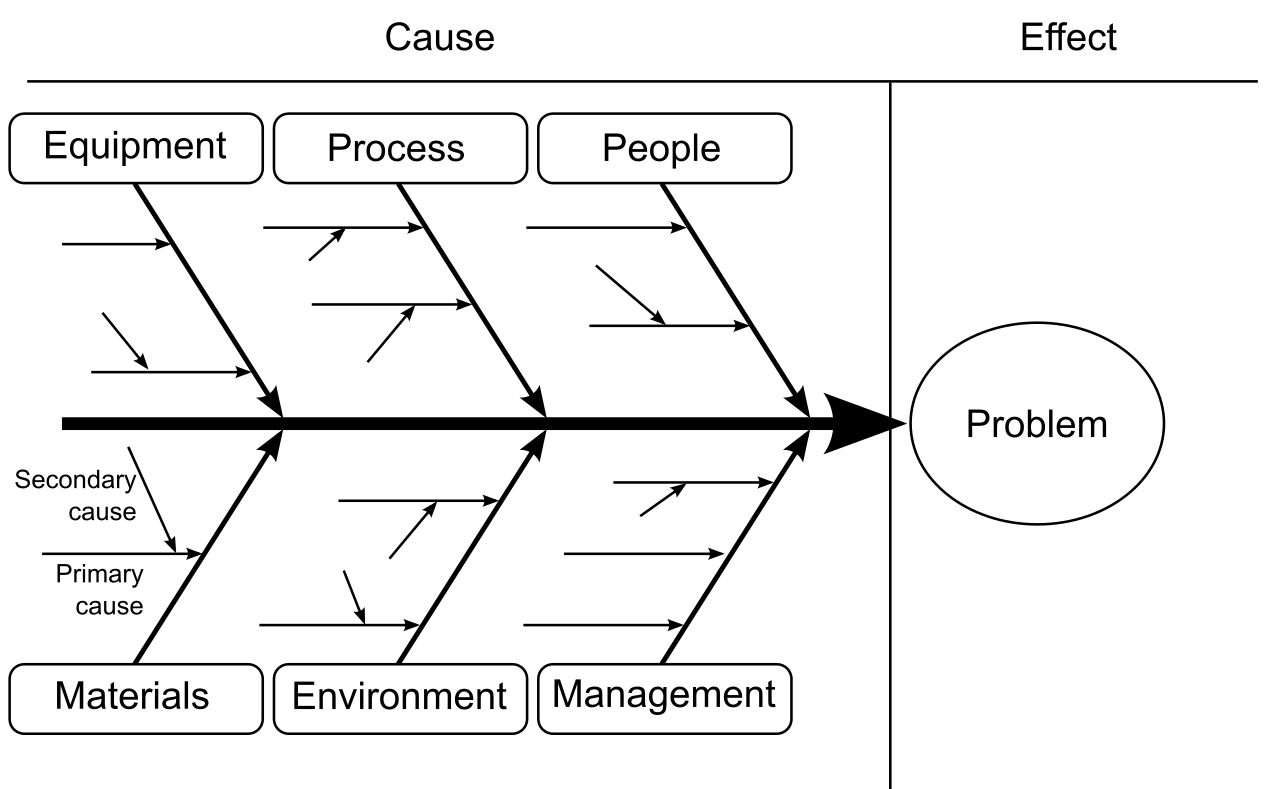
Sometimes, an incident is caused by a confluence of several factors—people, processes, and technology—failing simultaneously. An Ishikawa diagram, also known as a fishbone diagram, is a visual tool used to categorize potential causes of a problem to pinpoint the root cause. The head of the fish is the incident (e.g., Data Breach). The "bones" branching off represent categories like Hardware, Software, Personnel, and Policies, allowing a team to brainstorm and visually map out all contributing factors.
Fault Tree Analysis
When dealing with complex, highly engineered systems, IT professionals use deductive logic to find the failure path. Fault tree analysis uses a top-down, deductive failure methodology incorporating Boolean logic to map out the exact pathways leading to a security failure.
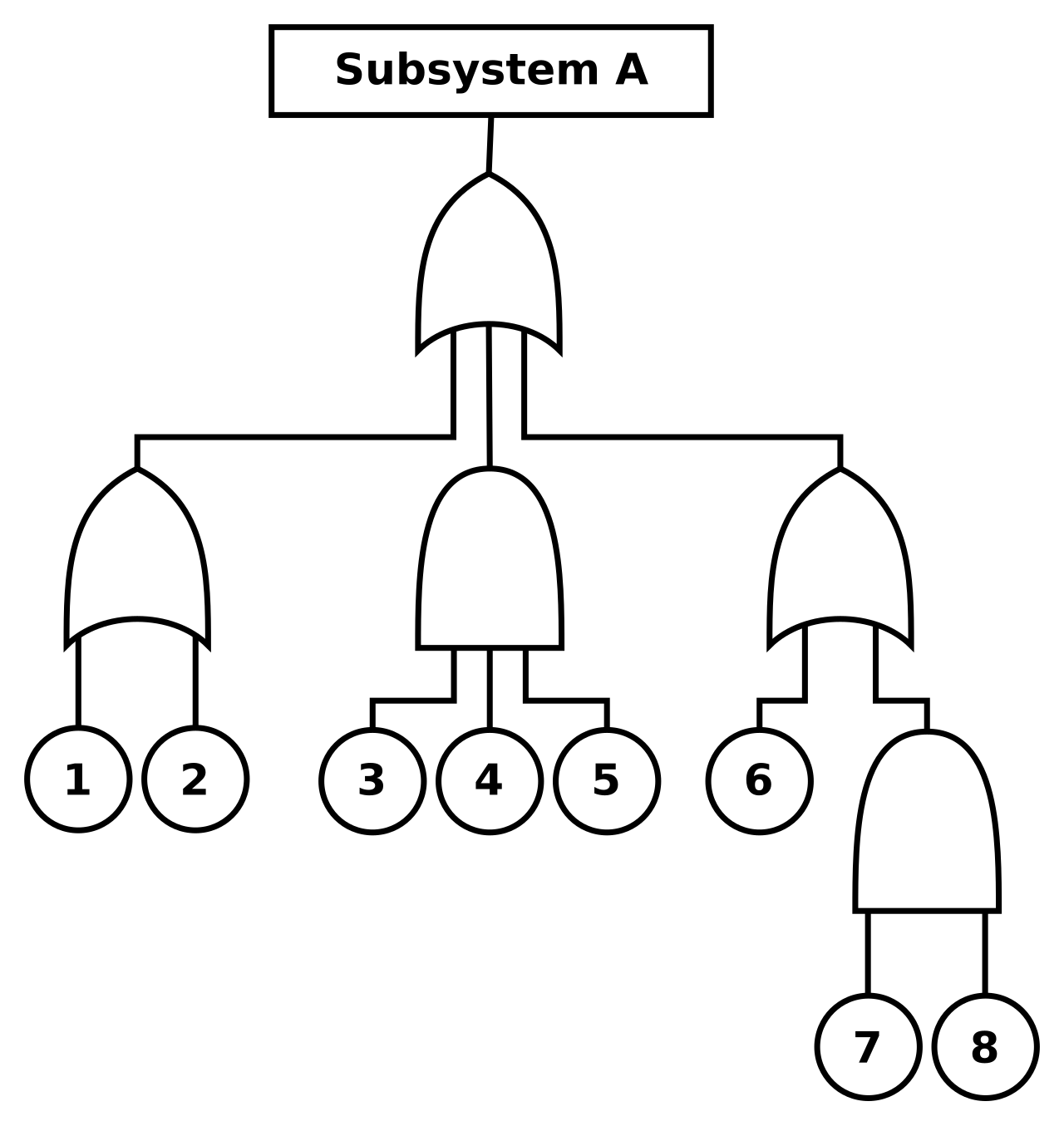
Think of it like designing a circuit using AND / OR gates. If the top event is "Web Server Compromise," the branches below it might map to "Firewall Failed" OR "Application Vulnerability Exploited." If it requires both an expired certificate AND a misconfigured load balancer for an outage to occur, they are connected by an AND gate. By mapping these logic gates, security engineers can mathematically determine the minimum number of failures required for a breach, allowing them to implement targeted, highly effective security controls.

In the end, performing digital forensics, hunting for threats, and finding the root cause of an incident isn't just about playing detective. It is about deeply understanding the mechanics of your own infrastructure. By mastering the order of volatility, protecting the chain of custody, and rigorously analyzing the root cause, you elevate yourself from an administrator reacting to blinking lights into a professional who controls the battlefield.