Financial planning process
Not sure you’re ready?
Take the ~3-minute readiness diagnostic and see where you stand.
A master architect does not begin constructing a skyscraper by arbitrarily pouring concrete; they follow a rigid, scientifically sound sequence of drafting, soil testing, and structural engineering. In professional financial advising, the architecture of wealth relies on a similarly uncompromising blueprint. The CFP Board defines Financial Planning as a collaborative process that helps maximize a client’s potential for meeting life goals. Whenever a CFP professional is engaged to provide Financial Planning to a client, they are procedurally and ethically bound to comply with the Practice Standards for the Financial Planning Process.
This framework is not a set of loose, optional guidelines; the CFP Board Practice Standards for the Financial Planning Process consists of seven sequential steps. You cannot optimize a system you do not understand, and you cannot monitor a trajectory you have not yet initiated. We must move through these steps in order, transforming a disparate collection of a client's financial data into a cohesive, actionable reality.
To master the CFP® exam and your professional practice, you must internalize not just the names of these steps, but the exact philosophical and practical duties the planner bears within each phase.
| Step | CFP Board Official Designation | Core Objective |
|---|---|---|
| 1 | Understanding the Client’s Personal and Financial Circumstances | Gather data, resolve contradictions, and assess reality. |
| 2 | Identifying and Selecting Goals | Filter desires through the lens of mathematical reality. |
| 3 | Analyzing Current and Alternative Courses of Action | Calculate the present trajectory versus potential optimal vectors. |
| 4 | Developing the Financial Planning Recommendation(s) | Engineer the specific strategy to bridge the gap. |
| 5 | Presenting the Financial Planning Recommendation(s) | Translate complex strategy so the client can make an informed choice. |
| 6 | Implementing the Financial Planning Recommendation(s) | Execute the blueprint using objective professional judgment. |
| 7 | Monitoring Progress and Updating | Measure empirical results against theoretical assumptions. |
Step 1 is the empirical foundation of the entire engagement. During this phase, the financial planner must obtain both the qualitative and quantitative information necessary to fulfill the Scope of Engagement.
Before you can chart a course, you must establish an exact set of coordinates for the client's current location. A physicist cannot calculate momentum without knowing both mass and velocity; a planner cannot build a strategy without knowing both the hard numbers and the human variables.
Gathering the Data
You must collect two distinct types of information:
- Quantitative Information: This is the objective data. It includes the measurable metrics of the client's financial physics: client age, income, expenses, assets, liabilities, and existing insurance coverage.
- Qualitative Information: This is the subjective data. It includes the nuances of human behavior and expectation: client health, life expectancy expectations, risk tolerance, and personal values.
Once gathered, the financial planner must analyze the information to assess the client’s current personal and financial circumstances. You are not just acting as a human filing cabinet; you are synthesizing this data to understand their baseline reality.
The Inconsistency Imperative
Human beings are frequently walking contradictions. In Step 1, the financial planner is responsible for addressing any inconsistencies in the provided client information. If a client claims on a questionnaire that their primary personal value is "absolute capital preservation," but their quantitative data reveals a portfolio entirely concentrated in leveraged cryptocurrency ETFs, you have an inconsistency. You cannot proceed to Step 2 until you have investigated and resolved this dissonance.
The Ultimate Ultimatum: Limit or Terminate
What happens when a client refuses to provide the necessary data? Perhaps they want you to design a retirement plan but refuse to disclose the balance of a high-interest business loan. The rule here is absolute: if a financial planner is unable to obtain the necessary information in Step 1, the planner must either limit the scope of the engagement (if the missing data only affects a peripheral area) or terminate the engagement. You cannot engineer a safe bridge with missing structural variables.
Step 2 is about defining the destination. In this phase, the financial planner and client collaborate to identify potential financial goals.
Goals are not handed down from on high; they are negotiated. During Step 2, the financial planner must first discuss the planner’s assessment of the client’s financial and personal circumstances (derived from Step 1) with the client. You must show them their current baseline before they can realistically decide where they want to go.
Building the Assumptions
Goals do not exist in a vacuum; they exist in an economy. During Step 2, the financial planner must develop reasonable assumptions and estimates regarding macroeconomic and personal factors like life expectancy, inflation rates, and investment returns.
If a client wants to retire at 50 and spend $150,000 a year, you must project what $150,000 will actually buy in twenty years. You must assume a reasonable rate of return on their capital. These assumptions form the gravitational constants of your financial model.
Prioritizing the Vision
Clients often have a limitless appetite for goals (fund a grandchild's Ivy League education, buy a second home, retire early) but limited resources. Therefore, in Step 2, the financial planner must help the client select and prioritize specific financial goals based on the stated assumptions. This is where you bring the client's desires into alignment with mathematical reality, ranking them by importance and feasibility.
Step 3 is the diagnostic phase. We know where the client is (Step 1) and where they want to be (Step 2). Now, we calculate their trajectory.
During Step 3, the financial planner must mathematically and logically analyze whether the client’s current course of action maximizes the potential for meeting the client’s goals. If they change absolutely nothing—if they keep saving at the same rate, in the same tax wrappers, with the same asset allocation—will they hit the target?
In most cases, the answer is no. Therefore, the financial planner must evaluate whether potential alternative courses of action could better help the client achieve stated goals.
Weighing the Alternatives
Evaluating alternative courses of action requires assessing the advantages and disadvantages of each option relative to the client’s current approach.
For instance, if the current course of action is paying heavy ordinary income tax on bond yields, an alternative course of action might be shifting to municipal bonds. The advantage is tax efficiency; the disadvantage is a potentially lower nominal yield or increased duration risk. You must objectively weigh these alternatives against the baseline of doing nothing.
Step 4 is the formulation of the master plan. The diagnostic work is done; it is time to write the prescription.
During Step 4, the financial planner must select one or more recommendations designed to maximize the potential for meeting the client's goals. Every recommendation developed here must be firmly based on the analysis of the client’s current and alternative courses of action conducted in Step 3.
The Architecture of the Plan
When developing recommendations, the financial planner must actively consider the assumptions and estimates (inflation, returns, life expectancy) used to formulate the plan. A recommendation to purchase a fixed annuity, for example, heavily relies on your inflation assumptions.
Furthermore, you must evaluate the mechanics of execution. The financial planner must evaluate whether the recommendations can be implemented independently or if multiple recommendations must be executed together.
- Independent: Increasing a 401(k) contribution can be done regardless of any other action.
- Interdependent: Recommending a client fund a Charitable Remainder Trust is highly dependent on the concurrent recommendation to sell a highly appreciated business asset. They are a package deal.
Step 5 is the translation phase. A brilliant plan that the client does not understand is a useless plan.
During Step 5, the financial planner must present the selected recommendations to the client in a manner that allows the client to make an informed decision. You are an educator here.
Complete Transparency
When presenting recommendations, the financial planner must discuss the anticipated material effects of the recommendations on the client’s financial circumstances. If a strategy will reduce their current liquid cash flow by $2,000 a month to fund a life insurance policy, that material effect must be explicitly stated.
Equally critical: the financial planner must disclose the specific assumptions and estimates that form the basis of the presented recommendations. The client must understand that the projection showing a successful retirement at age 60 relies on the assumption of a 6% annualized return and 3% inflation. If those variables change, the outcome changes.
Finally, the financial planner must communicate the timing and priority of the recommendations being presented. The client needs to know what must happen this week (e.g., executing estate documents before a major surgery) versus what can happen next quarter (e.g., rebalancing a standard brokerage account).
Step 6 is where theory meets reality. We are putting the blueprint into production.
A financial plan is not self-executing. During Step 6, the financial planner and client must agree on their respective responsibilities regarding the implementation of recommendations. Who is calling the CPA? Who is rolling over the 401(k)? Who is contacting the estate attorney?
The Planner's Implementation Duties
If the financial planner has implementation responsibilities, the planner must identify actions, products, or services designed to execute the recommendations. Moving from the abstract to the concrete, the financial planner must recommend specific actions, products, or services to execute the financial plan.
Instead of saying "You need a diversified equity portfolio" (which is a Step 4 recommendation), Step 6 requires saying, "I recommend implementing this via these specific index funds and ETFs."
Crucially, when selecting products or services in Step 6, a financial planner must use reasonable care and objective professional judgment. This is a profound fiduciary checkpoint. The selection of a specific mutual fund or insurance policy cannot be driven by planner compensation; it must be driven strictly by the objective mechanics of what best serves the client's goals.
Step 7 ensures the plan survives contact with reality. Financial physics is not static; variables change, markets crash, and human lives evolve.
First and foremost, during Step 7, the financial planner and client must establish whether the planner has ongoing monitoring responsibilities. Not all engagements require this—some are strict one-time project plans.
However, if the financial planner does take on monitoring responsibilities, the planner must analyze the client’s progress toward achieving the selected goals at agreed-upon intervals (e.g., annually, semi-annually).
The Feedback Loop
Monitoring is essentially a continuous return to Step 1. During Step 7, the financial planner must obtain current qualitative and quantitative information to evaluate material changes in the client’s circumstances. Have they inherited money? Had a child? Suffered a health crisis? Experienced a market correction?
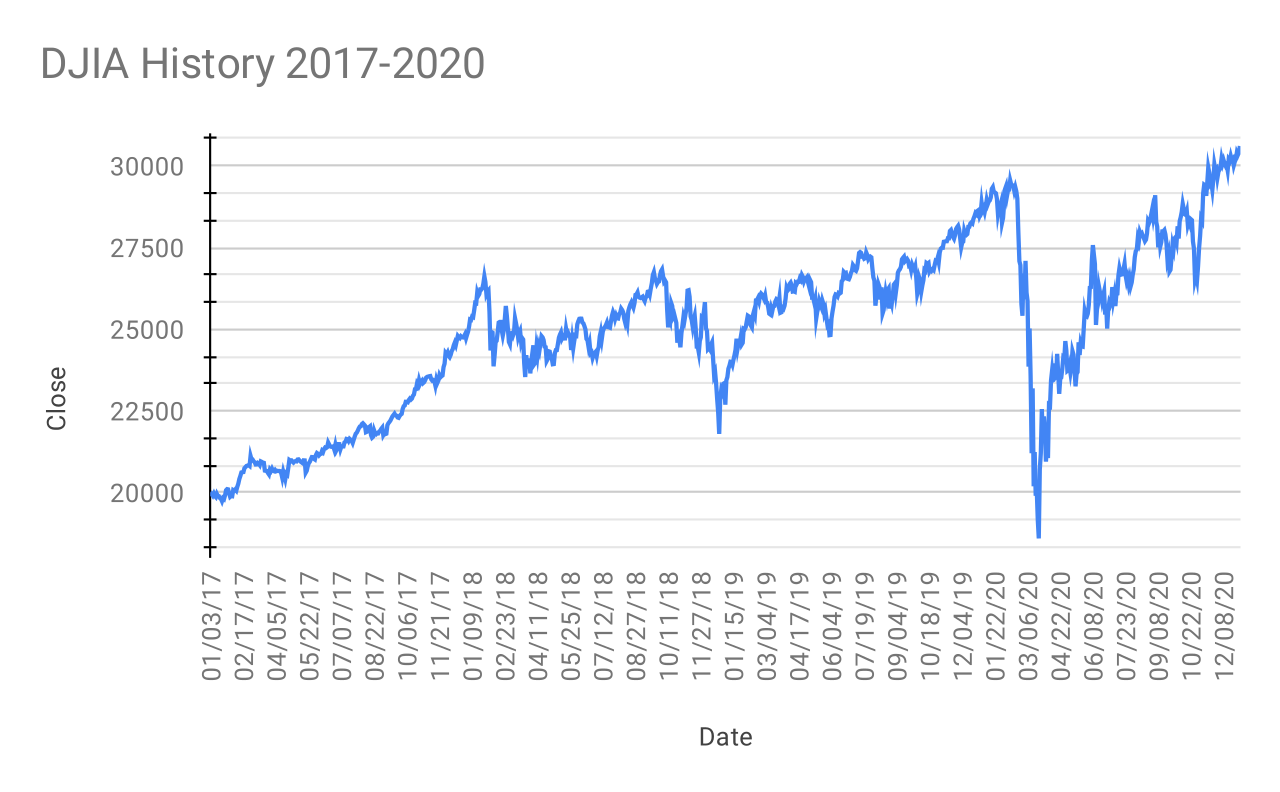
If changes in the client’s circumstances are identified, the financial planner must update the goals, recommendations, or implementation strategies accordingly. The blueprint is a living document. Through this rigorous, sequential process, you ensure that as the world changes, the client's trajectory remains firmly locked on their optimal financial potential.