Sources of money conflict
Not sure you’re ready?
Take the ~3-minute readiness diagnostic and see where you stand.
In the structural engineering of a bridge, the most dangerous forces are not the static weights of the concrete or steel, but the dynamic, oscillating friction points where different materials meet under stress. In professional financial planning, a Monte Carlo retirement projection or a tax-loss harvesting strategy represents the static weight—the predictable math. The dynamic, unpredictable friction comes from the human beings sitting across your desk. You will quickly discover that presenting a mathematically flawless financial plan is entirely useless if the couple receiving it is paralyzed by an unspoken war over money. To successfully guide clients toward their goals, a financial planner must be able to diagnose, mediate, and defuse the profound emotional volatility embedded in a couple's finances.

To understand why a simple conversation about a budget can spiral into a hostile standoff in your conference room, we must first look at the empirical reality of money in relationships.
Money is consistently cited as one of the most frequent sources of conflict among married couples. However, it is not merely the frequency of these disputes that matters, but their unique physical and emotional footprint. Arguments about money in relationships are often more intense than arguments about other topics. If a couple argues about household chores or weekend plans, their cortisol levels generally return to baseline relatively quickly. In contrast, financial arguments take longer for couples to recover from compared to other types of arguments.

Why is this the case? Because a dispute over a credit card bill is rarely actually about the bill. Money arguments often represent deeper psychological conflicts regarding control. Similarly, how one earns, spends, or saves is intimately tied to identity, meaning money arguments often represent deeper psychological conflicts regarding self-worth.
When these underlying issues are left unresolved, the long-term structural integrity of the relationship degrades. Statistically, couples who frequently disagree about finances are more likely to divorce than couples who disagree about other topics. As a CFP® professional, you are effectively standing at the intersection of your client's net worth and self-worth.
If you want to resolve a conflict, you have to understand the operating system governing your clients' behaviors. In financial psychology, this operating system is known as a money script.
A money script is a core unconscious belief about money formed in early childhood.
These scripts dictate what a person believes money is for, how it should be handled, and what it says about a person's character. Uncovering each partner's family-of-origin financial experiences helps explain current financial behaviors. For example, a client who grew up in poverty might view every dollar spent as a threat to their survival, while a client who grew up in an affluent, highly leveraged household might view debt as a normal tool for lifestyle maintenance.

When two individuals marry, their unexamined operating systems collide. Opposing money scripts are a primary source of financial conflict between partners.
Common Behavioral Fault Lines
When opposing money scripts interact in the real world, they predictably fracture along several specific fault lines. You will see these archetypes routinely on the CFP® exam and in your practice:
- The Saver vs. The Spender: The dynamic of a strict saver married to a frequent spender is a common source of friction in romantic relationships. The saver views the spender as reckless and a threat to their safety; the spender views the saver as controlling and a barrier to enjoying life.
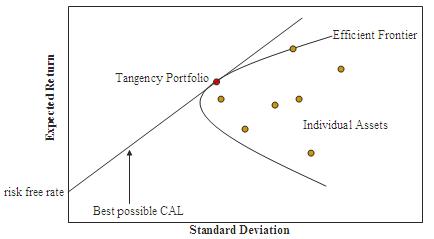
- Risk Tolerance Discrepancies: Differing risk tolerances between partners can lead to disputes regarding investment strategies. One partner may demand the safety of Treasury bonds, while the other insists on aggressive growth equities, leaving the portfolio paralyzed.
- Debt Prioritization: Disagreements over debt repayment prioritization frequently cause tension in relationships. One partner may want to aggressively pay down a $20,000 low-interest student loan to achieve emotional peace of mind, while the other wants to deploy that cash into a high-yield investment vehicle.
Beyond individual behavioral differences, conflict is frequently generated by the structural dynamics of the relationship itself, or by external pressures from the broader family tree.
Power Imbalances and Financial Infidelity
A power imbalance occurs in a relationship when one partner controls all financial decisions. In many households, this is not a malicious setup, but a slow delegation of duties that turns into unilateral control. These power imbalances in relationships often stem from a disparity in income between partners, where the primary breadwinner consciously or unconsciously dictates the terms of the family's financial life, leaving the other partner feeling voiceless.
When individuals feel restricted by a power imbalance or fear their partner's judgment regarding an opposing money script, they often resort to deception. Financial infidelity involves hiding financial actions or accounts from a romantic partner. This might manifest as hidden credit card debt, a secret brokerage account, or undisclosed loans to friends. Regardless of the scale, financial infidelity destroys trust within a relationship, acting as an emotional betrayal equivalent to, or sometimes more devastating than, romantic infidelity.
The Intergenerational Squeeze: Enabling and Adult Children
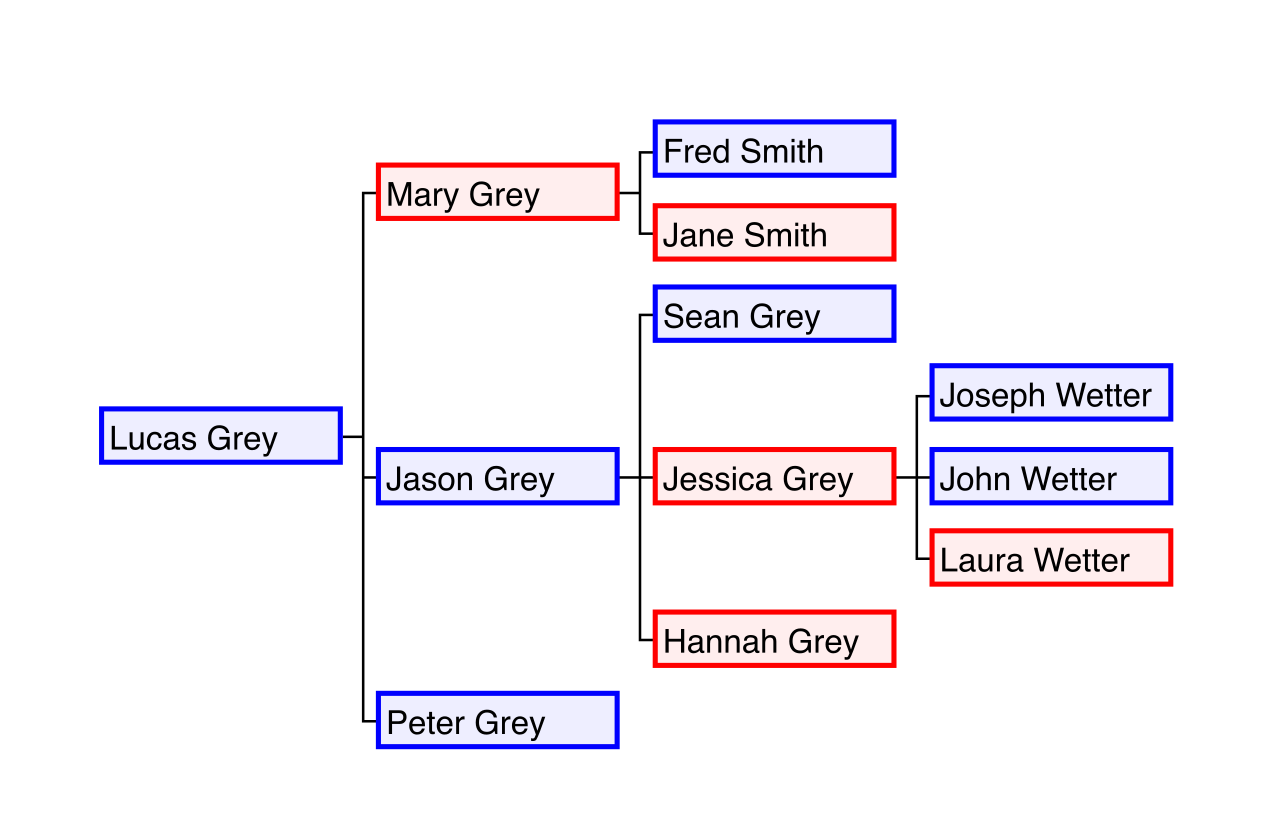
Money conflicts rarely stay contained to the married couple; they frequently bleed into the next generation. Disagreements over financially supporting adult children frequently cause friction between parents.
In these scenarios, the planner must introduce the concept of financial enabling.
Financial enabling is the act of giving money to someone in a way that harms the giver's financial well-being. Crucially, it is also a double-edged sword: financial enabling is the act of giving money to someone in a way that prevents the receiver from achieving financial independence.
If a couple is jeopardizing their retirement security to pay an adult child's rent, one partner usually recognizes the mathematical danger while the other is blinded by parental obligation. Mediating this requires shifting the perspective: continuing the support is not just bankrupting the parents; it is actively harming the child's development.
When financial conflict inevitably erupts during a planning meeting, you cannot simply stare at your spreadsheet and wait for it to pass. You must step into the role of a mediator.
Setting the Stage
Before diving into sensitive topics like budgeting or estate planning, financial planners must establish clear ground rules for communication during couple meetings. Ground rules in client meetings prevent minor financial disagreements from escalating into hostile arguments. These rules might include agreements to let one person finish speaking before the other responds, or a commitment to use "I" statements rather than accusatory "You" statements.
Communication and De-escalation Techniques
When mediating disputes, the CFP® professional must employ a specific toolkit of communication strategies.
| Technique | Definition | Clinical Application in Financial Planning |
|---|---|---|
| Active Listening | Requires a financial planner to fully concentrate on the client's words without interrupting. | You do not formulate your rebuttal or your financial solution while the client is speaking. You give them complete cognitive presence. |
| Reflective Listening | Involves the financial planner repeating back a client statement to confirm understanding. | "What I am hearing you say is that holding this credit card debt makes you feel physically anxious. Did I get that right?" |
| Normalizing | Involves the financial planner assuring clients that financial disagreements are common among couples. | When a couple feels embarrassed about arguing, you step in: "I want you both to know that negotiating over spending limits is something I see in almost every successful marriage I work with." |
| Reframing | Changing the perspective of a negative client statement into a more constructive view. | Shifting "He's obsessed with hoarding cash" to "It sounds like building a fortress of financial safety is incredibly important to him." |
| Identifying Shared Goals | Helping couples find common ground during a disagreement by zooming out to the macro objective. | When arguing over a $200 monthly expense, remind them: "Let's pause. Both of you have stated your primary goal is to retire to the lake house by age 60. How does this decision serve that shared goal?" |

The Golden Rule of Mediation
Through all of these techniques, there is an absolute boundary you must observe: financial planners must maintain strict neutrality when mediating disputes between partners.
Even if one partner's perspective aligns perfectly with the mathematically optimal financial choice (e.g., the partner who wants to save more), you cannot ally yourself with them. Taking sides in a client dispute compromises the financial planner's objectivity. The moment one partner feels the planner has "teamed up" with their spouse, the planner loses all trust and credibility, and the professional relationship is effectively over.
You are a financial planner, not a psychologist. A financial planner must recognize the boundary between basic mediation and the need for psychological counseling.
While you are equipped to handle differing risk tolerances, minor disagreements over budgets, and the clashing of basic money scripts, there is a hard limit to your professional scope. Severe financial conflict requires a referral to a licensed mental health professional or financial therapist.
If a couple's arguments in your office become emotionally abusive, if financial infidelity has fundamentally shattered the marriage's foundation, or if a client exhibits signs of pathological financial behaviors (such as severe compulsive gambling or hoarding), you must pause the financial planning process. Attempting to fix deep-seated psychological trauma with an asset allocation strategy is not only ineffective—it is professional malpractice. Knowing when to mediate and when to refer out is the hallmark of an elite, comprehensive financial planner.