Tax consequences of property transactions
Not sure you’re ready?
Take the ~3-minute readiness diagnostic and see where you stand.
A client’s balance sheet is a living, breathing history of capital. Every asset carries an invisible tether to its origins—a figure known as its basis. In the Internal Revenue Code, wealth creation operates much like the laws of thermodynamics: economic energy cannot simply vanish. When an asset appreciates, that embedded gain must eventually be recognized, deliberately deferred, or legally excluded. As a financial planner, mastering the architecture of basis and property transactions allows you to choreograph the flow of capital, minimizing tax friction and maximizing after-tax wealth for your clients.
To determine the tax consequences of any property transaction, we must first establish the property's foundation: its basis. An asset's basis is its tax footprint. How that footprint is calculated depends entirely on how the asset was acquired.
1. Purchased Property
When your client writes a check for an asset, the rules are deeply intuitive. The initial basis of purchased property is the acquisition cost of the property. But cost is not just the sticker price. The IRS allows you to capitalize the friction of the purchase. Therefore, the cost basis of purchased property includes sales taxes, freight, and installation charges.
Holding Period Mechanic: The holding period for purchased property begins on the day after the property is acquired. The day of purchase does not count toward the holding period.
2. Inherited Property: The Ultimate Reset Button
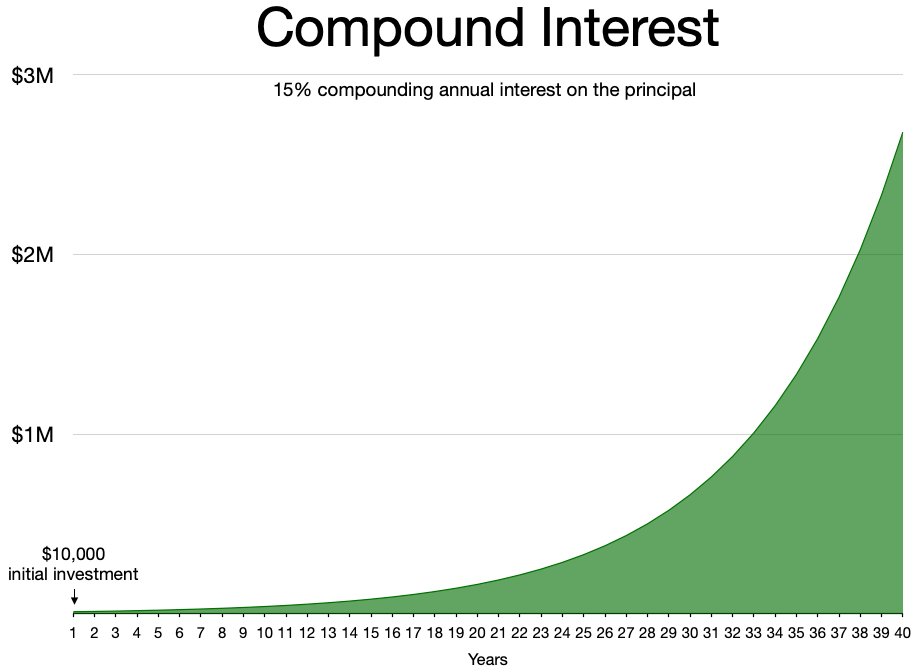
Death triggers one of the most powerful wealth-preservation mechanisms in the tax code: the step-up in basis. The basis of inherited property is generally the fair market value of the property on the date of the decedent's death. This is magical from a tax perspective because the step-up in basis eliminates income tax liability on capital appreciation that occurred during the decedent's lifetime. Decades of compound growth are instantly untethered from capital gains tax.
Furthermore, the holding period for inherited property is always considered long-term regardless of the actual holding period. Even if the decedent bought Apple stock on Monday and passed away on Tuesday, the heir receives long-term tax treatment.
Alternate Valuations and Exceptions Executors have a strategic choice if estate values are dropping. If the executor elects the alternate valuation date, the basis of inherited property is the fair market value six months after the decedent's death. However, this creates a timing trap: if inherited property is distributed or sold before the six-month alternate valuation date, the basis is the fair market value on the date of distribution or sale.
We must also be vigilant for two vital exceptions where the step-up is denied:
- Income in Respect of a Decedent (IRD): The step-up in basis rule does not apply to Income in Respect of a Decedent assets. Traditional IRAs and annuities are examples of Income in Respect of a Decedent assets that do not receive a step-up in basis. Their embedded gains are taxed as ordinary income to the beneficiary.
- The "Boomerang" Anti-Abuse Rule: You cannot give a dying relative highly appreciated stock just to get it back step-up a month later. Appreciated property gifted to a decedent within one year of death does not receive a step-up in basis if the property passes back to the original donor upon the decedent's death.
3. Gifted Property: The Carryover and the Dual Basis
When property is gifted during life, the IRS faces a dilemma. They want to eventually tax the embedded gain, but they absolutely refuse to let taxpayers transfer their tax losses to someone in a higher bracket. Consequently, the basis of gifted property depends on the fair market value of the property on the date of the gift relative to the donor's adjusted basis.
Scenario A: Appreciated Property (FMV ≥ Donor's Basis) When the fair market value of gifted property equals or exceeds the donor's adjusted basis, the donee assumes the donor's adjusted basis. The tax liability travels with the asset. Furthermore, the holding period for gifted property tacks on the donor's holding period when the donee assumes the donor's adjusted basis. Note on Gift Tax: If the donor incurred out-of-pocket gift tax, the tax code provides slight relief. Gift tax paid by the donor on the net appreciation of gifted property increases the donee's basis.
Scenario B: Depreciated Property (FMV < Donor's Basis) Imagine a client’s uncle bought a stock for $100, and it plummets to $40. The uncle gifts it to the nephew, hoping the nephew can claim the $60 loss. The IRS intercepts this with a clever mechanism. When the fair market value of gifted property is less than the donor's adjusted basis, a dual basis rule applies.
The asset now operates with a split personality depending on the ultimate sale price:
- Under the dual basis rule for gifted property, the basis for determining a gain is the donor's adjusted basis.
- Under the dual basis rule for gifted property, the basis for determining a loss is the fair market value on the date of the gift.
- The "Twilight Zone": If gifted property subject to the dual basis rule is sold for a price between the donor's adjusted basis and the fair market value on the date of the gift, no gain or loss is recognized.
Because a loss is based on the new, lower FMV, the IRS resets the clock: the holding period for gifted property sold at a loss under the dual basis rule begins on the date of the gift (there is no tacking of the donor's holding period here).
Once basis and holding period are established, a sale triggers a realized gain or loss. The tax code discriminates heavily based on time.
| Holding Period | Classification | Tax Treatment |
|---|---|---|
| 1 Year or Less | Short-term capital gains apply to capital assets held for one year or less. | Short-term capital gains are taxed at ordinary income tax rates. |
| More than 1 Year | Long-term capital gains apply to capital assets held for more than one year. | Taxed at preferential long-term capital gains rates (0%, 15%, or 20%). |
When a client has multiple transactions in a year, you must perform the netting process. Capital losses are first used to offset capital gains of the same character (short-term against short-term, long-term against long-term). If balances remain, net short-term capital losses are netted against net long-term capital gains.
If the final result is a net loss, taxpayers can deduct up to $3,000 of net capital losses against ordinary income per year. The remainder is not lost; unused capital losses can be carried forward indefinitely by individual taxpayers. Crucially, these capital loss carryforwards retain their original short-term or long-term character in future tax years.
For most Americans, their primary residence is their largest store of untaxed wealth. Section 121 is the fortress that protects this wealth from taxation.
Section 121 allows taxpayers to exclude up to $250,000 of capital gain on the sale of a primary residence for single filers. Section 121 allows taxpayers to exclude up to $500,000 of capital gain on the sale of a primary residence for married couples filing jointly. The Section 121 exclusion can generally be used only once every two years.
To earn this massive exclusion, the taxpayer must satisfy a two-pronged test:
- Ownership Test: To qualify for the Section 121 exclusion, the taxpayer must have owned the home for at least two of the five years preceding the sale.
- Use Test: To qualify for the Section 121 exclusion, the taxpayer must have used the home as a primary residence for at least two of the five years preceding the sale.
The Partial Exclusion
Life does not always adhere to a two-year timeline. Congress built in relief valves. A partial Section 121 exclusion is available if the sale is due to a qualifying change in place of employment, if the sale is due to qualifying health reasons, or if the sale is due to unforeseen circumstances such as divorce or natural disasters.
Partial Exclusion Formula: The partial Section 121 exclusion is calculated by multiplying the maximum exclusion amount ($250,000 or $500,000) by the ratio of qualifying months to 24 months.
Leakage in the Fortress (Depreciation and Non-Qualified Use)
If your client used part of their home for a business, they cannot double-dip on tax benefits. The Section 121 exclusion does not apply to depreciation claimed on a home office or rental portion of the property. When the home is sold, unrecaptured Section 1250 gain from depreciation on a primary residence is taxed at a maximum rate of 25%.
Furthermore, periods of non-qualified use reduce the portion of the gain eligible for the Section 121 exclusion. Non-qualified use refers to any period after 2008 during which the property is not used as the principal residence of the taxpayer or the taxpayer's spouse. (For example, if a client rents out a house for three years, then lives in it for two, a pro-rata portion of the gain based on that non-qualified rental period will not be eligible for the exclusion).
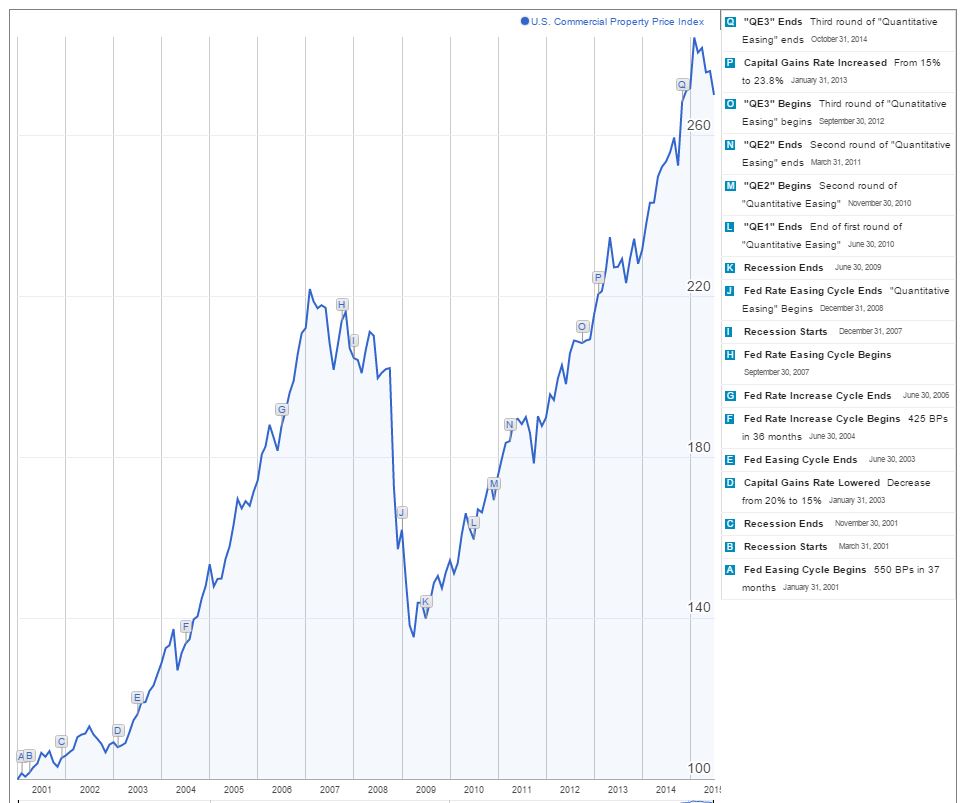
What if a client holds a highly appreciated commercial building but wants to pivot to a different geographic market? Selling it outright would trigger a massive tax bill, eroding their purchasing power. Enter Section 1031.
Section 1031 allows taxpayers to defer the recognition of capital gains on the exchange of like-kind property. Think of this not as a tax loophole, but as an acknowledgment of continuous investment. Because the taxpayer's capital remains locked in the real estate market, the IRS agrees to hit "pause" on the tax bill.
Qualifying Property
The rules governing what qualifies are rigid. Historically, this included equipment and vehicles, but the Tax Cuts and Jobs Act of 2017 limited Section 1031 exchanges exclusively to real property. Therefore, personal property does not qualify for Section 1031 like-kind exchange treatment.
The primary qualification is intent:
- Real property held for productive use in a trade or business qualifies for Section 1031 treatment.
- Real property held for investment qualifies for Section 1031 treatment.
- Primary residences do not qualify for Section 1031 exchange treatment.
Geographic borders form a hard wall for like-kind treatment: property situated in the United States and property situated outside the United States are not considered like-kind under Section 1031.
The Mechanics of the Exchange
A 1031 exchange operates on a strict, unforgiving clock.
- Identification: In a Section 1031 exchange, the replacement property must be identified within 45 days of the transfer of the relinquished property.
- Receipt: In a Section 1031 exchange, the replacement property must be received within 180 days of the transfer of the relinquished property.
Beware the Tax Deadline Trap: The 180-day replacement period in a Section 1031 exchange ends earlier if the due date of the taxpayer's tax return for the year of transfer occurs first. (If a client sells property on December 31, their 180-day window normally extends to late June, but because their tax return is due April 15, the window abruptly closes in April unless they file an extension).
The Concept of Boot
In a perfect 1031 exchange, value is swapped equally. Reality is rarely perfect. Boot refers to cash or other non-like-kind property received in a Section 1031 exchange.
The moment a client touches boot, the tax-deferral shield breaks. The receipt of boot in a Section 1031 exchange triggers the recognition of capital gain. But how much? The recognized gain in a Section 1031 exchange is the lesser of the realized gain or the boot received.

Debt as Boot: If a client trades a building with a $500,000 mortgage for a building with a $300,000 mortgage, they just shed $200,000 of debt. The IRS views this as an economic benefit. Relief from a liability in a Section 1031 exchange is treated as the receipt of cash boot.
Establishing the New Basis
Because a 1031 exchange is a deferral, the replacement property's basis must be artificially lowered to ensure the IRS eventually captures the untaxed gain when the asset is sold for good.
There are two formulas to calculate this. Both are mathematical tautologies describing the exact same economic reality from two different vantage points:
- The Top-Down Method: The basis of the replacement property in a Section 1031 exchange is the fair market value of the replacement property minus the deferred gain.
- The Bottom-Up Method: The basis of the replacement property in a Section 1031 exchange equals the adjusted basis of the relinquished property plus any boot paid and any gain recognized minus any boot received.
Because the investment is viewed as continuous, the holding period of the relinquished property tacks onto the holding period of the replacement property in a Section 1031 exchange.
Finally, an anti-abuse rule exists for family maneuvers: Taxpayers engaging in a Section 1031 exchange with a related party must hold the replacement property for at least two years to avoid gain recognition.
Understanding these mechanics separates an average advisor from an exceptional one. By mastering basis, exclusions, and exchanges, you transition from simply observing a client's wealth to actively safeguarding its trajectory.