An insurance policy is, at its core, a piece of paper containing a financial promise. The entire industry rests on the public's absolute confidence that this promise will be kept, even decades into the future. Yet, insurance companies are mortal financial institutions; they can, and occasionally do, fail. When an insurer collapses under the weight of its obligations, the resulting vacuum threatens not just individual livelihoods, but the systemic trust that makes the insurance market possible. To prevent this collapse of confidence, the state provides a financial backstop: the California Life and Health Insurance Guarantee Association (CLHIGA). This statutory entity protects policyholders and beneficiaries against the financial failure of an insurance company, providing essential financial protection when a member insurer becomes insolvent and cannot meet its policy obligations.
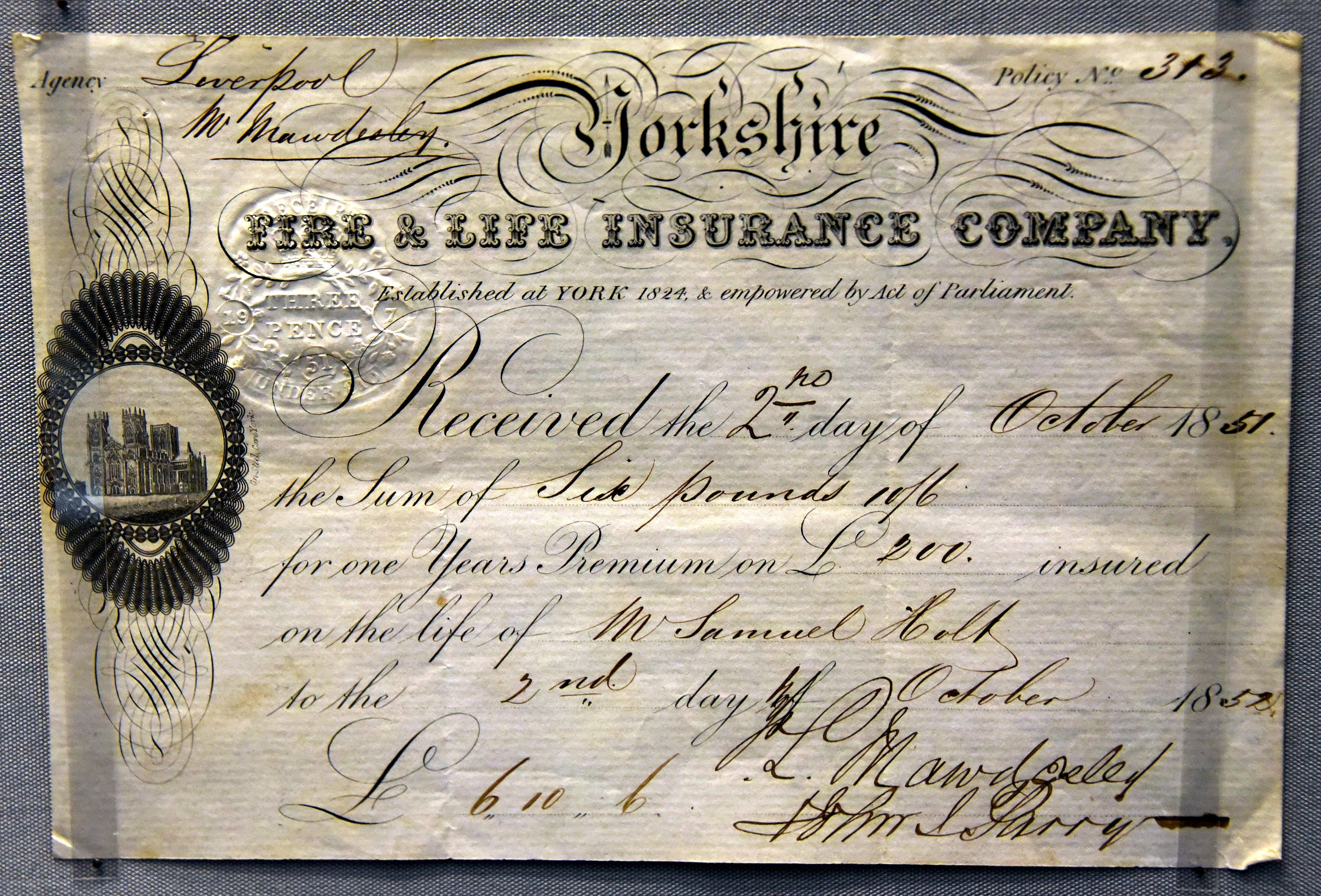
An 1851 life insurance policy. The entire insurance industry is built on the confidence that the paper promises made in these contracts will be honored, necessitating safety nets like CLHIGA when institutions fail.
To understand how CLHIGA works, we must first understand how it is assembled and funded. The state does not sit on a massive, idle pile of taxpayer money waiting for an insurance company to fail. Instead, it utilizes a reactive, collective-liability model.
Membership in the California Life and Health Insurance Guarantee Association is mandatory for all life and health insurers licensed to transact business in California. You cannot legally sell life or health insurance in this state without belonging to the Association.
Rather than paying heavy upfront dues, member insurers are assessed by the Association only after an insurance company insolvency occurs. When a member insurer is officially ordered into liquidation by a court, CLHIGA assumes the administration of the failed company's covered claims. To pay these claims, CLHIGA levies financial assessments on the remaining healthy member insurance companies.
How is the bill split? A member insurer's financial assessment is strictly proportional to the amount of premiums that member insurer collected in California. A company controlling 10% of the California market pays 10% of the assessment.
Naturally, the remaining healthy insurance companies do not simply absorb this sudden expense. By law, insurers can recoup the cost of CLHIGA assessments through a premium surcharge on their own policyholders. Ultimately, the cost of the safety net is distributed across the entire insurance-buying public.
CLHIGA does not protect the entire world; its jurisdiction is geographical. The Association covers policyholders who reside in California at the exact time a member insurer is declared insolvent by a court. If a policyholder moved to Nevada a month before the insolvency declaration, they must look to Nevada's equivalent association.
There is, however, one critical exception: beneficiaries of a life insurance policy. If the deceased policyholder was covered under CLHIGA, the beneficiaries receive CLHIGA protection regardless of the beneficiaries' state of residence. The protection travels with the origin of the policy, not the mailbox of the recipient.
When a financial institution fails, the goal of a guaranty association is to provide a lifeline, not a windfall. The state expects consumers to bear a fraction of the risk. For life insurance and annuities, CLHIGA applies an 80 percent rule coupled with hard statutory maximums.
If an insurer fails, CLHIGA does not pay 100% of the owed funds. It covers 80% of the claim, up to a strict dollar cap.
Worked Example:
If a client has a life insurance policy with a $200,000 death benefit from a failed insurer, CLHIGA covers 80%, meaning the beneficiary receives $160,000.
If a client has a policy with a $500,000 death benefit, 80% would be $400,000. However, the statutory maximum applies, capping the payout at exactly $300,000.
Furthermore, there is a hard ceiling on total protection. The absolute maximum aggregate coverage provided by CLHIGA for any single individual is $300,000. This $300,000 aggregate protection limit applies even if an individual holds multiple different policies with the insolvent insurance company. You cannot stack policies to bypass the cap.
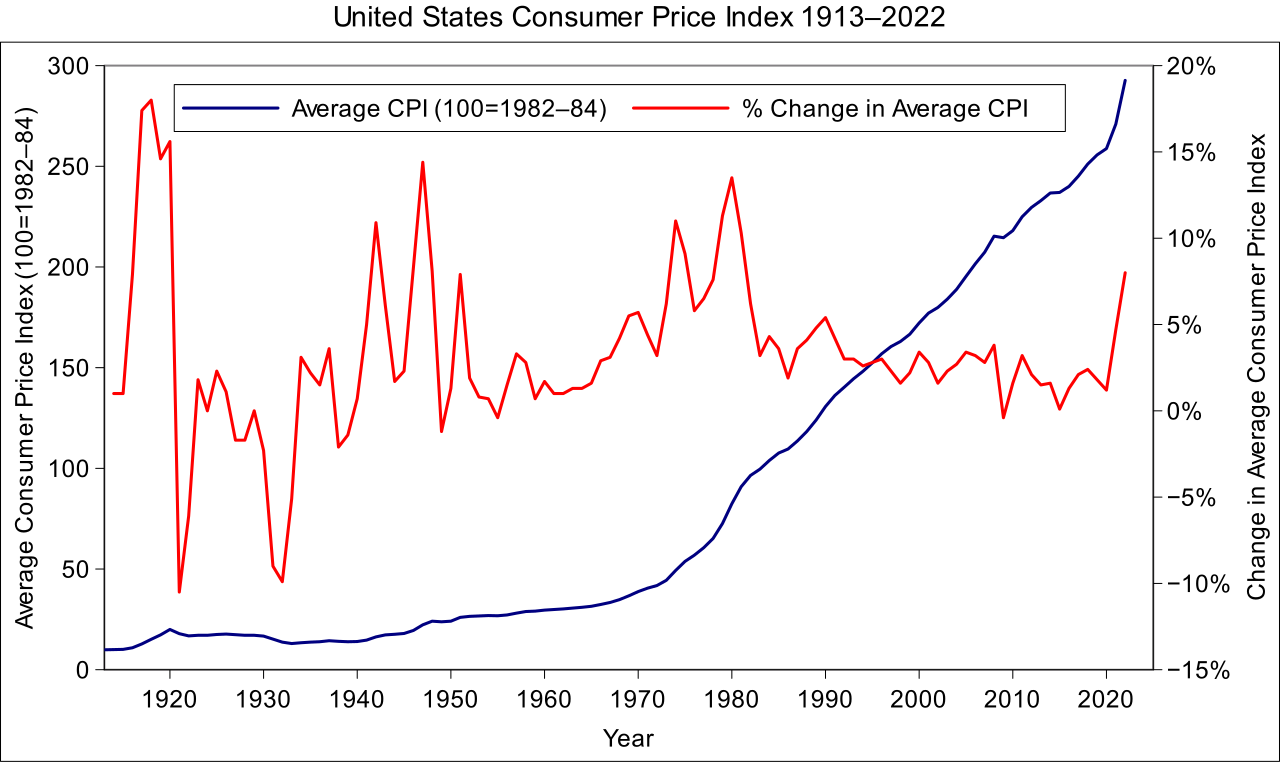
For health insurance, the limits behave slightly differently due to the volatile nature of medical costs. The coverage limit for health insurance adjusts annually based on the health care cost component of the consumer price index (CPI).
Historical graph of the US Consumer Price Index (CPI). Because healthcare costs are highly volatile, CLHIGA uses the health care component of the CPI to automatically adjust coverage limits for health policies each year.
Source: US Consumer Price Index Graph by Original image by donarreiskoffer , new SVG version made with Gnumeric (from BLS data; now covers 1913–2022), CC BY-SA 3.0.
CLHIGA does not cover every financial product sold by an insurance agent. The state draws a firm dividing line based on a simple concept: Who bears the investment risk?
CLHIGA inherently protects fixed guarantees made by the insurer. Therefore, the Association does not cover insurance policies where the policyholder assumes the investment risk.
Because the policyholder chooses the underlying market investments and bears the risk of loss, the following products are expressly excluded from CLHIGA coverage:
Conversely, products with guaranteed payouts are protected. Structured settlement annuities (often used to pay out legal judgments over time) are protected by CLHIGA.
Health, Group, and Institutional Exclusions
When categorizing policies, note that Long-term care (LTC) insurance is covered by CLHIGA. Under California guarantee association rules, long-term care insurance policies are legally classified as health insurance.
However, several major institutional and health frameworks fall entirely outside of CLHIGA's jurisdiction:
Self-funded employer benefit plans are not protected. (In a self-funded plan, the employer is taking on the risk, not an insurance company).
Unallocated annuity contracts issued to employer groups are excluded. (These are typically massive contracts used to fund pension plans, not individual retail consumer policies).
Policies issued by unlicensed insurers. If a consumer buys a policy from a company not licensed to do business in California, that policy is entirely excluded from CLHIGA coverage. The state will not bail out an illegal or unregulated transaction.
We arrive at the most vital behavioral rule for an aspiring insurance producer. The state provides this massive financial safety net, but California insurance law strictly prohibits producers from using the existence of CLHIGA to sell insurance.
Why hide a good thing? The state wants to prevent moral hazard. If agents could advertise the safety net, struggling, reckless insurance companies could offer unsustainably high annuity yields or dirt-cheap life premiums. Consumers would buy these dangerous products, thinking, "It doesn't matter if the company fails; the state guarantees it." The state refuses to let its safety net be weaponized as a marketing tool for bad insurers.
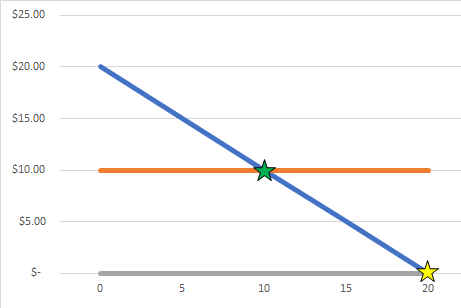
An economic model illustrating moral hazard, where a party shielded from risk (via insurance or a state guarantee) changes their behavior. California bans advertising CLHIGA to prevent consumers from recklessly buying from unstable insurers.
Therefore, the regulatory boundaries are absolute:
It is an unfair trade practice to mention CLHIGA as an inducement to purchase a life or health insurance policy.
Insurers are outright prohibited from referencing CLHIGA in any advertising or promotional materials.
An insurance producer cannot assure a client that an insurance policy is "safe" because the policy is backed by CLHIGA.
Required Consumer Disclosures
While you cannot use the Association to make a sale, you are legally required to inform the consumer about it formally during the transaction.
A standardized summary document describing the California Life and Health Insurance Guarantee Association must be delivered to a policyholder prior to or at the time of policy delivery. This summary document serves as a reality check. It clearly outlines the limitations, exclusions, and funding mechanisms of the association. Most importantly, the summary document explicitly warns consumers not to rely on association coverage when selecting an insurance company.
Finally, what if a client purchases a variable annuity or another product that falls outside the safety net? In that scenario, transparency is paramount. A separate Notice of Non-Coverage must be provided to a policyholder when a purchased insurance policy is excluded from CLHIGA protection. The client must understand exactly when they are stepping out onto the financial tightrope without a net.