California Producer Licensing, Appointment & Continuing Education
Not sure you’re ready?
Take the ~3-minute readiness diagnostic and see where you stand.
To understand the architecture of insurance law in California, one must recognize that an insurance policy is fundamentally an invisible, legally binding promise. You are transacting a piece of paper today in exchange for a massive, contingent transfer of capital tomorrow. Because the stakes of this transaction are profound—protecting homes from turning to ash and businesses from bankrupting litigation—the State of California heavily regulates exactly who is allowed to make these promises, and on whose behalf they can be made.
As a prospective producer, you are not merely learning a set of bureaucratic hurdles; you are studying the boundaries of your own legal authority. The California Department of Insurance (CDI), overseen by the Insurance Commissioner, acts as the gatekeeper to this industry. Their mandate is not to make your life difficult, but to ensure that the public is protected from incompetence, fraud, and financial ruin.
Before you can represent an insurer, you must prove to the state that you possess the necessary baseline of maturity, knowledge, and ethical standing.
To obtain a California Property and Casualty insurance license, an applicant must be at least 18 years old. This is the minimum threshold of legal capacity. From there, the state requires a demonstration of knowledge, but the nature of that requirement has recently fundamentally shifted.
Starting in 2026, California no longer requires general line-specific prelicensing education hours for property and casualty applicants. The state has realized that the nuance of specific policy forms is best tested on the exam and learned in the field. Instead, the focus of early education is on statutory boundaries. Today, California insurance producer applicants must complete 12 hours of prelicensing education exclusively on the California Insurance Code and Ethics.
Once the educational requirement is met, applicants must pass the California state insurance licensing exam for their desired line of authority. This exam is the great equalizer, verifying that you comprehend the mechanics of risk transfer.
However, knowledge alone does not equal trustworthiness. Because you will be a fiduciary—handling other people's money and intimate personal details—applicants must submit fingerprint impressions for a background check when applying for a California insurance license.
Passing your exam grants you a license, but a license is merely a classification. It dictates the exact perimeter of what you are legally permitted to sell. Operating outside this perimeter is not a minor error; it is a serious breach of law.
| Line of Authority | Scope of Legal Authorization |
|---|---|
| Property Broker-Agent | Authorizes a producer to transact insurance coverage on direct or consequential loss to real or personal property. (Think: burning buildings, stolen inventory, and the resulting loss of business income). |
| Casualty Broker-Agent | Authorizes a producer to transact insurance coverage against legal liability. (Think: a customer slips in a grocery store, or a manufacturer is sued for a defective product). |
| Personal Lines Broker-Agent | Authorizes a producer to transact non-commercial automobile, homeowners, and personal umbrella insurance. A Personal Lines Broker-Agent is legally restricted from transacting commercial insurance policies. |
| Limited Lines Automobile Insurance Agent | Restricted to transacting only automobile insurance policies. |
If a client approaches a Personal Lines Broker-Agent asking to cover their new fleet of delivery vans, the producer must decline or refer the business. The license explicitly prohibits crossing the boundary from personal into commercial risk.
There is a critical distinction in insurance law between being licensed and being authorized.
Think of your insurance license like a driver's license, and an insurer appointment as the keys to a specific car. You can have a valid driver's license, but if you don't have the keys to a car, you cannot legally drive.
The Rule of Appointment: A property and casualty producer cannot legally act as an agent of an insurer without an active notice of appointment. Operating without a valid license or insurer appointment is a direct violation of the California Insurance Code.
A notice of appointment formally registers that a producer is legally authorized to act on behalf of a specific insurer. The burden of this filing falls on the carrier. An insurance carrier must file a notice of appointment with the California Insurance Commissioner to authorize a producer.
Often, producers do not work directly for a single carrier; they work for a brokerage or agency. In these cases, an agency appointment in California automatically covers the affiliated individual producers operating within that agency. The agency holds the appointment, and by extension, its registered downstream producers are authorized to bind coverage.
Termination and Inactive Status
Business relationships end. When they do, the state must be notified to sever the legal link of agency. An insurer must formally submit a notice of termination to the Commissioner to end a producer's appointment.
What happens to your license when an appointment is terminated? The termination of an insurer appointment does not automatically cancel a producer's insurance license. The state does not revoke your hard-earned credentials simply because you changed jobs. However, a producer's insurance license becomes inactive if the producer loses all active insurer appointments. You retain the license, but it sits dormant. You cannot transact business until a new carrier files a new notice of appointment.
Once you are licensed and appointed, you enter the maintenance phase of your career.
A producer must hold an active renewable license in California to qualify for the license renewal process. A California insurance producer license must be renewed every two years. To prevent administrative chaos, the state standardizes your specific deadline: the California license renewal deadline is the last day of the original month of licensure. If you were licensed on March 4th, your renewal deadline is March 31st every two years.
Continuing Education (CE)
The insurance market is dynamic. Laws change, policies evolve, and new risks emerge. Consequently, a California property and casualty producer must complete 24 hours of approved continuing education during each two-year license term. (Note a structural exception: A Limited Lines Automobile Insurance Agent is required to complete 20 hours of continuing education per two-year term instead of 24 hours, reflecting the narrower scope of their authority).
To ensure these hours are genuinely completed before renewal processing, all required continuing education hours must be completed before the producer's license renewal deadline.
Furthermore, the state mandates specific educational subsets within those hours:
- A producer must complete three hours of ethics continuing education as part of the total 24-hour requirement.
- One of the three required ethics continuing education hours must cover California anti-fraud training.
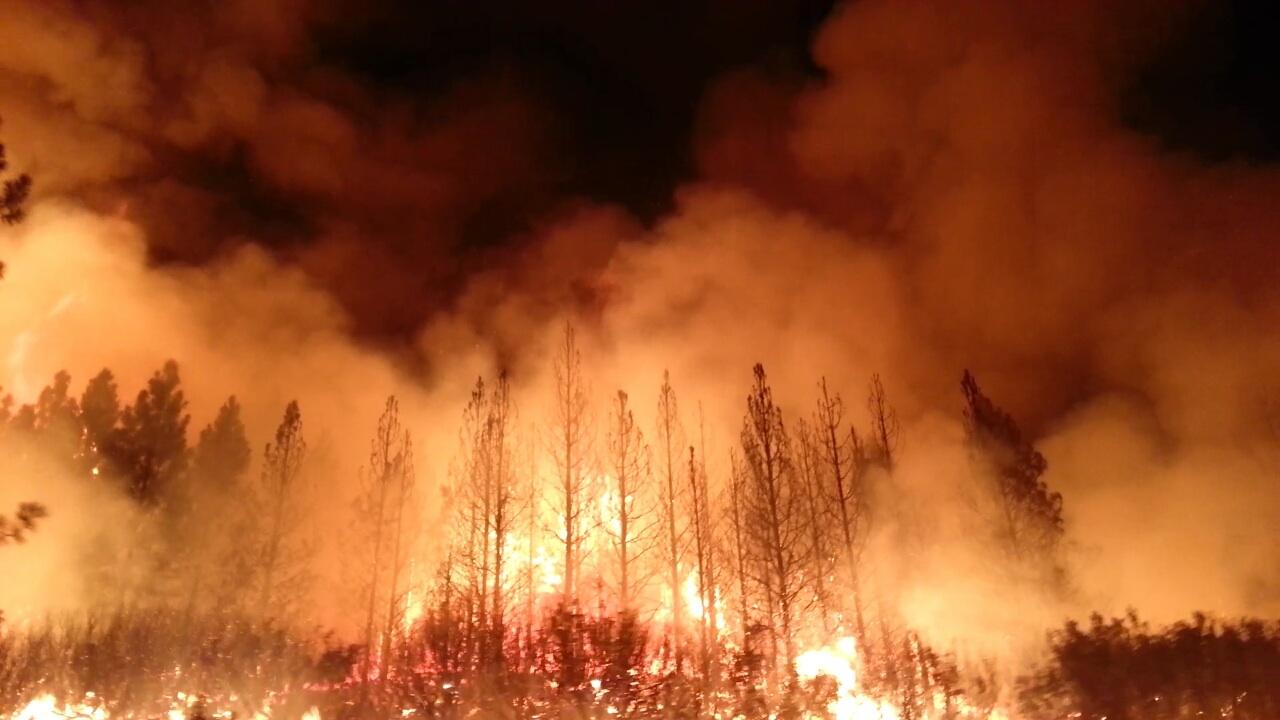
Beyond standard CE, California requires specialized training for high-stakes property valuation. A producer must complete a one-time homeowners valuation training course before estimating replacement values on homeowners insurance policies. Why? Because historically, after massive California wildfires, consumers discovered they were tragically underinsured due to improper valuation estimates by their agents. The state intervened to mandate this specific competency.
Reporting Changes
The Department of Insurance cannot regulate what it cannot see. Therefore, California resident producers must notify the Commissioner immediately of any change in residence, principal business, or mailing address. If you move across state lines entirely, a producer who moves from California to another state must file a change of address within 30 days of the move.
The scrutiny on your background also does not end at licensure. California requires producer applicants and licensees to report any background changes to the Department of Insurance within 30 days. Reportable background changes include criminal convictions, administrative actions, and certain financial events like bankruptcy.
Why does the Commissioner care about a personal bankruptcy? Because an insurance producer is a fiduciary handling premium funds. Extreme financial distress increases the temptation to misappropriate client money, altering your risk profile as a licensee.
The ultimate authority over your career rests with the California Insurance Commissioner. The Commissioner can suspend or revoke a producer license for violating any provision of the Insurance Code.
Suspensions vs. Revocations
The severity of the discipline generally scales with the severity of the offense:
- Suspension: Often tied to severe capability failures. Exposing the public to the danger of loss through incompetence is formal grounds for a license suspension. If you simply do not understand the products you are selling and leave clients dangerously exposed, the Commissioner will pull you from the field.
- Revocation: Often tied to intentional breaches of trust. Failing to perform fiduciary duties regarding the handling of premium funds is formal grounds for a license revocation. Stealing or comingling client money strikes at the very heart of the insurance promise.
If your license is suspended or revoked, you do not simply receive an email; a licensee must surrender their physical license document to the Commissioner upon suspension or revocation.
License Denials and Summary Actions
The state acts proactively to prevent untrustworthy individuals from ever entering the industry. The Commissioner may deny a license application if granting the license would be against the public interest, or if the applicant lacks a good business reputation or integrity.
In certain severe cases, the state bypasses standard due process (the right to an administrative hearing) via a mechanism called a summary action. The Commissioner uses summary actions when the evidence of unfitness is already established by another legal authority:
- The Commissioner can summarily revoke a producer license without a hearing if the licensee is convicted of a felony.
- The Commissioner can summarily revoke a license without a hearing if the licensee is convicted of any misdemeanor involving the Insurance Code.
- The Commissioner can summarily deny a license application without a hearing if a previous professional license was revoked within the past five years.
These summary rules reflect a profound truth about the insurance profession: your authority to act relies entirely on your integrity. The moment that integrity is formally compromised in the eyes of the law, the keys to the engine are revoked, and you are entirely removed from the marketplace.