Florida Life & Health Insurance Guaranty Association
Not sure you’re ready?
Take the ~3-minute readiness diagnostic and see where you stand.
When an individual purchases a life insurance policy or a health plan, they are fundamentally buying a promise that may not be called upon for decades. If the institution making that promise fails, the resulting financial vacuum can be devastating, leaving families without death benefits and individuals without critical health coverage. To ensure these foundational promises remain intact when an insurance company collapses, the Florida Legislature established a statutory safety net: the Florida Life & Health Insurance Guaranty Association.
Just as the FDIC protects depositors from bank failures, this Association protects state residents against the insolvency of a life or health insurer. Understanding how this safety net operates—who funds it, what it covers, and the strict legal boundaries governing how its existence may be discussed—is essential for any insurance professional entrusted with the financial security of their clients.
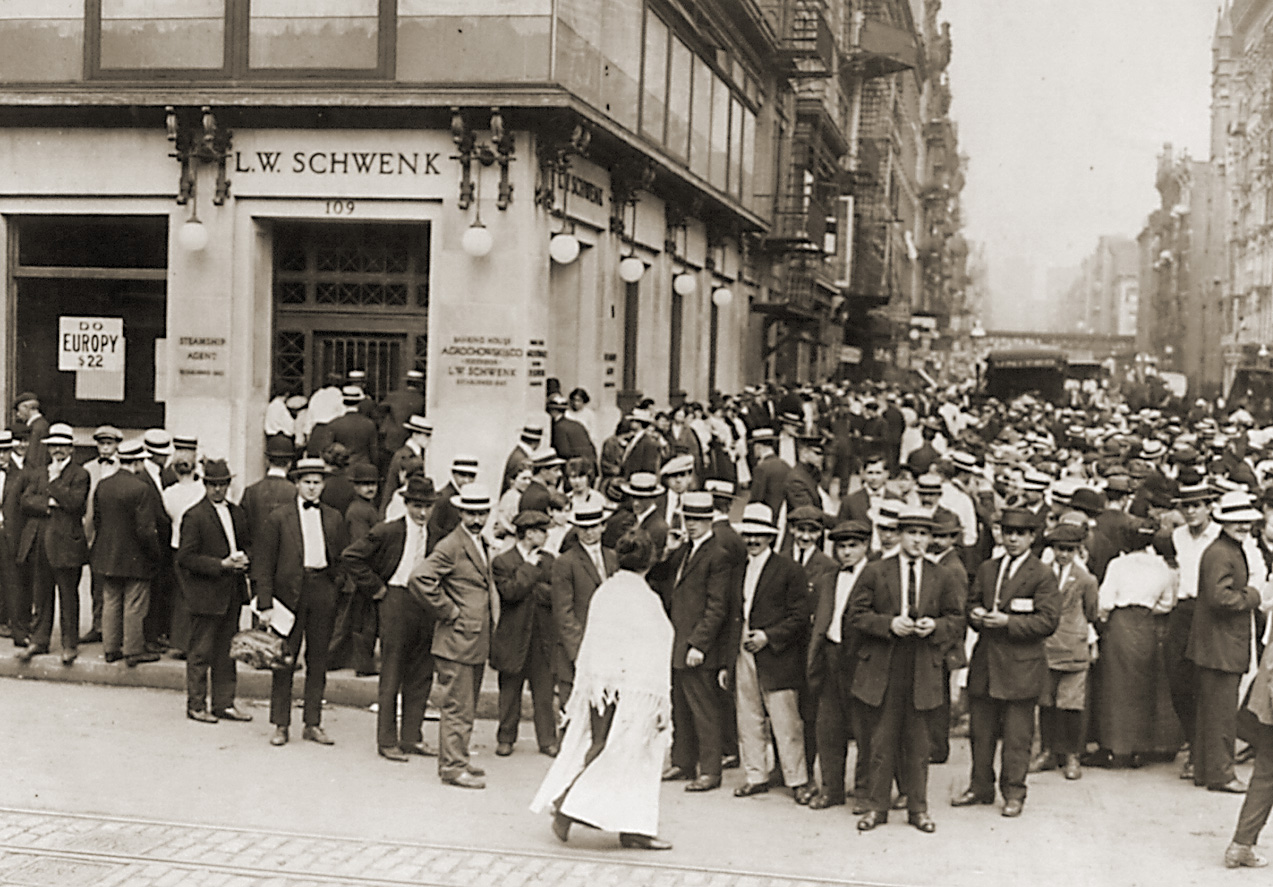
The Florida Life & Health Insurance Guaranty Association is a nonprofit statutory entity created by the Florida Legislature. It does not exist as a commercial enterprise; rather, it is a legally mandated collective of the insurance industry itself.
To operate within the state, all insurers licensed to sell life insurance, health insurance, and annuities in Florida must be members of the Florida Life & Health Insurance Guaranty Association. There is no opting out. Membership in the Association is a mandatory condition for an insurer to transact life and health insurance in Florida.
How is the Association Funded?
The Association does not sit on a massive stockpile of taxpayer money. Instead, it is funded through mandatory financial assessments levied on its member insurers. If an insurance company goes bankrupt, the Association calculates the financial shortfall and issues an assessment to the remaining solvent insurers in the state to cover the claims.
To ensure fairness and prevent a crisis in one sector from destroying another, the Florida Life & Health Insurance Guaranty Association maintains three separate accounts for administration and financial assessment:
- The life insurance account
- The health insurance account
- The annuity account
If a life insurance company fails, the assessments are drawn entirely from the life insurance account—health insurers are not asked to bail out life insurers. This compartmentalization keeps the mathematics of risk isolated and manageable.
The Trigger: When Does the Association Step In?
The Association does not intervene merely because an insurer is struggling or experiencing a downgrade in its credit rating. The Florida Life & Health Insurance Guaranty Association assumes liability for covered policies only after a court of competent jurisdiction orders the liquidation of an insolvent insurer.
Crucial Concept: The key phrase is court-ordered liquidation. Until a judge officially pulls the plug and orders the company to be liquidated, the Guaranty Association remains on standby.
The Guaranty Association is a safety net, not a parachute of infinite size. Its purpose is to prevent catastrophic ruin for the consumer, which means it caps the amount of money it will replace.
For the aspiring producer, memorizing these specific dollar thresholds is vital:
| Policy Type | Maximum Coverage Limit |
|---|---|
| Life Insurance (Death Benefits) | Up to $300,000 per insured. |
| Life Insurance (Cash Value) | Up to $100,000 for net cash surrender values per insured. |
| Deferred Annuities | Up to $250,000 in net cash surrender values per contract owner. |
Real-World Scenario: Suppose your client has a whole life policy with a $500,000 death benefit and $150,000 in cash value. If their insurer is ordered into liquidation, the Association provides a maximum of $300,000 in coverage for the life insurance death benefit, and a maximum of $100,000 in coverage for the life insurance net cash surrender value. The excess amounts are lost or relegated to standard creditor claims in bankruptcy court.
You will notice that the accounts listed above cover traditional life, health, and annuities. But what about Health Maintenance Organizations (HMOs)? HMOs operate under a distinctly different legal and financial framework in Florida.
To account for this, Florida utilizes a parallel structure: the Florida Health Maintenance Organization Consumer Assistance Plan (often referred to as the HMO CAP). This Plan protects persons enrolled in commercial HMOs against HMO insolvency.
The HMO CAP provides a maximum of $300,000 in covered health benefits per person.
However, it is crucial to recognize who this plan excludes. The state’s HMO CAP is designed strictly for commercial enrollees. Therefore:
- The Plan does not cover individuals enrolled in an HMO for Medicaid coverage.
- The Plan does not cover individuals enrolled in an HMO for Medicare coverage.
Why? Because Medicare and Medicaid are federal and state-sponsored safety net programs. If a Medicare Advantage HMO fails, the federal government (CMS) steps in to transition the patient. The state’s CAP does not double-insure government-backed programs.
To master this topic, you must understand what the Florida Life & Health Insurance Guaranty Association explicitly refuses to cover. The underlying principle is simple: The Association only protects guarantees made by licensed insurers. If the client took on the risk, or if the entity wasn't a licensed insurer paying into the system, there is no protection.
The Association does not cover:
- Consumer-Borne Investment Risk:
- The Association does not cover the portion of a variable life insurance contract where the investment risk is borne by the policyholder.
- The Association does not cover the portion of a variable annuity contract where the investment risk is borne by the contract holder.
- The logic: Variable products place the client's money into separate accounts tied to the stock market. If the market crashes, that is the client's risk, not an insurer insolvency.
- Non-Guaranteed Elements: The Association does not cover any portion of a policy or contract that is not explicitly guaranteed by the insurer (e.g., projected but unearned dividends).
- Fraternal Benefit Societies: The Association does not cover insurance policies issued by a fraternal benefit society. Fraternals operate under an "open contract" system where they can assess their own members directly if they run out of money, bypassing the need for a state guaranty association.
- Self-Funded Insurance Plans: Often used by large employers, self-funded plans mean the employer pays claims out of its own pocket. Since no insurance company took the risk, the Association does not cover self-funded insurance plans.
- Unauthorized Entities: The Association does not cover insurance policies issued by unauthorized or unlicensed insurers. If a client buys a policy from a rogue, unlicensed company, the state will not bail them out.
- Reinsurance (Without Assumption): The Association does not cover reinsurance contracts unless assumption certificates have been issued. Reinsurance is a backend deal between two insurance companies. Unless the reinsurer issued a direct certificate to the consumer assuming the risk, the consumer has no direct legal relationship with them.

Here is one of the most heavily tested, yet counterintuitive, realities of Florida insurance law: You have a massive safety net behind your products, and you are legally forbidden from using it to make a sale.
Florida law strictly controls how agents and companies communicate about the Guaranty Association to prevent "moral hazard." Imagine an agent representing a severely mismanaged, financially unstable insurance company. To win the client, the agent says, "Don't worry about their low financial ratings! Even if they go bankrupt, the state Guaranty Association will pay your claims."
This behavior allows bad companies to attract business by free-riding on the financial strength of the state's solvent companies. To prevent this, Florida enforces strict rules:
- Unfair Trade Practice: Florida law classifies the use of the Florida Life & Health Insurance Guaranty Association's existence for the purpose of insurance sales as an unfair trade practice.
- No Inducements: Florida insurance agents are strictly prohibited from using Guaranty Association coverage as an inducement to purchase any form of insurance.
- No Public Ads: Florida insurers cannot mention Florida Life & Health Insurance Guaranty Association protection in public advertisements to promote the financial stability of their products.

The Sole Exception: The Explicit Request
So, how can a client ever learn about this protection?
An insurance agent may furnish a written summary of Florida Life & Health Insurance Guaranty Association coverage limits only upon the explicit request of a policyholder or an insurance applicant. You cannot volunteer the information; the client must ask.
Furthermore, if the client does ask, you cannot simply write an email explaining the limits. Any permitted written summary of coverage limits must be in an official form prepared by the Association itself.
As a producer, your role is to sell products based on the financial strength, contractual guarantees, and merits of the issuing insurance company—treating the Guaranty Association as a silent guardian that steps in only when the unthinkable occurs.