Florida Producer Licensing, Appointment & Continuing Education
Not sure you’re ready?
Take the ~3-minute readiness diagnostic and see where you stand.
Insurance is fundamentally an invisible product—a promise printed on a page, activated only when physical or financial disaster strikes. Because the product is invisible, the entire weight of the system rests on the structural integrity of the person selling it. The Florida Insurance Code does not view a producer's license as a mere certificate of completion; it treats the license as a strict regulatory mechanism designed to calibrate and enforce trust. As a producer, you are the critical junction between a multibillion-dollar pool of capital and a policyholder’s financial survival.
Before you can operate within this system, the State of Florida must verify your structural soundness. The baseline requirements to obtain a Florida insurance producer license are highly specific. You must be at least 18 years of age and either a United States citizen or a legal alien possessing work authorization. Furthermore, to hold a Florida resident insurance producer license, you must actually be a resident of Florida. Finally, you cannot be a ghost in the system; every candidate must submit fingerprints for a criminal background check to ensure public protection.

Once verified, you enter a tiered licensing structure. Think of these licenses as varying levels of clearance to operate the state's economic machinery.
- 2-20 General Lines Agent: This is the master key. A Florida 2-20 license authorizes a producer to transact a massive spectrum of risk: property, casualty, surety, marine, health, and miscellaneous lines of insurance. Because of the vast responsibility this entails, a candidate must complete a rigorous 200-hour state-approved pre-licensing education course.
- 20-44 Personal Lines Agent: This is the precision tool. It authorizes a producer to transact exclusively in the personal realm: personal automobile, homeowners, and inland marine insurance. However, the system allows for upward mobility. A 20-44 agent can upgrade to a full 2-20 General Lines license by completing a 40-hour conversion course, provided they have completed at least one year of licensed experience.
- 4-40 Customer Representative: This is the supervised operator. A 4-40 licensee must be employed and strictly supervised by a licensed and appointed general lines agent or agency. They are the gears moving inside the larger engine of an agency.
A license is merely potential energy. It proves you know the rules of the game, but it does not put you on the field. To legally transact or solicit insurance in Florida, a licensed insurance producer must be appointed by an authorized insurer.

However, the modern economy moves fast, and the state recognizes that. If a client urgently needs coverage from a carrier you aren't currently appointed with, you are allowed to solicit applications for that unappointed insurer under the state's just-in-time appointment rule. The burden then falls on the insurer: they must file this just-in-time appointment with the Florida Department of Financial Services (DFS) within 45 days of the appointment effective date.
Because you are likely working as an independent agent, the system permits you to hold multiple appointments simultaneously, allowing you to match a client's specific risk profile to the best available carrier.
Maintaining and Severing Appointments
Appointments are not permanent; they operate on a cyclical rhythm.
- Renewal: An agent's appointment must be renewed every 24 months, specifically during the appointee's birth month.
- Termination: The relationship is at-will from the carrier's side; an appointing insurer may terminate a Florida agent's appointment at any time. But to prevent sudden disruption to your livelihood and your clients, the law builds in a buffer. The terminating insurer must give the agent at least 60 days of advance written notice. Subsequently, the insurer must file a written notice of this termination with the Florida DFS within 30 days of the termination itself.
Warning: Your appointments are tethered to your geography. Moving your principal residence AND principal business address out of Florida results in the immediate termination of your producer's license and appointments.
Entropy affects everything, including your professional knowledge. Florida mandates strict Continuing Education (CE) to ensure your expertise reflects current law and market realities. The burden lightens as you gain proven experience.
| Experience Level | CE Requirement |
|---|---|
| Licensed for less than 6 years | 24 hours every two years |
| Licensed for 6 or more years | 20 hours every two years |
Regardless of your tenure, every Florida insurance producer must complete a 4-hour state-approved Law and Ethics Update course as a mandatory part of their biennial CE requirement.
Non-Resident Exemption: A non-resident Florida producer is exempt from Florida's CE requirements if they successfully complete the CE requirements of their home state.
Mandatory Notifications
The DFS must know how to find you. You operate under a strict 30-day clock to notify the DFS of any of the following changes:
- A legal name change
- A residence or principal business address change
- A telephone number or email address change
Failure to notify the DFS of an address change within those 30 days results in swift friction: an administrative fine of up to $250 for the first offense.
(Note: Florida bail bond agents operate under a much tighter timeline and must notify the DFS of an address or name change within just 10 working days).
The 30-day clock also applies to legal and disciplinary matters. If you plead guilty or no contest to a felony, you must notify the DFS in writing within 30 days. Similarly, if you face an administrative action, you must submit a copy of the final order to the DFS within 30 days after its final disposition.
When you hold an insurance license, you handle other people's money and their economic safety nets. The law views this as a profound fiduciary duty.
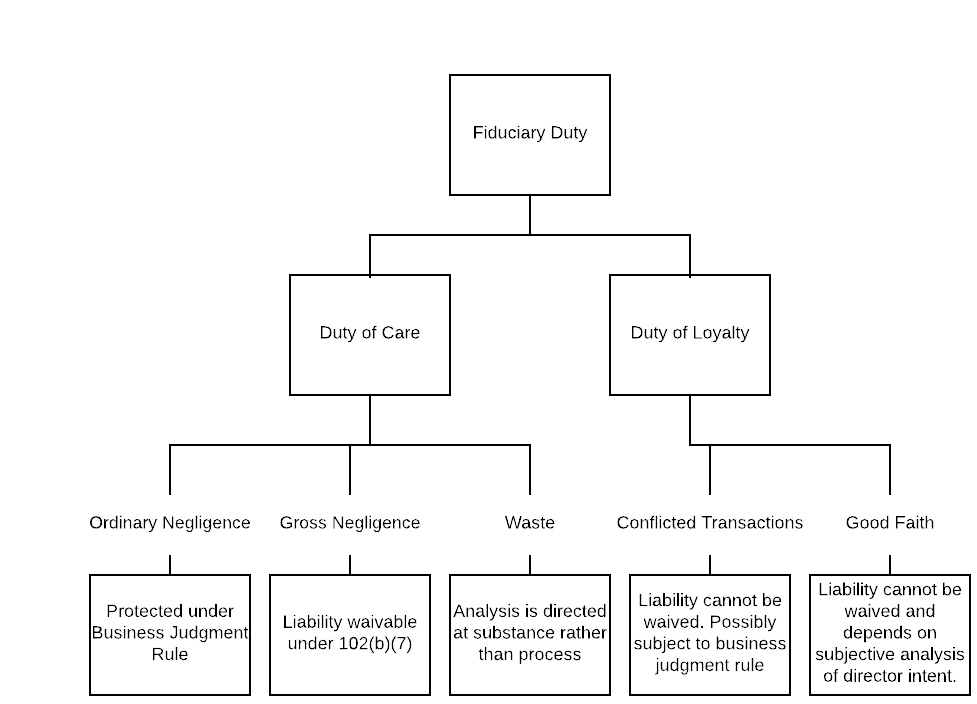
You are legally required to maintain premium payment records for at least three years after the payment date. Misappropriating or illegally withholding premium funds belonging to an insurer or an insured is a catastrophic violation of this fiduciary duty and serves as direct grounds for license revocation.
Beyond theft, the Florida Insurance Code severely punishes market manipulation. We categorize these illegal acts by how they deform the client relationship.
The Unholy Trinity: Twisting, Churning, and Sliding
These three terms frequently appear on the state exam. Understand the mechanics of each:
- Twisting: The illegal practice of making misrepresentations to induce a policyholder to drop an existing policy and replace it with a contract from a different insurer. (You are twisting them away from their current carrier).
- Churning: The illegal practice of using the values from an existing policy to purchase another policy with the same insurer, done solely for the purpose of generating additional commission for the agent. (You are churning the waters within the same company).
- Sliding: Adding hidden costs or altering coverage without informed consent. Think of it as "sliding" something onto the bill. Sliding legally includes:
- Falsely representing to an applicant that a specific ancillary coverage is required by law.
- Falsely representing that an ancillary coverage is included in a policy at no additional charge.
- Charging an applicant for an ancillary coverage in addition to the cost of the main insurance policy without the applicant's informed consent.
Coercion, Controlled Business, and Rebating
- Coercion: This is an unfair trade practice involving the use of physical or mental force, or the threat of force, to persuade a consumer to transact insurance.
- Controlled Business: This occurs when an agent sells insurance policies primarily to themselves, their family members, or their business associates. The state wants a competitive, open market; therefore, an individual is expressly prohibited from holding a Florida insurance license primarily for the purpose of writing controlled business.
- Rebating: In most states, rebating (giving the client a portion of your commission or something of value to induce a sale) is strictly illegal. Florida is a unique exception. Rebating is legally permitted in Florida, but ONLY if the rebate is available to all insureds in the same actuarial class and strictly adheres to a schedule filed with the insurer.
The Cost of Failure
The Florida DFS does not view ignorance as an excuse. The penalty for even a nonwillful violation of the Florida Insurance Code is an administrative fine of up to $12,500 per violation.
When you sit for your exam, remember that these laws are not arbitrary bureaucratic hurdles. They are the structural mechanics of a functional, trustworthy financial system. Know the timelines, respect the fiduciary boundaries, and understand precisely how your license empowers—and restricts—your actions in the marketplace.