Florida Automobile Insurance Laws
Not sure you’re ready?
Take the ~3-minute readiness diagnostic and see where you stand.
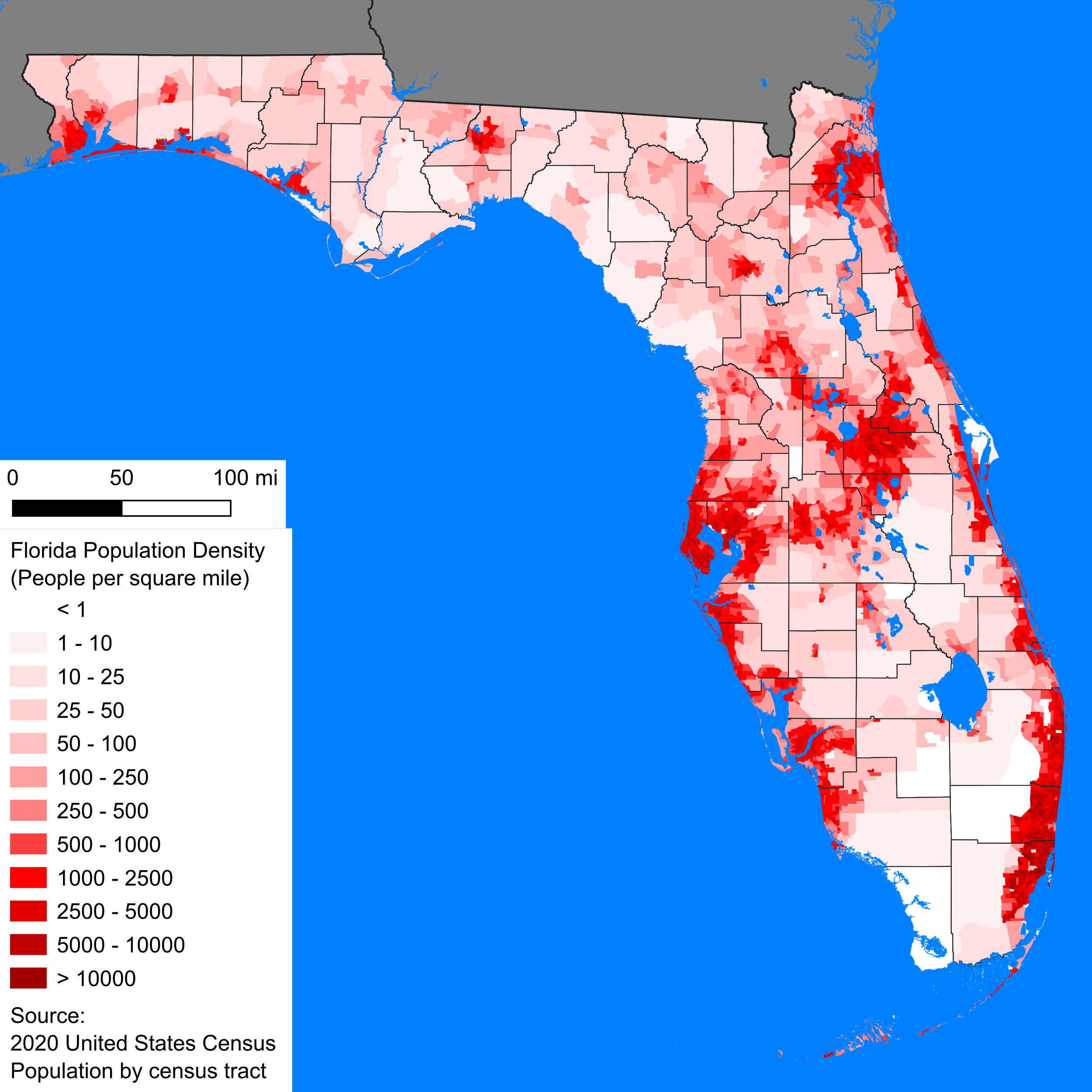
Physics dictates that millions of fast-moving, multi-ton vehicles sharing a densely populated peninsula will inevitably collide. When they do, the resulting bodily and economic damage demands a system of rapid resolution. To manage the immense legal and financial burden of millions of accidents clogging the court system, Florida adopted a highly specific, bifurcated legal framework. It manages daily friction through a no-fault system designed to swiftly resolve minor injuries outside the courtroom, layered on top of a financial responsibility framework reserved for bodily injury and catastrophic negligence.
For a prospective insurance producer, mastering this architecture is not merely about memorizing statutory limits. It is about understanding exactly how risk is legally transferred and mitigated so you can accurately protect the livelihoods of the drivers you advise.
Florida operates under a no-fault automobile insurance system for personal passenger vehicles.
Historically, auto accidents were governed purely by tort law: if you were injured, you had to prove the other driver was legally negligent before their insurance would pay your hospital bill. This meant minor fender-benders triggered months of costly litigation just to settle a single emergency room invoice.
To eliminate this friction, Florida established a legal compromise. Florida's No-Fault automobile insurance system requires injured parties to seek compensation for medical expenses from the injured party's own Personal Injury Protection (PIP) policy first, regardless of who caused the crash.
What is Required to Register a Vehicle?
To obtain a Florida license plate and register a standard vehicle, the state requires exactly two basic coverages.
- Personal Injury Protection (PIP): Florida drivers must carry Personal Injury Protection coverage to register a vehicle. The minimum required limit for Personal Injury Protection in Florida is $10,000.
- Property Damage Liability (PDL): Property Damage Liability coverage pays for damage caused to another person's property while driving the insured vehicle. The minimum required limit for Property Damage Liability in Florida is $10,000.
Crucial Distinction: Bodily Injury Liability (BIL) coverage is not legally required to register a standard personal passenger vehicle in Florida. While highly recommended for asset protection, the state does not force drivers to purchase it up front for personal vehicles.
Also, understand the physical limitations of PIP. Florida Personal Injury Protection does not cover damage to vehicles or other physical property. It is strictly a bodily injury and economic loss coverage. Furthermore, Florida Personal Injury Protection requirements do not apply to motorcycles because the statute defines covered motor vehicles as having four or more wheels. Motorcycles, having fewer than four wheels, operate outside the PIP framework entirely.

Inside the PIP Policy: Benefits and Limitations
When your client buys that minimum $10,000 PIP policy, what exactly are they purchasing? The policy acts as a highly structured financial safety net with strict payout formulas.
| Benefit Type | Florida PIP Payout Rules |
|---|---|
| Medical Expenses | Pays 80% of reasonable and necessary medical expenses up to the policy limit. |
| Lost Wages | Pays 60% of lost wages up to the policy limit. |
| Death Benefit | Provides a flat $5,000 death benefit per individual. |
Because PIP was designed for rapid resolution, the state strictly caps timelines to prevent insurance fraud (such as claiming a sore back six months after a minor bump).
- The 14-Day Rule: Medical treatment must be sought within 14 days of a Florida auto accident for the injured party to receive Personal Injury Protection benefits.
- The EMC Requirement: Florida Personal Injury Protection medical benefits are strictly limited to $2,500 without a formally diagnosed Emergency Medical Condition (EMC). A physician must officially diagnose an EMC for the client to access the full $10,000 limit.

The Scope of PIP: Following the Person, Not Just the Car
The word "Personal" in PIP is vital. It means the coverage extends beyond the driver's seat. The policy treats the insured human being as the asset to be protected in a variety of physical spaces.
Florida Personal Injury Protection covers the policyholder:
- While riding as a passenger in another person's vehicle.
- When injured as a pedestrian struck by a motor vehicle.
- When injured while riding a bicycle involved in a crash with a motor vehicle.
Furthermore, PIP extends its umbrella across the living room. Florida Personal Injury Protection covers resident relatives living in the same household who do not own a vehicle. If your client has a 16-year-old child living at home who gets hit by a car while crossing the street, the parent's PIP policy steps in.

Piercing the Tort Exemption: When Can You Sue?
The entire premise of no-fault is to stop people from suing each other over minor injuries. By accepting PIP, Florida drivers accept a statutory limitation on their right to sue. Specifically, the Florida no-fault law prohibits an injured party from suing an at-fault driver for non-economic damages (pain and suffering) unless specific statutory injury thresholds are met.
You can only pierce this legal shield and sue an at-fault driver for pain and suffering if the accident caused:
- Significant and permanent scarring or disfigurement.
- Significant and permanent loss of an important bodily function.
- Permanent injury within a reasonable degree of medical probability.
- Death.

If Bodily Injury Liability is not required to register a car, how does Florida handle drivers who cause catastrophic harm? They use a retroactive enforcement mechanism.
The Florida Financial Responsibility Law requires drivers to prove financial ability to pay for damages resulting from at-fault accidents. This law waits in the background and is only triggered when a driver exhibits behaviors or causes accidents that deem them a high risk to the public.
Triggers and Mandates
The Florida Financial Responsibility Law is triggered precisely when a driver is:
- Involved in an accident resulting in bodily injury.
- Involved in an accident resulting in property damage that renders a vehicle inoperable (a "tow-away" crash).
- Convicted of driving under the influence (DUI).
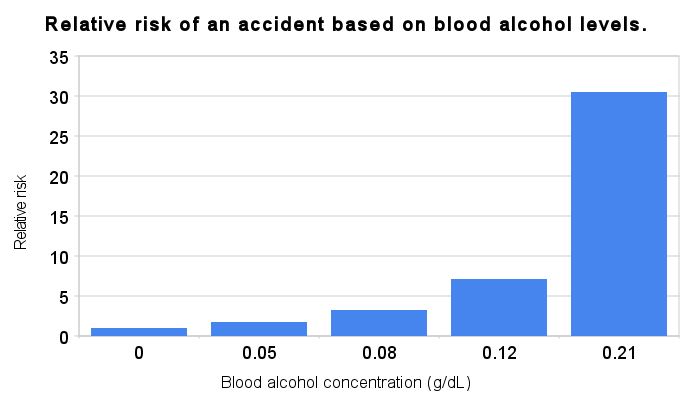
Once triggered, the driver is legally cornered. They must now prove they carry mandatory minimum liability limits to pay for the harm they might cause.
The Florida Financial Responsibility Law mandates minimum bodily injury liability limits of:
- $10,000 per person.
- $20,000 per accident.
- Along with the standard Property Damage Liability limits of $10,000 per crash.
Note: Instead of split limits (10/20/10), a combined single liability limit (CSL) of $30,000 fully satisfies the requirements of the Florida Financial Responsibility Law.
Special Classes: Taxis
Commercial transport involves a drastically higher exposure to public liability. As such, standard limits do not apply to vehicles carrying passengers for hire. Taxis registered in Florida are required to carry bodily injury liability coverage of $125,000 per person and $250,000 per occurrence. Additionally, taxis registered in Florida must carry Property Damage Liability coverage of $50,000.

Consequences of Non-Compliance
The state does not take financial responsibility lightly. Drivers failing to comply with the Florida Financial Responsibility Law face suspension of driver licenses and vehicle registrations.
To lift this suspension and legally drive again, the offender must purchase the required insurance and have their insurance company file an SR-22 form. An SR-22 form is a certificate of financial responsibility used in Florida to prove compliance with mandated liability insurance requirements. It acts as a direct, monitored line of communication between the insurer and the state.
Because so many Florida drivers carry zero bodily injury liability coverage, your clients are at intense risk of being gravely injured by someone who has no money to pay for their negligence. This is the domain of Uninsured Motorist (UM) coverage.
Florida Uninsured Motorist coverage pays for bodily injury damages caused by an at-fault driver lacking adequate insurance. It also explicitly applies to bodily injury damages caused by hit-and-run drivers.
Offer and Rejection Rules
Despite its critical importance, Florida law does not mandate the purchase of Uninsured Motorist coverage.
However, the state strongly protects the consumer's right to buy it. Florida auto insurers are legally required to offer Uninsured Motorist coverage whenever a policy includes Bodily Injury Liability coverage. Furthermore, insurers must offer Uninsured Motorist coverage at limits exactly equal to the purchased Bodily Injury Liability limits.
If a client buys $100,000 in Bodily Injury coverage to protect others, the insurer must offer $100,000 in UM to protect the client. To bypass this, strict administrative hurdles exist:
- A Florida auto insurance policyholder must sign a written rejection form to completely decline Uninsured Motorist coverage.
- A Florida auto insurance policyholder must sign a written selection form to choose Uninsured Motorist limits lower than the purchased Bodily Injury Liability limits.
Stacked vs. Unstacked Limits
Florida offers UM coverage in two forms, dictating how limits aggregate across multiple vehicles.
- Stacked Uninsured Motorist coverage allows a Florida policyholder to multiply the coverage limit by the number of vehicles insured on the policy. (Think of it as dragging safety nets from your other vehicles over to the vehicle you happen to be driving today).
- Unstacked Uninsured Motorist coverage restricts available Florida insurance benefits strictly to the single limit specified for the vehicle involved in the crash.
The administration of Florida auto insurance operates under a rigid, unforgiving continuous coverage requirement.
Florida law requires vehicle owners to maintain continuous auto insurance coverage throughout the entire registration period. This is where everyday common sense collides with statutory law. If a client's engine seizes and the car is placed on cinder blocks in the garage, they often assume they can safely cancel the insurance to save money. This is a trap. A Florida vehicle owner must maintain continuous auto insurance even if the registered vehicle is completely inoperable. The state links the insurance mandate to the active license plate, not the mechanical state of the engine.
The Rule of Surrender: A vehicle owner must surrender the Florida license plate to the state before canceling an auto insurance policy. If the insurance is canceled while the plate remains active, the state will immediately flag the registration for suspension.
Furthermore, you cannot bring an out-of-state policy to satisfy a Florida registration. Proof of Florida auto insurance must be issued by an insurance company officially licensed to do business within the state.
The Snowbird Effect: Non-Resident Rules
Florida is a highly transient state, hosting millions of seasonal residents. The state cannot allow millions of out-of-state drivers to utilize its infrastructure for months at a time without paying into its no-fault system.
Therefore, non-residents must purchase Florida minimum auto insurance if a vehicle is physically present in the state for more than 90 days during a 365-day period.
Crucially, this is an aggregate threshold. The 90-day threshold requiring a non-resident to purchase Florida auto insurance applies regardless of whether the 90 days are consecutive. If a seasonal resident brings their vehicle down for 30 days in January, 40 days in April, and 25 days in November, they have crossed the 90-day threshold and must secure a legally compliant Florida auto policy.