Disability Definitions and Classifications
Not sure you’re ready?
Take the ~3-minute readiness diagnostic and see where you stand.
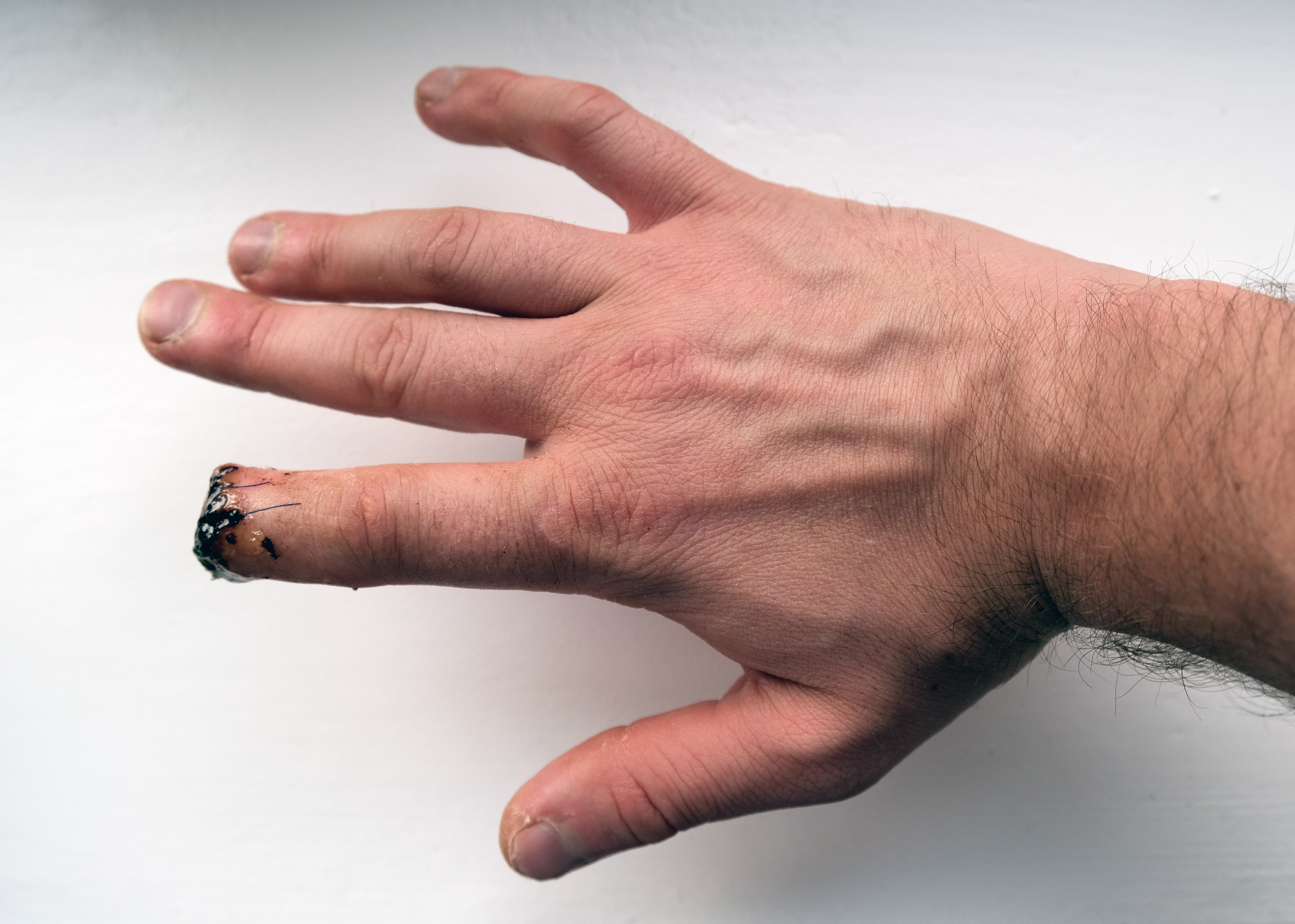
In the realm of life and health insurance, disability is not fundamentally a medical diagnosis; it is an economic event. When an underwriter evaluates a disability risk or an adjuster reviews a claim, they are not primarily measuring physical impairment. They are measuring the impairment of earning capacity. The exact same physical injury—the loss of an index finger, for instance—is a minor inconvenience for a corporate executive but a catastrophic, career-ending event for a concert pianist. Therefore, to master disability income insurance, we must discard the purely medical definition of injury and instead understand how the policy contract defines the insured's ability to work. The boundaries of these definitions dictate everything from premium costs to the mechanics of claim payouts.
As a future insurance producer, your ability to explain these contractual boundaries will determine whether your client receives a lifeline during their darkest hour or a devastating claim denial. We will dissect the architecture of disability definitions, examining how insurers categorize total disability, incentivize recovery through partial and residual benefits, manage relapses, and acknowledge catastrophic losses.
The threshold question in any disability claim is: Disabled from doing what?
Insurance policies generally answer this question using one of two definitions for total disability. The distinction between them is arguably the most critical concept in disability income insurance.
"Own Occupation" Total Disability
The "own occupation" definition of total disability requires the insured to be unable to perform the main duties of the insured's specific profession.
If your client is an orthopedic surgeon who develops a severe, permanent hand tremor, they can no longer perform surgery. Under an "own occupation" policy, they are totally disabled. But what happens if this highly educated doctor decides to take a job teaching at a medical school or consulting for a medical device company?
Remarkably, an "own occupation" disability policy pays full benefits while the insured earns income working in a completely different profession. Because they can no longer perform the duties of an orthopedic surgeon, the economic loss insured by the contract has triggered, regardless of their subsequent success in a new field.
"Any Occupation" Total Disability
Conversely, the "any occupation" definition of total disability is much stricter. It requires the insured to be unable to perform the duties of any profession.
However, the law and the courts apply a rule of reason here. The insurer cannot deny a claim simply because a disabled neurosurgeon could technically work as a tollbooth operator. An "any occupation" policy evaluates alternative professions for which the insured is reasonably suited by education, training, or experience.
If our surgeon with a hand tremor can reasonably transition into a role as a general practitioner or clinic administrator—roles fitting their medical education and training—they will not qualify for benefits under an "any occupation" definition.
Why this matters for your clients: Because it is highly protective of the insured's chosen career, the "own occupation" definition is highly desirable. Naturally, the "any occupation" definition makes it harder for the insured to qualify for disability benefits compared to the "own occupation" definition. To reflect this reduced risk to the insurer, disability policies using the "any occupation" definition generally feature lower premiums than policies using the "own occupation" definition.
The Hybrid Approach: The Two-Year Transition
In modern insurance design, permanent "own occupation" coverage is expensive and rare, often reserved for elite professionals. How do insurers balance the need for robust early protection with long-term cost containment? They use a split definition.
Many disability policies restrict the "own occupation" definition of total disability to the first two years of a disability. A disability policy typically transitions to an "any occupation" definition after the initial "own occupation" period expires.
This gives the insured a two-year buffer to recover, retrain, or transition to a new career while receiving full benefits. If they are still disabled after two years, they are evaluated under the stricter "any occupation" standard to determine if benefits will continue.
| Feature | Own Occupation | Any Occupation |
|---|---|---|
| Definition | Unable to perform main duties of specific profession. | Unable to perform duties of any profession. |
| Alternative Work | Can earn income in a different profession and keep full benefits. | Expected to work in a field suited by education/training. |
| Premium Cost | Higher | Lower |
| Exam Context | Often limited to the first 2 years of a claim. | Kicks in after the initial "own occ" period ends. |
Recovery from a severe illness or injury is rarely a binary switch. People rarely wake up one Tuesday completely healed, ready to resume a 50-hour work week. They transition. They return for half-days, or they take on lighter duties.
If a policy only paid benefits for total disability, insureds would be financially penalized for attempting to go back to work early. To solve this moral hazard, insurers created partial and residual disability provisions.
Partial Disability
Partial disability is traditionally defined as the inability to perform one or more of the regular duties of the insured's occupation. It is alternatively defined as the inability to work on a full-time basis in the insured's occupation.
The purpose of a partial disability benefit is to encourage a completely disabled insured to transition back to part-time work without immediately losing all financial support from their policy.
To keep the administration simple, partial disability uses a fixed mathematical formula. A partial disability benefit is typically calculated as a flat 50 percent of the policy's total disability benefit. Furthermore, because it is designed as a temporary transition tool, partial disability benefits are generally limited to a maximum payment period of three to six months.
Example: Your client receives a $4,000 monthly benefit for total disability. After six months, they return to work half-time. Under a partial disability provision, they will receive a flat $2,000 (50% of the total benefit) for up to three to six months, regardless of exactly how much their income dropped.
Residual Disability
While partial disability is simple, it is a blunt instrument. A flat 50% payout doesn't accurately reflect a worker whose income drops by 20%, or by 75%. Enter the more sophisticated cousin: the residual disability benefit.
A residual disability benefit provides income replacement for an insured who returns to work after a period of total disability. Unlike the partial benefit, a residual disability benefit applies when a returning worker earns less than the worker's pre-disability income, and the math is strictly proportional.
Residual disability benefits are calculated as a direct percentage of the insured's lost income.
The Residual Formula in Action If your client experiences a 40 percent drop in their income upon returning to work, this results in a residual disability benefit equal to 40 percent of the total disability benefit.
If they originally had a $5,000 monthly total benefit, and their post-disability income is 40% lower than their pre-disability income, the policy will pay them a $2,000 residual benefit ($5,000 x 40%). Because it is far more precise and economically fair, residual disability provisions often replace partial disability provisions in modern comprehensive disability income policies.
Imagine your client has been out of work for eight months due to a severe herniated disc. They finally recover, return to work, and their disability benefits cease. Two months later, they bend over to pick up a box, and the exact same disc ruptures again.
Do they have to start all over? In disability insurance, the "deductible" is measured in time, known as the elimination period (often 90 days). Making a client wait another 90 days without pay for a relapse of the exact same injury would be punitive.
This scenario introduces the concept of recurrent disability. A recurrent disability is a second period of disability arising from the exact same cause as a prior period of disability.
To protect the insured, an insured suffering a recurrent disability is not required to satisfy a new elimination period. The insurer treats the relapse as a continuation of the original claim, and benefits resume immediately.
However, there are time limits. A recurrent disability must occur within a specific timeframe after the insured returns to work to be considered a continuation of the prior claim. The standard timeframe for a returning disability to be classified as a recurrent disability is between three and six months.
If the client works successfully for a year, and then the back injury flares up again, the grace period has lapsed. A disability recurrence happening after the policy's recurrent disability timeframe expires is treated as a completely new disability claim.
A completely new disability claim requires the insured to satisfy a new elimination period before receiving benefits.
Throughout this text, we have established that to receive ongoing disability benefits, an insured must continually prove their loss of income and their inability to perform work duties. But what happens when an injury is so catastrophic, so unambiguously devastating, that forcing the client to repeatedly prove they are disabled becomes an absurd bureaucratic cruelty?
Insurance addresses this through the doctrine of presumptive disability.
Presumptive disability is a provision automatically qualifying the insured for full disability benefits regardless of the insured's actual ability to work. If a condition falls under this classification, the insurer "presumes" the economic loss is total and permanent.
To qualify, the loss must be extreme. Presumptive disability conditions typically include:
- The total loss of sight in both eyes.
- The total loss of hearing in both ears.
- The total loss of speech.
- The severance of any two limbs (e.g., both legs, both arms, or one arm and one leg).
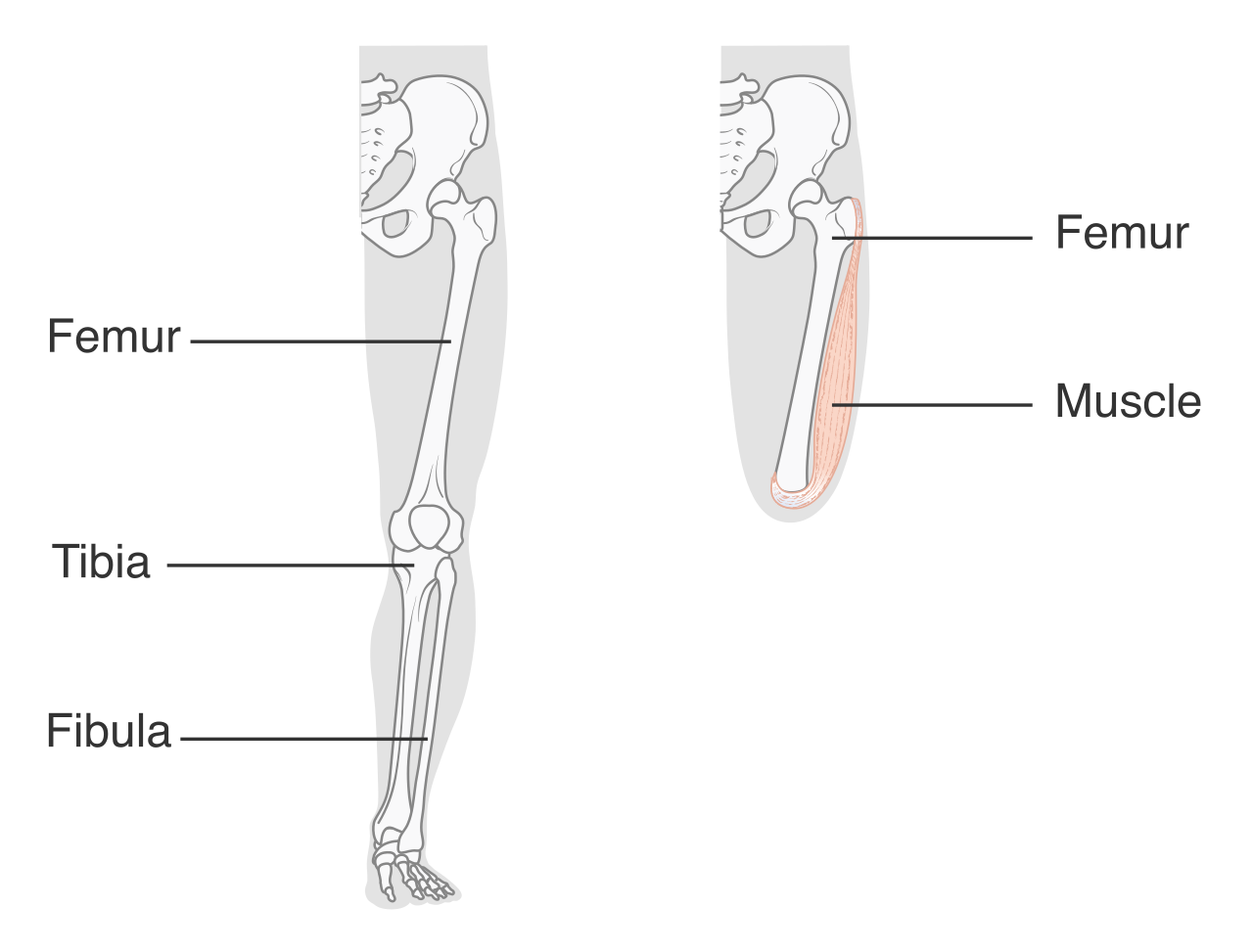
Notice the phrasing: regardless of the insured's actual ability to work. If a software engineer suffers the severance of both legs, they might theoretically be able to write code from a wheelchair six months later. It doesn't matter. Under the presumptive disability provision, they will receive their full total disability benefits.
Furthermore, an insured with a presumptive disability is generally not required to remain under the regular care of a physician to receive ongoing benefits. While standard claims require ongoing medical documentation to prove the disability still exists, presumptive conditions are permanent by definition. The insurer waives the physician requirement to spare the insured the unnecessary expense and hassle of visiting a doctor merely to confirm that a severed limb has not grown back.
Summary for the Licensing Exam
When you sit for your exam, remember that the core of disability insurance is the measurement of lost time and lost wages.
- Look for the word specific when dealing with own occupation, and any suited by education/training when dealing with any occupation.
- Remember that partial is a rigid, flat 50% for 3 to 6 months, while residual is a flexible percentage of lost income.
- Know that the recurrent timeframe is generally 3 to 6 months to avoid a new elimination period.
- Finally, memorize the grim but necessary list of presumptive conditions—two eyes, two ears, speech, or two limbs—that bypass all normal requirements for claim approval.