At the foundation of American healthcare and disability planning lie two massive, complex public programs designed as structural safety nets: Medicaid and Social Security Disability Income (SSDI). For a prospective life and health insurance producer, mastering the architecture of these public programs is not merely an exercise in understanding government policy; it is the absolute baseline required to design proper private insurance solutions. Private insurance exists to fill the gaps, bridge the waiting periods, and elevate the standard of living above the bare minimums dictated by federal and state law. To sell a private disability or long-term care policy, you must first precisely understand where the public safety net ends and where it begins.
When we look at the spectrum of public health coverage, we often conflate Medicare and Medicaid. It is vital to separate them immediately. Medicare is an entitlement program tied to age or disability, regardless of wealth. Medicaid, conversely, is a system built exclusively on financial need.
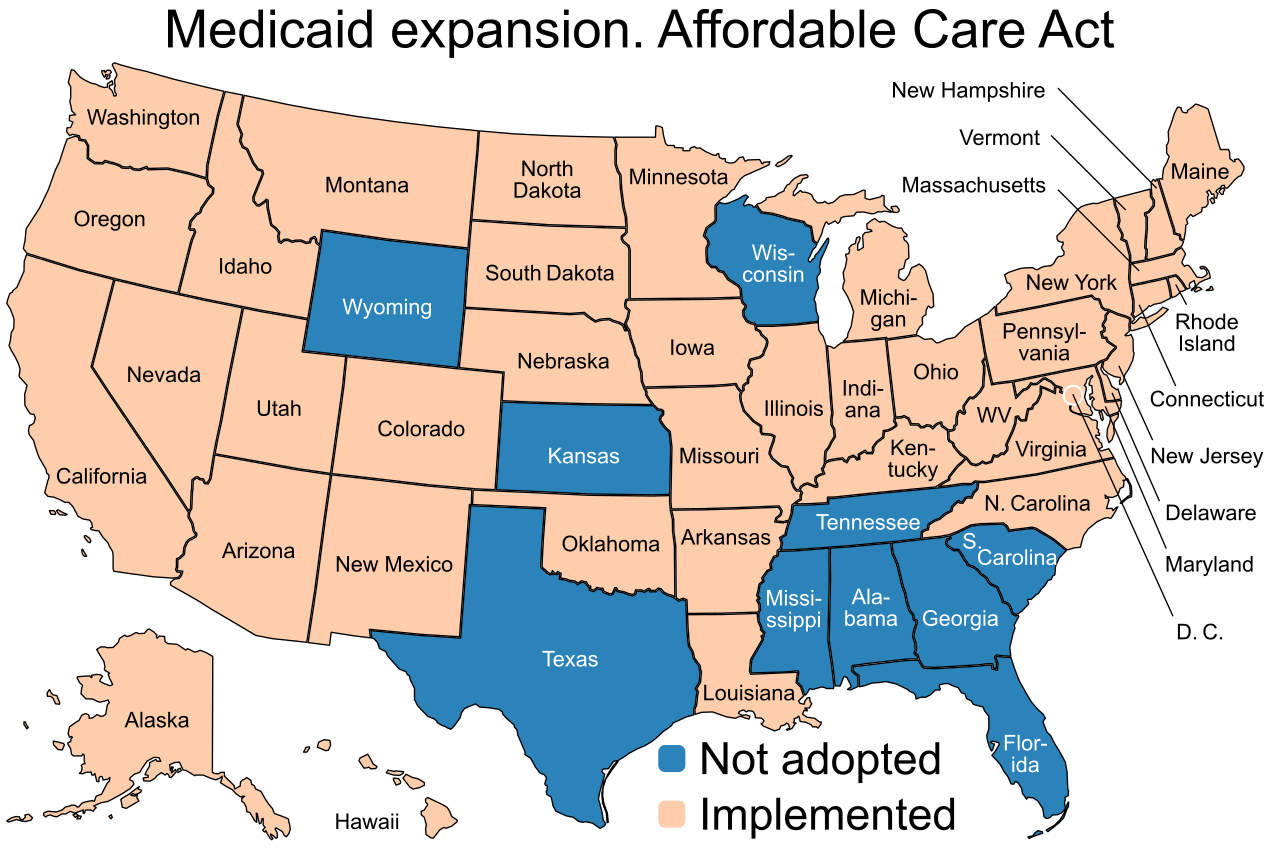
Medicaid is a joint federal and state public assistance program. It is an act of cooperation. The federal government provides a portion of the funding for Medicaid, effectively matching state dollars to encourage participation, but it does not run the day-to-day operations. Instead, state governments administer the Medicaid program directly. Because the states hold the administrative reins, state governments establish specific eligibility guidelines for Medicaid within broad federal parameters.
This means that while the federal government dictates the baseline rules, a Medicaid policy in New York may look vastly different in its specific income thresholds than one in Texas.
Medicaid eligibility and expansion decisions are administered by individual states, leading to significant variations in public health coverage and qualification parameters across the country.
Who Medicaid Protects
The core mission of Medicaid is straightforward: Medicaid provides medical assistance to qualifying low-income individuals and families. It is the healthcare system for those who cannot afford the premiums of the private market. Furthermore, Medicaid provides medical assistance to qualifying individuals who are blind or disabled, acknowledging that these populations often face insurmountable barriers to traditional employment and private insurance access.
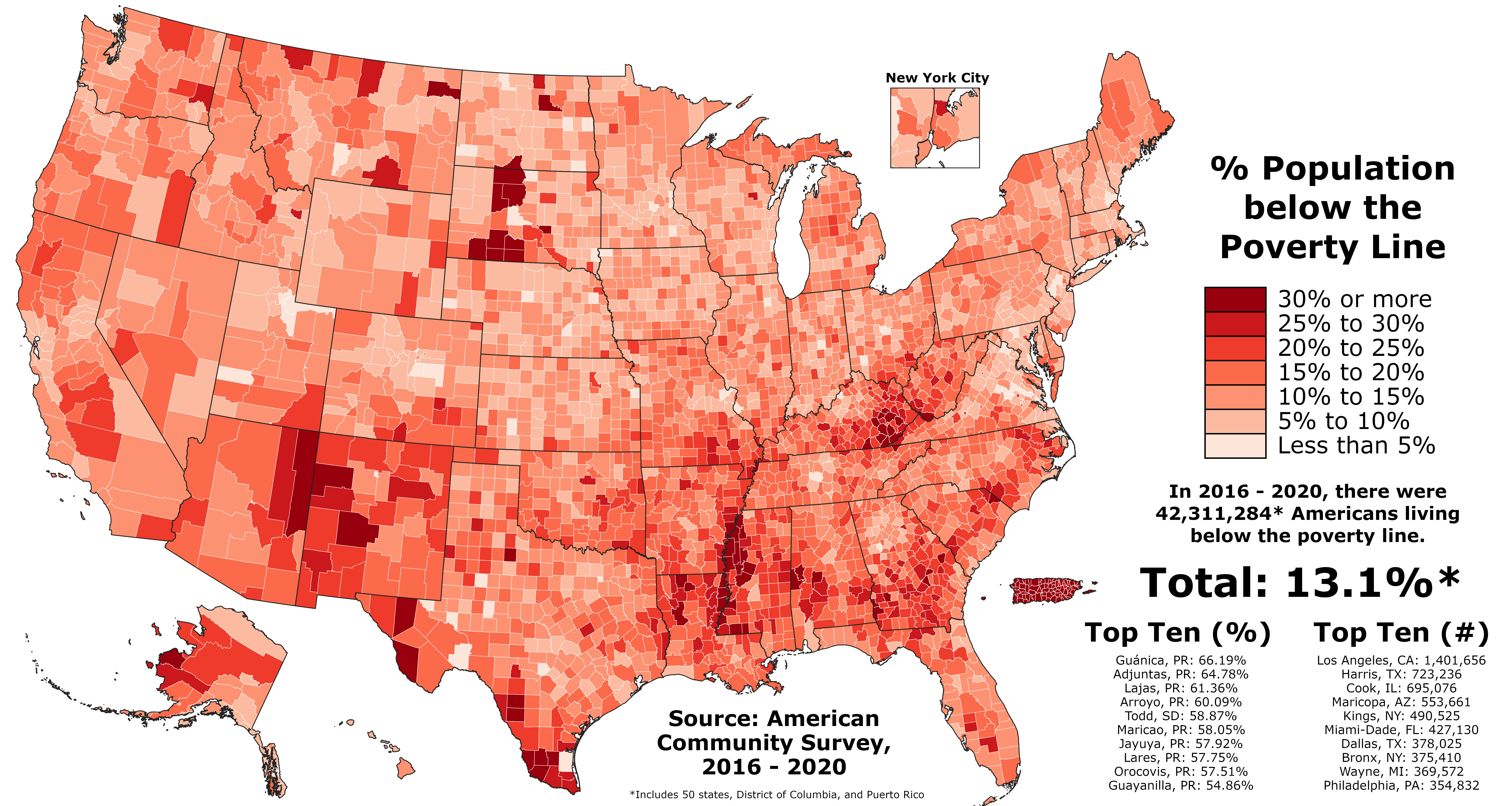
The proportion of Americans living below the poverty line varies significantly by county. Medicaid's core mission is to provide a strict means-tested healthcare safety net for these low-income populations.
How does a state determine who is "low-income"? It does not rely on a simple honor system. Medicaid eligibility is strictly means-tested.
Means-Tested Program: A system of granting public assistance only to those who possess minimal financial resources.
First, a means-tested program requires an applicant to demonstrate financial need based on specific income limits. (You cannot earn too much money).
Second, a means-tested program requires an applicant to demonstrate financial need based on specific asset limits. (You cannot have too much wealth stored in bank accounts, secondary properties, or investments).
If an applicant has high medical bills but sits on a million-dollar stock portfolio, Medicaid will not step in. They have the "means" to pay.
Coordination of Benefits: The Payer of Last Resort
Because Medicaid is fundamentally a welfare program funded by taxpayers, it fiercely protects its treasury. By law, Medicaid acts as the payer of last resort. If an individual has any other form of valid health insurance—whether an employer plan, a private individual policy, or Medicare—that other entity must pay its maximum contractual obligation first.
Consider the "Dual Eligible" citizen—someone who is over 65 (qualifying for Medicare) but also impoverished (qualifying for Medicaid). In this scenario, Medicare acts as the primary payer when an individual has both Medicare and Medicaid coverage. Medicaid waits at the end of the billing line. After Medicare pays for the hospital stay or the doctor's visit, Medicaid covers the remaining eligible medical costs after Medicare pays its primary share, such as deductibles, copayments, or specific long-term care services Medicare excludes.
Long-Term Care and Spousal Impoverishment
One of the most profound interactions you will see as an insurance producer involves Medicaid's role in long-term care (nursing homes). Because Medicare does not pay for custodial long-term care, many seniors end up spending down their life savings to qualify for Medicaid to cover a $10,000-a-month nursing home bill.
Historically, this meant a healthy spouse still living at home would be left completely destitute, as all marital assets were drained to meet Medicaid's strict means-testing asset limits. To prevent this tragedy, Congress created a firewall. Spousal impoverishment rules protect a portion of a married couple's assets when one spouse requires Medicaid-funded long-term care. This allows the "community spouse" (the one staying at home) to retain a specific amount of income and assets to live on, while the institutionalized spouse can still receive Medicaid assistance.
If Medicaid is the safety net for healthcare, Social Security Disability Income (SSDI) is the concrete floor for income replacement. Social Security Disability Income provides benefits to eligible workers who suffer a total disability.
Notice the emphasis on eligible workers. Unlike Supplemental Security Income (SSI), which is a welfare program, SSDI is an earned benefit. You buy your way into the system through your labor.
Earning Your Coverage: Quarters and Taxes
To draw from the SSDI system, you must have paid into it. Social Security Disability Income requires an applicant to have fully insured status.
How is this status measured? Through time and taxation. A worker earns fully insured status under Social Security by accumulating sufficient quarters of coverage. A "quarter of coverage" is essentially a credit you earn by making a certain amount of money in a calendar year. Quarters of coverage for Social Security are earned through payroll tax contributions (specifically, the FICA taxes deducted from your paycheck).
The math of eligibility is heavily tested:
An older worker must generally accumulate 40 quarters of coverage to be considered fully insured under Social Security. (At a maximum of 4 quarters per year, this translates to roughly 10 years of work).
But historic work isn't enough; the system demands recent attachment to the workforce. Therefore, an older worker must earn 20 quarters of coverage in the 10 years immediately preceding a disability to qualify for Social Security Disability Income.
If a worker leaves the labor force for 15 years to raise a family and then suffers a stroke, they will likely not qualify for SSDI, despite having 40 quarters from their early twenties. The recency requirement (20 of the last 40 quarters) is a critical gap that private disability insurance often must fill.
Sudden, catastrophic medical events like an ischemic stroke can immediately halt a worker's ability to earn an income. However, without a recent attachment to the workforce (20 of the last 40 quarters), an individual will not qualify for SSDI regardless of the severity of the incident.
When you sell a private disability policy, you might sell "own-occupation" coverage, meaning the policy pays out if a surgeon can no longer perform surgery, even if they can still teach medicine. Social Security does not care about your specific profession.
Social Security Disability Income uses a highly restrictive definition of disability.
The Federal Definition of Disability:Social Security defines disability as the total inability to engage in any substantial gainful activity.
If our injured surgeon can sit at a desk and answer phones as a medical consultant—making a fraction of their old salary but still earning above the "substantial gainful activity" threshold—Social Security will deny their claim.
Furthermore, the physical reality of the disability must be empirically proven. A Social Security qualifying disability must be caused by a medically determinable physical or mental impairment. You cannot simply claim you are in subjective pain; there must be laboratory findings, X-rays, or psychiatric evaluations to prove it.
Finally, the timeline of the impairment is rigid. The impairment qualifying an individual for Social Security Disability Income must be expected to last for a continuous period of at least 12 months—or, tragically, an impairment qualifies for Social Security Disability Income if it is expected to result in death.
Because of this severe, binary definition, two facts emerge that drive the entire private disability insurance industry:
Social Security Disability Income does not pay benefits for partial disabilities. (If you can work part-time, you get nothing).
Social Security Disability Income does not pay benefits for short-term disabilities. (If a broken femur puts you out of work for 8 months, you get nothing).
A fractured femur may completely disable a worker and prevent employment for several months. Because this injury is expected to heal in less than a year, it fails the strict timeline requirement for SSDI, leaving the worker entirely uncompensated by the federal government.
Even if an applicant meets the draconian medical and insured-status requirements, the government does not write a check the next day.
There is a mandatory waiting period of five full consecutive months to receive Social Security Disability Income benefits. This waiting period acts as a deductible expressed in time rather than dollars. It is designed to weed out temporary impairments that might resolve on their own.
Because of this five-month wait, Social Security Disability Income benefit payments officially begin on the sixth full month of disability.
Clients often mistakenly assume that once approved, the government will back-pay them for the months they spent waiting. This is a dangerous misconception to harbor. By law, Social Security Disability Income benefits are never paid retroactively to cover the five-month waiting period. That five-month window represents a total loss of income for the disabled worker, a gap that short-term private disability insurance is perfectly designed to bridge.
Calculating the Benefit
If a worker crosses all these hurdles, what do they receive? It is not a flat rate, nor is it a strict percentage of their final salary.
The monetary amount of a Social Security Disability Income benefit is based on the disabled worker's Primary Insurance Amount.
Think of the Primary Insurance Amount (PIA) as the worker's base value in the Social Security system. The Primary Insurance Amount is calculated using the disabled worker's average indexed monthly earnings. The government looks at the worker's lifetime earnings history, adjusts (indexes) those past earnings for inflation so that wages earned in 1995 are comparable to wages earned today, averages them out, and applies a progressive formula. The result is the PIA, which dictates the exact dollar amount of the monthly disability check.
The Bridge to Medicare
Disability doesn't just destroy an individual's ability to earn an income; it almost always strips them of their employer-sponsored health insurance precisely when they need medical care the most. The federal government provides a lifeline here, but again, it requires immense patience.
An individual receiving Social Security Disability Income automatically becomes eligible for Medicare Part A (hospital insurance), regardless of their age. They do not have to wait until they are 65.
However, this eligibility is not instantaneous. Medicare Part A eligibility begins after an individual receives Social Security Disability Income benefits for 24 months.
Let us calculate the total chronological journey for a disabled worker.
The disability occurs.
The worker waits the mandatory 5 months (receiving no SSDI).
The worker begins receiving SSDI on the 6th month.
The worker must collect SSDI for 24 months before Medicare kicks in.
Therefore, the total waiting period from the onset of a qualifying disability to Medicare Part A coverage is 29 months (5 months + 24 months).
Summary for the Professional
As an insurance producer, you must view Medicaid and SSDI not as distant bureaucratic entities, but as the underlying physics of your client's financial world.
You must know that Medicaid is a joint federal/state program, strictly means-tested, and acts as the payer of last resort.
You must know that SSDI requires 40 quarters of coverage (20 in the last 10 years), demands a total inability to perform substantial gainful activity for at least 12 months, and enforces a harsh 5-month waiting period that is never retroactively paid.
You must remember the mathematical bridge of 29 months from the onset of disability to the security of Medicare Part A.
Understanding the massive gaps, rigid definitions, and long waiting periods of these programs is exactly how you articulate the profound necessity of private life and health insurance.
If Medicaid is the safety net for healthcare, Social Security Disability Income (SSDI) is the concrete floor for income replacement. Social Security Disability Income provides benefits to eligible workers who suffer a total disability.
Notice the emphasis on eligible workers. Unlike Supplemental Security Income (SSI), which is a welfare program, SSDI is an earned benefit. You buy your way into the system through your labor.
Earning Your Coverage: Quarters and Taxes
To draw from the SSDI system, you must have paid into it. Social Security Disability Income requires an applicant to have fully insured status.
How is this status measured? Through time and taxation. A worker earns fully insured status under Social Security by accumulating sufficient quarters of coverage. A "quarter of coverage" is essentially a credit you earn by making a certain amount of money in a calendar year. Quarters of coverage for Social Security are earned through payroll tax contributions (specifically, the FICA taxes deducted from your paycheck).
The math of eligibility is heavily tested:
If a worker leaves the labor force for 15 years to raise a family and then suffers a stroke, they will likely not qualify for SSDI, despite having 40 quarters from their early twenties. The recency requirement (20 of the last 40 quarters) is a critical gap that private disability insurance often must fill.
The Strictest Definition in Insurance
When you sell a private disability policy, you might sell "own-occupation" coverage, meaning the policy pays out if a surgeon can no longer perform surgery, even if they can still teach medicine. Social Security does not care about your specific profession.
Social Security Disability Income uses a highly restrictive definition of disability.
If our injured surgeon can sit at a desk and answer phones as a medical consultant—making a fraction of their old salary but still earning above the "substantial gainful activity" threshold—Social Security will deny their claim.
Furthermore, the physical reality of the disability must be empirically proven. A Social Security qualifying disability must be caused by a medically determinable physical or mental impairment. You cannot simply claim you are in subjective pain; there must be laboratory findings, X-rays, or psychiatric evaluations to prove it.
Finally, the timeline of the impairment is rigid. The impairment qualifying an individual for Social Security Disability Income must be expected to last for a continuous period of at least 12 months—or, tragically, an impairment qualifies for Social Security Disability Income if it is expected to result in death.
Because of this severe, binary definition, two facts emerge that drive the entire private disability insurance industry:
Timelines and Waiting Periods
Even if an applicant meets the draconian medical and insured-status requirements, the government does not write a check the next day.
There is a mandatory waiting period of five full consecutive months to receive Social Security Disability Income benefits. This waiting period acts as a deductible expressed in time rather than dollars. It is designed to weed out temporary impairments that might resolve on their own.
Because of this five-month wait, Social Security Disability Income benefit payments officially begin on the sixth full month of disability.
Clients often mistakenly assume that once approved, the government will back-pay them for the months they spent waiting. This is a dangerous misconception to harbor. By law, Social Security Disability Income benefits are never paid retroactively to cover the five-month waiting period. That five-month window represents a total loss of income for the disabled worker, a gap that short-term private disability insurance is perfectly designed to bridge.
Calculating the Benefit
If a worker crosses all these hurdles, what do they receive? It is not a flat rate, nor is it a strict percentage of their final salary.
The monetary amount of a Social Security Disability Income benefit is based on the disabled worker's Primary Insurance Amount.
Think of the Primary Insurance Amount (PIA) as the worker's base value in the Social Security system. The Primary Insurance Amount is calculated using the disabled worker's average indexed monthly earnings. The government looks at the worker's lifetime earnings history, adjusts (indexes) those past earnings for inflation so that wages earned in 1995 are comparable to wages earned today, averages them out, and applies a progressive formula. The result is the PIA, which dictates the exact dollar amount of the monthly disability check.
The Bridge to Medicare
Disability doesn't just destroy an individual's ability to earn an income; it almost always strips them of their employer-sponsored health insurance precisely when they need medical care the most. The federal government provides a lifeline here, but again, it requires immense patience.
An individual receiving Social Security Disability Income automatically becomes eligible for Medicare Part A (hospital insurance), regardless of their age. They do not have to wait until they are 65.
However, this eligibility is not instantaneous. Medicare Part A eligibility begins after an individual receives Social Security Disability Income benefits for 24 months.
Let us calculate the total chronological journey for a disabled worker.
Therefore, the total waiting period from the onset of a qualifying disability to Medicare Part A coverage is 29 months (5 months + 24 months).
Summary for the Professional
As an insurance producer, you must view Medicaid and SSDI not as distant bureaucratic entities, but as the underlying physics of your client's financial world.
Understanding the massive gaps, rigid definitions, and long waiting periods of these programs is exactly how you articulate the profound necessity of private life and health insurance.