Illinois Marketing, Replacement & Suitability Rules
Not sure you’re ready?
Take the ~3-minute readiness diagnostic and see where you stand.
Imagine a doctor prescribing medication without first asking about a patient's allergies, or a financial advisor selling a complex derivative to someone simply looking to open a checking account. In the realm of life insurance and annuities, the product you are selling is an invisible promise—a legal contract exchanged for a premium today, guaranteeing a payout decades in the future. Because this transaction relies entirely on trust and the accurate representation of financial mathematics, the State of Illinois meticulously regulates how these promises are marketed, explained, and swapped. At the core of Illinois insurance law lies a fundamental doctrine: you must ensure transparency over the transaction.
As a producer, your daily reality involves sitting at kitchen tables and in boardrooms, translating abstract financial guarantees into concrete peace of mind. To do this legally and ethically in Illinois, you must master the state's stringent rules governing marketing, replacements, and product suitability.
Whenever you speak to a prospect, you are acting as the mouthpiece of an insurance carrier. Illinois regulates life and health insurance advertising to ensure promotional materials are truthful and not misleading to the public. You cannot use smoke and mirrors, nor can you disguise what you are actually selling.
During any sales presentation, an insurance producer must clearly identify themselves as an insurance producer. Furthermore, you must explicitly identify the specific insurance company you represent. The consumer must never be left guessing who is sitting across from them or whose paper they are buying.
When you explain a life insurance policy, words matter. An insurance advertisement must not use terms such as investment, savings, or profit in a way that implies the life insurance policy is a traditional investment vehicle rather than insurance. You are selling a death benefit and risk transfer, not a mutual fund.
You also cannot lean on the state's safety net to close a deal. Insurers and producers are prohibited from using the existence of the Illinois Life and Health Insurance Guaranty Association as an inducement to sell an insurance policy. The Guaranty Association exists to protect consumers if a carrier goes bankrupt; using it as a sales pitch implies your carrier might be financially unstable, which fundamentally undermines public trust.
The Chain of Responsibility and Record-Keeping
Who takes the fall if a rogue agent creates a misleading flyer? The carrier. All life and health insurance advertisements are the legal responsibility of the insurance company whose policies are being advertised, regardless of who created the promotional material.
Because insurers carry this liability, the state demands rigid bookkeeping:
- Illinois insurers must maintain a file containing a specimen copy of every advertisement disseminated in the state.
- Insurers must retain copies of these insurance advertisements for at least four years or until the next regular examination by the Department of Insurance, whichever is longer.
When a consumer agrees to buy life insurance, they must understand precisely what they are purchasing. Illinois law requires two distinct documents to bridge the gap between financial theory and the consumer's reality.
| Document | Purpose & Requirement |
|---|---|
| Buyer's Guide | A high-level educational tool. A Buyer's Guide must be provided to all prospective life insurance purchasers. It helps a prospective purchaser decide how much insurance to buy and what type of policy is best for their needs (e.g., term vs. whole life). |
| Policy Summary | A granular, mathematical breakdown. A Policy Summary must also be provided to all prospective purchasers. It provides specific data regarding the financial elements and guarantees of the exact life insurance policy being considered by the applicant (e.g., premium amounts, guaranteed cash values, dividend projections). |
The Free Look Provision
Even with perfect disclosures, a consumer might realize the policy isn't right for them once they see the final physical contract. To protect them, standard non-replacement life insurance policies issued in Illinois require a minimum ten-day free look period.
The Free Look: This period allows the policyowner to return a newly issued life insurance policy for a full refund of all premiums paid. It is an unconditional right to unwind the transaction without financial penalty.
As a producer, you will frequently encounter clients who already own life insurance. If you recommend they swap their old policy for a new one, you have entered the regulatory territory of a replacement.
The state views replacements with high scrutiny because they often generate a new commission for the producer while potentially resetting contestability periods, increasing premiums, or causing the loss of accrued cash values for the consumer. The purpose of Illinois replacement regulations is to protect the interests of life insurance and annuity purchasers by establishing minimum standards of conduct for producers.
A replacement legally occurs when a new life insurance policy or annuity is purchased, and an existing policy is:
- Surrendered entirely.
- Allowed to lapse or forfeit due to non-payment.
- Heavily borrowed against to fund the new purchase.
Duties of the Replacing Producer
If you are the producer initiating this change, your duties multiply. During a replacement transaction, the replacing insurance producer must provide the applicant with a specific document titled Notice Regarding Replacement at the time of the application. This isn't a simple brochure; the Notice Regarding Replacement document must be signed by both the insurance applicant and the replacing insurance producer.
You must also obtain a list of all existing life insurance policies and annuities that the applicant intends to replace.
Duties of the Replacing Insurance Company
Once you submit the application, the bureaucratic machinery of the insurer takes over. A replacing insurance company must explicitly notify the existing insurance company of the proposed replacement transaction.
They do this by sending a Notice of Proposed Replacement of Life Insurance or Annuity to the existing insurer. This Notice must contain the applicant's name and address and the existing insurance contract number, giving the original company a fair chance to conserve their business and verify the client understands what they are giving up.
To ensure the consumer has ample time to weigh the pros and cons of this major financial shift, a replacing life insurance company must grant a minimum twenty-day free look period for the replacement life insurance policy—double the standard ten-day requirement.
Exceptions to Producer Rules: If a new replacement life insurance policy is sold directly by an insurer without a producer (a direct response solicitation), the insurer must mail a copy of the Notice Regarding Replacement within three days of receiving the application.
Record-Keeping: Replacing insurance companies must maintain copies of replacement notices and related sales materials for at least three years.
Annuities are complex mathematical instruments designed to liquidate an estate or guarantee lifetime income. Because of their complexity and high commission structures, Illinois imposes a rigorous Best Interest standard of conduct on insurance producers when the producers recommend an annuity product to a consumer.
This isn't just about selling a "good" product; it's about fiduciary-like alignment. The Best Interest standard applies to any recommendation to purchase, exchange, or replace an annuity made to a consumer by an insurance producer. Under the Best Interest standard, an insurance producer must act in the best interest of the consumer without placing the producer's or the insurer's financial interest ahead of the consumer's financial interest.
The Four Pillars of the Best Interest Standard
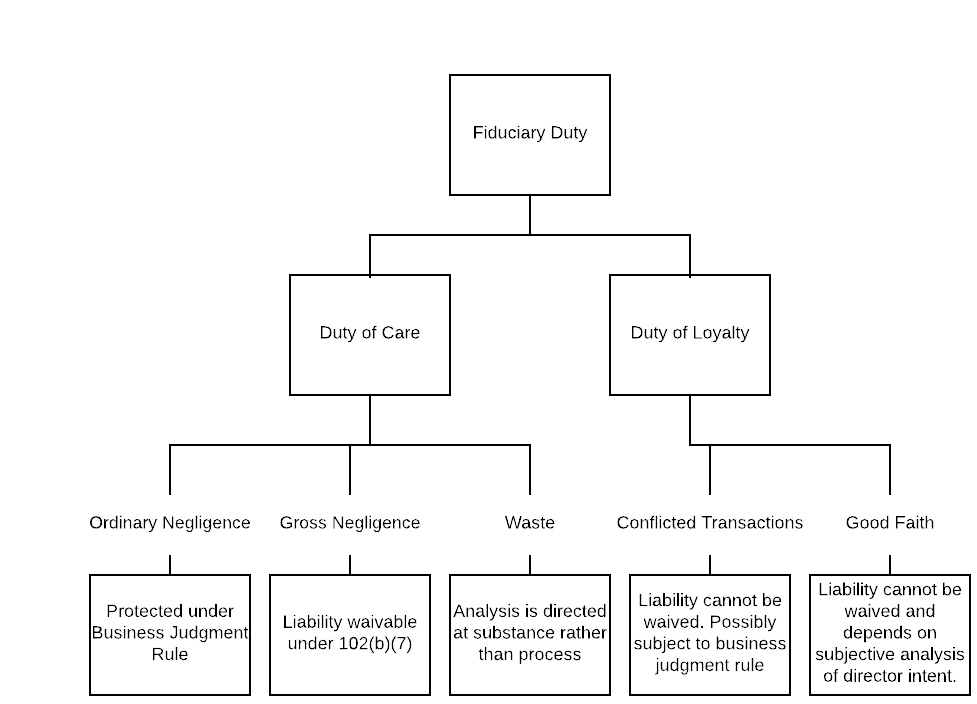
The Best Interest standard for annuity sales includes four primary obligations. Think of these as the structural supports of your ethical duty:
- The Care Obligation: Requires insurance producers to exercise reasonable diligence and skill in making an annuity recommendation based on the consumer's suitability profile. Consumer suitability information includes factors such as the consumer's age, annual income, financial experience, investment objectives, and risk tolerance.
- The Disclosure Obligation: Requires an insurance producer to fully disclose the scope of the producer's relationship with the consumer and any material conflicts of interest prior to the annuity recommendation.
- The Conflict of Interest Obligation: Requires an insurance producer to actively identify and reasonably manage or avoid material conflicts of interest related to an annuity recommendation.
- The Documentation Obligation: Requires insurance producers to maintain a written record of any annuity recommendation made to a consumer and the basis for that specific recommendation.
When Consumers Go Rogue
What happens if you run the numbers, determine an annuity is a terrible fit, but the client insists on buying it anyway? Illinois law protects you, provided you document the deviation. An insurance producer must obtain a consumer's signed statement acknowledging that an annuity transaction is not recommended if the consumer decides to enter into an annuity transaction against the producer's advice.
Exemptions: It is worth noting that annuity suitability and best interest rules do not apply to direct response solicitations where no specific product recommendation is made to the consumer (e.g., a consumer buying an annuity directly through an unprompted online portal).
Because the state assumes you cannot act in a client's best interest if you don't understand the tools you are wielding, Illinois mandates specialized education. Before selling, soliciting, or negotiating annuities in Illinois, an insurance producer must complete a one-time, four-hour Annuity Suitability and Best Interest training course.
Ultimately, the burden of compliance does not rest on your shoulders alone. Insurance companies are responsible for establishing a supervision system reasonably designed to ensure producer compliance with the Illinois annuity best interest regulations. The state expects carriers to act as the final gatekeepers, auditing files and catching reckless recommendations before they ruin a consumer's retirement.
By mastering these rules—by understanding the why behind the what—you don't just pass a licensing exam. You elevate yourself from a mere salesperson to a trusted, highly regulated architect of your clients' financial futures.